Bhavarlal Jain Fed 10,000 Workers Daily: The Real Leadership Lesson
When Bhavarlal Jain — who once pushed a kerosene cart — built a 10,000-person company, he never stopped giving his workers a free hot meal, every single day.
LinkedIn India's 2026 research puts leadership skills at #1 on India's professional wish-list. And yet the most powerful leadership lesson I've ever shared in a training room doesn't come from a Harvard case study — it comes from a kerosene cart in Jalgaon, and a man named Bhavarlal Jain.
TL;DR- Bhavarlal Jain (Bhau) started with ₹7,000 in 1963 and built Jain Irrigation into the world's 2nd-largest micro-irrigation company after Netafim
- Every single one of Jain Irrigation's 10,000 workers gets a free hot meal — every day, without exception
- Bhau's philosophy: workers are human beings, not headcount — and that difference defines everything about how you lead
- Real leadership starts with what you remember about struggle, not with what you've forgotten after success
- Ask yourself: if your 10 direct reports described in one sentence how you see them, what would they say?
Who Was Bhavarlal Jain? The ₹7,000 Kerosene Cart That Started Everything
Bhavarlal Jain — everyone called him Bhau — was born in Maharashtra and came to understand poverty not as an abstract concept but as a daily lived reality. In 1963, with just ₹7,000 pooled from three generations of family savings, he started selling kerosene from a cart in Jalgaon. He had no MBA, no mentor with a corner office, no head start. What he had was a bone-deep knowledge of what hunger felt like — and that knowledge became the foundation of every business decision he would ever make.
Why Jain Irrigation's 10,000 Workers Get a Free Hot Meal Every Single Day
Here's the thing most people miss about this story. Bhau could have run Jain Irrigation like any other large Indian company — performance dashboards, cost-per-head targets, quarterly cost rationalisation. Instead, he made one non-negotiable commitment: every single one of his 10,000 workers gets a free hot meal every day. No exceptions. Not buried in a CSR policy that gets activated at audit time. Because a man who spent his childhood pushing a kerosene cart — who knows what real hunger feels like — will never, ever let his people go hungry. That's not an HR initiative. That's character.
From Kerosene Seller to the World's 2nd-Largest Micro-Irrigation Company
From that ₹7,000 beginning in 1963, Jain Irrigation Systems grew into a company that today stands second in the world in micro-irrigation, behind only Israel's Netafim. It serves lakhs of farmers across India, helping them use water more efficiently in a country where every litre matters. That growth didn't come from cutting corners on people. It came because Bhau invested in them — not just with salary or training programmes, but with the basic human dignity of a daily meal. Trust me, there's a direct line between those free meals and that global rank.
| Leadership Dimension | Headcount Mindset | Human-First Mindset (Bhau's Way) |
|---|---|---|
| How employees are described | Resources, manpower, HR cost | People, team members, human beings |
| Primary welfare focus | Compliance: minimum statutory requirements | Dignity: baseline needs met unconditionally |
| Welfare decisions driven by | ROI analysis and quarterly budget | Non-negotiable personal commitment |
| Response to financial pressure | Cut welfare first, preserve margin | Protect people baseline, find other efficiencies |
| Team loyalty outcome | People give contractual minimum | People pour discretionary effort in |
| Jain Irrigation example | N/A | 10,000 workers fed a free hot meal every single day |
Workers Are Human Beings, Not Headcount: The Philosophy That Built Jain Irrigation
I've trained teams at companies like Bajaj Auto, Tata Tech, Mahindra, and L&T. And the single most common leadership mistake I see across Indian organisations — regardless of industry or size — is treating people as resources. Managers say 'HR cost', 'headcount', 'manpower'. For Bhau, the vocabulary was completely different. His workers were people — human beings with hunger, with families, with dignity that mattered. That shift in vocabulary, from headcount to human beings, isn't soft or theoretical. It changes how you lead every single day. And it determines whether your people give you their discretionary effort or just their contractual hours.
What Indian Companies Get Wrong About Employee Welfare
Here's what I observe too often in Indian organisations. Companies pour money into fancy office interiors, employee engagement apps, and annual off-sites — while the canteen food is terrible, salaries are delayed, and line managers speak to their teams with casual contempt. It's completely backwards. The baseline matters most: food, respect, safety, psychological security, dignity. LinkedIn India's 2026 research puts leadership skills at #1 on what Indian organisations need most right now. But great leadership starts before any skill — it starts with how you actually see the people you lead.
How to Lead Like Bhau: Practical Leadership Lessons for India's Managers in 2026
You don't need to own a 10,000-person company to apply Bhau's lesson. You need three things. First, remember where you came from — your team's struggles may not be so different from struggles you once faced yourself. Second, make one non-negotiable decision about how your people will be treated and hold to it regardless of quarterly financial pressure. Third, stop treating employee welfare as a cost line and start treating it as a signal. Your team reads how you treat them as the clearest signal of what you believe they're worth. What that signal says will determine what you get back from them.
What Bhavarlal Jain's Story Changed in My Corporate Training Programs
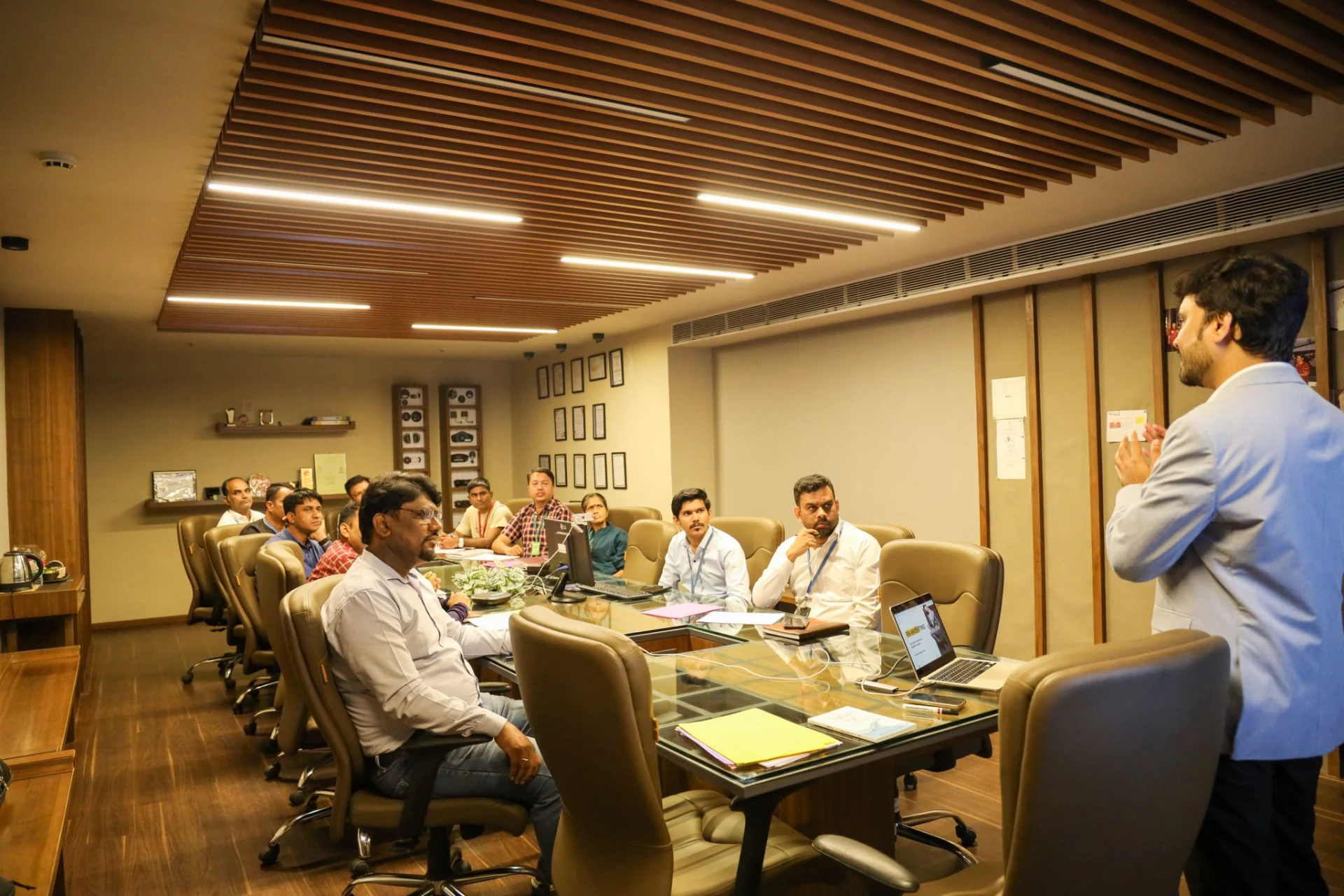
I've been bringing Bhau's story into my corporate training sessions for years — at companies like Infosys, Bosch, JSW Steel, and in sessions with the Indian Army. I don't use it as a feel-good anecdote. I use it as a business case. What shifts in the room when this story lands is that senior leaders stop thinking about engagement as a programme to run and start thinking about it as the inevitable consequence of how they actually treat people day-to-day. The question I always leave them with is simple: if your ten direct reports had to describe in one sentence how you see them as human beings, what would they say?
Book Avinash Chate for Your Next Event
TEDx speaker. 11+ yrs training Army, BRO, RBI, BARC, JSW. Available for keynotes, leadership training, team building & manager development at your office or event venue.
✅ Thanks! Avinash team will reach out within 24 hours.'}).catch(function(e){f.outerHTML='Something went wrong. WhatsApp +91 8793630001
'});return false;">Select ServiceKeynote / Motivational SpeakingLeadership Development TrainingTeam Building WorkshopManager DevelopmentEmployee TrainingOutbound TrainingBook Avinash Now →Or WhatsApp directly: +91 87936 30001
Related Articles by Avinash Chate
- Recession मध्ये Hyundai ने cars परत घेऊनही फायदा कसा कमावला
- Virender Sehwag Mindset That Most Corporate Professionals Fear
- Why Manufacturing Industry is Difficult to Start in India: 5 Key Challenges
Avinash Chate TEDx Speaker · Founder, The Future Corporate · 11+ yrs experience Avinash has trained Indian Army, BRO, RBI, BARC, JSW Steel and 1000+ corporate leaders across India. His work focuses on leadership development, communication skills, and behavioural training rooted in Indian values and modern business needs. |
Frequently Asked Questions
Who was Bhavarlal Jain and what did he build?
Bhavarlal Jain — affectionately called Bhau — was an Indian entrepreneur from Jalgaon, Maharashtra. Starting with just ₹7,000 in 1963 selling kerosene from a cart, he built Jain Irrigation Systems into the world's second-largest micro-irrigation company, behind only Israel's Netafim. Jain Irrigation serves lakhs of farmers across India with water-efficient irrigation technology and today employs over 10,000 people. Bhau passed away in 2016, leaving behind one of India's most remarkable business legacies.
Why does Jain Irrigation provide free meals to all 10,000 workers every single day?
Because Bhavarlal Jain grew up in poverty and pushed a kerosene cart before he built his empire. He never forgot what hunger felt like. For Bhau, his 10,000 workers were never headcount on a spreadsheet — they were human beings with dignity that mattered. The free hot meal, every single day, was a non-negotiable expression of that philosophy. It was not a CSR policy but a deeply personal commitment rooted in his own lived experience of struggle. When your leader has known hunger himself, he doesn't let his people go hungry.
What is the leadership lesson from Bhavarlal Jain's story for Indian managers?
The lesson is that the most powerful leadership foundation isn't a skill or a strategy — it's a worldview. Bhau saw his workers as human beings, not resources. That perspective changed everything about how he invested in them, what he stood for non-negotiably, and why his people gave him extraordinary loyalty. For Indian managers, the lesson is to examine their own vocabulary: do they say 'headcount' or 'team'? 'HR cost' or 'people'? The words reveal the worldview, and the worldview determines the culture and the loyalty you build.
How can Indian companies practice human-first leadership in 2026?
Human-first leadership in practice starts with the baseline — dignity, respect, fair pay, safe working conditions — before any investment in engagement programmes or off-sites. It means managers who remember their own early struggles and use that empathy in how they lead daily. It means having one non-negotiable commitment to your team's wellbeing and protecting it even when financial pressure arrives. And it means asking yourself regularly: how do my people actually feel about working for me — and am I genuinely comfortable with that answer?
Avinash Chate services
Corporate Trainer in Maharashtra · Top Corporate Trainers in Maharashtra · Leadership Trainer in Maharashtra · Top Leadership Trainers in Maharashtra · Team Building Trainer in Maharashtra · Top Team Building Trainers in Maharashtra · Motivational Speaker in Maharashtra · Top Motivational Speakers in Maharashtra · All service locations
← Back to all articles · Book Avinash Chate
By Avinash Chate — Maharashtra’s #1 Corporate Trainer & Motivational Speaker. .