Building Resilient Teams: India Corporate Training Framework 2026
65% of Indian firms invest in soft-skill training. I use this resilience framework at L&T, Bosch, Mahindra and the Indian Army to build teams that never break.
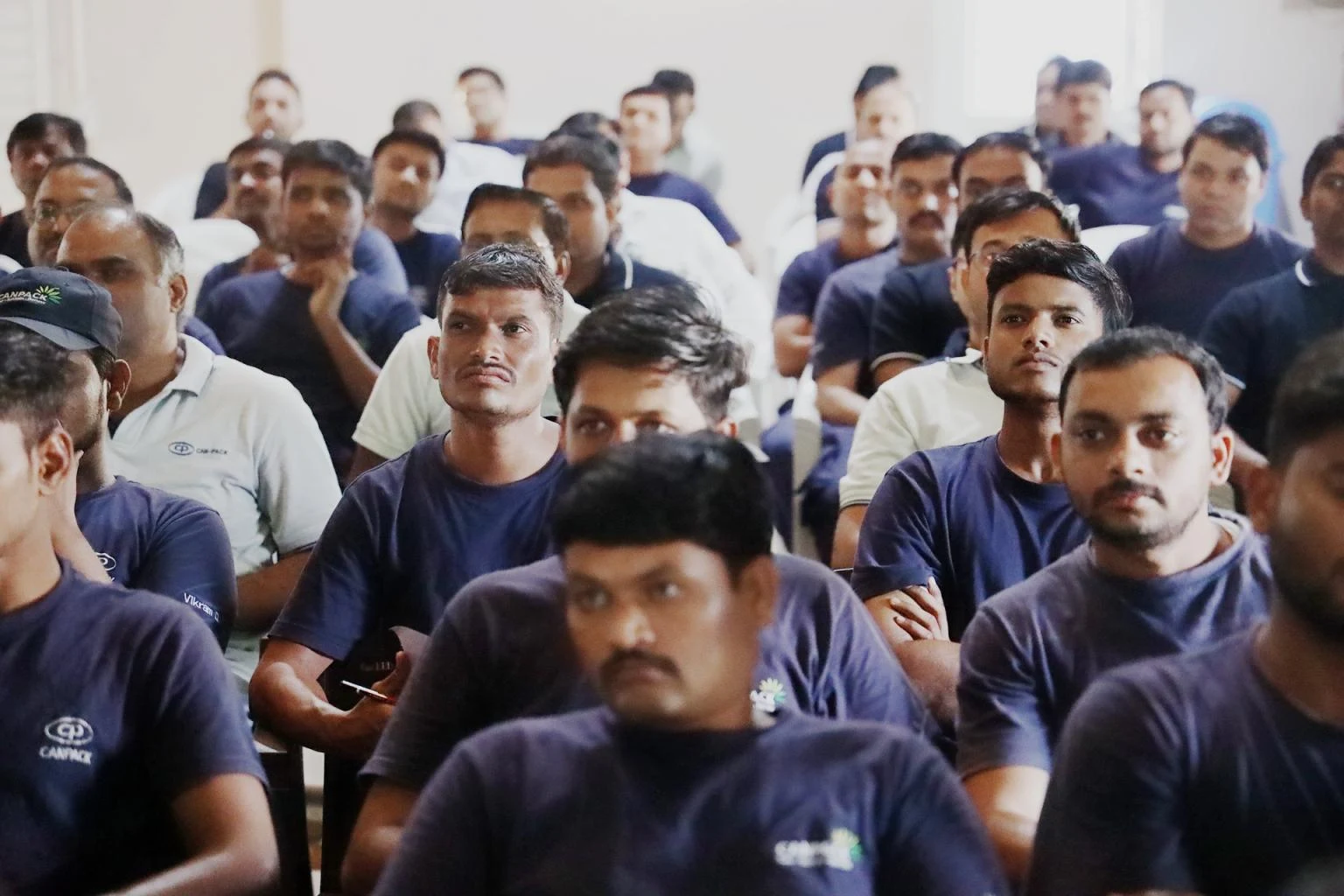
65% of Indian firms now invest in soft-skill training, yet most teams crack the moment conditions get difficult. Building resilient teams is not about motivation speeches or team lunches — it's about three structural capabilities. I've built them with the Indian Army, L&T, Bosch, Mahindra and Siemens. Here's the framework.
TL;DR- Resilient teams perform in bad conditions — not just good ones
- The 3 foundations: psychological safety, shared accountability, adaptive communication
- Most Indian team training targets individual skills — missing the structural dynamics that create resilience
- I have built this framework with L&T, Bosch, Mahindra, the Indian Army and 100+ corporate organisations
- Start your 90-day resilience plan this week with a psychological safety audit
What Makes a Team Truly Resilient — Not Just Hardworking
Most managers confuse a high-performing team with a resilient team. A high-performing team delivers results in good conditions. A resilient team delivers results when things go wrong — under pressure, under ambiguity, after setbacks. In my 11 years training teams at the Indian Army, BRO, BARC, and India's top corporations, I've seen the difference clearly. Resilience isn't built by pushing people harder. It's built by developing three specific structural capabilities that most corporate training programmes completely ignore because they're harder to measure than sales numbers.
The 3 Foundations of Every Unbreakable Corporate Team
The three foundations of every resilient corporate team are: first, psychological safety — people must believe that speaking up about a problem will not damage their career. Second, shared accountability — every person on the team owns outcomes, not just tasks. Third, adaptive communication — the ability to recalibrate messaging and strategy when context changes rapidly. These three are not soft ideals or team-building buzzwords. They are the structural conditions that determine whether a team holds together or fractures the moment a project hits serious turbulence.
| Dimension | Non-Resilient Team | Resilient Team (Avinash Chate Framework) |
|---|---|---|
| Psychological Safety | People hide problems until crisis | Problems flagged early, no stigma attached |
| Accountability Model | Blame culture, task ownership only | Outcome ownership, shared accountability |
| Communication Under Pressure | Leadership silent, teams fill silence with fear | Adaptive communication, real-time recalibration |
| Performance in Adversity | Output drops significantly under stress | Output maintained, recovery is faster |
| Training Focus | Individual skill-building only | Structural team dynamics plus individual skills |
| Result After 12 Months | Same patterns, different faces | Rewired defaults, sustained performance |
How I Build Resilience at L&T, Bosch, Mahindra and the Indian Army
Here's how I approach team resilience in practice. At L&T, we worked on psychological safety by creating structured pre-mortem conversations — teams discussed what could go wrong before a project started, removing the stigma from admitting failure. At Bosch, we rebuilt accountability frameworks so engineers owned outcomes, not just deliverables. At Mahindra, we focused on adaptive communication — teaching managers to recalibrate their messaging in real time as business conditions shifted. At the Indian Army, all three were built under genuine pressure. That experience shapes everything I teach in corporate settings today.
The Most Common Resilience Killer in Indian Corporate Teams Today
The most common resilience killer I see in Indian corporate teams is not stress — it is ambiguity without communication. When leadership goes quiet during a difficult quarter, teams fill the silence with fear. When accountability is unclear, people disengage rather than step up. When there is no psychological safety to flag problems early, teams wait until an issue becomes a full crisis. 65% of Indian firms invest in soft-skill training, but most programmes target individual performance — not the team dynamics that actually determine whether the group holds or breaks.
Building Resilience Under Pressure: The Training Method That Sticks
My training method for building resilience starts with diagnosis, not prescription. Before I run a single workshop, I map the team's existing stress responses — what they default to under pressure, where communication breaks down first, how accountability is actually practised versus how it is supposed to work on paper. Then I design a programme that addresses those specific gaps directly. This is why the results hold for 6-12 months after training, not just the week after the workshop. Resilience is not an event. It is a rewired default behaviour that becomes the team's new baseline.
Team Resilience vs Team Cohesion: What India's HR Leaders Get Wrong
Many HR leaders confuse team resilience with team cohesion. Cohesion is about people liking each other and working smoothly together in calm conditions. Resilience is about performing when conditions are adverse. A cohesive team can still fall apart under pressure if there is no structure for accountability and adaptive communication. Conversely, a resilient team does not need to be socially close — it needs to be structurally sound. Getting this distinction right changes how you design your training programmes, your team structures, and your leadership pipeline for the year ahead.
Your 90-Day Plan to Build a Resilient Team in Your Organisation
If you are a team leader or HR professional reading this in 2026, here is a 90-day plan to start this week. Month 1: run a psychological safety audit — use anonymous feedback to understand where team members feel unsafe speaking up. Month 2: redefine your accountability framework so every person owns an outcome, not just a task on a list. Month 3: run two adaptive communication sessions where teams practise changing their message in response to changing scenarios. After 90 days you will have the structural foundation of a resilient team. Then you build on it with me.
Book Avinash Chate for Your Next Event
TEDx speaker. 11+ yrs training Army, BRO, RBI, BARC, JSW. Available for keynotes, leadership training, team building & manager development at your office or event venue.
✅ Thanks! Avinash team will reach out within 24 hours.'}).catch(function(e){f.outerHTML='Something went wrong. WhatsApp +91 8793630001
'});return false;">Select ServiceKeynote / Motivational SpeakingLeadership Development TrainingTeam Building WorkshopManager DevelopmentEmployee TrainingOutbound TrainingBook Avinash Now →Or WhatsApp directly: +91 87936 30001
Related Articles by Avinash Chate
- Why Manufacturing Industry is Difficult to Start in India: 5 Key Challenges
- Ajit Agarkar's 21-Ball ODI Fifty Against Zimbabwe: The Silent Performer's Career Blueprint
- Zero Defects: How Sundram Fasteners Won GM Supplier of the Year 5 Times
Avinash Chate TEDx Speaker · Founder, The Future Corporate · 11+ yrs experience Avinash has trained Indian Army, BRO, RBI, BARC, JSW Steel and 1000+ corporate leaders across India. His work focuses on leadership development, communication skills, and behavioural training rooted in Indian values and modern business needs. |
Frequently Asked Questions
What is the difference between team resilience and team cohesion in corporate settings?
Team cohesion is about how well team members like and trust each other — it produces smooth collaboration under normal, calm conditions. Team resilience is about how well a team performs when conditions deteriorate — under pressure, uncertainty, or setbacks. A cohesive team can still collapse under adversity if there is no structure for accountability and adaptive communication. A resilient team may not be socially close but is structurally sound enough to deliver even when things go seriously wrong. Most HR training builds cohesion. Resilience requires a fundamentally different design and intention.
What are the three foundations of a resilient corporate team according to Avinash Chate?
In my corporate training work across organisations including L&T, Bosch, Mahindra and the Indian Army, I have found that resilient teams share three structural foundations: psychological safety — people can raise problems without fear of career damage; shared accountability — every person owns outcomes, not just tasks; and adaptive communication — teams can recalibrate their messaging and strategy when circumstances change rapidly. These three are not about personality or individual motivation. They are about how a team is structured and led day to day. Without all three, resilience remains fragile.
How long does it take to build a resilient team using structured corporate training?
Building genuine team resilience takes 90 days at minimum — not a single workshop or team outing. My approach starts with a diagnostic phase to understand a team's specific vulnerability patterns, then moves into targeted sessions on psychological safety, accountability, and adaptive communication. Most teams show measurable improvement in how they handle pressure within 60 days. The goal is to rewire the team's default responses so that resilience is the baseline behaviour, not the exception. Teams I have trained at Siemens and KPIT have maintained the gains for 12 months or more after the programme ends.
How do I know if my corporate team lacks resilience and needs intervention?
There are clear signals to watch for. If your team goes quiet or conflicts spike when a project runs into trouble, that is a resilience gap. If leadership communication breaks down during tough quarters and teams fill the silence with rumours and fear, that is a resilience gap. If problems are consistently flagged too late — after they have already become crises — that is a psychological safety failure. If team performance visibly drops under pressure rather than holding steady, that is the most direct indicator. If you are seeing two or more of these patterns regularly, your team needs a resilience intervention, not a motivation session.
Avinash Chate services
Corporate Trainer in Maharashtra · Top Corporate Trainers in Maharashtra · Leadership Trainer in Maharashtra · Top Leadership Trainers in Maharashtra · Team Building Trainer in Maharashtra · Top Team Building Trainers in Maharashtra · Motivational Speaker in Maharashtra · Top Motivational Speakers in Maharashtra · All service locations
← Back to all articles · Book Avinash Chate
By Avinash Chate — Maharashtra’s #1 Corporate Trainer & Motivational Speaker. .