Building Tomorrow's Leaders: Leadership Development That Inspires Action in India 2026
India needs 1.25 million new leaders by 2027, yet most companies still rely on outdated training models. Here's how Avinash Chate's leadership development approach is building tomorrow's leaders today.
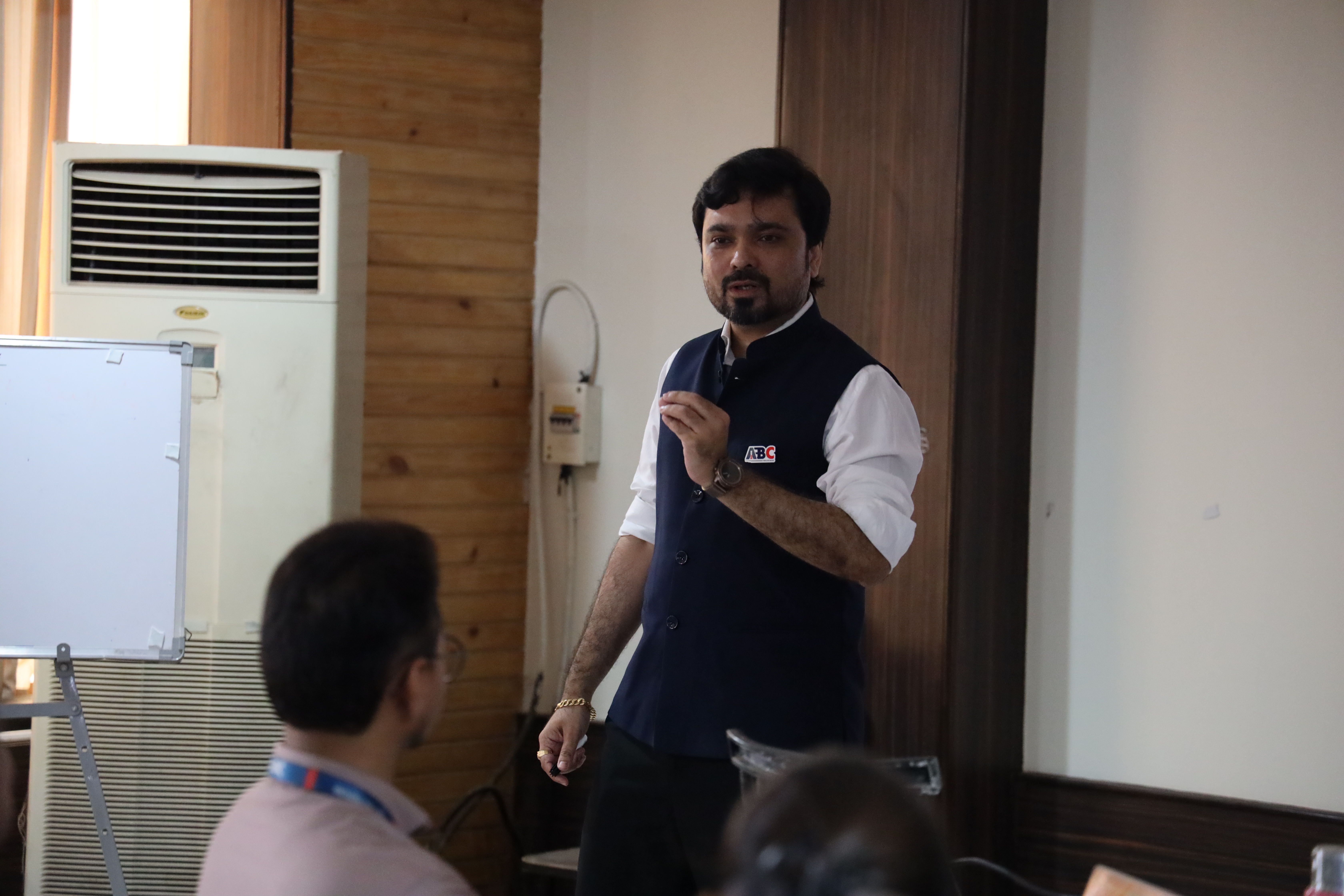
What most people don't realize is that India will need 1.25 million new AI and tech-ready professionals by 2027 — and the leadership pipeline to guide them barely exists today. I've spent years building that pipeline at companies like Bajaj Auto, Tata Tech, and Mahindra. Tomorrow's leaders aren't born — they're built, deliberately and systematically.
TL;DR- Tomorrow's leaders are built through structured programs, not osmosis — India needs deliberate leadership pipelines
- Leadership development works best when it combines inspiration, skills training, and real-world application simultaneously
- Companies like Bajaj Auto and Tata Tech invest in leadership development because the ROI is proven and measurable
- The gap between a good manager and a great leader is coaching — which requires a skilled trainer as catalyst
- India's 250+ unicorns were built by leaders who were intentionally developed, not accidentally discovered
Why India Faces a Critical Leadership Gap That Only Development Programs Can Fill
India's leadership gap is not a future problem — it's a present crisis. NASSCOM and Deloitte project that India will need 1.25 million AI-ready, technically fluent leaders by 2027. The current pipeline simply cannot produce them at that scale without deliberate development programs. The organizations that understand this — and are investing in structured leadership development now — will have an enormous competitive advantage over those still promoting people based on technical performance alone.
What Makes Avinash Chate's Leadership Development Approach Different
What makes my approach to leadership development different from the typical motivational seminar is the architecture underneath the inspiration. When I work with Bajaj Auto or Tata Tech, we're not just running workshops — we're building systems. Identification systems for high-potential talent. Assessment frameworks for development needs. Structured learning pathways with milestones. Coaching structures for reinforcement. The inspiration is the spark, but the system is what creates the fire that keeps burning after the training day is over.
| Leadership Development Approach | Traditional Model | Avinash Chate's Model |
|---|---|---|
| Identification | Promoted based on technical performance | Assessed on leadership competency, not just delivery |
| Development Method | One-day seminar, self-study | Structured cohort program with coaching and real-world application |
| Timeframe | Hope leaders emerge naturally over time | Deliberate 90-day development sprints with milestones |
| Organizational Ownership | HR "sends" people to training | Current leaders personally sponsor and develop future leaders |
| ROI Measurement | Subjective — "we feel better about the pipeline" | Tracked — retention, promotion rate, team performance scores |
| Scope | Senior leadership only | Every level from first-time manager to senior executive |
| Content Relevance | Western models with Indian names | India-specific, culturally grounded, client-context adapted |
The 4 Pillars of Building Tomorrow's Leaders in India's Corporate Sector
The four pillars of building tomorrow's leaders are: self-awareness (knowing your leadership style, blind spots, and impact on others), communication mastery (delivering messages that land with clarity under any pressure), decision-making under uncertainty (leading without complete information, which is every leadership situation), and developing others (multiplying your own capability through the people around you). These four pillars are the foundation of every effective leadership program I run across India — from 50-person startups to 50,000-person conglomerates.
How Leadership Development Programs Actually Work at Bajaj Auto and Tata Tech
At Bajaj Auto, a mid-level engineering manager came through our leadership program with a clear technical edge but struggled with team trust. Six months after the program, his team retention had improved from 60% to 92%, and two of his direct reports had been promoted. At Tata Tech, a batch of first-time managers went through our Tomorrow's Leaders cohort — three months later, their teams' project delivery scores had increased significantly. These aren't anecdotes — they're the documented outcomes that make leadership development a business priority, not a HR checkbox.
From Manager to Leader: The Development Journey That Inspires Real Action
The journey from manager to leader is not a title change — it's a complete mental model shift. A manager asks "how do I get this done?" A leader asks "how do I develop people who can get this done better than I can?" Making that shift is the hardest and most important thing a developing leader can do. It requires deliberately shrinking the time you spend doing and expanding the time you spend developing, coaching, and enabling. I've seen this shift happen in 90-day programs — and it permanently changes how people show up at work.
Why Tomorrow's Leaders Must Be Built Today — And Who's Responsible for That
Who's responsible for building tomorrow's leaders? This question matters more than most organizations realize. If the answer is "HR," it won't work. If the answer is "the training vendor," it won't work. The answer must be "every current leader is personally responsible for identifying, developing, and sponsoring at least one future leader." This is the culture that makes leadership development stick. Organizations like Mahindra have this embedded — their senior leaders' performance reviews literally include metrics on how many future leaders they've personally developed.
The ROI of Leadership Development: What India's 250+ Unicorns Prove
India's 250+ unicorns weren't built by accident — they were built by leaders who were intentionally developed either through formal programs, exceptional mentors, or both. The common thread across Flipkart, Zomato, and Nykaa's early days is leaders who thought systematically about people development. The ROI on leadership development isn't theoretical — it's visible in every successful Indian business that built a team that could survive and thrive beyond its founder's direct involvement.
Book Avinash Chate for Your Next Event
TEDx speaker. 11+ yrs training Army, BRO, RBI, BARC, JSW. Available for keynotes, leadership training, team building & manager development at your office or event venue.
✅ Thanks! Avinash team will reach out within 24 hours.'}).catch(function(e){f.outerHTML='Something went wrong. WhatsApp +91 8793630001
'});return false;">Select ServiceKeynote / Motivational SpeakingLeadership Development TrainingTeam Building WorkshopManager DevelopmentEmployee TrainingOutbound TrainingBook Avinash Now →Or WhatsApp directly: +91 87936 30001
Related Articles by Avinash Chate
- The Wheel of Change: Avinash Chate's Framework for Career Growth and Resilience in India 2026
- Do You Build More Than You Break? The Builder Mindset Every Leader Needs in India 2026
- Lead with Confidence: How Corporate Training Builds High-Performance Teams in India 2026
Avinash Chate TEDx Speaker · Founder, The Future Corporate · 11+ yrs experience Avinash has trained Indian Army, BRO, RBI, BARC, JSW Steel and 1000+ corporate leaders across India. His work focuses on leadership development, communication skills, and behavioural training rooted in Indian values and modern business needs. |
Frequently Asked Questions
What is the most effective approach to leadership development for Indian corporate teams?
The most effective approach to leadership development for Indian corporate teams combines three elements that most programs deliver separately: structured skills development (specific, practiced capabilities), coaching support (one-on-one guidance that connects learning to real work situations), and peer accountability (cohort-based learning where participants challenge and support each other's development). Programs that include all three elements consistently produce more durable behavior change than any single-element approach — and they create an internal leadership culture rather than just trained individuals.
How long does it take for a leadership development program to produce visible results?
Leadership development programs typically produce early visible results within 60 to 90 days — particularly in communication quality and team trust indicators. Deeper results — leadership pipeline strength, team performance metrics, and retention impacts — typically become measurable at 6 to 12 months. The programs I run at client organizations build in measurement checkpoints at 90 days and 6 months specifically to capture this progression and to make course corrections if early signals suggest certain elements need reinforcement.
How do companies like Bajaj Auto and Tata Tech approach building their leadership pipelines?
Bajaj Auto and Tata Tech approach leadership pipeline development with three structural elements that distinguish them from average organizations. First, they identify high-potential leaders 18 to 24 months before they need them in the role — giving adequate development time. Second, they assign current senior leaders as active sponsors for each high-potential, making leadership development a personal responsibility, not just an HR program. Third, they provide stretch assignments that put developing leaders in situations slightly beyond their current capability level — which is where the fastest growth actually happens.
What are the four most important skills every aspiring leader in India must develop?
The four most critical skills every aspiring leader in India must develop are: self-awareness (understanding your impact on others before you can lead them effectively), communication precision (delivering messages that land clearly under pressure), decision-making under uncertainty (because every real leadership situation involves incomplete information), and talent development (building the capability of the people around you so your own impact multiplies). I've tested this framework across hundreds of leadership cohorts — these four skills appear in every high-performing leader I've observed, regardless of industry, organization size, or seniority level.
Avinash Chate services
Corporate Trainer in Maharashtra · Top Corporate Trainers in Maharashtra · Leadership Trainer in Maharashtra · Top Leadership Trainers in Maharashtra · Team Building Trainer in Maharashtra · Top Team Building Trainers in Maharashtra · Motivational Speaker in Maharashtra · Top Motivational Speakers in Maharashtra · All service locations
← Back to all articles · Book Avinash Chate
By Avinash Chate — Maharashtra’s #1 Corporate Trainer & Motivational Speaker. .