Charles Duhigg's Habit Loop: The 3-Step Brain Circuit Behind Every Behaviour You Want to Change
Discover how Charles Duhigg's Cue-Routine-Reward habit loop works and exactly where to intervene to change any professional behaviour for good.
Every time a manager snaps under pressure, every time a salesperson procrastinates on a difficult call, every time a student reaches for their phone instead of their textbook — there is a precise three-step neurological loop running quietly in the background. It is not a character flaw. It is not laziness. It is a circuit your brain has wired for efficiency, and once you understand how it works, you gain the power to rewire it.
I first encountered this framework through the work of Charles Duhigg, the Pulitzer Prize-winning journalist and author of The Power of Habit. His research on habit formation changed the way I design my corporate training workshops — and it became a cornerstone of Chapter 10 of my book The Winning Edge, The Champion Mindset. The chapter is titled "Triggers," and the central idea is simple yet profound: before you can change a behaviour, you must identify the trigger that fires it.
In this article I am going to walk you through Duhigg's Habit Loop — the Cue, the Routine, and the Reward — and show you the exact intervention point where lasting change becomes possible. Whether you are a leader trying to build a high-performance culture, a professional trying to shed a career-limiting habit, or a student building the discipline to reach your goals, this framework will give you a practical map for doing it.
What Is the Habit Loop? A Framework Every Indian Professional Needs to Know
Charles Duhigg's research revealed that almost every habitual behaviour in human life follows an identical three-stage neurological circuit. He called it the Habit Loop.
Stage 1: The Cue (Trigger)
The cue is a signal from your environment — internal or external — that tells your brain: "It is time to go into automatic mode." The cue can be almost anything:
- A time of day — 3 pm always makes you reach for tea and social media
- A specific person — a particular colleague's name on your phone makes your jaw tighten
- A physical sensation — tiredness, hunger, or a headache that triggers avoidance behaviour
- A location — sitting at the desk at home always ends in distraction, but the office library keeps you focused
- An emotional state — anxiety about a presentation that leads to over-preparation of minor details while ignoring the big picture
Here is what most people miss: the cue does not have to be dramatic. It does not have to be a traumatic childhood event or a major failure. It can be as subtle as the ping of a WhatsApp notification, the smell of coffee, or the feeling of boredom between meetings. The brain is extraordinarily sensitive to these signals because it is always looking for shortcuts.
Stage 2: The Routine
The routine is the behaviour itself — the action your brain executes automatically once the cue fires. This is the part we usually call "the habit." It can be physical (smoking, checking email obsessively, biting your nails), mental (catastrophising every piece of criticism), or emotional (withdrawing when challenged in a meeting).
The critical word is automatically. Once a routine is sufficiently embedded, your conscious mind barely participates. The cue fires, and the routine runs — almost like a macro on a computer keyboard.
Stage 3: The Reward
The reward is the payoff the brain receives at the end of the routine. This is why the loop exists in the first place. The reward trains the brain to remember this particular loop and to repeat it next time the cue appears. And here is the insight that changes everything: the reward does not have to be conscious or even pleasurable in an obvious sense. It can be as subtle as:
- A fleeting feeling of relief (you avoided something uncomfortable)
- A sense of control (you checked your email one more time, reducing anxiety)
- A micro-dose of social validation (someone liked your post)
- The simple absence of discomfort (you scrolled rather than sit with a difficult thought)
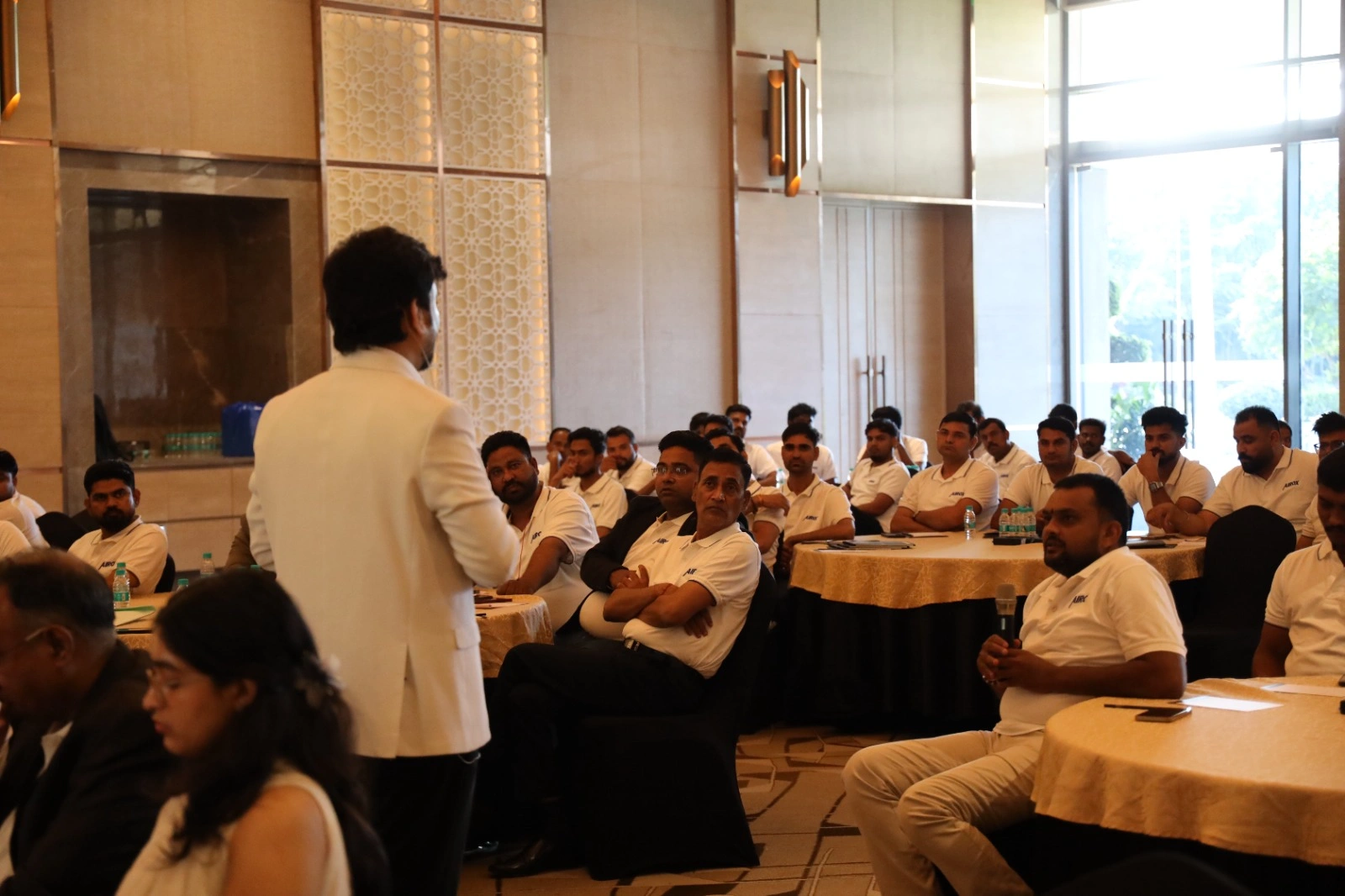
"The cue does not have to be a traumatic event — it can be subtle: a time of day, a specific person, a physical sensation, a location, an emotional state. The reward does not have to be conscious — it can be as subtle as a feeling of relief or control." — From The Winning Edge, The Champion MindsetA corporate training session where participants map their own Cue-Routine-Reward loops — the first step toward intentional behaviour change.
Why Willpower Alone Will Never Break a Bad Habit
This is the question I am asked most often in my workshops, by managers who are frustrated with their own patterns and with those of their teams: "I know I should stop doing X. Why can I not just stop?"
The answer is that willpower operates in the prefrontal cortex — the slow, deliberate, rational part of your brain. The Habit Loop lives in the basal ganglia — a much older, faster, and more energy-efficient structure. When the cue fires and the loop activates, it happens before your rational mind has even clocked what is happening.
Research on habit formation consistently shows that habits are not erased — they are overwritten. The old loop remains in the neural circuitry; it is simply displaced by a newer, stronger loop. This is why people who have been sober for years can relapse when they return to the same environment, the same people, and the same emotional states. The cue is still there. The old routine is still encoded. All that was missing was the right trigger.
The Implication for Corporate Teams
In my training programmes across Maharashtra — working with companies in Pune, Mumbai and beyond — I see this play out constantly. A sales team keeps reverting to pressure-based selling not because they lack product knowledge, but because the cue (a hesitant customer) fires the old routine (push harder) because it previously produced the reward (an occasional yes that felt like a win). No amount of product training alone changes that loop.
A manager keeps interrupting team members not out of arrogance, but because the cue (a pause in conversation) fires the old routine (fill the silence with their own idea) because it previously produced the reward (feeling competent and in control).
Until you change the loop, the behaviour returns. Every time.
The Precise Intervention Point: Where Change Actually Happens
Here is the most practical insight from Duhigg's framework, which I have applied in my coaching work and in the frameworks inside The Winning Edge: you cannot fight the loop from inside the routine. By the time you are in the middle of the routine, the loop has already taken over. The intervention must happen either before the cue fires, or at the reward stage — by designing a competing routine that delivers the same reward through a healthier path.
Three Intervention Strategies
In Chapter 10 of my book, I outline three strategies that I call the Three As:
- Anticipate the cue before it fires. If you know that 3 pm always triggers mindless scrolling, schedule a brief walk at 2:55 pm. You are breaking the chain before it starts.
- Avoid the situation that generates the cue, wherever possible. If working from the living room always leads to distraction, set up your workspace in a separate room. Remove the cue from your environment.
- Adjust your environment so the cue does not trigger the old routine. Keep your phone in your bag during meetings. Delete the apps that auto-fire the loop. Rearrange your desk so the first thing you see is your priority list, not your inbox.
"To change the routine, you must change the cue — or design a competing routine that provides the same reward through a better path." — From The Winning Edge, The Champion Mindset
The Goldsmith Addition: Replace, Do Not Just Remove
Building on Duhigg's work, executive coach Marshall Goldsmith adds a vital layer: you cannot simply remove a routine and leave a void. The brain will fill that void with the next available behaviour, which is usually the old one. You must design a replacement routine that satisfies the same craving — the same underlying reward — through a different action.
- If your stress cue fires a routine of complaining to colleagues, design a replacement: a five-minute walk, followed by writing down the single most important action you can take right now.
- If your boredom cue fires a routine of checking email every five minutes, design a replacement: keep a "curiosity list" of questions you want to explore, and go to that list instead.
- If your conflict-avoidance cue fires a routine of deflecting difficult conversations, design a replacement: a two-sentence script you use to open the conversation with curiosity instead of avoidance.
The reward — relief, control, engagement — remains the same. The routine is new. And over time, the new loop becomes the default.
Applying the Habit Loop in a Corporate Training Context
The reason I dedicated an entire chapter of The Winning Edge to this framework is that behaviour change inside organisations is one of the hardest problems leaders face. Training programmes that focus only on knowledge — what to do — fail to address the loops that govern what people actually do under pressure.
For Leaders and Managers
When I work with leadership teams, I ask them to complete a Loop Audit: identify three behaviours they want to change, and for each one, map the cue, the routine, and the reward. Most leaders find this exercise uncomfortable — and that discomfort is the point. You cannot lead others to better habits if you have not examined your own loops.
Common leadership loops I encounter across Indian corporate environments:
- Cue: Team member makes a mistake. Routine: Leader takes over and does it themselves. Reward: Immediate problem solved; feeling of control. Cost: Team never develops ownership.
- Cue: Inbox hits a certain volume. Routine: Spend two hours on email at the expense of strategic work. Reward: Inbox zero feels like progress. Cost: No time for deep thinking.
- Cue: Conflict arises in a meeting. Routine: Leader imposes a quick decision to end the discomfort. Reward: Harmony restored temporarily. Cost: Team learns that surfacing disagreement is pointless.
For Sales and Customer-Facing Professionals
In sales training, the habit loop is the difference between consistent performers and those who only perform when conditions are ideal. The best salespeople have deliberately designed their pre-call routine — a specific sequence of actions they execute before every call — so that the cue (an upcoming customer conversation) fires the right routine (preparation, curiosity, listening posture) rather than the default (script-reading, pressure tactics, talking too much).
For Students and Early-Career Professionals
The earlier you learn to map your loops, the more you shape the professional you become. I often tell young professionals: your habits at 25 are your results at 35. The cues you allow to govern your time — social media, peer pressure, comfort-seeking — will compound over a decade into either an extraordinary career or a string of missed opportunities.
Building habits of excellence — the foundation of every high-performance team I work with across Maharashtra.Designing Your Champion Habit Stack: A Practical Framework
Once you understand the Habit Loop, you are ready to go beyond breaking bad habits and start building what I call a Champion Habit Stack — a deliberately sequenced set of cues and routines designed to create the outcomes you want, rather than the outcomes your old programming defaults to.
Step 1: Choose One Keystone Habit
Duhigg introduced the concept of the keystone habit — a single habit that, when changed, ripples out and changes other habits as a side effect. For professionals, keystone habits typically involve:
- Morning routine structure (what you do in the first hour sets the tone for decision quality all day)
- Physical exercise (research consistently links it to improved focus, emotional regulation, and resilience)
- Weekly planning rituals (a Sunday evening or Monday morning review that sets priorities before the week sets them for you)
Step 2: Design the Loop Deliberately
For your chosen keystone habit, write down:
- The specific cue you will use to trigger it (a time, a location, an existing habit you stack it onto)
- The exact routine — specific, timed, non-negotiable
- The reward you will give yourself immediately after completing it (even something small is enough to reinforce the loop)
Step 3: Protect the Cue
The cue is the most fragile part of the loop in the early stages. Protect it fiercely. Tell the people around you about it. Put it in your calendar. Eliminate the competing cues that fire your old routine at the same time. This is what I mean by "Adjust" in the Three As framework.
"Anticipate the cue before it fires. Avoid the situation that generates it. Adjust your environment so the cue does not trigger the old routine." — From The Winning Edge, The Champion Mindset
The One Question That Changes Everything
At the end of my sessions on this topic, I always leave participants with a single question to take back to their desks, their homes, and their teams. It is not "what habit do I want to build?" That is too abstract, too distant from the actual mechanics of change.
The question is: "What cue is firing my most destructive routine — and what am I getting out of it?"
That second part — what am I getting out of it — is the one most people skip. They focus on the behaviour they want to eliminate and ignore the reward it is providing. But until you honestly identify the reward, you cannot design a replacement routine that satisfies the same need. The habit will return, because the underlying craving has not been met.
In the companies I train across Pune and Mumbai, I have watched this single question unlock more behaviour change than any list of tips or productivity hacks. Because it addresses the mechanism, not the symptom. It treats the professional as an intelligent adult whose brain is doing exactly what it was designed to do — and gives them the tools to redesign it.
Bring this to your team. I run habit loop and behaviour change-focused corporate training and keynotes for companies across Pune, Mumbai and all of Maharashtra.
Book a session · Explore corporate training programs
Frequently Asked Questions
What is the Habit Loop according to Charles Duhigg?
Charles Duhigg's Habit Loop is a three-stage neurological circuit that governs all habitual behaviour: a Cue (a trigger from your environment or internal state), a Routine (the automatic behaviour the cue fires), and a Reward (the payoff the brain receives that reinforces the loop). Once this circuit is established, the brain executes it automatically, bypassing conscious decision-making. Understanding each stage is the first step to changing any habit — professional or personal.
How can professionals in India use the Habit Loop to change bad habits at work?
The most effective approach is to identify the specific cue that triggers the unwanted routine, then design a replacement routine that delivers the same underlying reward through a better behaviour. In my corporate training sessions across Maharashtra, I use a three-step framework — Anticipate, Avoid, Adjust — to help professionals and leaders intervene before the cue fires rather than fighting the habit mid-loop, which is where willpower typically fails.
Why does willpower fail to break habits?
Willpower operates in the prefrontal cortex — the slow, rational part of the brain. Habits are encoded in the basal ganglia, a much faster and older structure. When a cue fires, the habit loop activates before conscious reasoning can intervene. This is why willpower alone is insufficient: it arrives too late. Sustainable behaviour change requires redesigning the environment (changing or removing the cue) or building a competing routine that satisfies the same reward — not relying on in-the-moment willpower.
What is a keystone habit, and why does it matter for corporate training?
A keystone habit is a single habit that, when changed, creates a positive chain reaction across other habits and behaviours. For leaders and professionals, common keystone habits include structured morning routines, regular physical exercise, and weekly priority-planning rituals. In corporate training, identifying and building one keystone habit per team member is far more effective than trying to overhaul multiple behaviours simultaneously. Small, structural shifts compound over time into large, measurable performance improvements.
The Habit Loop is not a theory you read once and forget. It is a diagnostic tool you apply every day — to yourself, to your team, and to the culture of your organisation. Every time you see a behaviour you want to change, your first question should be: what is the cue? What is the routine? What is the reward? Answer those three questions honestly, and you will know exactly where to intervene. That is the Champion Mindset in practice — not more willpower, but better design. I invite you to take this further at a session with me, explore my corporate training programmes, or learn more about my approach at my full profile.
This article is adapted from my book The Winning Edge, The Champion Mindset.Related Articles by Avinash Chate
- Ajit Agarkar's 21-Ball ODI Fifty Against Zimbabwe: The Silent Performer's Career Blueprint
- Zero Defects: How Sundram Fasteners Won GM Supplier of the Year 5 Times
- Clive Lloyd's 1975 World Cup Final Leadership: How Bold Captaincy Wins Under Pressure
| AC | Avinash ChateIndia's Leading Corporate Trainer | TEDx Speaker | Author With 80+ organizations trained including RBI, JSW Steels, and Ferrero, Avinash Chate delivers high-impact corporate training across India. Creator of the KITE Leadership Framework and bestselling author of "The Winning Edge." Website YouTube |
Avinash Chate services
Corporate Trainer in Maharashtra · Top Corporate Trainers in Maharashtra · Leadership Trainer in Maharashtra · Top Leadership Trainers in Maharashtra · Motivational Speaker in Maharashtra · Top Motivational Speakers in Maharashtra · All service locations
← Back to all articles · Book Avinash Chate
By Avinash Chate — Maharashtra’s #1 Corporate Trainer & Motivational Speaker. .