Converting Problems into Opportunities: India Career Growth Guide 2026
Every workplace problem is a disguised opportunity. Here's the practical mindset framework—tested across Bajaj Auto, Tata Tech, and Mahindra teams—that helps Indian professionals convert daily challenges into career-defining breakthroughs.
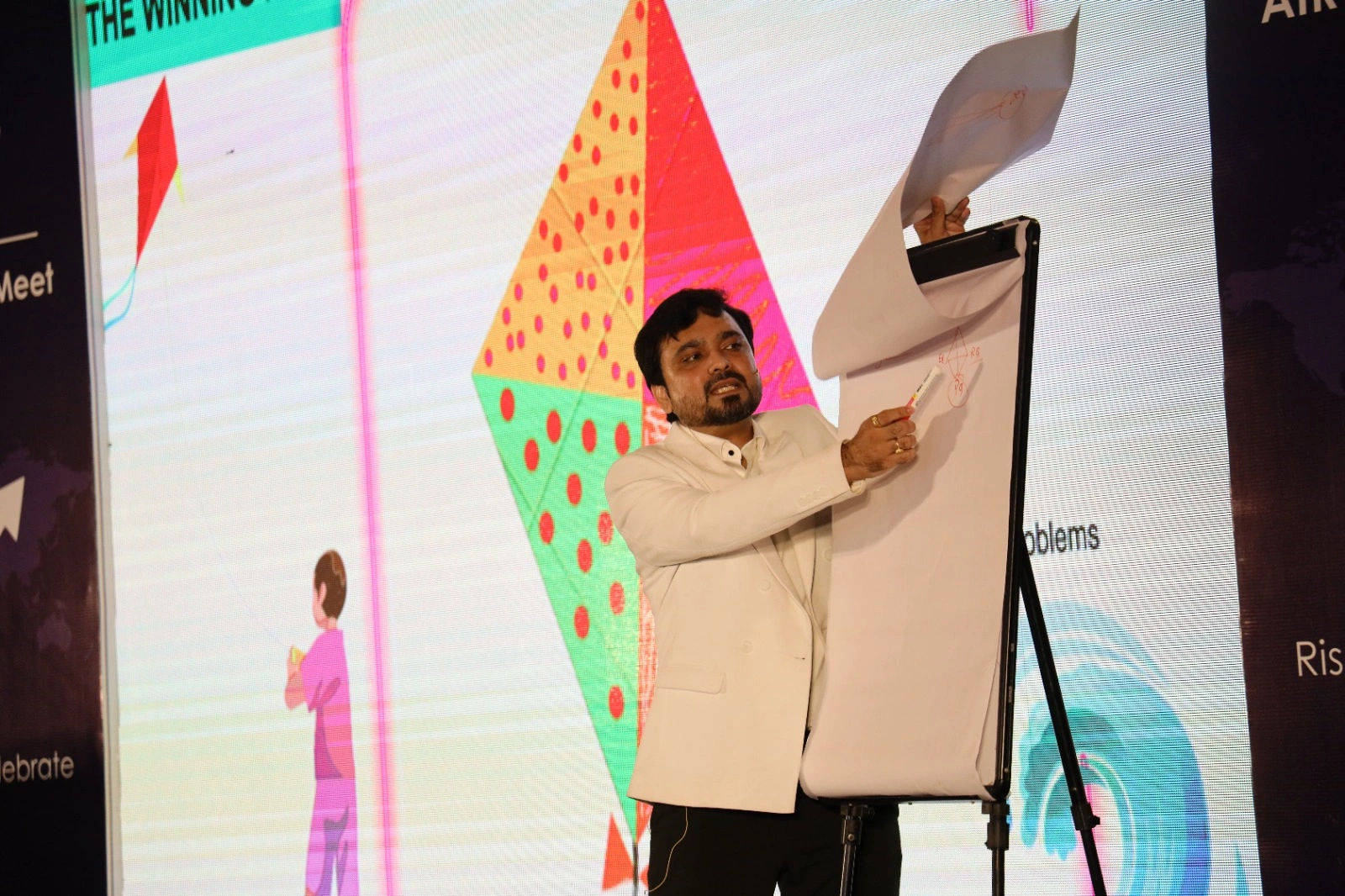
Every problem that lands on your desk at work is a disguised opportunity—but only if you know how to look at it the right way. I've trained thousands of professionals across Maharashtra and India, and what separates those who rise from those who stagnate is never talent. It's mindset. India's ₹1.5 trillion L&D market exists precisely because this skill—converting problems into opportunities—is the most in-demand leadership capability of our time.
TL;DR- Every workplace problem is a hidden opportunity waiting for someone with the right mindset to claim it
- Problems signal gaps—and whoever fills that gap with a solution becomes indispensable to their organization
- The obstacle-to-opportunity mindset is a trained skill, not a personality trait you're born with
- Indian professionals who master this shift outperform peers in promotions, recognition, and resilience
- Start small: convert one recurring problem in your team into a documented, ownable solution this week
Why Most Indian Professionals See Problems as Threats Instead of Opportunities
In most Indian offices, when a problem arrives, the first instinct is to report upward, complain to colleagues, or wait for someone senior to fix it. That's a natural response—but it's also the response that keeps people stuck at the same level for years. The professionals I train at Bajaj Auto, Infosys, and L&T who advance fastest are the ones who've trained themselves to pause at the moment a problem appears and ask a different question: where is the opportunity hiding in this? That pause is where careers are made.
The Mindset Shift: From Problem-Mode to Opportunity-Mode in Indian Workplaces
The opportunity mindset doesn't mean pretending problems don't exist or staying relentlessly positive. It means developing the ability to look at a challenge from two angles simultaneously: what is the actual problem here, and who can I become by solving it? Every crisis creates demand—demand for solutions, for leadership, for calm competence. McKinsey data tells us Indian managers spend 21 hours per week in meetings, 35% more than their US counterparts. Most of those hours are spent on problems. The professional who walks in with solutions owns those rooms.
How Problems Signal Where the Real Opportunities Are Hiding in Your Organization
Here's the thing: problems in organizations are essentially addresses of opportunity. Wherever there's friction, confusion, or a recurring breakdown, that's exactly where the organization needs help—and help is always rewarded. I've worked with teams at Tata Tech, Siemens, and Bosch where junior professionals built careers by simply owning a problem that everyone acknowledged but nobody wanted to touch. They didn't wait for permission. They mapped the problem, proposed a solution, implemented it, and documented the result. That's the complete formula.
| Mindset | Problem-Focused | Opportunity-Focused |
|---|---|---|
| First Reaction | Escalate, complain, avoid | Pause, map, propose solution |
| Question Asked | Who is responsible for this? | What opportunity does this create for me? |
| Career Impact | Stagnation, reputation as complainer | Visibility, promotions, trust |
| Team Perception | Adds to the noise | The go-to problem-solver |
| Long-Term Outcome | Problems keep recurring | Problems become owned processes |
The 3-Step Framework to Convert Any Workplace Problem into a Career Opportunity
My three-step framework is simple and repeatable. Step one: name the problem precisely—vague problems produce vague solutions. Step two: map the gap it creates—who is affected, what decision is being blocked, what cost is the organization paying? Step three: propose a specific, ownable solution and request responsibility for executing it. This isn't complex. It's methodical. I've taught this framework in programs for Mahindra, KPIT, and RBI teams, and it works across every industry and every level—from junior engineers to department heads.
Real Examples: How Indian Professionals Converted Problems into Promotions
The most promotable professionals I've encountered across 20+ years of training all share one story: they saw a problem everyone else was avoiding and turned it into their platform. At a Pune-based manufacturing firm, a young process engineer inherited a quality-control problem that had been escalated for months with no resolution. Instead of escalating further, she mapped it, built a three-week fix plan, and presented it to leadership. She was promoted within the year. The problem wasn't solved by brilliance—it was solved by someone being willing to own it completely.
The Marathi Wisdom Principle Behind Converting Adversity into Advantage
Maharashtra's business culture has a deep-rooted tradition of converting adversity into advantage—from agricultural communities who built irrigation systems from drought conditions to trading families who turned trade restrictions into parallel distribution networks. This same spirit runs through the professionals I train from Pune, Nashik, Aurangabad, and Mumbai. The Marathi professional who sees every challenge as an invitation to demonstrate capability carries an instinct that translates directly into modern corporate success. It's not stubbornness—it's strategic optimism.
Building a Problem-to-Opportunity Habit That Compounds Over Time in India 2026
Converting problems into opportunities isn't a one-time insight—it's a daily practice that compounds over time. Start small this week. Pick the one problem in your team that's been mentioned in at least three meetings with no owner assigned. Claim it. Map it. Propose a solution. The habit you build from this first small act will rewire how you instinctively respond to challenges across your entire career. India's corporate growth story—250+ unicorns, ₹1.5 trillion L&D market, AI transformation—is driven by professionals who see obstacles as invitations. Be one of them.
Book Avinash Chate for Your Next Event
TEDx speaker. 11+ yrs training Army, BRO, RBI, BARC, JSW. Available for keynotes, leadership training, team building & manager development at your office or event venue.
✅ Thanks! Avinash team will reach out within 24 hours.'}).catch(function(e){f.outerHTML='Something went wrong. WhatsApp +91 8793630001
'});return false;">Select ServiceKeynote / Motivational SpeakingLeadership Development TrainingTeam Building WorkshopManager DevelopmentEmployee TrainingOutbound TrainingBook Avinash Now →Or WhatsApp directly: +91 87936 30001
Related Articles by Avinash Chate
- Why Manufacturing Industry is Difficult to Start in India: 5 Key Challenges
- Ajit Agarkar's 21-Ball ODI Fifty Against Zimbabwe: The Silent Performer's Career Blueprint
- Clive Lloyd's 1975 World Cup Final Leadership: How Bold Captaincy Wins Under Pressure
Avinash Chate TEDx Speaker · Founder, The Future Corporate · 11+ yrs experience Avinash has trained Indian Army, BRO, RBI, BARC, JSW Steel and 1000+ corporate leaders across India. His work focuses on leadership development, communication skills, and behavioural training rooted in Indian values and modern business needs. |
Frequently Asked Questions
Why do most Indian professionals struggle to convert problems into opportunities?
Most Indian professionals struggle because they've been trained—in school, at home, and in early careers—to treat problems as threats to be avoided or escalated rather than opportunities to be owned. The instinct to report up or wait for authority to fix things is deeply ingrained. The shift to an opportunity mindset requires deliberate practice and a specific framework. Once that practice becomes a habit, the professional who developed it becomes the most valuable person in any room where problems are being discussed.
What is the 3-step framework to convert a workplace problem into an opportunity?
My three-step framework: step one—name the problem precisely, because vague problems produce vague solutions. Step two—map the gap it creates: who is affected, what decision is blocked, what cost is the organization paying? Step three—propose a specific, ownable solution and request responsibility for executing it. This framework is repeatable at any level, from junior professionals to department heads. I've used it in programs with Mahindra, KPIT, and RBI teams across Maharashtra and India with consistent results in visibility, promotion, and leadership recognition.
How does the problem-to-opportunity mindset help with career growth in India?
The problem-to-opportunity mindset is the most direct path to career acceleration in Indian corporates. When you consistently arrive with solutions rather than problems, you position yourself as a leader regardless of your job title. Leaders at every level want to work with people who reduce their cognitive load, not add to it. The professionals I've trained at Bajaj Auto, L&T, and Tata Tech who developed this habit saw faster promotions, better cross-functional relationships, and higher appraisal scores within one to two performance cycles.
Can anyone learn to convert problems into opportunities or is it a natural talent?
It is absolutely a learned skill, not a natural talent. I've trained professionals from every background, industry, and education level in Maharashtra and across India, and every one of them was capable of developing this mindset with the right framework and consistent practice. The professionals who appear naturally opportunity-focused didn't start that way—they practised the habit until it became automatic. Start with one problem per week: name it precisely, map the gap, propose one solution. Within three months, the habit becomes instinctive.
Avinash Chate services
Corporate Trainer in Maharashtra · Top Corporate Trainers in Maharashtra · Leadership Trainer in Maharashtra · Top Leadership Trainers in Maharashtra · Team Building Trainer in Maharashtra · Top Team Building Trainers in Maharashtra · Motivational Speaker in Maharashtra · Top Motivational Speakers in Maharashtra · All service locations
← Back to all articles · Book Avinash Chate
By Avinash Chate — Maharashtra’s #1 Corporate Trainer & Motivational Speaker. .