Corporate Trainer Kothrud Karve Nagar: Bridging Pune's Old and New
Kothrud and Karve Nagar companies face a unique tension: old Pune business culture meets Gen Z expectations. Avinash Chate bridges this gap with corporate training.
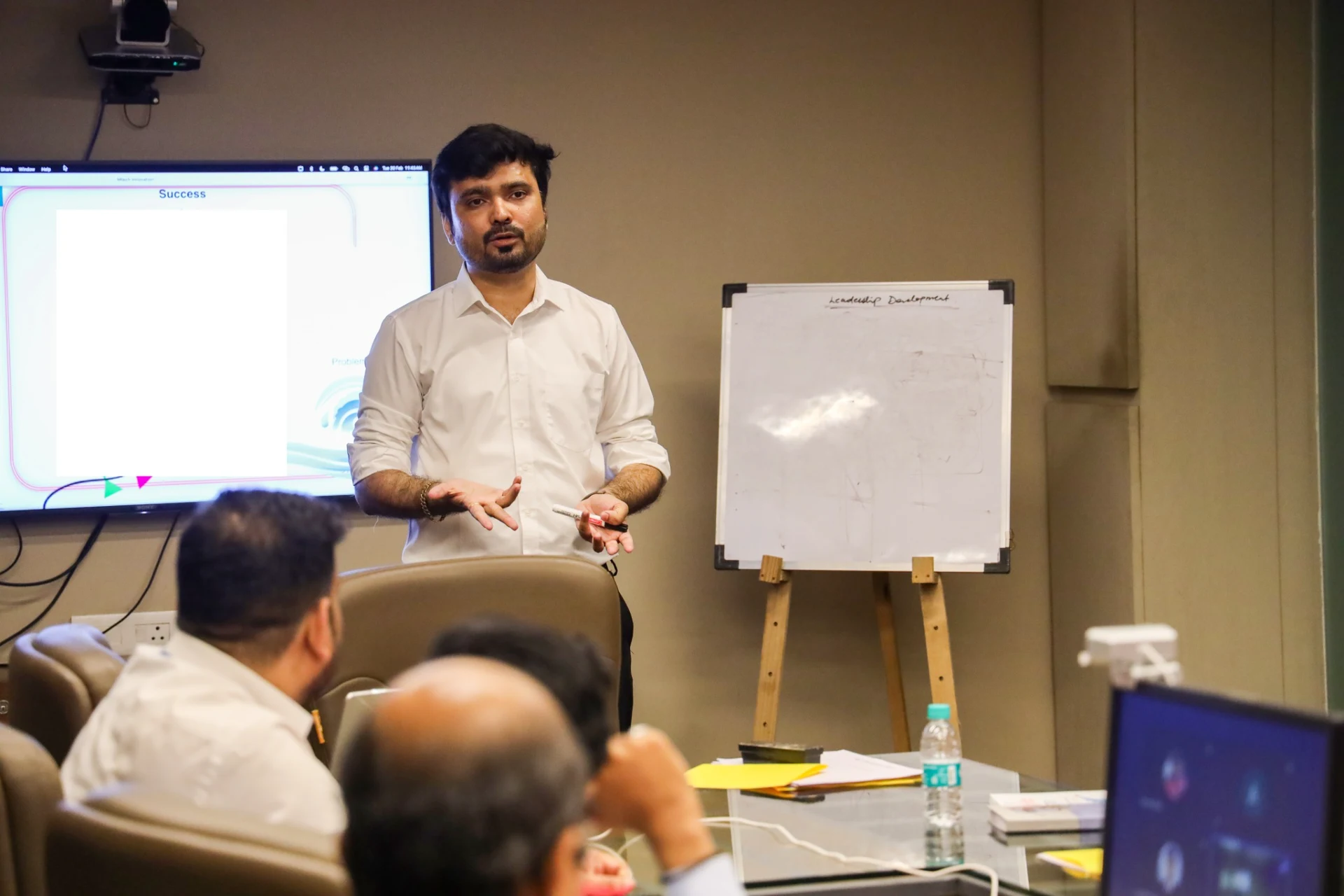
Kothrud and Karve Nagar are home to more than 4,000 MSMEs and family-run businesses — many built over two or three generations. Today, these same companies are hiring Gen Z employees with entirely different expectations of leadership, communication, and recognition. I work with companies in both areas to bridge that gap before it becomes a culture crisis.
TL;DR- Kothrud and Karve Nagar have a dense concentration of traditional Pune MSMEs and family businesses now hiring a Gen Z and millennial workforce with different expectations
- The tension is not generational conflict — it is a communication and expectation gap that can be designed around with the right training intervention
- Old Pune business culture values loyalty, hierarchy, and continuity — new workforce values transparency, recognition, and growth — both can coexist if leaders are trained to bridge the gap
- Avinash Chate conducts corporate training for companies in Kothrud and Karve Nagar covering leadership communication, ownership culture, and workforce engagement
- Companies that address the culture gap proactively retain better, promote faster, and build stronger teams than those that wait for attrition to force the conversation
Kothrud and Karve Nagar: The Old Pune Business Identity That Built Maharashtra's Middle Class
Kothrud and Karve Nagar represent something specific in Pune's economic geography. These are not startup corridors or tech parks — they are dense, deeply rooted residential-commercial zones where the same families have run their businesses for twenty, thirty, sometimes forty years. The typical Kothrud business is a second-generation trade or manufacturing operation, a CA's practice, a mid-sized retail firm, or an engineering supplier with relationships built entirely on trust and continuity. Karve Nagar, similarly, has a strong base of professional services, healthcare, education, and family-run operations that define the old Pune identity: disciplined, community-rooted, relationship-first. This is the culture these companies were built inside — and it produced real success for decades.
The New Workforce Arriving in Traditional Pune Companies: What Gen Z Actually Wants
What is changing is not the business model — it is the workforce entering it. The young professionals joining Kothrud and Karve Nagar companies in 2025 and 2026 have been shaped by entirely different formative experiences: digital-native education, gig economy expectations, social media transparency, and a strong personal narrative around growth and meaning at work. They are not disloyal by default — but they require things that traditional Pune business culture does not naturally provide: explicit feedback cycles, clearly articulated career paths, acknowledgement of individual contribution, and a management style that explains rather than simply directs. When these expectations meet a leadership culture built on hierarchy and implicit trust, friction is almost inevitable — not because anyone is wrong, but because the languages are different.
Why the Culture Gap in Kothrud and Karve Nagar Businesses Is Not a Generational Problem — It's a Design Problem
The framing that most Kothrud and Karve Nagar business owners bring to me is generational conflict: "today's youth don't want to work," or "they have no patience," or "they can't commit." These observations reflect a real experience — but they diagnose it incorrectly. The problem is not that the new workforce is fundamentally different from its predecessors in character. The problem is that the traditional systems of management communication were never designed for explicit articulation because they did not need to be — the culture transmitted expectations implicitly, through observation and social continuity. That transmission mechanism has broken down. It is a design problem, not a values problem. And design problems have solutions.
| Area of Culture | Old Pune Business Culture | New Workforce Expectation | The Bridge |
|---|---|---|---|
| Expectation-Setting | Implicit — observed over time | Explicit — written, discussed in onboarding | Create visible performance standards and explain them from day one |
| Recognition | Assumed in continued employment | Specific, timely, verbal acknowledgement | Build regular check-ins with structured recognition language |
| Decision Authority | Position is sufficient justification | Rationale-driven, transparent reasoning | Train managers to explain the why behind key decisions |
| Career Growth | Earned through loyalty over time | Clearly defined milestones and timelines | Create explicit growth maps for key roles within first 90 days |
What Corporate Training for Old Pune Business Culture Actually Looks Like in Practice
When I run corporate training for companies in Kothrud and Karve Nagar, the work is structured differently from training I do at multinational or tech company contexts. The starting point is always a diagnosis: what are the specific friction points between the leadership culture and the workforce experience? This is done through structured conversations with business owners, managers, and team members separately — not as HR feedback, but as a training design input. From there, the training is built around the specific communication gaps: how the owner communicates expectations, how managers give feedback, how performance is recognized, and how the company's story is told to the team. The goal is not to make traditional companies look like startups. It is to give the existing culture a communication infrastructure that the new workforce can actually read.
Three Communication Patterns That Create Friction Between Old Pune Owners and New Workforce
There are three specific communication patterns I encounter most frequently in traditional Pune companies — including across Kothrud and Karve Nagar — that create the largest friction with new workforce expectations. First, implicit expectation: the owner knows exactly what good looks like, but has never made it explicit because in the old culture, team members observed and absorbed it over time. The new workforce has no patience for implicit standards they cannot see. Second, recognition silence: traditional culture treats doing your job well as the baseline, not as something requiring acknowledgement. The new workforce interprets silence as indifference and disengages. Third, authority without rationale: decisions are communicated without context because the old culture respected position as sufficient justification. The new workforce wants to understand the reasoning — and when they don't get it, they assume incompetence or arbitrariness.
How Avinash Chate's Training Approach Is Built Specifically for Traditional Pune Company Contexts
My training approach for traditional Pune company contexts — including the companies I work with in Kothrud and Karve Nagar — is built on three principles. First, I never ask business owners to abandon the culture they built — I ask them to translate it. The values of loyalty, discipline, and continuity that built these businesses are assets, not liabilities. They need a vocabulary the new workforce can receive. Second, I work with managers as the primary change layer — not owners and not team members. Managers are the translation layer, and they are almost always undertrained in traditional businesses. Third, I build very specific behavioural scripts for the most common friction moments: the new hire's first 30 days, the performance conversation, the mistake and correction sequence, and the recognition and growth conversation. These are the four moments that determine whether a new workforce member stays or leaves.
The Business Case for Bridging Old and New Culture in Kothrud and Karve Nagar in 2026
The business case for bridging old and new culture in Kothrud and Karve Nagar in 2026 is straightforward. Attrition in small and mid-sized Pune companies is running at 20-30% annually in many sectors — and the cost of replacing a single mid-level professional, when you account for recruitment, onboarding, and the lost institutional knowledge, is conservatively 50-75% of annual salary. A company with 40 employees losing 8-10 per year is spending significant capital on a preventable problem. The investment in structured corporate training — one that specifically addresses the culture gap — pays for itself within two to three attrition cycles avoided. Beyond cost, the companies in Kothrud and Karve Nagar that build a reputation as good employers among the local professional community will have a structural advantage in hiring: the best candidates in a 5-km radius choose the companies where people stay.
Book Avinash Chate for Your Next Event
TEDx speaker. 11+ yrs training Army, BRO, RBI, BARC, JSW. Available for keynotes, leadership training, team building & manager development at your office or event venue.
✅ Thanks! Avinash team will reach out within 24 hours.'}).catch(function(e){f.outerHTML='Something went wrong. WhatsApp +91 8793630001
'});return false;">Select ServiceKeynote / Motivational SpeakingLeadership Development TrainingTeam Building WorkshopManager DevelopmentEmployee TrainingOutbound TrainingBook Avinash Now →Or WhatsApp directly: +91 87936 30001
Related Articles by Avinash Chate
- Karoly Takacs: Lost His Right Hand in 1938, Won Olympic Gold in 1948 With His Left
- One Thank You That Says It All: Inside the Sahakari Bank Majalgaon Session
- Why Your Company Needs Video Content Now: The Business Growth Lesson from MBS Session
Avinash Chate TEDx Speaker · Founder, The Future Corporate · 11+ yrs experience Avinash has trained Indian Army, BRO, RBI, BARC, JSW Steel and 1000+ corporate leaders across India. His work focuses on leadership development, communication skills, and behavioural training rooted in Indian values and modern business needs. |
Frequently Asked Questions
What specific corporate training does Avinash Chate offer for companies in Kothrud and Karve Nagar?
Avinash Chate offers corporate training for companies in Kothrud and Karve Nagar that covers four core areas: leadership communication for business owners and senior managers, ownership and accountability culture building, workforce engagement and retention, and manager effectiveness — specifically the translation layer between traditional business leadership and new workforce expectations. The training is always preceded by a diagnostic conversation to identify the specific friction points in that company's context, and the content is built around those specific gaps rather than delivered as a generic program. Companies range from family-run manufacturing and trading operations to professional service firms and mid-sized retail businesses. Training is available as half-day, full-day, or multi-session formats depending on the company's size and specific needs.
How does old Pune business culture differ from what new workforce employees expect?
Old Pune business culture — particularly in Kothrud, Karve Nagar, and similar traditional residential-commercial zones — is built on three implicit values: loyalty to the organisation above explicit reward, hierarchy as sufficient justification for decisions, and the expectation that good performance is a baseline rather than something requiring acknowledgement. New workforce employees — primarily millennials and Gen Z — have been shaped by a different set of expectations: they require explicit performance standards they can see and measure themselves against, they want transparency in decision-making, and they expect regular recognition of individual contribution as a condition of sustained engagement. Neither set of values is wrong — but without a translation layer between them, they create predictable friction in hiring, onboarding, and retention.
Why do traditional Pune family businesses struggle with Gen Z retention, and what is the fix?
Traditional Pune family businesses struggle with Gen Z retention primarily because of three specific communication failures that are invisible to the business owner: first, expectations are never made explicit — the new hire does not know what good looks like until they do something wrong; second, there is no structured recognition of individual contribution, which the new workforce interprets as indifference and begins planning their exit within 90 days; third, career growth is framed as a function of time rather than demonstrated competence, which creates a ceiling the new workforce hits very quickly. The fix is not cultural capitulation — it is communication design. Avinash Chate's training for traditional Pune companies focuses specifically on building the communication systems — onboarding conversations, feedback cycles, recognition patterns, growth conversations — that the new workforce needs to commit to an organisation.
How can a Kothrud or Karve Nagar company contact Avinash Chate for corporate training?
Companies in Kothrud, Karve Nagar, and the broader Pune region can contact Avinash Chate directly through the contact form at avinashchate.com or by reaching out through the enquiry channels listed on the site. Avinash personally reviews all corporate training requests and typically schedules a diagnostic conversation before proposing a training design — because every company's culture gap looks different and a standard program rarely addresses the actual friction points. Companies that have contacted through the site have typically received a response within 24-48 hours and been booked for a first diagnostic conversation within one to two weeks. There is no minimum team size for training engagement — Avinash works with companies as small as 10-15 employees and as large as several hundred.
Avinash Chate services
Corporate Trainer in Pune · Top Corporate Trainers in Pune · Leadership Trainer in Pune · Top Leadership Trainers in Pune · Team Building Trainer in Pune · Top Team Building Trainers in Pune · Motivational Speaker in Pune · Top Motivational Speakers in Maharashtra · All service locations
← Back to all articles · Book Avinash Chate
By Avinash Chate — Maharashtra’s #1 Corporate Trainer & Motivational Speaker. .