Developing Leaders at Every Level: Workplace Leadership India 2026
Leadership isn't a title reserved for the top floor. India's highest-performing companies build leaders at every level — here's the framework that empowers your entire workforce to lead from where they stand.
India's ₹1.5 trillion L&D market reflects one truth that every HR leader and CEO already knows: you can't scale a company faster than you scale your leaders. What most organizations don't realize is that the biggest growth constraint isn't funding or strategy — it's the quality of leadership at every level of the organization. Here's how to fix that.
TL;DR- Leadership development can't be reserved for the top — India's fastest-growing companies build leaders at every level of their organization
- The biggest bottleneck to organizational growth in India isn't funding or strategy — it's leadership capacity below the C-suite
- Multi-level leadership development reduces attrition, accelerates execution, and builds organizational resilience
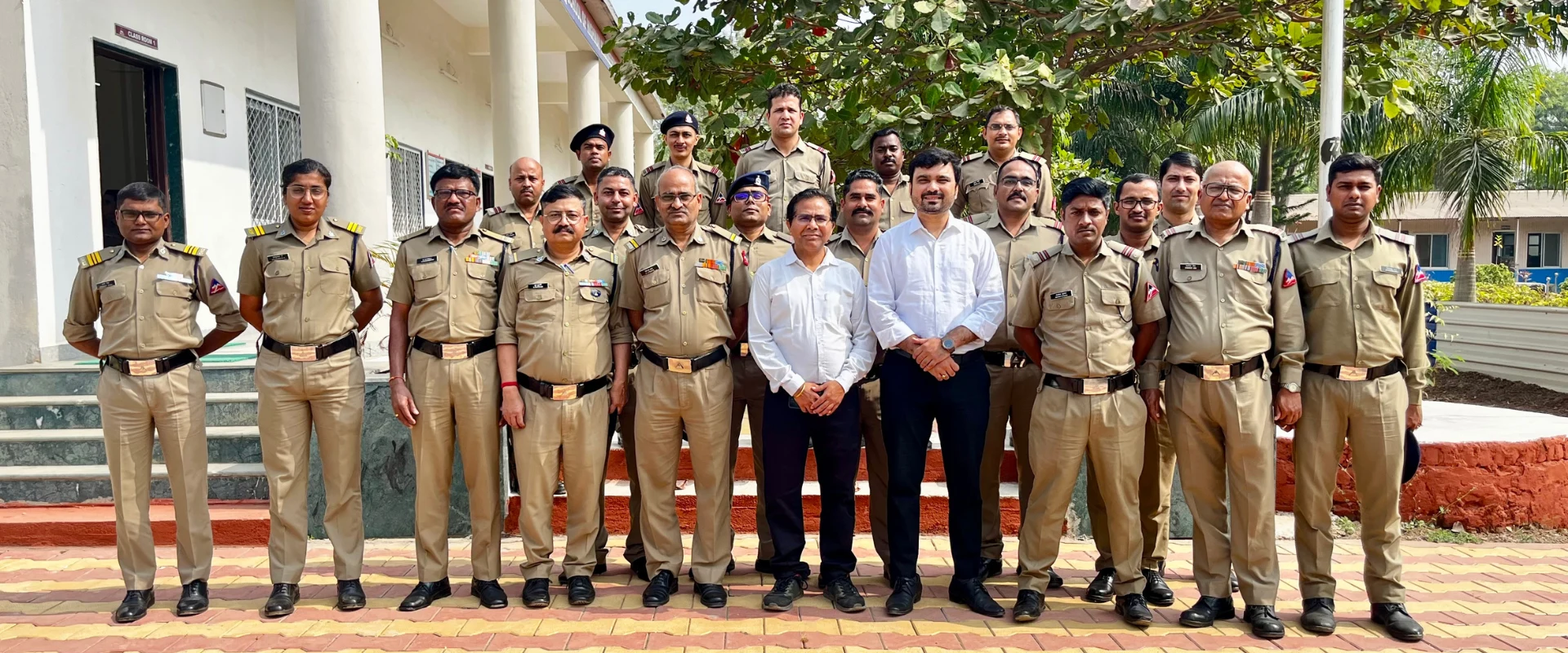
- Avinash Chate's workplace leadership programs at Bajaj Auto, Tata Tech, and Siemens develop leaders from shop floor to boardroom
- You don't need to wait for a formal program to start developing leadership in your team — start with these five practices today
Why Developing Leaders at Every Level Is India's Biggest Competitive Advantage
India has over 250 unicorns and a corporate sector growing faster than almost anywhere in the world. But here's the challenge: companies scale structures and headcount, and then discover their leadership bench isn't deep enough to support the growth. The organizations that consistently outperform their peers — whether it's a manufacturing giant like Bajaj Auto or a tech firm like KPIT — all share one trait: they don't wait for talent to rise to the top before developing it. They develop leadership at every level, every year, systematically. That's the real competitive advantage.
What 'Workplace Leadership in Action' Actually Looks Like at India's Top Companies
When I train at organizations across India, I ask senior leaders one question: 'Who in your organization is ready to step into your role tomorrow?' In most companies, the honest answer is uncomfortable. It's not because the talent isn't there — it's because they haven't been developed. Workplace leadership in action means giving junior managers real accountability and coaching. It means floor supervisors who run team huddles with empathy and clarity. It means senior engineers at Siemens or L&T who mentor their teams on both technical mastery and professional behavior. Leadership isn't an event — it's what happens in every conversation, every morning meeting, every project handoff.
| Career Level | Key Leadership Focus | Development Priority |
|---|---|---|
| Fresher / Junior | Ownership, communication, work ethic | Professional behavior foundation |
| Team Lead / Supervisor | Delegation, coaching, conflict resolution | People management skills |
| Middle Manager | Strategy, cross-functional influence | Business acumen and impact |
| Senior Leader | Vision, culture, talent development | Organizational leadership |
| All Levels | Accountability, honest communication | Behavioral consistency |
The Three Levels Where Leadership Development Breaks Down in Indian Organizations
In most Indian organizations, leadership development breaks down at three specific points. First, frontline employees become team leads without any leadership training — they're technically promoted but behaviorally unprepared. Second, mid-managers get stuck in execution mode with no strategic development, creating a talent plateau that frustrates both them and their seniors. Third, senior managers get coaching only when there's a performance problem rather than proactively. The organizations that close these three gaps consistently outperform those that don't on every metric — output, attrition, and innovation.
How to Build a Leadership Pipeline From Fresher to Senior Manager
Building a leadership pipeline isn't a single training event — it's a structured development architecture. Here's what I recommend for Indian organizations: at the fresher and junior level, focus on foundational professional behaviors, communication, and ownership mindset. At the team lead and supervisor level, focus on coaching skills, delegation, and conflict resolution. At the manager level, focus on strategic thinking, cross-functional influence, and performance management. At the senior level, focus on vision communication, organizational culture, and talent development. Each level needs different content — but the through-line is the same: build people who lead, not just people who manage.
The Multi-Level Leadership Framework That Works for Indian Manufacturing and Tech
The most effective multi-level leadership programs I've delivered in India combine classroom learning with on-the-job practice assignments and structured peer feedback. This model works whether you're running a 500-person manufacturing plant or a 50-person tech startup. At Bosch India, we ran a year-long leadership development program across three levels simultaneously. The result: key project delivery timelines improved, and voluntary attrition in trained cohorts dropped compared to a control group. The investment in leadership at every level consistently generates returns that are multiples of the training cost.
How Avinash Chate's Training Develops Leaders at Bajaj Auto, Siemens, and L&T
At Bajaj Auto in Pune, our multi-level leadership program starts at the shop floor and goes up to plant management. What makes it work is that the content at each level connects to real business challenges — it's not generic. Supervisors learn how to run shift reviews that surface problems early instead of hiding them. Managers learn how to do monthly one-on-ones that actually develop their teams rather than just reviewing KPIs. Senior leaders learn how to create an environment where bad news travels up fast, so course corrections happen before problems become crises. At Siemens and L&T, similar structured programs have become embedded parts of the annual talent development calendar.
Five Practices Every Indian Manager Can Use to Start Developing Leaders This Week
You don't need to wait for a formal L&D budget to start developing leaders in your team. Here are five things you can do this week. One: delegate a meaningful project to a junior team member with a clear goal and support structure, not just a task handoff. Two: run a 15-minute weekly team check-in focused on learning, not just status. Three: identify one high-potential person on your team and invest one hour per month in deliberate coaching. Four: give structured feedback that includes both what went well and what to do differently — not just problem-spotting. Five: celebrate leadership behaviors publicly — not just results. When you reward how people lead, you build the culture that scales.
Book Avinash Chate for Your Next Event
TEDx speaker. 11+ yrs training Army, BRO, RBI, BARC, JSW. Available for keynotes, leadership training, team building & manager development at your office or event venue.
✅ Thanks! Avinash team will reach out within 24 hours.'}).catch(function(e){f.outerHTML='Something went wrong. WhatsApp +91 8793630001
'});return false;">Select ServiceKeynote / Motivational SpeakingLeadership Development TrainingTeam Building WorkshopManager DevelopmentEmployee TrainingOutbound TrainingBook Avinash Now →Or WhatsApp directly: +91 87936 30001
Related Articles by Avinash Chate
- High-Energy Motivational Session for Corporate Success India 2026
- Best Motivational Speaker Phaltan: Cummins Mahindra Sanyo 2026
- Communication Skills Training: Improve Team Dynamics India 2026
Avinash Chate TEDx Speaker · Founder, The Future Corporate · 11+ yrs experience Avinash has trained Indian Army, BRO, RBI, BARC, JSW Steel and 1000+ corporate leaders across India. His work focuses on leadership development, communication skills, and behavioural training rooted in Indian values and modern business needs. |
Frequently Asked Questions
Why is it important to develop leaders at every level in Indian organizations?
Organizations that develop leaders at every level grow faster, retain talent better, and execute with more consistency than those that concentrate leadership development only at the top. In India's competitive talent market, the ability to promote from within depends entirely on whether you've built leadership capability below the senior level. Companies with deep leadership pipelines spend less on external hiring, lose fewer high-performers to competitors, and adapt more quickly to market changes. Leadership development at every level isn't a cost — it's the highest-return people investment a growing Indian organization can make.
What does multi-level leadership development look like in practice for Indian companies?
In practice, multi-level leadership development means different content for different career stages, all running simultaneously. Frontline employees receive training in professional ownership, communication, and team contribution. Team leads and supervisors receive training in delegation, coaching, and conflict resolution. Middle managers develop strategic thinking and cross-functional collaboration skills. Senior leaders work on vision communication and organizational culture. The common thread across all levels is behavioral development — building the specific behaviors that make each role more effective. Avinash Chate's programs at organizations like Bajaj Auto and Bosch India run across these levels concurrently, creating organizational alignment from the ground up.
How do Indian companies like Bajaj Auto and Tata Tech build leadership at every level?
Bajaj Auto runs a structured multi-level leadership program that starts at shop floor supervision and extends through plant management. Supervisors learn how to run effective shift reviews that surface problems early. Managers learn coaching-focused one-on-ones that develop team members rather than just monitor them. Senior leaders focus on creating psychological safety so problems are reported upward quickly. Tata Tech uses a similar model in their engineering functions, where team leads receive quarterly development interventions focused on real project challenges. The key at both organizations is that leadership development is continuous, role-specific, and connected to actual business outcomes — not a once-a-year offsite.
How can a manager start developing leadership in their team without a formal HR program?
Start with five specific actions this week: delegate a meaningful project to a junior team member with a clear goal and coaching support; run a weekly 15-minute learning check-in with your team; identify one high-potential person and schedule a monthly coaching hour with them; give structured behavioral feedback after every significant project or event; and publicly celebrate leadership behaviors, not just results. These actions don't require budget approval or HR sign-off — they require only the decision to invest in your people's growth every week. That decision, compounded over months and years, is how India's best leaders build the next generation of leaders around them.
Avinash Chate services
Corporate Trainer in Maharashtra · Top Corporate Trainers in Maharashtra · Leadership Trainer in Maharashtra · Top Leadership Trainers in Maharashtra · Team Building Trainer in Maharashtra · Top Team Building Trainers in Maharashtra · Motivational Speaker in Maharashtra · Top Motivational Speakers in Maharashtra · All service locations
← Back to all articles · Book Avinash Chate
By Avinash Chate — Maharashtra’s #1 Corporate Trainer & Motivational Speaker. .