Discipline Beats Talent: Why the Disciplined Always Win
Talent gets you noticed, but discipline gets you the win. Here is why I rank discipline as the number-one value in my book The Winning Edge.
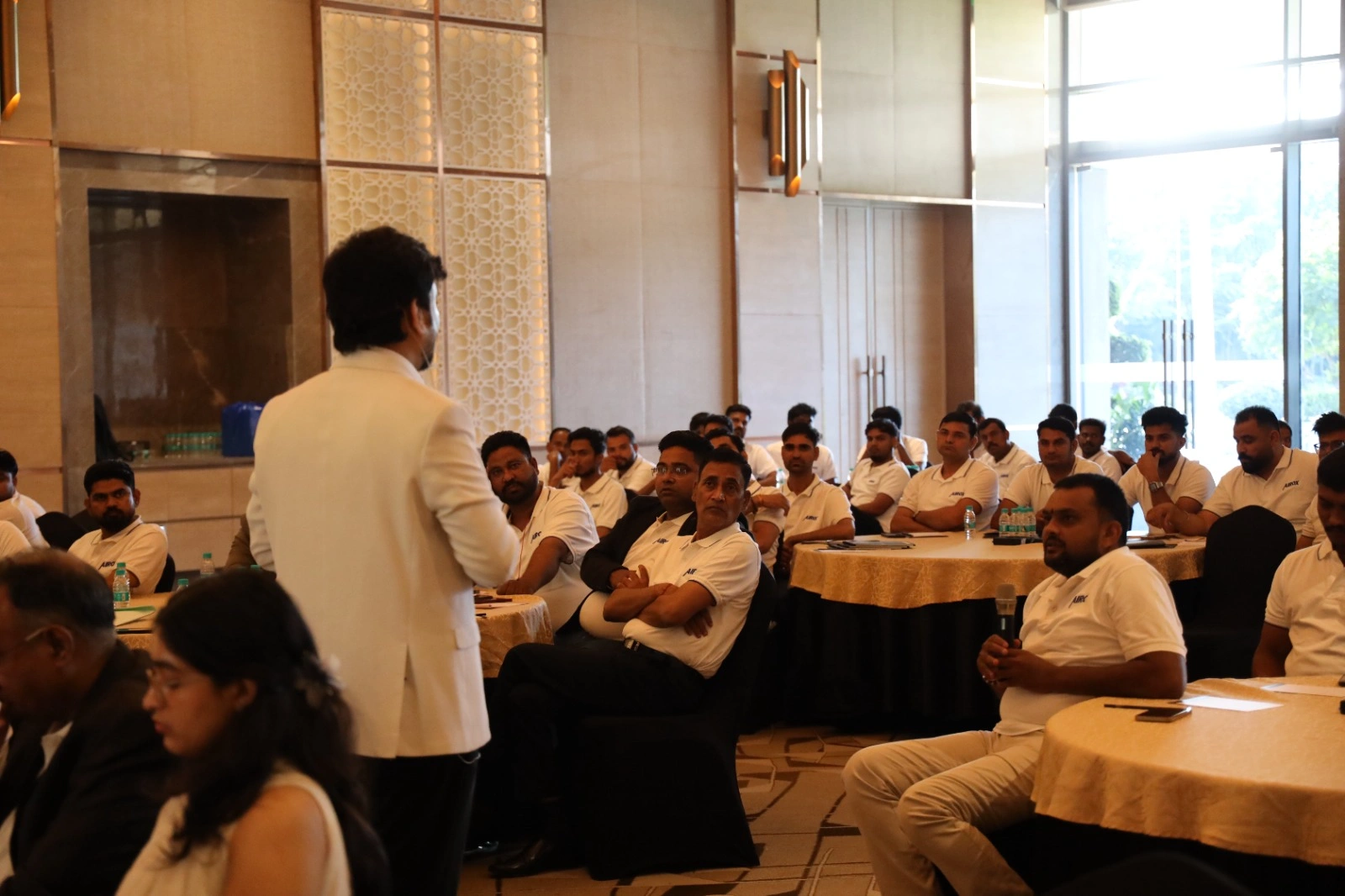
Early in my career I believed, like most people do, that talent decides who wins. I watched gifted colleagues with brilliant minds and natural charm, and I assumed they were destined to rise. Then I watched many of them stall, while quieter, less obviously talented people kept climbing. It took me years to understand the simple truth at the centre of my book, The Winning Edge, The Champion Mindset: talent gets you to the start line, but discipline carries you across the finish.
This is not a feel-good slogan. In my workshops with managers, business owners and students across Maharashtra, I see the same pattern again and again. The most disciplined person in the room is rarely the most talented, yet over twelve or twenty-four months they pull away from everyone else. Discipline compounds. Talent, left alone, simply fades.
In this article I want to show you why I place discipline at the very top of my "toward" values, and how you can actually build it, not just admire it from a distance.
Why Talent Is Overrated and Discipline Is Underrated
Talent is loud. It shows up in the first meeting, the first presentation, the first quarter. That is exactly why it fools us. We mistake a fast start for a guaranteed finish. But the people who win consistently are not the ones who started fastest, they are the ones who refused to stop.
Consider M.S. Dhoni. The world remembers the helicopter shots and the calm under pressure, but behind that was a structured, almost machine-like discipline in how he prepared, recovered and led. As I tell my audiences, drawing on his own spirit:
"What does not kill you makes you strong." — M.S. Dhoni
That mindset is not talent. It is a daily decision to keep going when it would be easier to quit. Discipline turns ordinary ability into an extraordinary result, because it is repeated thousands of times when nobody is clapping.
The Champion vs the Loser
In The Winning Edge I write that the real difference between a champion and a loser is not skill, it is how each one deals with pain. The loser runs from discomfort. The champion sits with it, learns from it, and uses it. I capture this in a simple formula I share in every leadership session:
- Pain + Reflection = Success. Pain alone makes you bitter. Pain plus honest reflection makes you better.
- Discipline is what keeps you in the room long enough to reflect, instead of escaping into distraction.
- Every champion you admire has simply out-disciplined their own desire to give up.
Why I Rank Discipline as the Top Toward Value
In my framework I ask professionals to separate their "toward" values, the things that pull them forward, from their "away" values, the things they avoid. The order matters enormously. Whatever sits at the top of your toward list quietly governs every other choice you make.
I deliberately move discipline to the top of that list, above comfort, above approval, even above motivation. Why? Because motivation is a mood, and moods do not show up on demand. Discipline shows up whether you feel like it or not. The other values I hold dear, contribution, humility, responsibility, optimism, learning, patience, all of them depend on discipline to be expressed in real life.
A Lesson From Muktangan
I learned this most powerfully from the work of the Muktangan rehabilitation centre in Pune. Their approach to helping people rebuild their lives does not begin with grand philosophy. It begins with discipline, the daily, unglamorous structure of waking, working and routine. They teach discipline first, because without it no other change can hold.
That stayed with me. If discipline is the foundation strong enough to rebuild a broken life, it is certainly strong enough to build a winning career. As I often remind my clients:
"Life is like a game of chess. To win you have to make a move." — Allan Rufus
Discipline is what makes you keep making the move, day after day, long after the initial excitement is gone.
Discipline, not raw talent, is the value I place at the top of every professional's toward list.How to Actually Build Discipline (Not Just Admire It)
Most people treat discipline as a personality trait they either have or do not. I disagree. Discipline is a built skill, and in my programs I teach it as a system. Here is the practical scaffolding I use.
1. Turn Actions Into Habits
Discipline becomes effortless only when it becomes automatic. The goal is to practise an action until you no longer have to negotiate with yourself about it. I recommend my participants read deeply on this: The Power of Habit by Charles Duhigg, The Professional by Subroto Bagchi, Chanakya Daily Motivation by Radhakrishnan Pillai, and the timeless Thirukkural. These are not light reads, they are blueprints for a disciplined life.
2. Know Your Environment and Triggers
You cannot out-willpower a bad environment forever. So I teach a simple three-step rule: anticipate, avoid, adjust. Anticipate the situations that break your discipline, avoid the ones you can, and adjust the ones you cannot. Discipline is far easier when your surroundings are doing half the work for you.
3. Treat Time Management as Mood Management
One of the lines from my workshops that professionals quote back to me most is this:
Time management is mood management.
When you control your time, you control your mood, and when you control your mood, discipline stops feeling like a fight. A disciplined calendar protects you from your own worst impulses far better than a burst of inspiration ever could.
4. Use the Master System
I borrow the idea of a Master System from Tony Robbins, the internal operating system of beliefs, values and rules that drives our behaviour. If your behaviour keeps drifting from your plan, the problem is usually upstream, in your Master System. Align that, and discipline flows downstream naturally instead of being forced.
Discipline, the Body, and Emotional Control
Discipline is not only a mental act. In The Winning Edge I insist on maintaining balance between Mind, Body and Emotions, because these three are interdependent. When one is neglected, the others suffer. Stress that you fail to manage does not stay in your head, it leaks into your body as psychosomatic problems and shows up at work as avoidable errors.
Self-Awareness Comes First
This is why I link discipline so tightly to emotional intelligence. Self-awareness is the foundation of EQ, and I encourage every professional I train to meditate, even for a few minutes a day. Meditation is discipline turned inward. It is the practice of staying present with your own mind instead of being dragged around by it.
Hobbies as a Healthy Addiction
Discipline does not mean a joyless life. I often share the example of the late Dr Anil Awachat, affectionately known as Baba, who used hobbies as a healthy addiction to beat boredom. A disciplined person channels their energy into something that builds them, rather than letting boredom pull them into habits that drain them. Discipline and joy are not enemies, they are partners.
In my corporate sessions I treat discipline as a built skill, scaffolded by habits, environment and follow-up.The Daily Follow-Up: Where Discipline Lives or Dies
Plans are easy. Follow-up is where almost everyone fails. The disciplined professional is simply the one who follows up with themselves consistently, while everyone else forgets their resolutions by the second week.
The tool I recommend is deceptively simple: a short set of daily questions you answer honestly every single day. Did I move toward my goals today? Where did I let discomfort win? What will I do differently tomorrow? This daily audit is what keeps discipline alive long after motivation has gone quiet.
- Phase out your goals into stages and pace yourself, beginning with the end in mind.
- Build habits until the right action is automatic.
- Manage your environment so discipline is the path of least resistance.
- Follow up daily with honest questions, and adjust.
Bring this to your team. I run discipline-focused corporate training and keynotes for companies across Pune, Mumbai and all of Maharashtra.
Book a session · Explore corporate training programs
Frequently Asked Questions
Does discipline really beat talent?
In my experience training thousands of Indian professionals, yes. Talent gives you a fast start, but discipline is what compounds over months and years. The most disciplined person in the room consistently pulls ahead of the most talented one, because discipline keeps working when motivation and talent alone go quiet.
How can a working professional build self-discipline?
I teach discipline as a built skill, not a personality trait. Turn key actions into automatic habits, manage your environment using anticipate, avoid and adjust, treat time management as mood management, and follow up daily with a short set of honest questions. Done consistently, these make discipline feel natural rather than forced.
Why do you rank discipline as the top value?
Because every other value, contribution, humility, responsibility, optimism, learning and patience, depends on discipline to be expressed in real life. Motivation is just a mood, but discipline shows up whether you feel like it or not. I learned this from the Muktangan centre in Pune, where discipline is taught first because no other change can hold without it.
Can corporate teams be trained in discipline?
Absolutely. Discipline at the team level is about shared habits, clear environments and consistent follow-up. In my corporate training across Pune, Mumbai and Maharashtra, I give teams a practical system for this, drawn directly from the champion mindset framework in The Winning Edge.
If discipline is the edge your team has been missing, I would love to help you build it. Reach out through my contact page, explore how I work through my corporate training programs, or learn more about my journey on my about page. This article is adapted from my book The Winning Edge, The Champion Mindset.
Related Articles by Avinash Chate
- Recession मध्ये Hyundai ने cars परत घेऊनही फायदा कसा कमावला
- Virender Sehwag Mindset That Most Corporate Professionals Fear
- Ajit Agarkar's 21-Ball ODI Fifty Against Zimbabwe: The Silent Performer's Career Blueprint
| AC | Avinash ChateIndia's Leading Corporate Trainer | TEDx Speaker | Author With 80+ organizations trained including RBI, JSW Steels, and Ferrero, Avinash Chate delivers high-impact corporate training across India. Creator of the KITE Leadership Framework and bestselling author of "The Winning Edge." Website YouTube |
Avinash Chate services
Corporate Trainer in Maharashtra · Top Corporate Trainers in Maharashtra · Leadership Trainer in Maharashtra · Top Leadership Trainers in Maharashtra · Motivational Speaker in Maharashtra · Top Motivational Speakers in Maharashtra · All service locations
← Back to all articles · Book Avinash Chate
By Avinash Chate — Maharashtra’s #1 Corporate Trainer & Motivational Speaker. .