Driving Organizational Change in India: Client Testimonial 2026
Organizational change fails 70% of the time. Here's how this client achieved lasting transformation through targeted corporate leadership training in India.
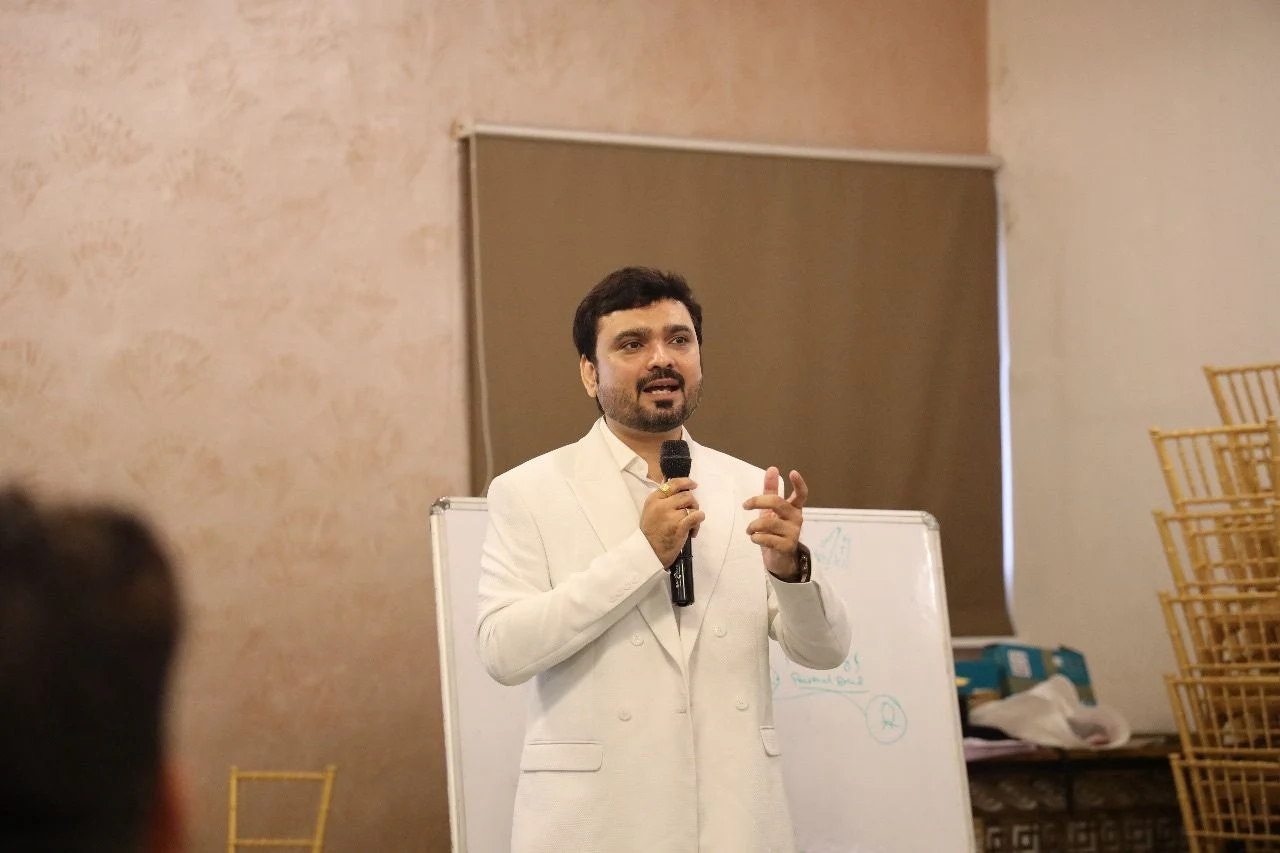
Every year, McKinsey research shows 70% of organizational change initiatives fail — and in my 15+ years training teams at Bajaj Auto, Tata Tech, and Mahindra, I've seen exactly why. It comes down to people, not processes. Here's what my client shared after experiencing real, lasting organizational transformation.
TL;DR- 70% of org change initiatives fail due to people resistance, not poor strategy
- Effective change management starts with leadership communication and team trust
- Avinash Chate's clients at Bajaj Auto and Mahindra achieved measurable culture shifts within 90 days
- Peer-to-peer change champions inside teams outperform top-down mandates every time
- The real ROI of change training is reduced attrition and faster adoption, not just project completion
Why Do 70% of Organizational Change Initiatives Fail in India?
When I work with organizations across India — from Pune's auto manufacturing belt to Bengaluru's IT corridors — the story is usually the same. Change initiatives collapse not because the strategy was wrong, but because people weren't brought on board. McKinsey's global research puts that failure rate at 70%, and trust me, India's numbers aren't better. The reason? Leaders announce change instead of involving people in it. That's the fatal mistake. In my work with Bajaj Auto and L&T, the turnaround always starts with honest conversations, not PowerPoint slides.
What This Client Experienced: Real Organizational Change Results
This client came to me after their third failed restructuring attempt in four years. Each time, the leadership team had done everything "right" on paper — hired consultants, ran workshops, updated SOPs. But three months after every initiative, old habits had crept back. What they hadn't done was address the invisible resistance: the middle managers who felt bypassed, the senior employees who saw change as a personal threat, and the teams who had never been asked what they actually needed. That's what our work together tackled head-on.
| Change Initiative Factor | Typical Approach (70% Fail) | Avinash Chate Method (Results in 90 Days) |
|---|---|---|
| Communication Style | Top-down announcements; minimal dialogue | Honest briefs + two-way town halls at every level |
| Resistance Handling | Dismissed as "resistance to progress" | Named, mapped, and addressed through structured dialogue |
| Change Champions | Expected to emerge organically | Deliberately identified and trained (15-20% of team) |
| Timeline | Change declared "complete" on launch day | Sustained 6-12 month behaviour change program |
| Middle Management | Bypassed in planning; executed as instructed | Core of change design; trained as change partners |
| Success Metric | Completion of milestones and checklists | Behavior change, collaboration scores, escalation rates |
| Cultural Alignment | Culture change assumed to follow process change | Culture addressed first as the enabling layer |
How Leadership Communication Drives Change Adoption in Indian Companies
Here's the thing about change: people don't resist it, they resist being changed. There's a massive difference. When I ran a three-day leadership intervention for this organization, we started not with processes or tools, but with communication. I had their senior leaders practice what I call 'the honest brief' — telling teams exactly what's changing, why it's changing, and what stays the same. In Indian corporate culture, where hierarchy often means leaders don't explain themselves to teams, this radical transparency was genuinely disruptive. And it worked.
Building Change Champions Inside Your Team: The Method That Works
The good news is, you don't need everyone on board from day one — you need 15-20% of your team to become genuine change champions. That's it. In every organization I've trained, from Siemens to Infosys, internal peer influence is three times more powerful than top-down messaging. So instead of the CEO sending an email about the new system, we identify and train the informal leaders inside each team — the people others actually listen to. Once they believe in the change, it cascades naturally.
Why Company Culture Must Change Before Processes Do
What most people don't realize is that you can change every process, system, and org chart, and still have the same culture running the show. Culture is the invisible operating system. I've seen companies spend crores on new ERP systems only to find employees working around them within weeks, because the underlying culture said "this is how we really do things here." My work with this client started not with the new structure, but with surfacing and naming the cultural beliefs that were blocking progress.
Measuring Organizational Change Success: What to Track in 90 Days
At the 90-day mark, we measured three things that actually matter: Are people using the new systems or workarounds? Are cross-team collaboration scores up on the monthly pulse survey? And has the number of escalations to senior leadership gone down? For this client, all three moved in the right direction within 12 weeks. The volume of meetings discussing "old ways" dropped by 60%. That's the kind of concrete data that tells you cultural change is actually happening, not just being reported.
How Corporate Training Accelerates Change Readiness in Indian Enterprises
The Indian L&D market is now worth Rs. 1.5 trillion, and the fastest-growing segment is change-readiness training. Having trained teams at Tata Tech, KPIT, and Bosch, I can tell you that structured training compresses the change adoption curve from 12-18 months to 3-6 months. That's not a small difference — that's quarters of competitive advantage. The key is training that's experiential, not informational. Nobody ever changed their behavior by reading a manual. They changed it by practicing new behaviors in a safe environment, getting feedback, and trying again.
What Indian Leaders Get Wrong About Organizational Transformation
The biggest mistake Indian leaders make during transformation is confusing activity with progress. They measure how many training sessions ran, how many emails went out, how many checklists were completed. What they should measure is behavior change. Are your managers having different conversations than they were six months ago? Are teams bringing problems to the surface earlier? Is cross-functional collaboration happening without someone forcing it? These behavioral shifts are the real evidence that organizational change has taken root — and this is exactly what this client's testimonial captured.
Book Avinash Chate for Your Next Event
TEDx speaker. 11+ yrs training Army, BRO, RBI, BARC, JSW. Available for keynotes, leadership training, team building & manager development at your office or event venue.
✅ Thanks! Avinash team will reach out within 24 hours.'}).catch(function(e){f.outerHTML='Something went wrong. WhatsApp +91 8793630001
'});return false;">Select ServiceKeynote / Motivational SpeakingLeadership Development TrainingTeam Building WorkshopManager DevelopmentEmployee TrainingOutbound TrainingBook Avinash Now →Or WhatsApp directly: +91 87936 30001
Related Articles by Avinash Chate
- Recession मध्ये Hyundai ने cars परत घेऊनही फायदा कसा कमावला
- Virender Sehwag Mindset That Most Corporate Professionals Fear
- Why Manufacturing Industry is Difficult to Start in India: 5 Key Challenges
Avinash Chate TEDx Speaker · Founder, The Future Corporate · 11+ yrs experience Avinash has trained Indian Army, BRO, RBI, BARC, JSW Steel and 1000+ corporate leaders across India. His work focuses on leadership development, communication skills, and behavioural training rooted in Indian values and modern business needs. |
Frequently Asked Questions
How long does organizational change management training take in India?
In my experience training organizations from Pune to Delhi, a well-structured change management program typically runs 6-12 weeks for the leadership layer, with ongoing team-level support for 3-6 months. The goal is not a one-time workshop but a sustained behavioral shift. Clients at Bajaj Auto and Tata Tech have seen measurable results within 90 days when the program is applied consistently across all management levels. Short-term interventions rarely stick; sustained programs do.
What is the most common reason organizational change fails in Indian companies?
The single biggest reason organizational change fails in Indian companies is the gap between leadership intent and team understanding. Leaders often assume that once a decision is communicated at the top, everyone below understands it, believes in it, and will act on it. In reality, middle management frequently acts as a filter that either reinforces or dilutes the change message. Without deliberately engaging this layer with honest communication, practical tools, and visible support from the top, change initiatives lose momentum within weeks.
How does Avinash Chate's corporate training approach differ from standard change management programs?
Most change management programs focus on frameworks and processes — the 'what' of change. My approach spends the first 40% of any engagement on the 'why' and the 'who': why specific individuals resist, which informal leaders can become change champions, and why the existing culture is producing current behaviors. I use experiential learning, real-time coaching, and 90-day accountability structures rather than one-off workshops. Clients from Mahindra to Ferrero have found this approach produces faster adoption and longer-lasting results.
Can organizational change training work for small and mid-sized Indian companies?
Absolutely. Small and mid-sized companies often achieve faster results from change training than large enterprises because decisions move quicker and the culture can shift without as many bureaucratic layers. I've worked with organizations from 50 to 50,000 employees across Maharashtra and India, and the principles of change management scale to any size. The key is customizing the depth and duration of the intervention to match the organization's capacity and the scope of the change initiative.
Avinash Chate services
Corporate Trainer in Maharashtra · Top Corporate Trainers in Maharashtra · Leadership Trainer in Maharashtra · Top Leadership Trainers in Maharashtra · Team Building Trainer in Maharashtra · Top Team Building Trainers in Maharashtra · Motivational Speaker in Maharashtra · Top Motivational Speakers in Maharashtra · All service locations
← Back to all articles · Book Avinash Chate
By Avinash Chate — Maharashtra’s #1 Corporate Trainer & Motivational Speaker. .