DY Patil Pune Engineering Session: Harness Your Full Potential 2026
At DY Patil University Pimpri Pune, I shared the essential skills and innovative strategies that Indian engineering students need beyond their degrees to harness full career potential.
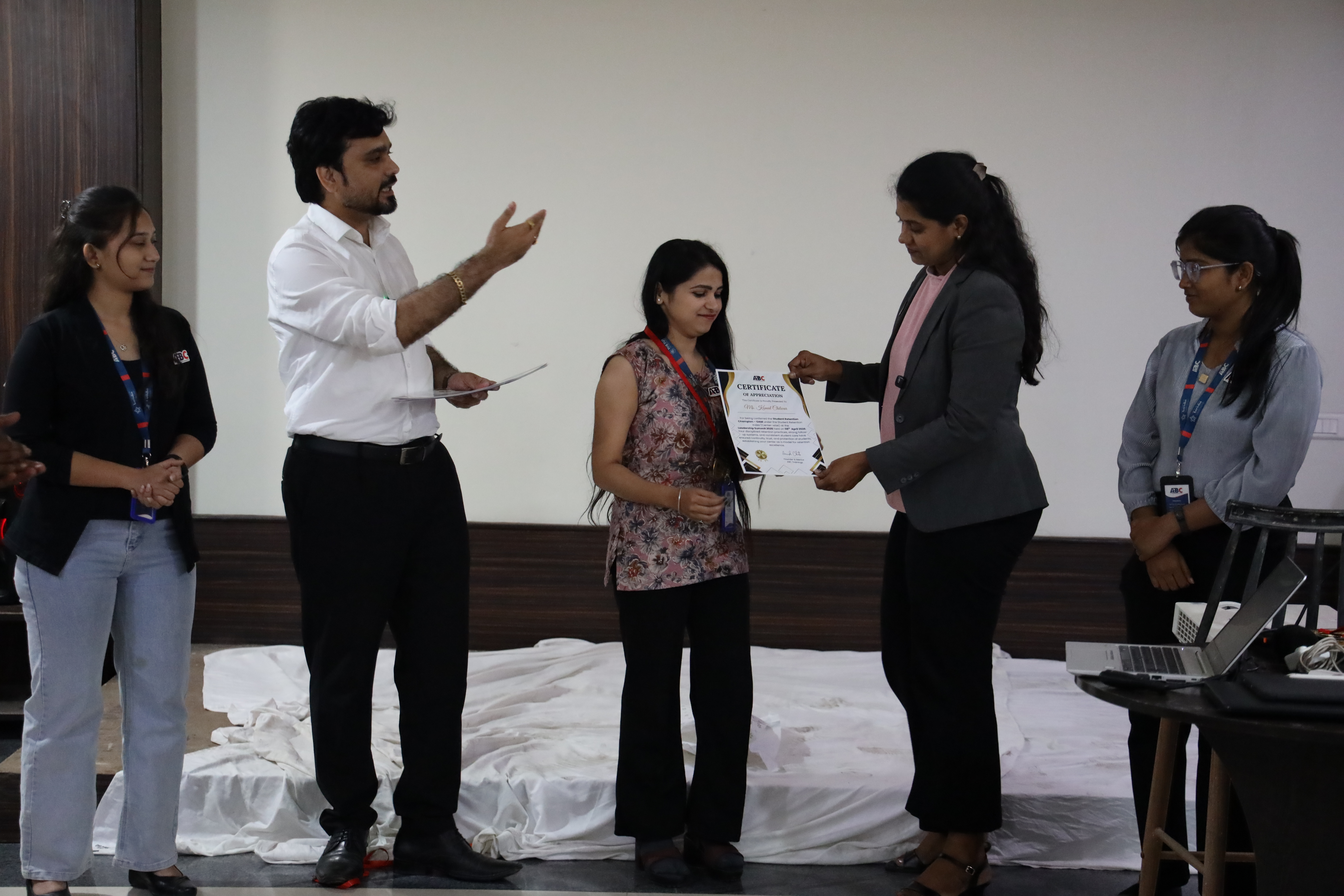
When I walked onto the stage at DY Patil University Pimpri Pune to speak to hundreds of engineering students, I knew the room was full of technical brilliance. But I also knew that 65% of Indian firms invest in soft-skill training because degrees alone no longer determine career trajectories — and this session was built to change that for every student in that room.
TL;DR- At DY Patil University Pimpri Pune, Avinash Chate delivered a session on essential skills and strategies for engineering students to harness their full potential
- India needs 1.25 million AI and tech professionals by 2027 — engineers who build soft skills early will dominate the hiring market
- Technical degrees are necessary but not sufficient — the Engineering for Impact framework fills the gap
- Academic and professional success use different rule sets; both must be deliberately trained
- Four daily habits can accelerate an engineering student's career trajectory significantly
What I Told Engineering Students at DY Patil University Pimpri Pune
When I was invited to speak at DY Patil University Pimpri Pune — one of Maharashtra's premier technical institutions — the brief was simple: inspire and develop future engineers. I stood before hundreds of students who had cracked JEE, mastered thermodynamics, and written thousands of lines of code. And I opened with a question that surprised them all: 'How many of you have practised articulating your ideas clearly in 30 seconds?' Almost no hands went up. That moment told me everything I needed to know about where the real gap lies.
Why Engineering Degrees Are Necessary But Not Sufficient for Career Success in India
Here's the hard truth that India's engineering industry has been saying for years: your degree gets you the interview, but your soft skills get you the job — and keep you growing. NASSCOM projects India will need 1.25 million AI and tech professionals by 2027. The demand is massive. But most candidates competing for those roles will have the same technical background as you. What will differentiate you? Communication. Leadership readiness. Problem framing. Emotional intelligence. These are the skills engineering colleges rarely teach formally, yet they determine who advances and who stagnates.
The Engineering for Impact Framework: Four Capabilities Beyond Your Degree
At DY Patil, I shared what I call the Engineering for Impact framework — four capabilities every engineer must develop alongside core technical skills. First, Communication Precision: the ability to explain technical decisions to non-technical audiences clearly. Second, Collaborative Leadership: working across functions without formal authority. Third, Adaptive Learning: consuming new technologies faster than the industry changes. Fourth, Initiative Architecture: spotting a problem, proposing a solution, and owning its execution from start to finish. These four, stacked on top of your technical foundation, make you genuinely unstoppable in the Indian job market.
| Skill | Why It Matters for Engineers in India | How to Develop It as a Student |
|---|---|---|
| Communication Precision | Non-technical stakeholders make most business decisions | Explain one project to a layperson every week |
| Collaborative Leadership | Cross-functional teams are the norm at top Indian tech firms | Lead at least one group project per semester |
| Adaptive Learning | Tech stacks change every 3-5 years in India | Commit to one new technology or framework per quarter |
| Initiative Architecture | Promotions go to people who solve problems, not just complete tasks | Start one self-initiated project before graduation |
| Emotional Intelligence | 70%+ of workplace conflict stems from poor emotional management | Study conflict resolution; practise active listening daily |
| Time and Energy Management | Burnout is rising in India's tech sector | Build study and rest rhythms now — they translate directly to work |
Academic vs Professional Success: Why Both Need a Completely Different Approach
What most engineering students don't realize is that academic and professional success are two very different games with two different rule sets. Academic success rewards individual mastery, correct answers, and following established methods. Professional success rewards collaboration, creative problem-solving, ambiguity tolerance, and delivering under pressure with incomplete information. Both are valuable. But if you only train for one, you'll be unprepared for the other. At DY Patil, I used real corporate case studies from Bosch, Infosys and Tata Tech to show students exactly how each academic skill maps to a professional one — and where the dangerous blind spots are.
How to Harness Your Full Potential as an Engineering Student in 2026
Harnessing your full potential as an engineering student means treating your four years like a startup, not a syllabus. Attend the extra lecture because it might spark a career-defining idea. Take the project lead even if you're nervous — the discomfort is the training. Build one real-world project outside of coursework, not for your portfolio but for the learning itself. Connect with working professionals in your field and ask them what they wish they'd known at your stage. Every student at DY Patil had the raw material for excellence; the only question was whether they would activate it intentionally or wait for someone else to unlock it for them.
Innovative Strategies for Engineers Thriving in India's Fast-Changing Industry
The engineers who advance fastest in Indian companies like KPIT, Bosch and Siemens are rarely the ones who know the most algorithms. They're the ones who can explain a complex system to a non-technical stakeholder in two minutes, who can lead a cross-functional team through ambiguity, and who manage their energy over a long project cycle. I've trained thousands of engineers across India, and the pattern is consistent: soft skills are the multiplier on top of technical excellence. The best move any engineering student can make is to develop both, simultaneously, from day one of their degree.
The Direct Advice I Gave DY Patil Students and What You Should Do Today
Here's the most direct advice I gave students at DY Patil University Pimpri Pune, and the same advice I give to engineers at Bajaj Auto and L&T: your career is not a result of your marks. It's a result of your decisions. The decision to stay curious when you could coast. The decision to speak up in a meeting when silence is safer. The decision to invest in your own growth beyond what's required. India's 250+ unicorns were built by engineers who made those decisions consistently — not by people who were the smartest in the room, but by people who were the most intentional about becoming who they needed to be.
Book Avinash Chate for Your Next Event
TEDx speaker. 11+ yrs training Army, BRO, RBI, BARC, JSW. Available for keynotes, leadership training, team building & manager development at your office or event venue.
✅ Thanks! Avinash team will reach out within 24 hours.'}).catch(function(e){f.outerHTML='Something went wrong. WhatsApp +91 8793630001
'});return false;">Select ServiceKeynote / Motivational SpeakingLeadership Development TrainingTeam Building WorkshopManager DevelopmentEmployee TrainingOutbound TrainingBook Avinash Now →Or WhatsApp directly: +91 87936 30001
Related Articles by Avinash Chate
- Sikandar Raza Zimbabwe: The Perseverance Leadership Lesson India 2026
- Shastri's 2018 Lesson: Okay to Lose But Not Without Trying India 2026
- Adapting to Change Like R Ashwin and Hardik Pandya — India Career 2026
Avinash Chate TEDx Speaker · Founder, The Future Corporate · 11+ yrs experience Avinash has trained Indian Army, BRO, RBI, BARC, JSW Steel and 1000+ corporate leaders across India. His work focuses on leadership development, communication skills, and behavioural training rooted in Indian values and modern business needs. |
Frequently Asked Questions
What skills did Avinash Chate teach at DY Patil University Pimpri Pune?
At the DY Patil University Pimpri Pune Students Development Program, Avinash Chate covered the essential soft skills and innovative professional strategies that engineering students need alongside their technical education. The session focused on Communication Precision, Collaborative Leadership, Adaptive Learning and Initiative Architecture — a four-part model Chate calls the Engineering for Impact framework. He also addressed academic vs professional success mindsets, the India job market reality in 2026, and practical daily habits that accelerate engineering careers. The session drew on his experience training engineers at companies like KPIT, Bosch, Infosys, Tata Tech and Bajaj Auto across India.
Why do Indian engineering students struggle to get jobs despite good grades?
The gap between good grades and good job offers in India's engineering sector has widened because Indian companies now require more than technical accuracy — they need engineers who communicate clearly, collaborate across functions, and lead without formal authority. NASSCOM consistently reports that fresh engineering graduates lack the soft skills required to function effectively in cross-functional teams. Avinash Chate's training data from thousands of engineering professionals shows that technical skills account for roughly 40% of career success, while interpersonal and leadership skills account for the remaining 60%. Grades open doors; soft skills determine how far you walk through them.
What is the Engineering for Impact framework and how can students apply it?
The Engineering for Impact framework is a four-capability model Avinash Chate developed from his experience training engineers across India's top companies. It covers Communication Precision, Collaborative Leadership, Adaptive Learning and Initiative Architecture. Students can apply it immediately: practise explaining one technical project to a non-technical person per week (Communication Precision), take one leadership role per semester (Collaborative Leadership), learn one new technology per quarter (Adaptive Learning), and start one self-initiated project before graduation (Initiative Architecture). Together, these four habits create compounding career momentum from day one.
How should engineering students prepare for professional careers in India in 2026?
Engineering students in India in 2026 should build hard and soft skills simultaneously throughout their degree. With NASSCOM projecting a need for 1.25 million AI and tech professionals by 2027, the demand is real — but competition is fierce. Avinash Chate recommends four specific actions: first, take every leadership opportunity available within college, even small ones; second, build at least one real-world project that solves an actual problem; third, practise presenting your technical work to non-technical audiences regularly; and fourth, connect with working engineers via LinkedIn and attend industry events to understand what the real job requires before you're sitting in it.
Avinash Chate services
Corporate Trainer in Pune · Top Corporate Trainers in Pune · Leadership Trainer in Pune · Top Leadership Trainers in Pune · Team Building Trainer in Pune · Top Team Building Trainers in Pune · Motivational Speaker in Pune · Top Motivational Speakers in Maharashtra · All service locations
← Back to all articles · Book Avinash Chate
By Avinash Chate — Maharashtra’s #1 Corporate Trainer & Motivational Speaker. .