Engineering Career Roadmap: Real Advice for Indian Students in 2026
Engineering degrees open doors — but only if you know which doors to knock on. Here's the honest career roadmap I shared with engineering students at Navsahyadri College Pune.
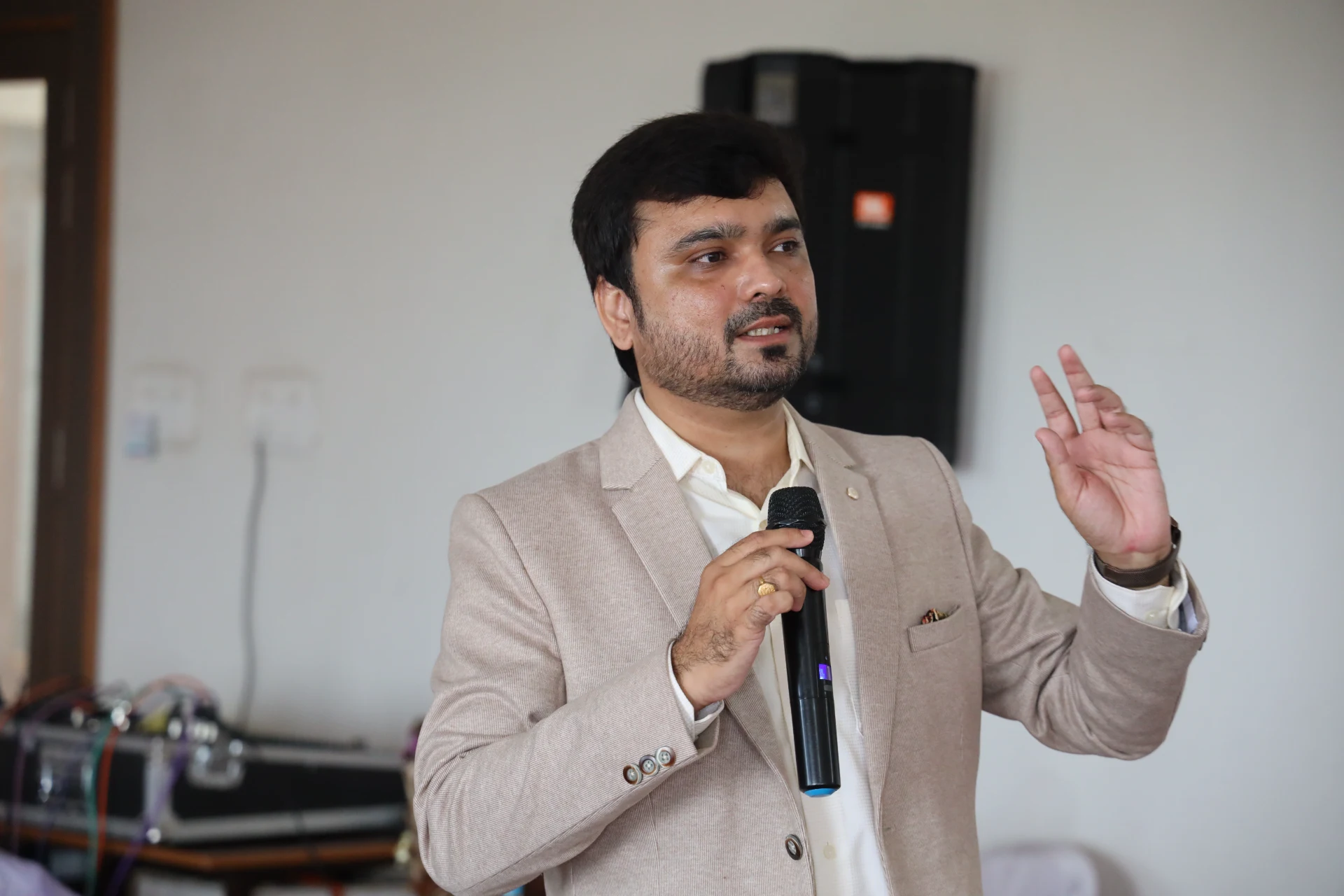
Here's the thing — NASSCOM-Deloitte projects India needs 1.25 million AI-ready professionals by 2027, and yet the most common question I hear from engineering students at colleges like Navsahyadri in Pune is: "What should I actually do with my degree?" The answer is more honest — and more exciting — than most career advisors will give you. This is what I told students at that career guidance session, and it's what every engineering student in India needs to hear right now.
TL;DR- Technical skills get you the interview — soft skills, communication, and ownership mindset get you promoted
- India's AI/ML job market is growing 25% YoY — engineers who upskill in AI-adjacent domains now will lead their generation
- The most successful engineers I've trained learned to communicate their work as clearly as they could build it
- Internships and live projects matter more for career launch than marks — experience is the unfakeable differentiator
- Your engineering degree is the foundation — but your career is built on curiosity, initiative, and the willingness to grow beyond your comfort zone
What Navsahyadri Engineering Students Asked — and What They Actually Need to Hear
When I spoke at Navsahyadri Engineering College in Pune, the questions students asked were honest and urgent: should I do a master's degree or enter the job market? Does my branch matter or can I pivot? What do companies actually look for beyond marks? These questions are universal among Indian engineering students — and they deserve equally honest answers. The good news is that India's engineering talent market in 2026 is genuinely opportunity-rich. The challenging news is that the rules of success have changed significantly since your seniors graduated, and most college curricula haven't caught up yet.
Technical Skills vs. Human Skills: The Real Career Gap for Indian Engineers in 2026
India's engineering colleges produce excellent technical talent — students who can solve complex problems, write functional code, and design functional systems. What most engineering graduates lack are the skills that determine career trajectory after the first three years: communication, ownership mindset, cross-functional collaboration, and the ability to translate technical work into business impact. LinkedIn India 2026 data confirms that leadership and communication skills are the number one professional gap in Indian organizations — and this gap is especially acute among technical professionals who've been trained to think in problems but not in people. The engineers who close this gap early become the leaders of their cohort.
How AI Is Reshaping Engineering Careers in India — and What to Do About It Right Now
NASSCOM-Deloitte projects India needs 1.25 million AI-ready professionals by 2027 — and the majority of those roles will be held by engineers who are graduating right now. AI/ML hiring in India is growing 25% year-on-year. This isn't a threat to engineering careers — it's the biggest opportunity in a generation. The engineers who will dominate the next decade are not those who resist AI but those who learn to work with it, build on top of it, and solve problems that AI cannot solve alone: judgment, creativity, human understanding, and cross-domain thinking. My advice to every engineering student: spend 30 minutes a day on AI-adjacent learning — not optional, existential.
| Career Priority | Years 1–2 (Entry Level) | Years 3–4 (Mid Level) | Year 5+ (Senior/Leadership) |
|---|---|---|---|
| Technical Skills | Master your stack, learn fast | Deep specialisation in chosen domain | Architecture/system thinking, AI integration |
| Soft Skills | Communication, reliability, ownership | Stakeholder management, cross-functional influence | Leadership, strategy, culture-building |
| Network | Build within your team and company | Expand to industry peers and mentors | Become the go-to expert others network with |
| Visibility | Document and share your learning | Present your work to non-technical audiences | Speak at industry events, publish thought leadership |
| AI Readiness | Learn AI tools relevant to your role | Build AI-adjacent projects and skills | Lead AI adoption in your team or organisation |
The Internship Advantage: Why Experience Beats Marks in India's Engineering Job Market
The most common mistake I observe in Indian engineering students' career thinking is the belief that marks are the differentiator. In the first recruitment round, marks matter — they get you through the initial filter. But in every subsequent career decision — your second job, your first promotion, your first team leadership role — what matters is experience, evidence of initiative, and demonstrated capability. Internships, live projects, open-source contributions, hackathon wins, and entrepreneurial experiments create an experience portfolio that marks cannot replicate. The students who land the best opportunities at companies like Tata Tech, Infosys, KPIT, and Bajaj Auto are consistently the ones who bring evidence of real work done, not just GPA.
Communication for Engineers: The Skill That Separates Good Developers from Great Leaders
Here's a truth that most engineering colleges don't teach: the engineers who become leaders are almost never the ones who were the best coders. They're the ones who could explain what they built in plain language to someone who couldn't code. Communication is the multiplier that makes technical excellence visible and influential. When I train engineering leads at KPIT and software teams at Bosch Pune, the most consistent development gap is the ability to present technical work to non-technical stakeholders — clearly, concisely, and with business impact framing. Learning this skill before you graduate puts you years ahead of your peer cohort.
Building Your Engineering Career Network Before You Graduate from Navsahyadri or Any Pune College
Your professional network is your second career engine — the first being your skills. The engineers who build meaningful networks during college consistently access better opportunities, better mentors, and better information about where the real growth is happening. Network building for engineering students means: attending industry events and hackathons in Pune's growing tech ecosystem, connecting with alumni from your college who are now working in your target companies, building an active LinkedIn presence that documents your projects and learning, and finding one mentor outside college who can give you real industry perspective. You have four years to build this — and the best time to start is first year, not final year.
The 5-Year Engineering Career Plan: A Realistic Roadmap for Indian Students Starting in 2026
The realistic 5-year engineering career roadmap for Indian students starting in 2026: Year 1 on the job — master your domain, learn the business context, build your reputation for reliability and communication. Year 2 — identify a specialisation or domain you want to lead in and invest in it deliberately. Year 3 — take on a project that requires cross-functional coordination; develop your stakeholder management and communication skills actively. Year 4 — seek a team lead or tech lead opportunity; this is where human skills become as important as technical skills. Year 5 — you should be operating as a manager, a specialist who's industry-recognised, or an entrepreneur using your engineering foundation. India's ₹1.5 trillion L&D market will be growing throughout — invest in yourself continuously.
Book Avinash Chate for Your Next Event
TEDx speaker. 11+ yrs training Army, BRO, RBI, BARC, JSW. Available for keynotes, leadership training, team building & manager development at your office or event venue.
✅ Thanks! Avinash team will reach out within 24 hours.'}).catch(function(e){f.outerHTML='Something went wrong. WhatsApp +91 8793630001
'});return false;">Select ServiceKeynote / Motivational SpeakingLeadership Development TrainingTeam Building WorkshopManager DevelopmentEmployee TrainingOutbound TrainingBook Avinash Now →Or WhatsApp directly: +91 87936 30001
Related Articles by Avinash Chate
- Why Indian Entrepreneurs Work Hard But Never Enjoy What They Earn
- How to Give Gifts That Strengthen Corporate Relationships in India
- Pune Travel Incident: The Mental Preparation Lesson Every Indian Needs Now
Avinash Chate TEDx Speaker · Founder, The Future Corporate · 11+ yrs experience Avinash has trained Indian Army, BRO, RBI, BARC, JSW Steel and 1000+ corporate leaders across India. His work focuses on leadership development, communication skills, and behavioural training rooted in Indian values and modern business needs. |
Frequently Asked Questions
What is the most important advice for engineering students starting their career in India in 2026?
The most important advice for engineering students in India in 2026 is to invest in your human skills as deliberately as you invest in your technical skills. NASSCOM-Deloitte projects India needs 1.25 million AI-ready professionals by 2027, and technical competence is increasingly the baseline — not the differentiator. The engineers who will lead their generation are those who can communicate clearly, build cross-functional relationships, demonstrate ownership and initiative, and adapt to rapidly changing technology landscapes. These skills are learnable — but they require deliberate practice, not just exposure. Start building them in your first year of college, not your final semester.
Does the engineering branch matter for career success in India or can I pivot to other domains?
Your engineering branch is less important than your attitude, initiative, and adaptability. In India's 2026 job market, successful pivots from mechanical to software, civil to data analytics, and electrical to product management are common — especially for students who complement their core degree with relevant projects, certifications, and demonstrable skills in the target domain. What matters most to India's top employers — Tata Tech, Infosys, KPIT, Bajaj Auto — is evidence that you can learn fast, take initiative, and communicate your work effectively. Your branch is a starting point, not a ceiling.
How important are marks versus experience for getting a good engineering job in India?
Marks matter for the initial filter — they get you into the interview room. Beyond that, experience is the differentiator. Two candidates with similar marks: the one who brings evidence of real work — internships, live projects, hackathon wins, open-source contributions, a side project they built — consistently outperforms the high-mark candidate with no experience portfolio. India's best engineering employers have become sophisticated at evaluating demonstrated capability over academic performance. My advice: maintain enough marks to pass the initial screen (typically top 60%), then invest the rest of your time in building an experience portfolio.
What skills should Indian engineering students build beyond technical knowledge to succeed in 2026?
The skills that determine long-term career success for Indian engineers beyond technical knowledge are: communication (the ability to explain your work clearly to non-technical people), ownership (treating outcomes as your responsibility, not just tasks as your deliverable), cross-functional thinking (understanding how your technical work creates business value), adaptability (the ability to learn new technologies and domains quickly), and AI readiness (working with and building on AI tools, not competing with them). These five skills, combined with technical competence, create the profile of an engineer who will be competitive, promotable, and future-proof in India's rapidly evolving job market through 2030 and beyond.
Avinash Chate services
Corporate Trainer in Pune · Top Corporate Trainers in Pune · Leadership Trainer in Pune · Top Leadership Trainers in Pune · Team Building Trainer in Pune · Top Team Building Trainers in Pune · Motivational Speaker in Pune · Top Motivational Speakers in Maharashtra · All service locations
← Back to all articles · Book Avinash Chate
By Avinash Chate — Maharashtra’s #1 Corporate Trainer & Motivational Speaker. .