Hired for Skills, Fired for Emotions: Why EQ Decides Your Career
From my book The Winning Edge, here is why technical skill gets you hired but emotional intelligence decides whether you rise, lead and last in your career.
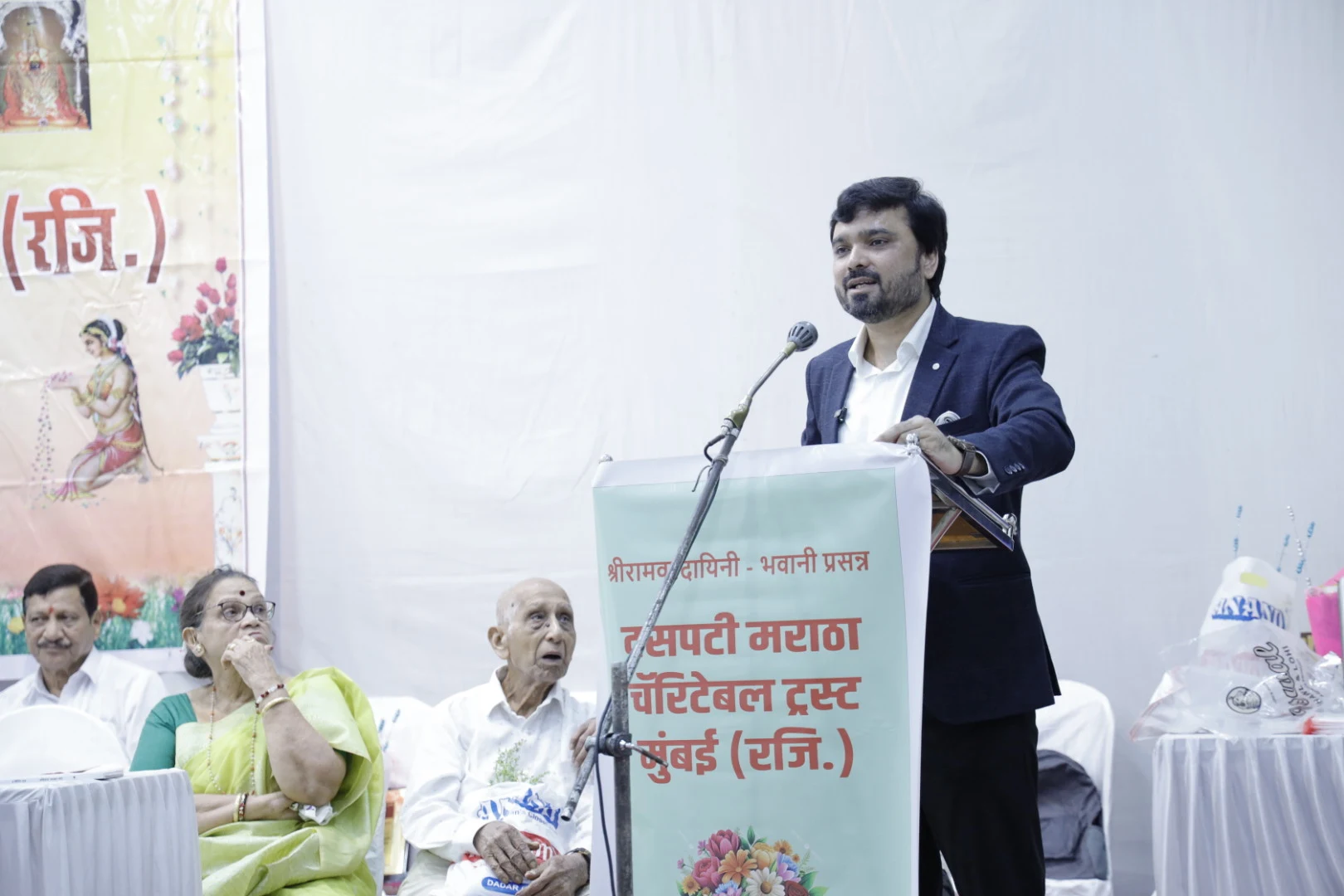
In more than two decades of training professionals across Maharashtra, I have watched a pattern repeat itself so often that I built an entire chapter of my book The Winning Edge, The Champion Mindset around it. People are hired for their technical skills, and then, months or years later, they are quietly sidelined, passed over or fired for their emotional skills. The degree got them in the door. The temperament decided whether they stayed.
This is the most expensive blind spot in the Indian workplace. We obsess over qualifications, certifications and tools, and we almost never train the one capacity that decides careers: emotional intelligence. As Daniel Goleman, who brought EQ into the mainstream, put it, this is the ability to manage and use emotions in yourself and in others.
In my workshops I call it the Champion pyramid of emotions, and I want to walk you through it the same way I do with a room full of managers and business owners, one level at a time.
Hired for Skills, Fired for Emotions
Think about the last person you saw lose their standing at work. It was rarely because they forgot how to do the job. It was because they could not hold their temper in a meeting, could not take feedback without sulking, could not read the room, or could not motivate the people around them. The technical part was never the problem.
Dale Carnegie said it best, and I quote him in almost every session:
When dealing with people, remember you are not dealing with creatures of logic, but with creatures of emotion.
That single line dismantles the myth that work is purely rational. Your colleagues, your boss, your clients and your team are all creatures of emotion. If you cannot manage emotion, your skills are trapped behind a wall you keep building yourself.
EQ is a skill, not a personality
The good news, and the reason I am optimistic in every program I run, is that emotional intelligence is not a fixed trait you are born with. It is a skill. EQ is the ability to manage and use emotions in yourself and others, and like any skill it grows with deliberate practice. That is the promise of the pyramid I am about to share.
The Champion Pyramid: Five Steps of EQ
In The Winning Edge I structure emotional intelligence as five steps, built one on top of the other. You cannot skip a level. Each one rests on the strength of the one below it.
- Self-Awareness - knowing your moods as they happen, in real time, not an hour later when the damage is done. Meditation is one of the simplest ways to build this muscle.
- Self-Control - regulating fear, anger and anxiety. This matters because under stress the emotional brain hijacks the rational brain and shrinks your working memory, exactly when you need it most.
- Self-Motivation - pushing beyond your perceived limits with optimism, and entering a state of flow where your best work happens.
- Empathy - understanding what others are feeling. This is built directly on self-awareness, because you can only read in others what you have first learned to read in yourself.
- Motivating Others - inspiring teams, managing ego and smoothing the friction that exists in every group of human beings.
Notice the journey. The first three steps are about mastering yourself. Only then do you turn outward to others. Stephen Covey framed this beautifully, and I borrow his phrase often:
Private victory precedes public victory.
You cannot lead others through emotions you have not yet learned to lead in yourself.
Walking a room of managers through the Champion pyramid of emotions in a corporate workshop.Step One and Two: Mastering Yourself
Self-Awareness: know your moods as they happen
The foundation of the entire pyramid is the ability to notice your own emotion in the moment it arises. Most people only realise they were angry, anxious or defensive after they have already spoken the words they regret. Self-awareness closes that gap. In my sessions I recommend a simple daily practice of meditation, even ten minutes, because it trains you to observe your inner weather instead of being swept away by it.
Self-Control: do not let the emotional brain hijack you
Here is a piece of science I always slow down to explain. Under stress, the emotional brain hijacks the rational brain. When that happens, your working memory shrinks. The very faculty you need to solve the problem in front of you goes offline at the worst possible moment. That is why a capable professional can give a disastrous answer in a high-pressure meeting, then think of the perfect response in the car on the way home.
Self-control is the discipline of regulating fear, anger and anxiety so the rational brain stays in charge. Robert Cooper, another voice I draw on, reminds us that emotions are not the enemy of good judgement, they are a source of information when we learn to manage them.
Self-Motivation: optimism and flow
The third step is the engine. Self-motivation is the drive to push beyond your limits with optimism, and to enter flow, that absorbed state where work stops feeling like effort. This is the bridge between mastering yourself and serving others, because a person who cannot motivate themselves has nothing to give a team.
Step Three and Four: Turning Outward
Empathy is built on self-awareness
Once you have learned to read your own emotions, you can begin to read others. That is the whole secret of empathy, and it is why I insist on doing the inner work first. Empathy is not a soft, vague niceness. It is the precise ability to understand what another person is feeling, which lets you respond to the real situation instead of the surface one.
Motivating others: managing ego and friction
The top of the pyramid is the leadership level. Motivating others means inspiring teams, managing ego, and dealing with the friction that exists wherever humans work together. No team is friction-free. The leader with high EQ does not pretend the friction away, they manage it with awareness and empathy.
Subroto Bagchi gave one of the cleanest definitions of professionalism I know, and it sits squarely inside this level of the pyramid:
A professional is someone who works unsupervised, and is accountable.
That accountability is an emotional skill as much as a technical one. Howard Gardner, in his work on the minds we need for the future, calls one of them the ethical mind, the capacity to act with responsibility toward others. EQ is what makes that ethical mind possible in daily working life.
The 12 Star Qualities: What Gets Measured Grows
Steps are useful for understanding, but professionals want something they can measure. In The Winning Edge I break the pyramid down into 12 star qualities, grouped under the inner steps, so you can score yourself honestly and improve with intent.
Under Self-Awareness
- Being aware of your own emotions
- Accurate self-assessment
- Self-confidence
Under Self-Control
- Managing your emotions
- Trustworthiness
- Taking responsibility
- Adaptability
- Innovation
Under Self-Motivation
- Achievement drive
- Commitment
- Initiative
- Optimism
How to actually use the 12 qualities
Here is the exercise I give every participant, and I will give it to you now:
- Score yourself out of 10 on each of the 12 qualities. Be brutally honest.
- Now ask a peer who works closely with you to score you on the same 12. The gap between your view and theirs is pure gold.
- Pick your two lowest qualities and improve them with deliberate practice, the same way you would practise any skill.
- Re-score yourself, and ask your peer again, every month.
The principle behind this is simple and it never fails. What gets measured grows. The moment you put a number on a quality and revisit it monthly, you start improving it, almost without trying. A vague intention to be more patient does nothing. A score of 4 out of 10 on managing emotions, tracked every month, changes behaviour.
Bring this to your team. I run emotional-intelligence-focused corporate training and keynotes for companies across Pune, Mumbai and all of Maharashtra.
Book a session · Explore corporate training programs
Teams scoring themselves on the 12 star qualities of EQ during a leadership program.Frequently Asked Questions
What does hired for skills, fired for emotions actually mean?
It means that companies hire you for your technical ability, your degree and your tools, but people lose their standing, get sidelined or get let go because of emotional failures, like poor self-control, no empathy, or an inability to work with others. The skill got you in, the emotional intelligence decides whether you stay and rise.
Can emotional intelligence really be improved, or are you born with it?
It can absolutely be improved. EQ is a skill, not a fixed personality trait. In my workshops we use the 12 star qualities, score each one out of 10 with the help of a peer, work on the lowest ones with deliberate practice, and re-score every month. What gets measured grows.
Why does self-control matter so much under stress?
Because under stress the emotional brain hijacks the rational brain and your working memory shrinks. You literally lose access to clear thinking at the worst moment. Self-control, the discipline of regulating fear, anger and anxiety, keeps the rational brain in charge so you can perform when it counts.
How do I bring EQ training to my company in Pune or Mumbai?
I run emotional intelligence corporate training and keynotes for organisations across Pune, Mumbai and all of Maharashtra, built around the Champion pyramid and the 12 star qualities. You can reach out through my contact page to design a session for your team.
If there is one idea from The Winning Edge I want you to carry into Monday morning, it is this: your career is decided less by what you know and more by how you manage emotion, in yourself and in others. I would be glad to bring this pyramid to your people, so get in touch, explore my corporate training programs, or see how I work as an EQ trainer in Pune. This article is adapted from my book The Winning Edge, The Champion Mindset.
Related Articles by Avinash Chate
- Ajit Agarkar's 21-Ball ODI Fifty Against Zimbabwe: The Silent Performer's Career Blueprint
- Zero Defects: How Sundram Fasteners Won GM Supplier of the Year 5 Times
- Clive Lloyd's 1975 World Cup Final Leadership: How Bold Captaincy Wins Under Pressure
| AC | Avinash ChateIndia's Leading Corporate Trainer | TEDx Speaker | Author With 80+ organizations trained including RBI, JSW Steels, and Ferrero, Avinash Chate delivers high-impact corporate training across India. Creator of the KITE Leadership Framework and bestselling author of "The Winning Edge." Website YouTube |
Avinash Chate services
Corporate Trainer in Maharashtra · Top Corporate Trainers in Maharashtra · Leadership Trainer in Maharashtra · Top Leadership Trainers in Maharashtra · Motivational Speaker in Maharashtra · Top Motivational Speakers in Maharashtra · All service locations
← Back to all articles · Book Avinash Chate
By Avinash Chate — Maharashtra’s #1 Corporate Trainer & Motivational Speaker. .