Indian Army Management Training for UPSC Engineers: Leadership Lessons India 2026
What does management training look like for UPSC-qualified engineers joining the Indian Army? The leadership lessons from this rigorous program apply far beyond defence to every Indian corporate leader.
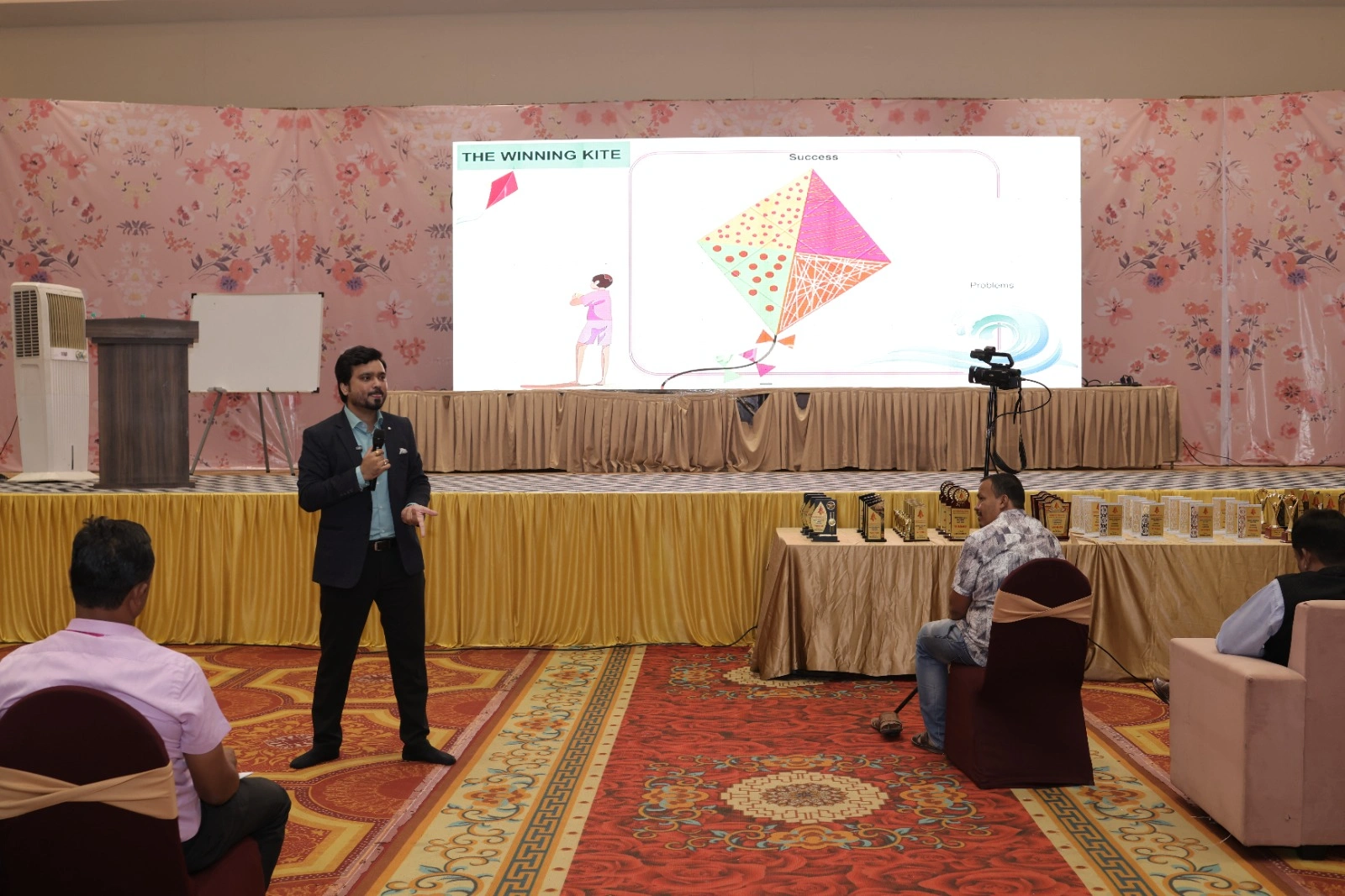
I've had the privilege of conducting management training for the Indian Army and Border Roads Organisation, and what I've observed is this: UPSC-qualified engineers don't just need technical skills — they need leadership frameworks that work under real pressure. LinkedIn India's 2026 research confirms leadership skills are India's #1 professional need, and nowhere is that truth tested harder than in India's defence forces.
TL;DR- UPSC-qualified engineers entering the Indian Army bring technical expertise but must rapidly develop management and leadership skills under high-stakes conditions
- The Indian Army's management training model emphasizes mission clarity, team cohesion, and decisive action — lessons directly applicable to corporate India
- Engineers who've gone through UPSC are strong at problem-solving but often need coaching on communication, delegation, and leading diverse teams
- Corporate managers can adopt defence-style accountability frameworks without the hierarchy — the principles translate powerfully to private sector teams
- India's best-performing corporate teams share one quality with Army units: absolute clarity on the mission combined with deep care for every team member
Why UPSC Engineers Need Management Training in the Indian Army
Here's what surprises most people: UPSC-qualified engineers who join the Indian Army are technically brilliant. They've cracked one of India's toughest examinations, they understand systems, they think analytically. But the moment they're responsible for 20 to 200 soldiers in high-stress field conditions, their engineering degree doesn't protect them. Managing people — especially under pressure, with incomplete information, with lives potentially at stake — is a different skill set entirely. That gap is exactly what management training bridges. And I've had the honour of being part of that bridge through my training work with the Indian Army and BRO.
What the Indian Army's Leadership Model Teaches About Team Management
What I find remarkable about the Indian Army's leadership model is how clearly it prioritizes mission, team, and self — in that order. This isn't just a motto. It's baked into every exercise, every debrief, every training session. Corporate India tends to invert this: we prioritize self first (career, credit, visibility), then team (when convenient), and mission last (it's usually someone else's job). The Army's model isn't just disciplined — it's profoundly team-centric in a way that most Indian corporate cultures claim to aspire to but rarely achieve. What most people don't realize is that this orientation produces dramatically better outcomes under uncertainty, which is exactly what India's corporate sector faces in 2026.
| Leadership Principle | Indian Army Application | Corporate India Application |
|---|---|---|
| Mission Clarity | Commander's Intent briefed to every level | One-sentence team mission, reviewed weekly |
| Delegation | NCOs trusted with real field authority | Junior leaders empowered to decide within scope |
| Accountability | AAR after every operation — learn, not blame | Post-project debrief, structured improvement |
| Communication | Simple, clear, calibrated to the soldier | Directive + rationale, adapted per audience |
| Decision-Making Under Pressure | Defined framework, practiced under stress | Pre-agreed decision criteria for crisis moments |
| Team Cohesion | Mission, Team, Self — in that order | Team interest explicitly prioritized in culture |
Mission Clarity: The Army Principle Indian Corporate Teams Miss Most
The single biggest gap I see in corporate teams across India — at companies like KPIT, Infosys, and Mahindra — is mission clarity. Everyone is busy. Nobody is clear on what success looks like this week, this quarter, this year. The Indian Army solves this with what it calls the "Commander's Intent" — before any operation, every person from officer to sepoy knows exactly what the mission is trying to achieve, not just what their specific task is. This means that when circumstances change (and they always do), everyone can adapt while still serving the mission. Corporate teams that operate this way are the ones that win.
Delegation and Trust: How the Army Develops Junior Leaders
One of the most powerful things Army management training builds is comfort with delegation. An officer who tries to micromanage every soldier in a dispersed field operation will fail catastrophically. You have to trust your NCOs. You have to give junior leaders the authority to act within the Commander's Intent. In corporate India, we call this empowerment, but most managers don't actually do it. They say "you're empowered" but then hover, second-guess, and override. True delegation, the way the Army practices it, means briefing your team on the mission, ensuring they have what they need, and then letting them execute. You remain available. You don't disappear. But you don't substitute your judgment for theirs on every decision.
High-Pressure Decision Making: Lessons from Defence for Corporate India
What corporate leaders can learn from UPSC engineers going through Army management training is how to think clearly under pressure. The UPSC exam itself trains people to hold multiple complex ideas simultaneously and make fast, high-quality decisions with limited time. The Army then takes that cognitive ability and adds a physical and emotional stress dimension — decisions made exhausted, cold, uncertain. In corporate India, our "pressure" is usually a board presentation or a quarterly miss. But the decision-making frameworks are identical: define the problem clearly, identify constraints, generate options, choose and commit, debrief and improve. The quality of your decisions under pressure is the most important variable in leadership.
Communication and Command: Why Engineers Must Learn to Lead, Not Just Solve
Here's what engineers often struggle with and Army management training directly addresses: communication. Engineers are trained to be precise and complete in their technical communication. But leadership communication is different — it needs to be simple, motivating, and calibrated to the listener's context. A soldier needs different communication than an officer. A junior engineer needs different communication than a plant head. In my corporate training sessions for companies like L&T and Bosch, I see this gap constantly: technically excellent leaders who can't simplify their message for frontline teams, or who communicate directives without the why — which kills buy-in and compliance simultaneously.
How I Apply Indian Army Leadership Frameworks in Corporate Training
When I conduct corporate training programmes inspired by defence leadership models, I consistently see three things happen. First, the team's accountability culture sharpens — people start holding themselves to the standard, not just waiting to be held accountable. Second, communication becomes cleaner — less hedging, more directness, fewer meetings where nothing gets decided. Third, the team's performance under pressure improves dramatically — because they've internalized a decision-making framework that works when the pressure is highest. These aren't coincidences. They're the direct result of applying Army-style leadership principles in a civilian context.
What Corporate India Can Steal from Army Management Training in 2026
If you're a corporate manager or team leader in India in 2026, here's what you can take directly from the Indian Army management model. Number one: state the mission in one sentence before every significant project — what does success look like, and why does it matter? Number two: trust your junior leaders with real decisions and back them up when they make mistakes rather than overriding them. Number three: debrief after every major project — not to assign blame but to extract learning. The Indian Army's After Action Review (AAR) process is one of the most powerful continuous improvement tools in the world, and it costs nothing except the willingness to be honest. India's corporate culture desperately needs more of it.
Book Avinash Chate for Your Next Event
TEDx speaker. 11+ yrs training Army, BRO, RBI, BARC, JSW. Available for keynotes, leadership training, team building & manager development at your office or event venue.
✅ Thanks! Avinash team will reach out within 24 hours.'}).catch(function(e){f.outerHTML='Something went wrong. WhatsApp +91 8793630001
'});return false;">Select ServiceKeynote / Motivational SpeakingLeadership Development TrainingTeam Building WorkshopManager DevelopmentEmployee TrainingOutbound TrainingBook Avinash Now →Or WhatsApp directly: +91 87936 30001
Related Articles by Avinash Chate
- Why Manufacturing Industry is Difficult to Start in India: 5 Key Challenges
- Ajit Agarkar's 21-Ball ODI Fifty Against Zimbabwe: The Silent Performer's Career Blueprint
- Clive Lloyd's 1975 World Cup Final Leadership: How Bold Captaincy Wins Under Pressure
Avinash Chate TEDx Speaker · Founder, The Future Corporate · 11+ yrs experience Avinash has trained Indian Army, BRO, RBI, BARC, JSW Steel and 1000+ corporate leaders across India. His work focuses on leadership development, communication skills, and behavioural training rooted in Indian values and modern business needs. |
Frequently Asked Questions
What kind of management training do UPSC-qualified engineers receive in the Indian Army?
UPSC-qualified engineers joining the Indian Army undergo rigorous management training that covers command responsibility, mission planning, delegation to junior leaders, high-pressure decision-making, and communication calibrated to diverse teams. The training bridges the gap between technical expertise and people leadership — recognizing that engineering knowledge alone doesn't prepare someone to lead soldiers in field conditions. The programme builds mission clarity, accountability culture, and the emotional resilience needed to maintain team performance under uncertainty.
How does Indian Army leadership training differ from corporate management training?
The core difference is stakes and stress. Army leadership training is conducted under physical and situational pressure that corporate training rarely replicates. However, the underlying principles are identical — clarity of mission, trust in junior leaders, quality of communication, and learning from failure. What Army training achieves that most corporate training doesn't is internalization: the principles are practiced until they become reflexive, not just conceptually understood. Corporate training that uses simulation, role-play, and real-stakes scenarios comes closest to achieving this depth.
What leadership lessons from the Indian Army apply to corporate India?
The most transferable lessons are: Commander's Intent (state the mission clearly enough that people can adapt without you), trust-based delegation (brief, equip, empower, support — don't micromanage), After Action Reviews (debrief every significant operation for learning without blame), and mission-team-self prioritization (team outcomes are measured before individual contribution). I regularly incorporate these frameworks into leadership workshops for companies like Bajaj Auto, L&T, and Mahindra, and they consistently produce measurable improvements in team cohesion and execution quality.
How can corporate managers adopt defence-style accountability in their teams?
Start with the After Action Review. After your next significant project, bring the team together and ask four questions: What was supposed to happen? What actually happened? Why was there a difference? What do we do differently next time? Keep it blameless and specific. Then introduce Commander's Intent for all major work: before any significant project kickoff, write one sentence defining what success looks like and why it matters. These two practices alone, done consistently, will shift your team's accountability culture more than any training programme — because they turn every experience into a learning loop.
Avinash Chate services
Corporate Trainer in Maharashtra · Top Corporate Trainers in Maharashtra · Leadership Trainer in Maharashtra · Top Leadership Trainers in Maharashtra · Team Building Trainer in Maharashtra · Top Team Building Trainers in Maharashtra · Motivational Speaker in Maharashtra · Top Motivational Speakers in Maharashtra · All service locations
← Back to all articles · Book Avinash Chate
By Avinash Chate — Maharashtra’s #1 Corporate Trainer & Motivational Speaker. .