Internal Trainer vs External Trainer — Which Is Better for Your Organization in Maharashtra
Discover whether an internal trainer or external trainer is the right fit for your organization in Maharashtra. I break down the pros, limitations, costs, scalability, and decision criteria to help HR leaders and business owners choose the best corporate training approach.
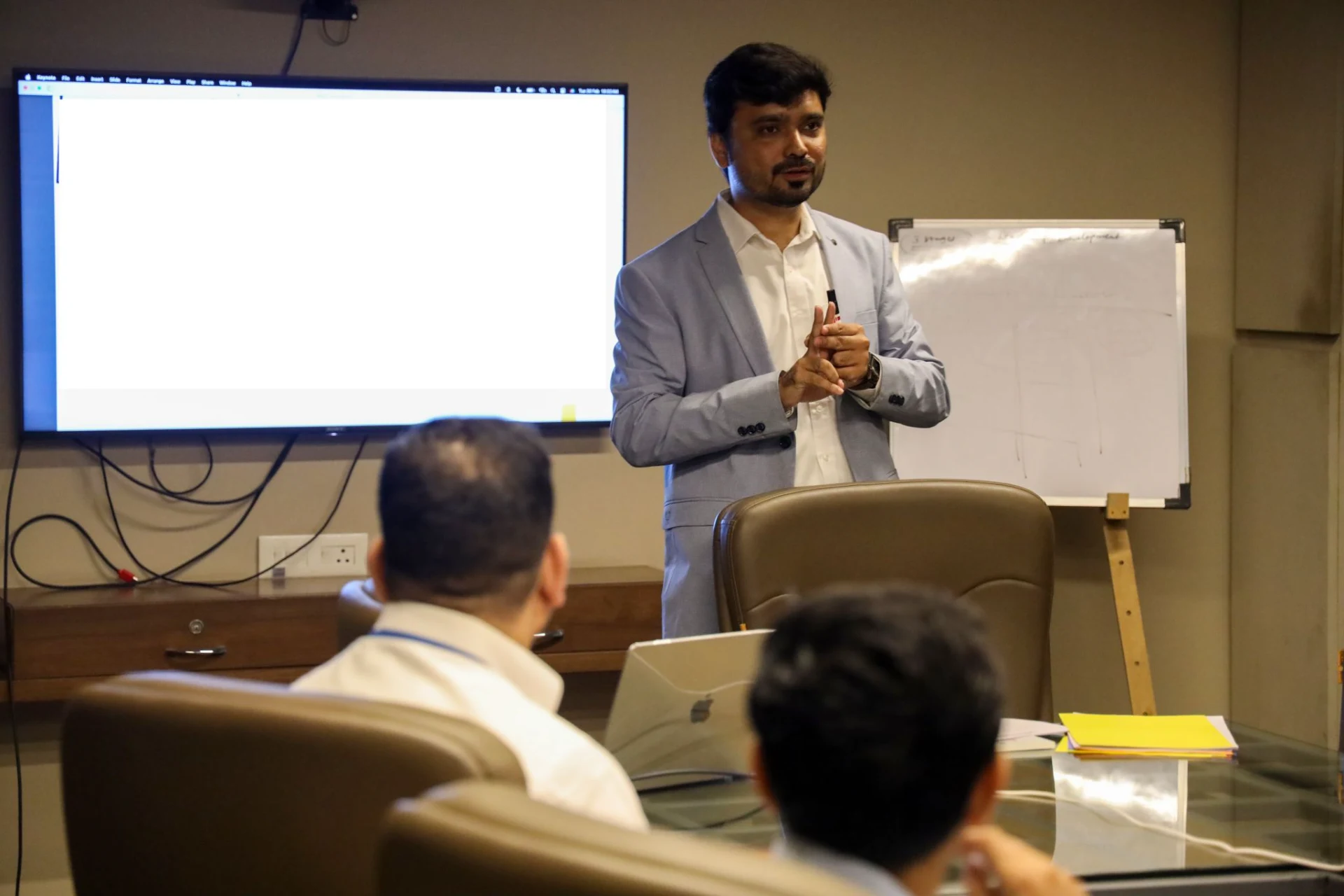
Avinash Chate - TEDx Speaker delivering keynote at corporate event
Internal Trainer vs External Trainer — Which Is Better for Your Organization in MaharashtraWhen leaders ask me whether they should choose an internal trainer or an external trainer, my answer is simple: the better choice depends on your business goal, learning culture, and the speed at which you want results. In Maharashtra, where organizations are scaling fast and teams are expected to adapt even faster, this decision can directly influence productivity, leadership quality, and business performance.
Key takeaway: if your need is consistency, domain familiarity, and ongoing reinforcement, internal trainers can be powerful. If your need is fresh perspective, specialized expertise, and faster transformation, external trainers often create stronger impact.
As Avinash Chate, a TEDx speaker and author of The Winning Edge, I have worked with leaders across 80+ organizations and seen both models succeed when used strategically. I have also seen both fail when chosen for the wrong reasons. The real question is not which option is universally better. The real question is which option is better for your organization at this stage.
In this article, I will help you compare internal trainer vs external trainer across cost, credibility, customization, execution, scalability, and long-term capability building so you can make a confident decision for your teams in Maharashtra.
What an Internal Trainer Does Best
An internal trainer is someone from within your organization who delivers learning programs to employees. This person understands your culture, systems, products, internal language, and business priorities. That familiarity is a major advantage.
Internal trainers are especially effective when your organization needs regular onboarding, process training, compliance learning, product education, or repeated capability-building sessions. Because they are part of the business, they can align training with real workflows and internal expectations.
Another benefit is accessibility. Employees often find internal trainers easier to approach for follow-up questions, reinforcement, and practical support after the workshop ends. This creates continuity in learning.
In many organizations across Maharashtra, internal trainers also help reduce dependency on external vendors for routine learning interventions. Over time, this can improve consistency and lower delivery costs for recurring programs.
However, internal trainers can face a credibility challenge. Employees may not always view them as neutral experts, especially in behavioral training, leadership development, sales transformation, or mindset change. Familiarity can sometimes reduce perceived authority.
That is why I often tell HR leaders that internal trainers are excellent for institutionalizing knowledge, but not always ideal for triggering breakthrough thinking.
Where External Trainers Create Greater Impact
An external trainer brings an outside perspective, wider industry exposure, and a level of objectivity that internal teams may not always have. This is particularly valuable when your organization wants to drive change, improve leadership, strengthen communication, enhance sales effectiveness, or build high-performance culture.
As an external corporate trainer, I often enter organizations at moments when leaders want more than information transfer. They want behavior change. They want energy. They want teams to challenge assumptions and adopt a fresh mindset.
That is where external trainers can create immediate value. We bring cross-industry insights, tested frameworks, and practical examples from multiple business environments. This helps participants learn not only from their own organization’s reality but also from broader market experience.
For example, my work with RBI has shown me how important it is to balance institutional depth with external perspective. Internal capability is essential, but external facilitation often accelerates reflection, alignment, and action in a way that internal voices may not.
External trainers also tend to be more effective when the topic requires specialized expertise. Leadership presence, trust-building, customer experience, team collaboration, executive communication, and managerial effectiveness are areas where an experienced external trainer can create strong measurable outcomes.
If you want to explore how trust influences learning acceptance and team dynamics, I recommend reading Credibility, Reliability, Intimacy: The Three Pillars of Trust.
Internal Trainer vs External Trainer: The Real Comparison
Let us compare the two options in practical business terms.
Cost: Internal trainers may appear more cost-effective for recurring sessions because the organization already pays their salary. But this is only part of the picture. You must also account for trainer development, content design, delivery quality, opportunity cost, and the time required to build expertise. External trainers involve a direct fee, but they can often shorten the learning curve and deliver faster results.
Context understanding: Internal trainers clearly have an advantage here. They know the business from the inside. External trainers need a proper discovery process to understand culture, challenges, and expectations before delivery.
Freshness of perspective: External trainers usually win this category. Because they work across sectors and teams, they can identify blind spots and offer proven approaches that internal teams may not see.
Credibility and neutrality: In many cases, external trainers are perceived as more objective. Participants may open up more freely, especially in leadership and interpersonal training. Internal trainers can sometimes be seen as representing management rather than facilitating learning.
Scalability: Internal trainers can scale routine learning effectively if they are well-prepared. External trainers can scale transformation programs, leadership interventions, and specialized learning with stronger depth, especially when supported by structured methodology.
Sustainability: Internal trainers are better positioned for continuous reinforcement. External trainers are best used to spark momentum, provide expertise, and design systems that internal teams can later sustain.
This is why I rarely treat the choice as either-or. In my experience, the most effective organizations in Maharashtra use a blended model.
The Best Option for Most Organizations: A Blended Learning Model
If you ask me what works best in the real world, I would say this: use external trainers to create strategic capability and internal trainers to sustain it.
This approach combines the strengths of both models. An external trainer can diagnose needs, design the learning architecture, deliver high-impact sessions, and equip leaders with practical tools. Internal trainers can then reinforce concepts, support implementation, and ensure continuity.
This is also where my KITE Leadership Framework becomes useful. I use it to help organizations build leadership capability in a way that is practical, scalable, and aligned to business outcomes. External facilitation can introduce the framework effectively, while internal trainers and managers can embed it into daily behavior.
When organizations rely only on internal trainers, they may miss out on innovation and external benchmarking. When they rely only on external trainers, they may struggle with reinforcement and culture integration. A blended model solves both problems.
For organizations planning experiential learning interventions, outdoor formats can also complement classroom sessions. You may find this relevant: Outbound Training Near Pune — Lonavala Khandala Panchgani Programs.
As Avinash Chate, I have seen blended learning create stronger retention, better manager ownership, and more visible business impact than a single-source approach.
How I Help Organizations Decide the Right Training Model
I do not believe in pushing a standard solution. I believe in diagnosing the business need first. Before recommending internal trainer development or external facilitation, I look at five factors: learning objective, audience maturity, urgency, scale, and reinforcement capacity.
If the requirement is onboarding, process adoption, product knowledge, or recurring SOP-based training, I usually recommend strengthening internal trainers. If the requirement is leadership development, communication excellence, sales capability, team alignment, or culture change, I usually recommend an external trainer-led intervention.
I also assess whether your managers are ready to reinforce learning after the session. Without reinforcement, even the best workshop loses momentum. That is why training should never be treated as an event. It must become a capability-building process.
For HR leaders evaluating options, it is also useful to understand the wider training landscape. You can explore this here: Top 10 Corporate Trainers in Pune 2026 — Complete Guide for HR.
Across Maharashtra, I work with organizations that want practical, high-engagement, outcome-focused corporate training. Whether the answer is internal, external, or blended, the decision should always serve business performance, not just budget convenience.
The best training model is the one that improves performance, changes behavior, and sustains results long after the workshop ends.
My Final View on Internal Trainer vs External Trainer
So, which is better for your organization: internal trainer or external trainer?
My answer is this. Internal trainers are better when you need continuity, organizational context, and repeatable learning at scale. External trainers are better when you need transformation, specialized expertise, objectivity, and fresh thinking. If your goal is long-term capability with immediate impact, combine both.
As Avinash Chate, a TEDx speaker and author of The Winning Edge, I believe organizations in Maharashtra should stop asking which option is cheaper and start asking which option creates stronger business outcomes. Training is not an expense to minimize. It is a strategic investment to optimize.
If you are evaluating the right corporate training approach for your team, I would be glad to help you assess your current needs and design the right learning strategy.
Book a corporate training session in Maharashtra if you want a practical, customized, and results-driven solution for your organization.
Frequently Asked Questions
Is an internal trainer more cost-effective than an external trainer in Maharashtra?
An internal trainer can be more cost-effective for recurring programs such as onboarding, compliance, and process training. However, for specialized behavioral or leadership interventions in Maharashtra, an external trainer may deliver faster and stronger outcomes, making the investment more valuable overall.
When should a company in Maharashtra hire an external corporate trainer?
A company in Maharashtra should hire an external corporate trainer when it needs fresh perspective, specialized expertise, leadership development, sales improvement, culture change, or high-impact learning that internal teams may not be able to drive effectively on their own.
Are internal trainers better for long-term capability building?
Internal trainers are often better for long-term reinforcement because they are part of the organization and can support continuous learning. They are especially effective when the content is closely tied to internal systems, products, and processes.
Can internal and external trainers work together in one training strategy?
Yes, and in many cases this is the best approach. External trainers can introduce frameworks, create momentum, and deliver specialized sessions, while internal trainers reinforce learning and support implementation over time.
How do I choose the right corporate training partner in Maharashtra?
Start by defining your business goal, learner profile, expected outcomes, and reinforcement plan. Then evaluate the trainer’s credibility, methodology, customization ability, and experience. A strong partner should align training with measurable business impact, not just deliver a workshop.
Related Articles by Avinash Chate
- Corporate Training for Hospital and Healthcare Staff in Pune, Maharashtra
- Redefining Team Building: A Unique Corporate Retreat Experience in Lonavala
- Corporate Training for Call Center and BPO Teams in Pune
About the Author
Avinash Chate is a TEDx speaker, published author of The Winning Edge and The Unanswered, and founder of The Future Corporate & Business Coaching. With over 15 years of experience training 80+ organizations including RBI, JSW Steels, Ferrero, and Forbes Precision Tools, Avinash is recognized as Maharashtra's leading corporate trainer. He created the KITE Leadership Framework and the 25-Star Competency Framework™, delivering high-impact programs across leadership, team building, sales transformation, and emotional intelligence.
📞 +91 8793630001 | ✉️ connect@avinashchate.com | 🌐 avinashchate.com
Book Avinash Chate for Your Next Event
Maharashtra's #1 Corporate Trainer · India's leading Motivational Speaker & Team Building Expert · 2x TEDx · Available across India in English, Hindi & Marathi.
✅ Thanks! Avinash team will reach out within 24 hours.'}).catch(function(e){f.outerHTML='Something went wrong. WhatsApp +91 8793630001
'});return false;"> Select Service Motivational Speaking / Keynote Team Building Workshop Corporate Training / Leadership Development Manager Development Employee Training Outbound Training Book Avinash Now →Or WhatsApp directly: +91 87936 30001
Avinash Chate services
Corporate Trainer in Maharashtra · Top Corporate Trainers in Maharashtra · Leadership Trainer in Maharashtra · Top Leadership Trainers in Maharashtra · Team Building Trainer in Maharashtra · Top Team Building Trainers in Maharashtra · Motivational Speaker in Maharashtra · Top Motivational Speakers in Maharashtra · All service locations
← Back to all articles · Book Avinash Chate
By Avinash Chate — Maharashtra’s #1 Corporate Trainer & Motivational Speaker. .