Learned Optimism: How to Beat Learned Helplessness
How learned optimism beats learned helplessness, with Seligman, Matt Biondi and Rahul Dravid, plus a simple self-talk drill from my book The Winning Edge.
In 1988, at the Seoul Olympics, an American swimmer named Matt Biondi flopped his first two races. Anyone watching would have written him off. Yet he went on to win five gold medals at those very Games. What almost nobody knew was that a sport psychologist, Martin Seligman, had quietly predicted this comeback months earlier. In my book The Winning Edge, The Champion Mindset, I call this kind of bounce-back the real DNA of a champion. It is not talent. It is optimism, and the remarkable thing is that it can be learned.
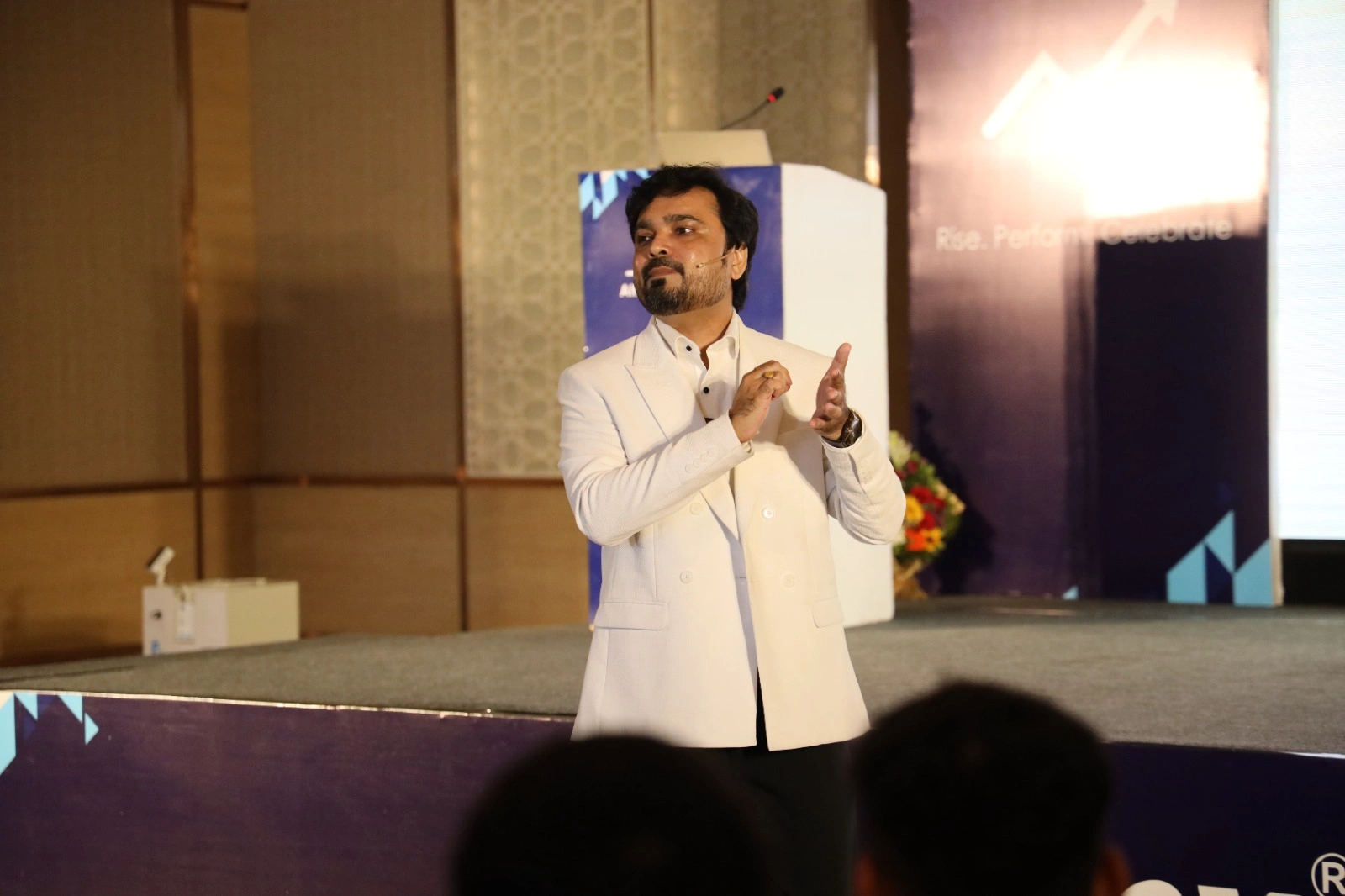
I have spent years standing in front of sales teams, managers and students across Maharashtra, and I keep meeting brilliant people who quietly give up. Not because they lack skill, but because somewhere along the way they learned to feel helpless. Their talent is intact. Their belief is not.
This article is about that gap, and how you close it. If you have ever watched a capable colleague stop trying after a few setbacks, or felt that quiet voice telling you it is pointless, read on. The fix has a name, and it is teachable.
The Champion Comeback Nobody Could Explain
Let me go back to Matt Biondi. Six months before the Seoul Olympics, Seligman ran a quiet experiment with a group of swimmers. He gave them deliberately false negative feedback about their timings, telling strong swimmers they had done worse than they actually had. Then he watched what happened next.
The pessimists in the group declined under that criticism. Their next swims got slower. But Biondi did the opposite. When told he had done badly, he improved. That single response told Seligman everything. He predicted that, no matter how Biondi started in Seoul, he would finish strong. And that is exactly what happened.
A pessimist sees the difficulty in every opportunity; an optimist sees the opportunity in every difficulty.
Winston Churchill said that, and it is the whole story of Biondi in one line. The same criticism that broke the pessimists became fuel for the optimist. This is why, in my workshops, I tell leaders that how a person responds to bad feedback tells you more about their future than their CV ever will.
What this means for your team
- Setbacks are not the test. The response to setbacks is the test.
- Two people with identical skill can have opposite futures, decided entirely by their explanatory style.
- You can spot a future top performer by watching how they take a hard week, not a good one.
Learned Helplessness: When Capable People Stop Trying
The dark mirror of learned optimism is something Seligman called learned helplessness. The idea is simple and a little frightening. After repeated failure, where nothing a person does seems to change the outcome, the mind draws a conclusion: effort is pointless. And so people stop trying, even when the situation finally changes and success is now within reach.
We have all seen this in Indian cricket and in our offices. Think of a talented player like Ambati Rayudu, full of ability, who at times seemed to carry the weight of being passed over. When a capable person absorbs enough rejection, a part of them quietly switches off. The talent stays. The willingness to fight for it leaves.
Success is going from failure to failure without loss of enthusiasm.
That, again, is Churchill, and it is the antidote to helplessness in a single sentence. The champion does not avoid failure. The champion refuses to let failure rewrite their self-talk.
How helplessness sneaks into a sales floor
I once worked with the story of Swapnali, who ran a boutique in Mumbai. For the first ten to twelve good days of the month, when sales came easily, she was euphoric. But by mid-month, when the footfall slowed, she became helpless. The slow patch did not just lower her numbers, it lowered her belief, and the lower belief made the rest of the month worse. The slump fed itself.
- Early wins create false euphoria that is fragile.
- A normal slow patch gets read as proof that nothing will work.
- The drop in belief then causes a real drop in performance, confirming the fear.
The Golden Triad: Focus, Meaning, Action
So how does a thought become a slump, or a comeback? In my book I describe what I call the Golden Triad. It runs in one direction: Focus leads to Meaning, and Meaning leads to Action.
Where you choose to focus determines the meaning you give an event. That meaning then drives the action you take, or fail to take. And here is the part most people miss: meanings are not neutral. They are either resourceful, pushing you forward, or unresourceful, shutting you down.
Rahul Dravid and the resourceful meaning
In 1998, Rahul Dravid was dropped from the ODI side. He could have read that as proof that he did not belong. Instead, he chose to read it as a chance to work on his fitness and his strokeplay. Same event. Completely different meaning. And that resourceful meaning produced years of brilliant action that followed.
That is the lever. You may not always control the event, but you can train where you focus, and therefore the meaning, and therefore the action. When I coach managers, I ask one question after every setback: is the meaning you are giving this resourceful or unresourceful? That single question changes careers.
Explanatory Style: The Three Ps That Decide Everything
Seligman gave us a precise way to understand why one person bounces back and another collapses. He called it explanatory style, and it comes down to how you explain events to yourself using three dimensions.
How a pessimist explains a bad event
- Permanent — this will last forever.
- Pervasive — this ruins everything in my life.
- Personal — it is entirely my fault, something wrong with me.
And cruelly, the pessimist explains a good event the opposite way: Temporary, Specific and the result of Others or luck. So nothing good ever sticks to them, and everything bad does.
How an optimist reverses it
- A bad event is Temporary — just for now.
- It is Specific — limited to this one situation.
- It is External — influenced by circumstances, not a verdict on my worth.
And the optimist lets good events become Permanent, Pervasive and Personal. They own their wins and rent their losses. This is not delusion. It is a more accurate and far more useful way to read reality.
This is not soft, feel-good talk either. The famous MetLife study found that explanatory style predicted sales success better than experience did. Salespeople who scored as optimists on the test outsold the pessimists. The ASQ test built on this idea went on to be used by Fortune 500 firms to choose people who would not crumble under rejection.
Teaching the three Ps of explanatory style to a sales team in Pune.Optimism Is Learnable: The 15-Minute Drill
Here is the good news that I build entire programs around: optimism is not a personality you are born with or denied. It is a skill. You can learn it the same way you learned to drive or to sell.
When I worked through Swapnali's mid-month slump with her, the fix was not a pep talk. It was learned optimism, practised daily. Two simple habits formed the core.
The daily practice
- Fifteen minutes of meditation to quieten the panicked, helpless self-talk before it runs the day.
- Rewriting self-talk with an index card — literally catching the pessimistic explanation, writing it down, and replacing it with a Temporary, Specific, External reading of the same event.
There is an old verse many of us grew up with, about King Bruce and the spider who tried again and again. I would add the humble ant to it. The ant that keeps climbing is not stronger than the others; it simply keeps using optimistic self-talk. It tells itself, just for now, just this slope, try once more. That inner sentence is the whole difference.
No one knows enough to be a pessimist.
Wayne Dyer said that, and I love it because it is logically true. To be certain things will fail, you would need to know the entire future. You do not. None of us do. So the optimistic reading is, quite simply, the more honest one.
Bring this to your team. I run learned-optimism-focused corporate training and keynotes for companies across Pune, Mumbai and all of Maharashtra.
Book a session · Explore corporate training programs
Frequently Asked Questions
What is the difference between learned optimism and learned helplessness?
Learned helplessness is what happens when, after repeated failure, a person concludes that effort is pointless and stops trying even when success becomes possible. Learned optimism is the trained ability to read setbacks as Temporary, Specific and External, so you keep acting. Both are learned, which means helplessness can be unlearned.
Can optimism really be taught to a sales team?
Yes. The MetLife study showed explanatory style predicted sales success better than experience, and the ASQ test was later used by Fortune 500 firms. In my workshops I teach the three Ps and a daily drill of meditation plus rewriting self-talk on an index card, so optimism becomes a repeatable skill, not a mood.
What are the three Ps of explanatory style?
Permanent, Pervasive and Personal. A pessimist treats bad events as permanent, pervasive and personal, and good events as temporary, specific and due to others. An optimist reverses it, treating bad events as temporary, specific and external, and owning good events as permanent, pervasive and personal.
What is the Golden Triad you teach?
The Golden Triad is Focus leads to Meaning leads to Action. Where you focus decides the meaning you give an event, and that meaning drives your action. Meanings are either resourceful or unresourceful, which is why Rahul Dravid reading a 1998 dropping as a chance to improve produced very different action than self-blame would have.
I have seen learned optimism turn quiet, capable people into relentless performers, and I would love to do that work with your team. If this resonated, get in touch, explore my corporate training programs, or look at my work as a motivational speaker in Pune. This article is adapted from my book The Winning Edge, The Champion Mindset.
Related Articles by Avinash Chate
- Recession मध्ये Hyundai ने cars परत घेऊनही फायदा कसा कमावला
- Virender Sehwag Mindset That Most Corporate Professionals Fear
- Ajit Agarkar's 21-Ball ODI Fifty Against Zimbabwe: The Silent Performer's Career Blueprint
| AC | Avinash ChateIndia's Leading Corporate Trainer | TEDx Speaker | Author With 80+ organizations trained including RBI, JSW Steels, and Ferrero, Avinash Chate delivers high-impact corporate training across India. Creator of the KITE Leadership Framework and bestselling author of "The Winning Edge." Website YouTube |
Avinash Chate services
Corporate Trainer in Maharashtra · Top Corporate Trainers in Maharashtra · Leadership Trainer in Maharashtra · Top Leadership Trainers in Maharashtra · Motivational Speaker in Maharashtra · Top Motivational Speakers in Maharashtra · All service locations
← Back to all articles · Book Avinash Chate
By Avinash Chate — Maharashtra’s #1 Corporate Trainer & Motivational Speaker. .