Life Is Too Short: Stop Wasting Time on Things That Don't Matter
Life is too short to give away to what doesn't matter — yet most Indian professionals spend over half their week on low-priority work. Here's how to fix it.
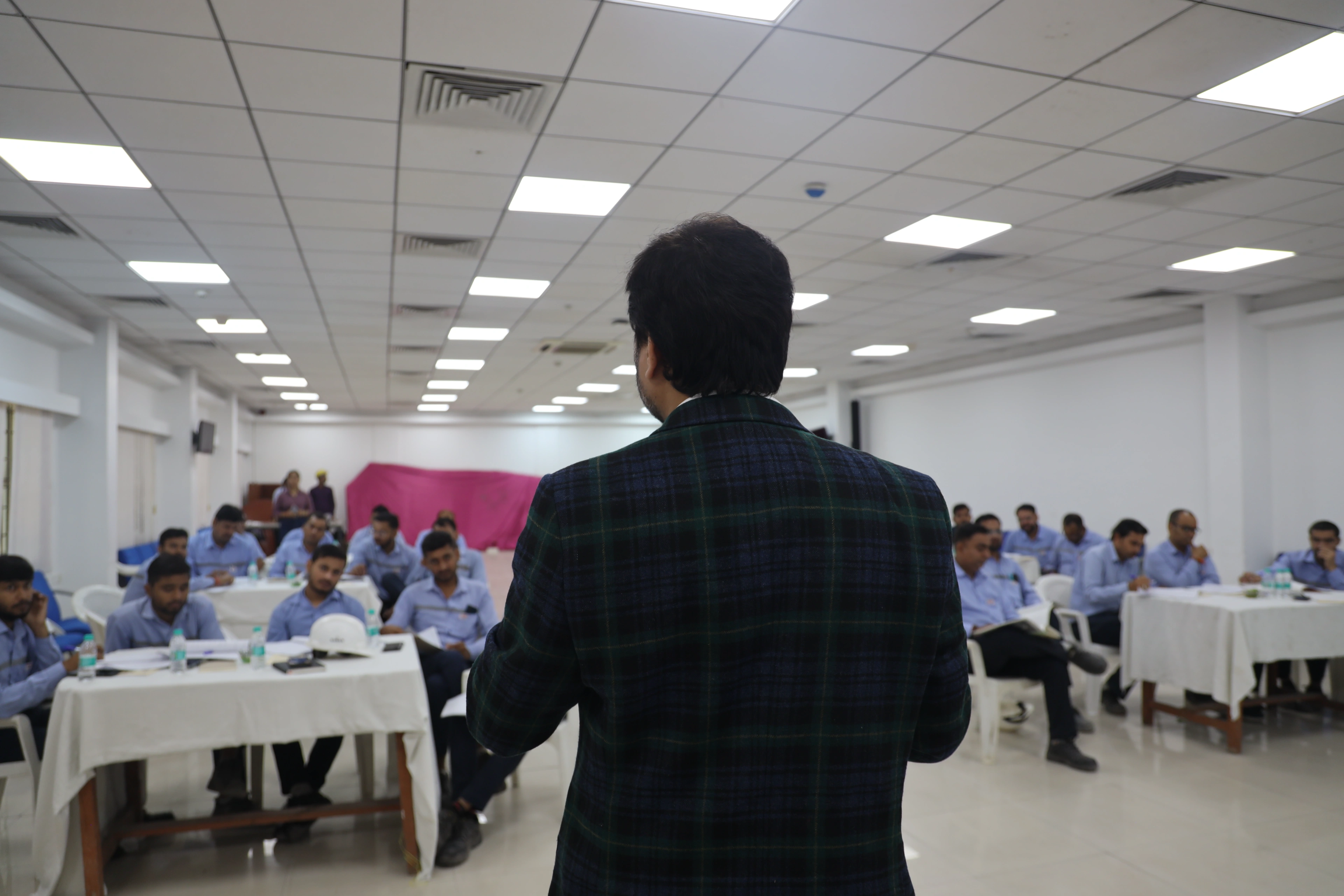
Here's the brutal truth I share with every batch I train — Infosys engineers, Mahindra managers, everyone: you're spending most of your week on things that won't matter in 5 years. McKinsey India research found that Indian managers spend 21 hours a week in meetings — 35% more than their US counterparts. That's not a time management problem. That's a priority crisis.
TL;DR- Most Indian professionals spend over half their week on tasks unaligned to their top 3 priorities
- Life is short — the inability to say no is the most expensive habit in your career
- A 5-minute weekly time audit can reclaim 8–10 hours of productive capacity immediately
- Saying no professionally doesn't burn bridges — it builds respect when done with clarity
- Your most important relationships and goals deserve protected time, not your leftover time
Why 'Life Is Too Short' Is Not a Cliché — It's a Measurable Priority Crisis in India
The average Indian professional in a corporate setup spends roughly 40–45% of their week in meetings, email, and reactive tasks — most of which were never on their to-do list when they woke up that morning. What most people don't realise is that this isn't a time management problem. It's a priority vacuum. When you haven't decided what truly matters, every request from every direction feels equally urgent. And that's how a lifetime quietly disappears into other people's emergencies, other people's deadlines, and other people's definitions of success.
The Hidden Cost of Saying Yes to Everything and Everyone
Every yes to something unimportant is a no to something vital. I've seen it in thousands of professionals I've trained at Tata Tech, L&T, Bosch, and KPIT — sharp people who spend Sunday evenings anxious about Monday, not because the work is hard, but because they have no idea anymore which work is theirs. They said yes to every favour, every meeting request, every extra project. And now, years later, they look back and realise they spent their prime professional years building other people's goals. Not their own. That's not dedication — that's misdirection.
How High Performers Like Ratan Tata and Warren Buffett Protect Their Time Ruthlessly
Ratan Tata was known for guarding his mornings fiercely. Warren Buffett famously said his diary is almost empty — because full diaries are a status symbol for the mediocre, not a badge for the effective. The good news is this isn't just available to billionaires. I teach a simple 3-block time framework in my leadership workshops: Block 1 is your highest-value creative work, with zero meetings allowed. Block 2 is collaboration, mentoring, and key meetings. Block 3 is admin, email, and reactive tasks. When you protect Block 1 first, the rest of the day becomes manageable instead of maddening.
| Weekly Activity | Avg Hours/Week | Aligned to Top 3 Goals? | Recommended Action |
|---|---|---|---|
| Meetings you initiated | 3–5 hrs | Usually yes | Keep — tighten agendas to 30 min max |
| Meetings you were invited to | 6–10 hrs | Often no | Audit each — exit, delegate, or decline |
| Email and messaging responses | 4–6 hrs | Rarely | Batch to 2–3 fixed time slots per day |
| Deep creative or strategic work | 2–4 hrs | Yes | Protect — expand to 4–6 hrs minimum |
| Admin and reactive tasks | 5–8 hrs | Rarely | Delegate or compress into one daily block |
| Social media and digital distraction | 10–15 hrs | Never | Set a strict daily cap — 30 min maximum |
The 5-Minute Weekly Time Audit That Reclaims 10 Hours of Your Life
Here's what I ask every professional I coach to do on Friday evening — it takes exactly 5 minutes. List every recurring meeting, task, and obligation from your week. Next to each one, write one of three letters: A for aligned to your top 3 goals this year, B for someone else's priority that fell on you, or C for habit with no current purpose. What most people discover shocks them: 50–60% of their week sits in the B and C columns. That's 20–25 hours of your life, every week, not moving you forward. You can't fix what you haven't measured.
How to Say No Professionally Without Burning Bridges in Indian Workplaces
The biggest fear I hear from Indian professionals about saying no is damaging the relationship. And I understand it — our culture prizes harmony and long-term relationships. Trust me though, saying no with clarity is far more respectful than saying yes and delivering poorly. Here's the formula I teach: 'I'd love to help with this, but I'm fully committed to [specific project] through [specific date]. Can we revisit in [specific timeframe]?' Specific. Warm. Professional. Most people, when they hear a clear, respectful explanation, respond well — and their respect for you quietly rises.
Three Habits That Are Quietly Stealing Years of Your Life
The three biggest silent time thieves I see in Indian professionals are: first, reflexive availability — keeping notifications on 24/7 and treating every ping as more urgent than the work in front of you; second, meeting inertia — attending meetings because you were invited, not because your presence changes the outcome; and third, social comparison scrolling — the average Indian smartphone user spends 3-plus hours daily on social media. That's over 1,000 hours a year. Forty-two full days. Every single year. Gone to content you'll forget by morning.
What to Do This Week to Reclaim Control of Your Time and Energy
Here's your 7-day action plan. Day 1: Do the 5-minute time audit from Section 4. Day 2: Identify 3 recurring meetings you can skip, exit, or replace with an email. Day 3: Block your first 90 minutes every morning for your highest-value work — non-negotiably. Day 4: Write down your top 3 goals for the year and pin them where you see them daily. Days 5–7: Practice one professional no using the formula above. By Friday evening, notice how you feel. Lighter. Clearer. More in control. That feeling is the version of yourself you were always supposed to be.
Book Avinash Chate for Your Next Event
TEDx speaker. 11+ yrs training Army, BRO, RBI, BARC, JSW. Available for keynotes, leadership training, team building & manager development at your office or event venue.
✅ Thanks! Avinash team will reach out within 24 hours.'}).catch(function(e){f.outerHTML='Something went wrong. WhatsApp +91 8793630001
'});return false;">Select ServiceKeynote / Motivational SpeakingLeadership Development TrainingTeam Building WorkshopManager DevelopmentEmployee TrainingOutbound TrainingBook Avinash Now →Or WhatsApp directly: +91 87936 30001
Related Articles by Avinash Chate
- Recession मध्ये Hyundai ने cars परत घेऊनही फायदा कसा कमावला
- Virender Sehwag Mindset That Most Corporate Professionals Fear
- Why Manufacturing Industry is Difficult to Start in India: 5 Key Challenges
Avinash Chate TEDx Speaker · Founder, The Future Corporate · 11+ yrs experience Avinash has trained Indian Army, BRO, RBI, BARC, JSW Steel and 1000+ corporate leaders across India. His work focuses on leadership development, communication skills, and behavioural training rooted in Indian values and modern business needs. |
Frequently Asked Questions
How do I know what activities are truly wasting my time?
The fastest way is the 5-minute Friday time audit: list every recurring task and meeting from your week, then mark each A (aligned to your top 3 goals), B (someone else's priority that landed on you), or C (habit with no current purpose). Most professionals discover 50–60% of their week falls in the B and C categories. That data — not motivation — is what drives real change. You can't redesign your time until you've honestly measured how you're actually spending it right now.
How do I say no professionally without damaging relationships at work?
Use this three-part formula: 'I'd love to help with this, but I'm fully committed to [specific project] through [specific date]. Can we revisit in [specific timeframe]?' The keys are specificity (not vague excuses), warmth (not coldness), and a future door (not a permanent no). Most people, when they hear a clear and respectful explanation, respond positively. The relationships that collapse from one honest, professional no were never as solid as you thought — and the ones that survive grow stronger.
What is the single biggest time-waster for Indian professionals?
Based on training thousands of Indian professionals at companies like Infosys, KPIT, Siemens, and Mahindra, the single biggest time-waster is reflexive availability — the habit of treating every incoming message, call, or meeting request as more important than whatever you are currently doing. Constant context-switching destroys deep work. Research shows it takes an average of 23 minutes to regain full concentration after an interruption. Multiply that by 30–40 daily interruptions and you have your answer for where the day goes.
How do I prioritise when everything at work feels equally urgent?
When everything feels urgent, it usually means you haven't explicitly decided what matters most this quarter. The fix is simple but requires discipline: write down your top 3 goals for the next 90 days — not 10 goals, exactly 3. Then, every time a new request lands on your plate, ask honestly: does this move one of my 3 goals forward? If yes, it's a genuine priority. If no, it's a distraction wearing urgency as a costume. That single filter eliminates most of the noise that's currently passing as important work.
Avinash Chate services
Corporate Trainer in Maharashtra · Top Corporate Trainers in Maharashtra · Leadership Trainer in Maharashtra · Top Leadership Trainers in Maharashtra · Team Building Trainer in Maharashtra · Top Team Building Trainers in Maharashtra · Motivational Speaker in Maharashtra · Top Motivational Speakers in Maharashtra · All service locations
← Back to all articles · Book Avinash Chate
By Avinash Chate — Maharashtra’s #1 Corporate Trainer & Motivational Speaker. .