MS Dhoni's Process Secret: Why India's Greatest Captain Trusted Systems Over Results
MS Dhoni's unshakeable calm under pressure was never about talent alone — it was a pre-committed process that removed emotion from performance. Here is what Indian managers can learn from it.
There is a scene that replays in Indian cricket's memory again and again. Last over. Three wickets needed. Or six runs off two balls. The camera cuts to the dugout — and there he is, MS Dhoni, jaw set, eyes steady, almost bored. While millions of fans are having cardiac events in their living rooms, the man responsible for the outcome looks like he is watching an evening stroll in a park.
That calm is not an accident. It is not a personality quirk. It is a system. And in my book The Winning Edge, The Champion Mindset, I spend considerable time on exactly this — because that same system is the difference between an average manager and a consistently high-performing leader in Indian corporate life. The scoreboard will always lie to you in the short run. The process never does.
If you are a manager, a team leader or a business owner in India today, this article is for you. We are going to unpack what I call the process-over-results mindset, why it removes emotional volatility from performance, and how you can install it in your team starting this week.
What "Trusting the Process" Actually Means
Most people use the phrase "trust the process" as a motivational poster slogan. But when I study Dhoni's career — and I have studied it carefully for the lessons I teach in my corporate training programs — what I see is something far more specific and actionable.
Trusting the process means making your decisions before the pressure arrives. Dhoni did not decide whom to bowl in the final over when the final over began. He had already decided — based on matchups, conditions, opposition data, and each player's specific role. By the time the crowd was screaming, the cognitive work was done. He was simply executing a pre-committed plan.
Pre-commitment: The Core of the System
Pre-commitment is a technique borrowed from behavioural psychology. You make a binding decision in a calm, rational state so that when emotion, fatigue or external pressure arrives, you are not re-deciding — you are just following the plan. Champions in sport, business and life use it constantly. Dhoni used it in every game. You can use it in every meeting, every sales conversation, every performance review.
Why the Scoreboard is a Dangerous Guide
The scoreboard — or in your corporate context, the monthly revenue number, the quarterly appraisal, the deal that did not close — tells you only what happened, not whether you did the right things. A team can execute perfectly and still lose a quarter to macro forces entirely outside their control. If your self-assessment and your team's morale hinge entirely on the scoreboard, you will swing between overconfidence and panic. That is emotional volatility. And emotional volatility destroys sustained performance.
"What does not kill you makes you more strong." — MS Dhoni
Dhoni said this not as a consolation for failure but as an operational truth: the difficulty of the situation is the very thing that builds the muscle you will need next time. But you only get that benefit if you stay in the process through the difficulty, rather than abandoning the plan the moment the scoreboard turns against you.
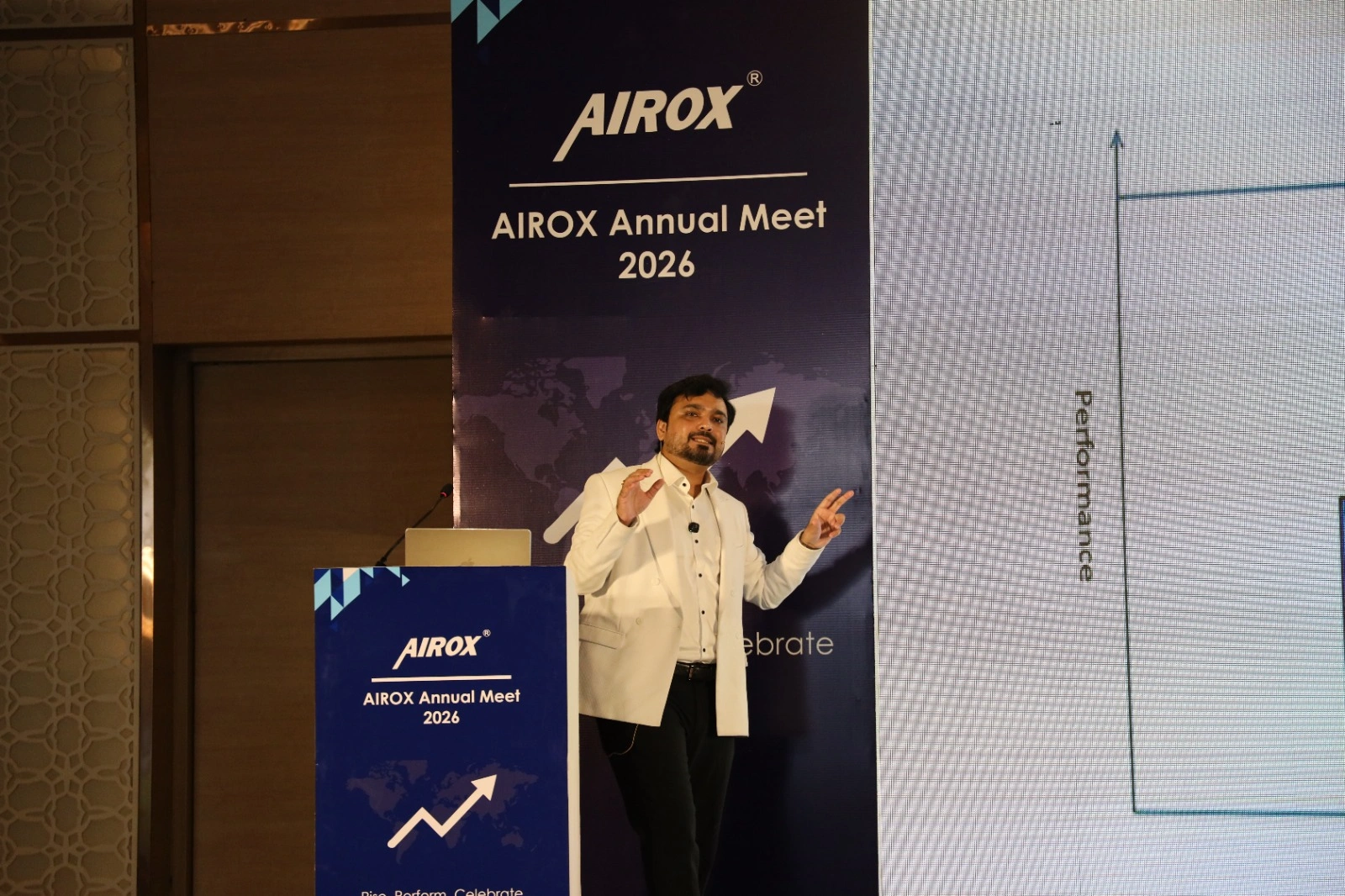
Avinash Chate conducting a leadership session on process mindset for Indian corporate teamsThe Deliberate Practice Foundation
In Chapter 3 of The Winning Edge, I write about deliberate practice as the engine that makes process-trust possible. Here is the connection: you can only trust a process if the process has been built correctly. And a process is only built correctly through deliberate, structured practice — not random repetition.
Dhoni and Rahul Dravid represent two very different styles of batting, but they share a common foundation: they did not leave preparation to chance. Every session had a purpose. Every drill targeted a specific gap. When the pressure situation arrived, the correct response had been rehearsed so many times it was automatic.
What Deliberate Practice Looks Like in the Workplace
- Role-specific preparation: Every team member knows exactly what they are responsible for — not a vague job description, but a precise set of outcomes and behaviours that are rehearsed and reviewed regularly.
- Feedback loops built in: After every major client interaction, sales call or project milestone, a structured debrief happens — not a blame session, but a process review. What did we plan to do? What did we actually do? What will we improve?
- Scenario rehearsal: High-performing teams run pre-mortems. Before a major pitch or product launch, they sit down and ask: what could go wrong, and what is our pre-committed response? This is the corporate equivalent of the Dhoni final-over plan.
The Trap of "Working Hard" Without a Process
I see this constantly in my workshops across Pune and Mumbai. Managers tell me their teams are working very hard — and I believe them. But hard work without a deliberate process is just effort without direction. You tire yourself out, the scoreboard does not move the way you expected, and morale collapses. The solution is not more hours. The solution is a better system.
"Rigorous preparation is not about leaving nothing to chance — it is about reducing the number of things that can go wrong to only those that are genuinely outside your control."
Building a Process-Oriented Team: The CSK Model
In Chapter 13 of The Winning Edge — the Winning Edge Checklist — I use Chennai Super Kings' IPL success under Dhoni as a case study in structured, holistic team design. CSK's success was never about assembling the most expensive players. It was about something far more transferable to Indian business:
- Clear team composition: Everyone knew their role — match-winner, anchor, death-overs specialist. There was no ambiguity.
- Clear role for each player: A player who was a finisher batted as a finisher, even if the "smart" cricket in that moment seemed to call for something else. The process held.
- Systematic approach: Decisions about team selection, batting order, bowling changes — all pre-planned, all consistent, all resistant to in-the-moment panic.
Translating the CSK Model to Your Team
- Define every person's role in explicit output terms. Not "handles client relationships" but "owns post-sale onboarding and achieves 90-day NPS above 8 for every account."
- Create a team composition map. Who is your anchor (steady, reliable, keeps things stable under pressure)? Who is your match-winner (creative, high-risk, high-reward)? Who is your specialist (deep expertise in one area)? Do you have all three types?
- Run structured weekly reviews against the process, not just the numbers. Ask: did each person execute their defined role this week? If not, what was the obstacle — a skill gap, a resource gap, or an external factor?
The Danger of Changing the System Every Quarter
One of the most common mistakes I see in Indian organisations — especially in fast-growing startups and mid-size companies going through scale — is abandoning the process the moment results slip. A quarter of soft sales and suddenly everything is redesigned: the team structure, the targets, the incentive scheme, the reporting lines. This is the scoreboard driving the car. The result is that the team never trusts any system deeply enough for it to compound over time. CSK never made that mistake. The system held, and the results followed — year after year.
Emotional Volatility: The Hidden Tax on Indian Corporate Performance
Let me be direct about something I observe in organisations across Maharashtra. Emotional volatility is extraordinarily expensive and almost nobody is measuring the cost.
When a team's mood swings with every client complaint, every competitor move, every monthly revenue miss, the energy that should be going into execution is going into managing internal anxiety. People stop taking initiative because they are not sure whether the mood in the room today will punish a mistake. Decision-making slows because nobody wants to own a result that might be judged by a panicking leadership team.
How Process Removes Volatility
A pre-committed process acts as an emotional anchor. When the team knows what they are doing and why, a bad week does not trigger an identity crisis. It triggers a process review. The question shifts from "are we failing?" — which is existential and paralysing — to "which part of our process needs adjustment?" — which is practical and energising.
The Leader's Role in Modelling Calm
Dhoni's composure was not just personally useful — it was organisationally contagious. His players knew that if Dhoni was calm, the situation was manageable. Your team looks to you the same way. When you, as a leader, react to bad news with panic, you give your team permission to panic. When you react with curiosity and process-focus, you model the behaviour that compounds into a high-performance culture.
- In a crisis, lead with questions, not statements. "What does our process say about this situation?" is more powerful than any instruction you can give.
- Celebrate process adherence, not just results. Publicly acknowledge when a team member followed the right process even when the outcome did not go their way.
- Build a language of process into your team's vocabulary. "Let us check our pre-committed approach" should be as natural as "let us check the numbers."
The Winning Edge Checklist: Installing the System
The final chapter of The Winning Edge, The Champion Mindset contains what I call the Winning Edge Checklist — a set of practical commitments that high performers make to themselves and their teams. The very first point on that checklist is the Dhoni principle: create a structured, holistic program with clear roles and a systematic approach.
Here is how I suggest you use this with your own team:
- Write your team's process down. If your process only exists in people's heads, it is not really a process — it is a habit. Habits break under pressure. Documented processes survive it.
- Assign clear ownership to every process step. The moment "everyone is responsible," nobody is responsible. Name the person.
- Set a review cadence before you need it. Do not wait for a crisis to review the process. Schedule a monthly process review as a standing agenda item, separate from the results review.
- Make the process visible. In CSK, every player knew the game plan. In your team, every person should be able to articulate the team's process in two sentences. If they cannot, the process is not clear enough.
- Protect the process from short-term panic. This is leadership's job. When the numbers dip and the board is restless, the leader's role is to assess: is the process sound, or has something fundamentally changed? If the process is sound, hold it. That is what Dhoni did.
"The champion does not perform despite the pressure. The champion performs because of the system that was built before the pressure arrived."
— Avinash Chate, The Winning Edge, The Champion Mindset
Applying This in Indian Corporate Reality: 2026 Context
India's corporate environment in 2026 is extraordinary in its opportunity and its volatility. AI is restructuring job roles at a pace nobody predicted. Competition is global in a way it was not ten years ago. The talent market is tighter and more demanding. In this environment, the temptation to react to every signal and abandon last quarter's strategy for this quarter's trend is enormous.
This is precisely when the Dhoni principle becomes most valuable. The organisations that will win in this environment are not the ones with the most aggressive targets — they are the ones with the most disciplined processes. They will attract better talent because talented people prefer to work in environments where the plan does not change every six weeks. They will retain clients because clients trust consistency. They will outperform competitors who are in constant reactive mode.
The question is not whether you have a good strategy. Almost every organisation in India has a good strategy. The question is whether you have a process committed enough and a culture calm enough to execute that strategy through the inevitable difficult quarters. That is the champion mindset. That is the winning edge.
Bring this to your team. I run process-mindset and champion leadership focused corporate training and keynotes for companies across Pune, Mumbai and all of Maharashtra.
Book a session · Explore corporate training programs
Frequently Asked Questions
What is the "process over results" mindset and why does it matter for Indian managers?
The process-over-results mindset means making key decisions in advance, in a calm state, so that when pressure or adverse circumstances arrive, you are executing a pre-committed plan rather than reacting emotionally. For Indian managers, this is critical because it removes emotional volatility from the team's daily performance. Rather than swinging between over-confidence in good weeks and panic in bad ones, the team stays anchored to a consistent approach that compounds over time. MS Dhoni embodied this — his pre-game plan meant that a tight finish triggered execution, not improvisation.
How did MS Dhoni use a process-oriented mindset to lead Chennai Super Kings?
Dhoni built CSK around three pillars that any corporate leader can replicate: clear team composition (every player had a defined role), individual role clarity (each player knew exactly what was expected of them in every game situation), and a systematic approach to decisions (team selection, batting order and bowling changes were pre-planned, not reactive). This structure meant the team's performance was not dependent on in-the-moment inspiration — it was built on deliberate preparation. The results — consistent IPL success — reflected the quality of the system, not just the talent on the field.
What is deliberate practice and how can corporate teams use it?
Deliberate practice, as I describe in Chapter 3 of The Winning Edge, is structured preparation where every session has a specific goal targeting a specific gap — it is not mere repetition. For corporate teams, this means role-specific training tied to real performance data, regular scenario rehearsal (pre-mortems before major pitches or launches), and structured post-event debriefs that review the process rather than just the outcome. Dhoni and Dravid both exemplified this — their consistency under pressure was the product of preparation that was anything but accidental.
How can a leader reduce emotional volatility in their team?
The most effective lever is a documented, visible process with clear ownership at every step. When the team knows exactly what they are supposed to do and why, a bad week triggers a process review rather than an identity crisis. Leaders should model calm by leading with questions in a crisis ("what does our process say?"), celebrate process adherence publicly — not just results — and protect the process from short-term reactive changes. As Dhoni demonstrated, the leader's composure is organisationally contagious: a calm leader gives the team permission to stay focused rather than panic.
If this resonates with how you want to lead your team, I would love to have a conversation. Reach out via the contact page, explore my corporate training programs, or learn more about my leadership training work in Pune. The champion mindset is not a personality trait — it is a learnable, installable system, and that is exactly what I help organisations build.
This article is adapted from my book The Winning Edge, The Champion Mindset.Related Articles by Avinash Chate
- Recession मध्ये Hyundai ने cars परत घेऊनही फायदा कसा कमावला
- Virender Sehwag Mindset That Most Corporate Professionals Fear
- Why Manufacturing Industry is Difficult to Start in India: 5 Key Challenges
| AC | Avinash ChateIndia's Leading Corporate Trainer | TEDx Speaker | Author With 80+ organizations trained including RBI, JSW Steels, and Ferrero, Avinash Chate delivers high-impact corporate training across India. Creator of the KITE Leadership Framework and bestselling author of "The Winning Edge." Website YouTube |
Avinash Chate services
Corporate Trainer in Maharashtra · Top Corporate Trainers in Maharashtra · Leadership Trainer in Maharashtra · Top Leadership Trainers in Maharashtra · Motivational Speaker in Maharashtra · Top Motivational Speakers in Maharashtra · All service locations
← Back to all articles · Book Avinash Chate
By Avinash Chate — Maharashtra’s #1 Corporate Trainer & Motivational Speaker. .