Muktangan's First Rule: Why Discipline Must Come Before Motivation
India's first rehabilitation centre teaches one truth above all: lasting change begins with discipline, not motivation. Here is what that means for every professional.
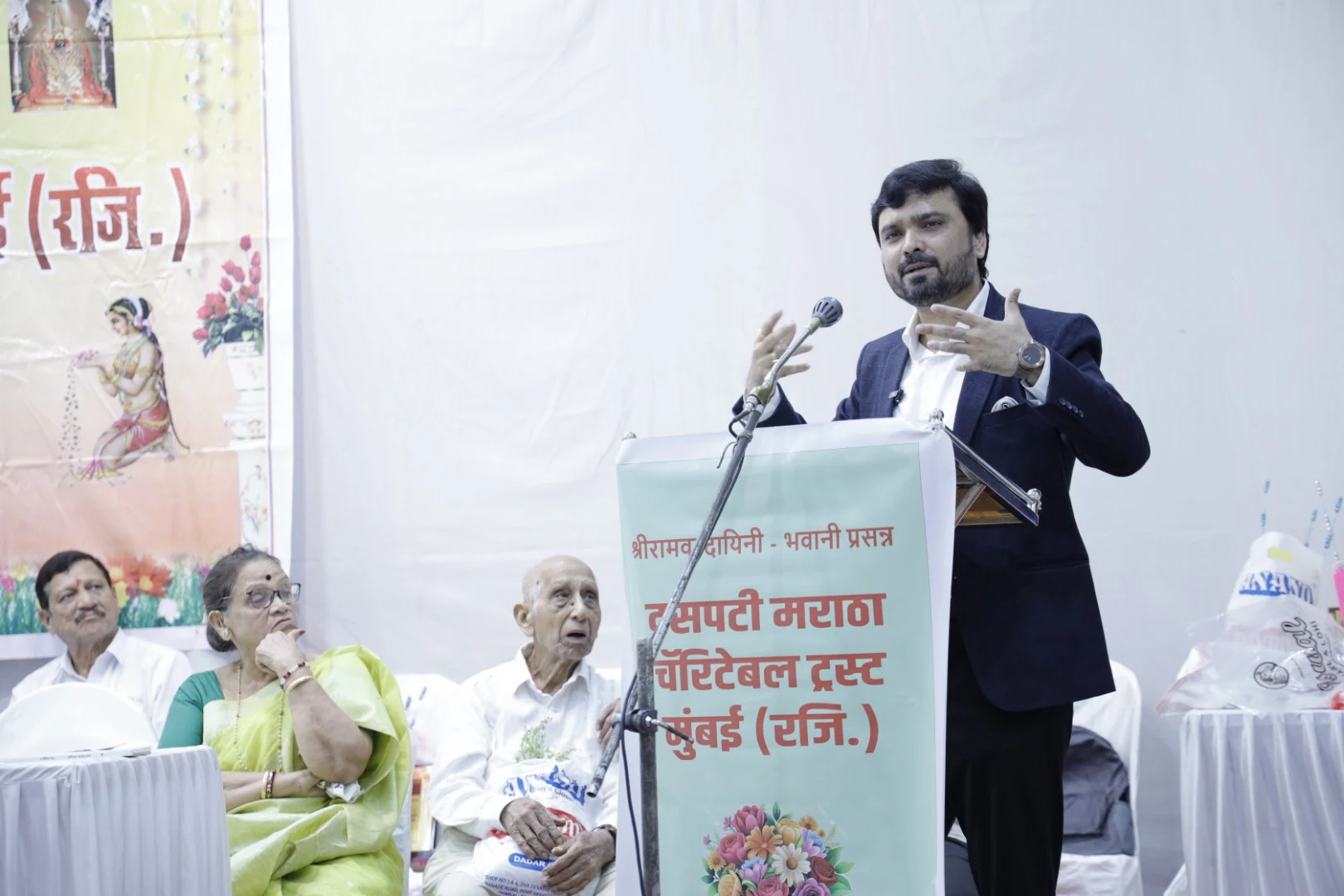
There is a story I return to again and again — in my workshops, in my keynotes across Pune and Mumbai, and in my book The Winning Edge, The Champion Mindset. It is the story of Muktangan.
Muktangan is cited as India's first rehabilitation centre for alcohol addiction, founded in Pune by the remarkable Dr Anil Awachat — known to everyone there simply as Baba. When I first encountered the work happening at Muktangan, I expected to find motivational techniques, counselling frameworks, perhaps elaborate psychological interventions. What I found instead was something far more radical, and far more powerful: a fixed daily timetable.
Wake up at the same time. Eat at the same time. Attend activities at the same time. No exceptions. No "I don't feel like it today." No negotiation. Muktangan's first and most fundamental rule is not about belief, not about willpower, and certainly not about staying motivated — it is about discipline. And after two decades of training professionals and leaders across India, I am convinced that this single insight holds the key to almost every performance problem I see inside organisations today.
What Muktangan Taught Me About Behaviour Change
Most of us have been sold a seductive lie: that if you want to change your behaviour, you first need to feel motivated. You need to want it badly enough. You need to find your "why." And once that inner fire is burning brightly, change will follow naturally.
Baba and his team at Muktangan discovered something different. The men and women who came to Muktangan were not lacking desire. They desperately wanted to overcome their addiction. Many had tried, failed, and tried again. The problem was never motivation — motivation comes and goes like the monsoon. The problem was structure.
By imposing a strict external framework — a discipline the patient did not yet feel inside — Muktangan gave the brain something motivation never can: consistency. The brain changes through repetition, not through enthusiasm. Over time, the external discipline becomes internalised. What begins as a rule becomes a rhythm. What begins as a constraint becomes a character trait.
"Massive behaviour change cannot be built on motivation or willpower alone. It requires structural discipline imposed from the outside until it becomes internalised."
— Avinash Chate, The Winning Edge, The Champion Mindset
This is the insight I carry into every corporate training room. Whether I am working with a sales team in Mumbai or a leadership cohort in Pune, the single biggest gap I see is not a lack of motivation — I have never met a professional who did not want to perform better. The gap is always a lack of disciplined structure around daily habits and behaviours.
Avinash Chate conducting a corporate training session on discipline and professional mastery across Maharashtra.The Motivation Trap: Why "Feeling Inspired" Is Not Enough
Let me be direct, because I see this mistake costing Indian professionals dearly. Motivation is an emotion. Like all emotions, it is temporary, it is context-dependent, and it is unreliable as a foundation for consistent high performance.
Consider what happens after a powerful motivational seminar. Participants leave feeling energised. They write goals. They make plans. And then — within days, sometimes within hours — the emotional high fades, the daily pressures return, and the new resolutions quietly dissolve. This is not a character failure. This is simply how emotions work.
The Motivation-Discipline Gap
In my workshops I draw what I call the Motivation-Discipline Gap on the whiteboard. It looks like this:
- Motivation spikes after a seminar, a great speech, a personal breakthrough — then falls back toward baseline within 72 hours.
- Discipline, once built through consistent practice, creates a floor that does not fall. It compounds upward over time.
- The gap between the motivation spike and the discipline floor is where most professionals live permanently — always inspired, rarely consistent.
The solution is not to chase bigger and bigger motivational experiences. The solution is to build the floor.
What Champions Do Differently
Every world-class performer I have studied — in sport, in business, in the arts — shares one trait: they show up and do the work whether they feel like it or not. Sachin Tendulkar did not wait until he felt motivated to go to the nets. Discipline was his default state. Motivation, for such people, is a bonus — a pleasant addition to an already robust system.
"Most people treat discipline as a cost, a sacrifice, or a constraint. Champions treat it as a privilege and a pleasure."
— Avinash Chate, The Winning Edge, The Champion Mindset
Point 8 of My 15-Point Mastery Checklist: Move Discipline to the Top
In Chapter 13 of The Winning Edge, I share a 15-Point Mastery Checklist — a framework for achieving genuine mastery of your profession. Point 8 is perhaps the most counterintuitive item on the entire list, and it is the one that draws the most pushback in my training rooms.
Point 8 states: Move discipline to the top of your "toward values."
Understanding Toward Values and Away Values
In my framework, values fall into two categories:
- Toward values are the things you move toward — pleasure, achievement, connection, excitement, success.
- Away values are the things you move away from — pain, embarrassment, failure, discomfort.
Most people unconsciously classify discipline as an away value — something they endure to avoid a bad outcome (failing an exam, losing a job, disappointing a boss). The moment the threat recedes, the discipline disappears.
Champions re-classify discipline as a toward value — something they actively desire, something that gives them pleasure and identity. When you genuinely enjoy the process of showing up consistently, no external threat is needed to keep you on track. This re-classification is not motivational talk. It is a deliberate cognitive reprogramming, and it can be trained.
How to Begin the Shift
- Start with non-negotiables: Choose two or three daily actions that are completely non-negotiable — the way Muktangan's wake-up time is non-negotiable. Treat them with the same seriousness as a client meeting.
- Track the streak, not the feeling: Use a simple habit tracker. The goal is to protect the streak on days when motivation is absent — especially on those days.
- Celebrate the act, not the outcome: Each time you follow through without feeling like it, acknowledge it internally. You are training your brain to associate discipline with a reward signal.
- Build identity first: Stop saying "I am trying to be more disciplined." Start saying "I am a disciplined professional." Identity precedes behaviour when you make the shift consciously.
Healthy Addictions: Dr Awachat's Second Insight
There is a second lesson from Muktangan that I find equally powerful and far less discussed. Dr Awachat did not simply remove the destructive addiction and leave a vacuum. He replaced it with what I call healthy addictions — alternative sources of intense pleasure and engagement that compete with the destructive ones.
At Muktangan, patients are introduced to hobbies, creative pursuits, and structured activities that generate genuine satisfaction and — crucially — a degree of positive obsession. Music, art, sports, craft. The brain that was once hijacked by alcohol now finds a legitimate channel for the same intensity of engagement.
What This Means for Your Professional Life
The healthy addiction principle maps directly onto professional mastery. The professionals I have coached who sustain peak performance over years are not the ones who white-knuckle their way through discipline. They are the ones who have found genuine deep engagement — almost addiction-like in its pull — in their craft.
- The sales professional who is genuinely fascinated by human psychology and negotiation.
- The manager who finds real pleasure in watching a team member grow under their guidance.
- The entrepreneur who is so absorbed in solving a customer problem that time becomes irrelevant.
When your work becomes a healthy addiction — when the discipline of showing up daily is fuelled by genuine engagement rather than fear of consequences — performance becomes almost effortless. The discipline is no longer a cost. It is the activity itself.
"To master your profession, discipline must be moved to the top of your toward values — the things you move toward rather than away from."
— Avinash Chate, The Winning Edge, The Champion Mindset, Chapter 13
Applying the Muktangan Framework in a Corporate Context
When I bring this framework into organisations across Pune, Mumbai, and the rest of Maharashtra, the conversation typically follows a predictable arc. Leaders initially resist it — "Our people need to feel inspired, not constrained." But the data from within their own teams tells a different story.
The Discipline Audit
I run a simple exercise I call the Discipline Audit. Participants are asked to list the five most important professional behaviours they know they should do consistently — the actions that, if done every single day, would transform their results. Then I ask: how many of those five are you actually doing every day this week?
In twelve years of running this exercise across hundreds of teams, the average answer has never exceeded two. People know what to do. The gap is never knowledge. The gap is always disciplined execution.
From Individual Discipline to Team Culture
Muktangan's most powerful insight for organisations is this: you cannot wait for every individual to become self-disciplined before building a high-performance culture. You build the structure first — clear routines, non-negotiable standards, consistent rituals — and self-discipline emerges as a consequence.
- Daily standups that start and end on time — every time.
- Weekly review rhythms that happen regardless of how busy the week was.
- One-on-one coaching conversations that are never cancelled for operational pressure.
- Feedback norms that are practised consistently, not only during appraisal season.
These are not bureaucratic processes. They are the organisational equivalent of Muktangan's morning timetable. They are the structure inside which individual motivation can eventually grow into sustainable, internalised discipline.
Avinash Chate with participants at a leadership and discipline workshop — the champion mindset in practice.The Champion Mindset Reframe: Discipline as Identity
The final shift the Muktangan story teaches — and the one I spend the most time on in my leadership training programs — is the reframe of discipline from an activity to an identity.
Patients at Muktangan who sustain their recovery for years are not people who have successfully resisted temptation every day. They are people who have rebuilt their sense of self. They no longer identify as people who happen to be not drinking. They identify as people who live a certain kind of life — structured, purposeful, engaged. The discipline is not what they do. It is who they are.
The same shift is available to every professional reading this article. You do not need to become more motivated. You need to decide — clearly, deliberately, and repeatedly — who you are. A disciplined professional is not someone who has conquered their laziness. It is someone who has chosen a different identity, and who allows that identity to govern their daily choices even on the days when motivation is nowhere to be found.
In my workshops, I close this section with one question: "If the most disciplined version of you showed up to work tomorrow — what would be different?" The answers are always specific, always actionable, and always within reach. The only thing standing between the professional in the room and that version of themselves is not inspiration. It is a daily structure, faithfully followed.
Bring this to your team. I run discipline and champion mindset-focused corporate training and keynotes for companies across Pune, Mumbai and all of Maharashtra.
Book a session · Explore corporate training programs
Frequently Asked Questions
What is the difference between motivation and discipline for professionals?
Motivation is an emotion — it rises and falls with circumstances, mood, and external events. Discipline is a structural habit that operates independently of how you feel on a given day. For Indian professionals who want consistent, long-term performance, discipline is the more reliable foundation. Motivation is valuable as a spark; discipline is the engine that keeps running after the spark fades.
How does the Muktangan rehabilitation model apply to corporate training?
Muktangan, India's first rehabilitation centre for alcohol addiction in Pune, demonstrated that massive behaviour change requires external structure imposed consistently until it becomes internalised. In corporate training, the same principle means building team rituals, non-negotiable routines, and consistent standards before expecting individual self-discipline to emerge spontaneously. Structure creates the conditions in which discipline grows.
What is a "toward value" and how can I make discipline one?
A toward value is something you actively move toward — something you desire and find rewarding. Most people experience discipline as an away value (something endured to avoid a negative consequence). You shift discipline into a toward value by linking it to identity ("I am a disciplined professional"), tracking your streaks to generate positive reward signals, and celebrating the act of following through rather than only the outcomes. Over time, the brain learns to associate disciplined action with pleasure rather than pain.
How can I book Avinash Chate for a corporate training session on discipline and mindset?
You can reach me directly through the contact page on this website. I conduct in-person and hybrid corporate training programs for teams across Pune, Mumbai, and Maharashtra, as well as keynote sessions for conferences and leadership offsites. My programs on discipline, the champion mindset, and professional mastery are drawn directly from the frameworks in my book The Winning Edge, The Champion Mindset.
The lesson from Muktangan is not complicated, but it is genuinely transformative: if you are waiting to feel motivated before you act with discipline, you have the equation backwards. Build the structure first, show up inside it faithfully, and motivation — along with mastery — will follow. I have seen this work for individuals in my workshops, for teams inside organisations, and for the remarkable patients at Muktangan who rebuilt their lives one disciplined day at a time. I would love to help you and your team experience the same shift. Visit my contact page or explore corporate training programs and leadership training in Pune to start the conversation.
This article is adapted from my book The Winning Edge, The Champion Mindset.Related Articles by Avinash Chate
- Recession मध्ये Hyundai ने cars परत घेऊनही फायदा कसा कमावला
- Virender Sehwag Mindset That Most Corporate Professionals Fear
- Ajit Agarkar's 21-Ball ODI Fifty Against Zimbabwe: The Silent Performer's Career Blueprint
| AC | Avinash ChateIndia's Leading Corporate Trainer | TEDx Speaker | Author With 80+ organizations trained including RBI, JSW Steels, and Ferrero, Avinash Chate delivers high-impact corporate training across India. Creator of the KITE Leadership Framework and bestselling author of "The Winning Edge." Website YouTube |
Avinash Chate services
Corporate Trainer in Maharashtra · Top Corporate Trainers in Maharashtra · Leadership Trainer in Maharashtra · Top Leadership Trainers in Maharashtra · Team Building Trainer in Maharashtra · Top Team Building Trainers in Maharashtra · Motivational Speaker in Maharashtra · Top Motivational Speakers in Maharashtra · All service locations
← Back to all articles · Book Avinash Chate
By Avinash Chate — Maharashtra’s #1 Corporate Trainer & Motivational Speaker. .