Pain + Reflection = Success: The Champion Formula
I unpack Ray Dalio's champion formula from my book The Winning Edge: how using pain to trigger honest reflection builds the quality decisions that drive real success.
There is a formula I keep coming back to in my workshops, one so simple that managers and business owners often underestimate it the first time they hear it. It is this: Pain + Reflection = Success. Not pain alone. Pain processed through honest reflection. I borrowed this idea from Ray Dalio, the investor who built Bridgewater and wrote the book Principles, and I have tested it against years of training rooms full of Indian professionals, managers and ambitious students. It holds up every single time.
In my book The Winning Edge, The Champion Mindset, I devote a whole chapter to what I call the Champion Evolution, because that is exactly what this formula produces, evolution. Not a one-time breakthrough, but a fast trial-and-error loop that keeps making you better, decision after decision. Most people treat pain as something to escape. Champions treat it as the most honest feedback they will ever get.
Here is the uncomfortable truth I open every session with: your life is the sum of your decisions, and the quality of your decisions depends entirely on how clearly you see reality. If you cannot see what is actually happening, you cannot decide well. And the fastest way to be forced to see reality is pain. So in this article I want to walk you through the full champion formula, the five steps to achieve any goal, and the discipline that turns setbacks into compounding success.
Why Success Is Really a Quality-of-Decisions Game
When people ask me what separates the top performers from the rest, they expect me to say talent, luck, or connections. I say something less glamorous. Success equals the quality of your decisions. That is it. And the quality of your decisions depends on one thing above all, your ability to see reality as it actually is, not as you wish it were.
Dalio calls this being a hyper-realist, and I love that phrase because it strips away comfort. A hyper-realist does not flinch from bad news. He looks for it. In my workshops I tell managers that their first job is not to be optimistic or pessimistic, it is to be accurate.
Syncing the logical and emotional mind
Here is where most of us fail. We have two minds, the logical mind that can analyse calmly, and the emotional mind that reacts, defends and rationalises. When pain hits, the emotional mind takes the wheel and the logical mind goes quiet. The champion learns to sync the two, to feel the pain but still think clearly.
Feedback is the breakfast of champions.
I keep that line on the first slide of my decision-making session. Champions wake up hungry for feedback, even when it stings, because feedback is just reality knocking on the door. If you reframe pain as feedback, you stop running from it and start using it.
Pain Is the Trigger, Reflection Is the Engine
Pain on its own changes nothing. We all know people who have suffered the same setback ten times and learned nothing from it. The formula is not Pain = Success. The formula is Pain plus Reflection equals Success. Pain is only the trigger. Reflection is the engine that converts that trigger into a better decision next time.
The fast trial-and-error feedback loop
Evolution, in Dalio's framing and in mine, is a fast trial-and-error feedback loop rooted in reality. You try something. Reality gives you a result, often a painful one. You reflect honestly. You adjust. You try again. The faster you run that loop, and the more honest you are inside it, the faster you evolve. Speed without honesty just helps you fail faster in the same way. Honesty without speed wastes time. You need both.
In my training rooms I draw this as a circle on the board, action, result, pain, reflection, better action. The professionals who grow fastest are not the ones who avoid the painful results. They are the ones who shorten the gap between feeling the pain and reflecting on it.
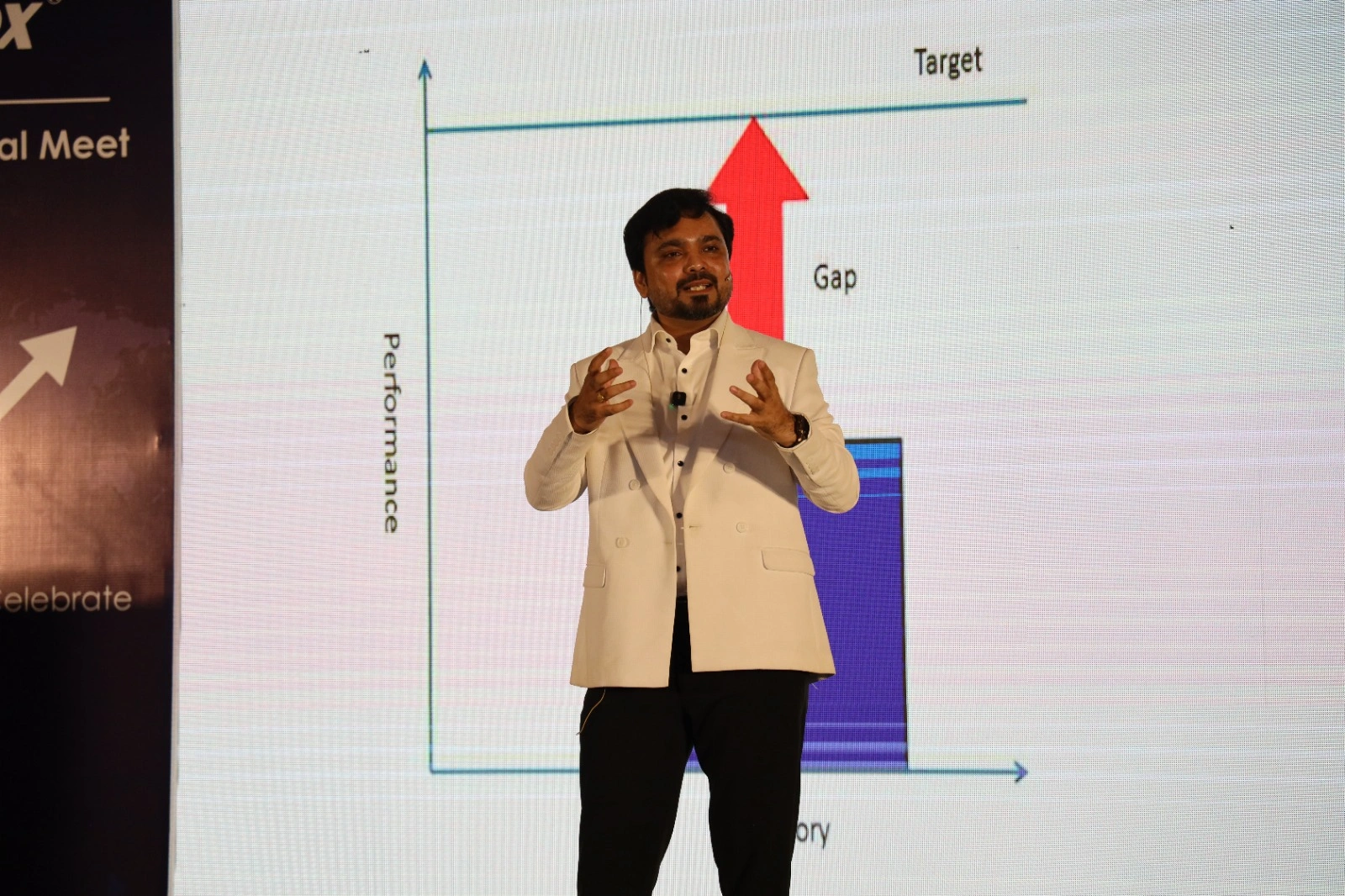
Walking a corporate audience through the Pain plus Reflection equals Success loop in a live session.The Five Steps to Achieve Any Goal
This is the heart of the champion formula, and it is the part of The Winning Edge that readers tell me they return to most. Dalio lays out a five-step process to achieve any goal, and I teach it almost word for word because I have never found a cleaner map. Here are the five steps.
- Have clear goals. Decide what you truly want, and do not change your goal on small setbacks. Separate your desire from your goal, a fleeting desire is not a goal. A goal is something you commit to even when the path turns painful.
- Identify problems. Find the problems standing between you and your goal. Be specific. Do not tolerate problems, name them. In my workshops I remind people that problems are not threats, problems are opportunities in work clothes.
- Diagnose. Separate the problems from their root causes. Be objective. Most people treat a symptom and feel busy. The champion digs down to the actual cause, even when the cause is uncomfortable, even when the cause is themselves.
- Design. Think of yourself as a machine that produces outcomes. If the outcomes do not match your goals, change the design of the machine. Remember there are many paths to the same goal, so you are never trapped, you are just using the wrong design.
- Act. Push the design through to execution. In the battle between action and planning, action wins. You only find oil when you drill.
We have a strategic plan. It is called doing things.
That line is from Herb Kelleher, and I use it whenever a team gets stuck in analysis. Plans feel safe. Action feels risky. But no plan ever produced a result, only action does. You only find oil when you drill, so at some point you must stop studying the map and start drilling.
Diagnosis is where most people quietly cheat
Of the five steps, step three is the one I watch most closely in my corporate programs. Diagnosis is where people quietly cheat, because honest diagnosis often points back at our own design, our own habits, our own ego. It is far easier to blame the market, the team, the timing.
We fail more often because we solve the wrong problem than because we get the wrong solution to the right problem.
That warning comes from Russell Ackoff, and it is the single most expensive mistake I see in Indian organisations. Teams pour energy into solving the wrong problem brilliantly. A good diagnosis, done with objectivity, saves you from winning a battle that does not matter.
Study the Pattern of Your Mistakes
Here is the discipline that turns the five steps from a one-time exercise into a lifelong evolution. After you have run the loop a few times, step back and study the pattern of your mistakes. Where do you typically fail? Is it step one, you keep changing your goals when pain shows up? Is it step two, you tolerate problems instead of naming them? Step three, you skip honest diagnosis? Step four, you fall in love with one design? Step five, you plan endlessly and never act?
Almost everyone has a favourite failure point. Mine took me years to admit. When you know yours, you can put a guard rail exactly there. That is the difference between repeating a mistake and evolving past it.
Pain is the signal that points to your pattern
This is why I refuse to let professionals waste their pain. Every painful result is a data point that, over time, reveals your pattern. The manager who keeps missing deadlines, the founder whose hires keep failing, the salesperson whose deals keep stalling at the same stage, each painful repetition is reality pointing at the exact step where the design is broken.
- Write down the setback the moment it happens, while the pain is fresh and honest.
- Tag it to one of the five steps, where in the process did this really break.
- Look back across a quarter and find which step appears again and again.
- Redesign that one step, and watch how many downstream problems disappear.
This is not theory I read once. It is the working method I have built workshops around for managers, business owners and students across Maharashtra, and it changes how people relate to failure within a single session.
Chasing Excellence Without Waiting for Perfection
One trap I see in high achievers, especially the diligent ones, is perfectionism disguised as high standards. They will not act until the plan is perfect, the design flawless, the conditions ideal. And so they never drill, and never find oil.
Have no fear of perfection, you will never reach it.
Salvador Dali said that, and I share it with every perfectionist in my room. Perfection is not a destination you arrive at, it is a direction you move in. The champion formula does not ask you to be perfect. It asks you to act, feel the result, reflect honestly, and improve. The standard is not flawlessness, it is honest, fast evolution.
Helping a team turn painful results into a repeatable evolution loop during a corporate keynote.Bring this to your team. I run champion-mindset and decision-making focused corporate training and keynotes for companies across Pune, Mumbai and all of Maharashtra.
Book a session · Explore corporate training programs
Frequently Asked Questions
What does the formula Pain plus Reflection equals Success actually mean?
It means that pain by itself does not make you successful, but pain processed through honest reflection does. Pain is the trigger that forces you to see reality, and reflection is the engine that converts that painful feedback into a better decision next time. Skip the reflection and you simply repeat the same painful mistake.
What are the five steps to achieve any goal in the champion formula?
The five steps are, first have clear goals and do not change them on small setbacks, second identify your problems specifically and do not tolerate them, third diagnose by separating problems from their root causes, fourth design yourself as a machine that produces outcomes and change the design when results fall short, and fifth take action because in the battle between action and planning, action wins.
Why is honest diagnosis the hardest step?
Because honest diagnosis often points back at us, our own habits, design and ego. It is far more comfortable to blame the market, the timing or the team. But as Russell Ackoff warned, we fail more often because we solve the wrong problem, so skipping objective diagnosis is the most expensive mistake a team can make.
Can this champion formula be taught as corporate training?
Yes. I teach the champion formula, the five-step goal process and the discipline of studying your pattern of mistakes as a structured corporate training and keynote program for teams across Pune, Mumbai and Maharashtra, adapted to your industry and your real challenges.
If this formula resonated, the next step is simple, take action, because you only find oil when you drill. I would be glad to bring the champion formula into your organisation, so get in touch, explore my corporate training programs, or learn more about my work and approach. This article is adapted from my book The Winning Edge, The Champion Mindset.
Related Articles by Avinash Chate
- Recession मध्ये Hyundai ने cars परत घेऊनही फायदा कसा कमावला
- Virender Sehwag Mindset That Most Corporate Professionals Fear
- Ajit Agarkar's 21-Ball ODI Fifty Against Zimbabwe: The Silent Performer's Career Blueprint
| AC | Avinash ChateIndia's Leading Corporate Trainer | TEDx Speaker | Author With 80+ organizations trained including RBI, JSW Steels, and Ferrero, Avinash Chate delivers high-impact corporate training across India. Creator of the KITE Leadership Framework and bestselling author of "The Winning Edge." Website YouTube |
Avinash Chate services
Corporate Trainer in Maharashtra · Top Corporate Trainers in Maharashtra · Leadership Trainer in Maharashtra · Top Leadership Trainers in Maharashtra · Motivational Speaker in Maharashtra · Top Motivational Speakers in Maharashtra · All service locations
← Back to all articles · Book Avinash Chate
By Avinash Chate — Maharashtra’s #1 Corporate Trainer & Motivational Speaker. .