Peter Drucker's Time Management Secret: Record Before You Manage
Discover Peter Drucker's powerful 3-step time management method — Record, Manage, Consolidate — and how I apply it in corporate training across India.
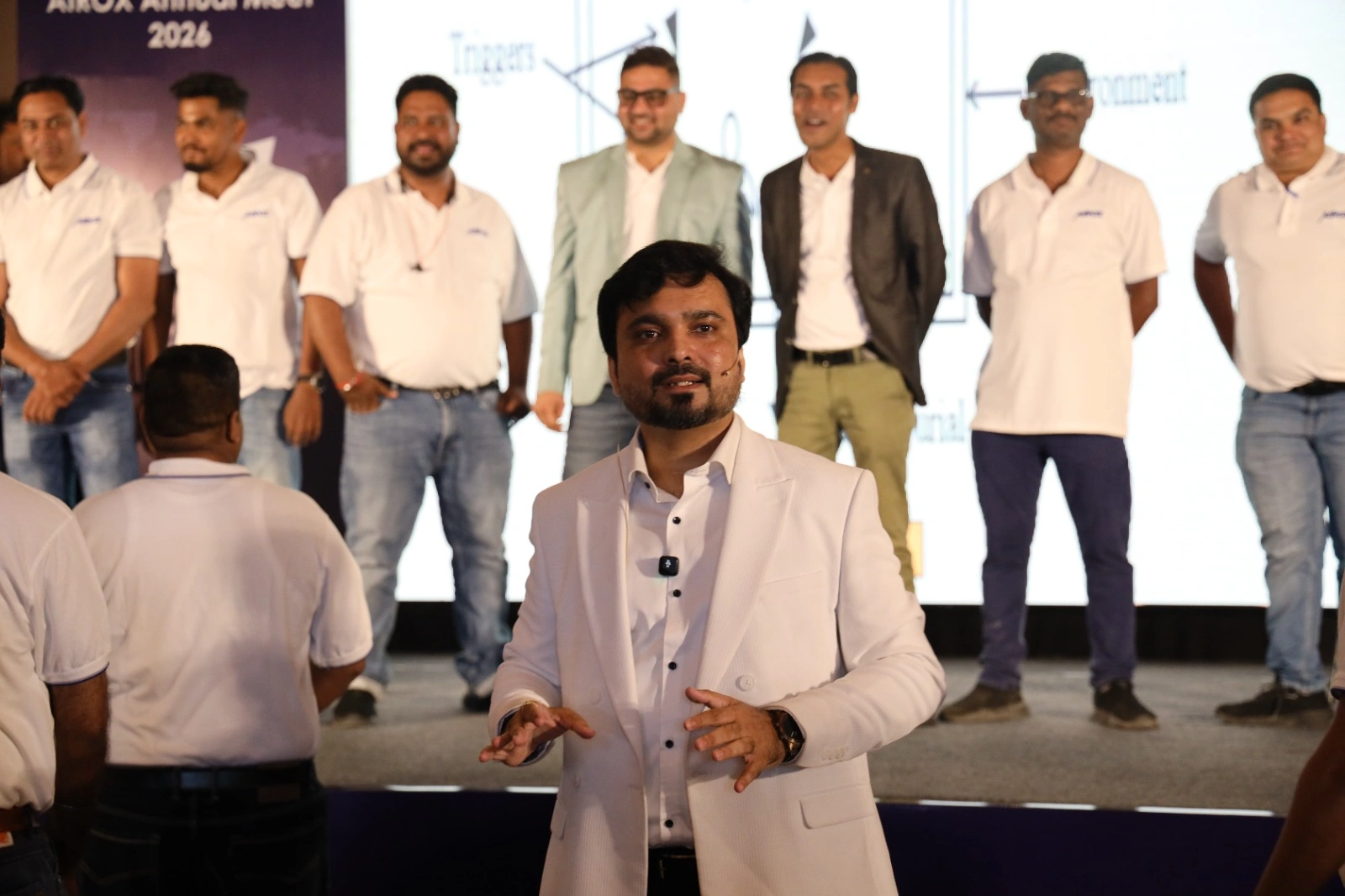
Most managers I meet across Pune, Mumbai and the rest of Maharashtra tell me the same thing: "Sir, there is not enough time in the day." But after two decades of corporate training and the research that went into writing The Winning Edge, The Champion Mindset, I have come to a very different conclusion. The problem is rarely a shortage of time. The problem is that we have never honestly looked at where our time actually goes.
That insight did not come from me alone. It came from Peter Drucker, widely regarded as the father of modern management. In Chapter 4 of my book, I walk readers through Drucker's brilliantly simple yet brutally honest framework for mastering time. What makes it so powerful is the sequence: you must record before you can manage. Most people try to do it the other way around — they install apps, buy planners, block calendars — without ever facing the raw truth of how they currently spend their hours.
In this article I want to break down Drucker's three-step method in full, share how I have used it personally, explain his three diagnostic hints for finding hidden time wasters, and show you how this thinking can transform the productivity of any team. Whether you are a manager leading twenty people or a business owner wearing every hat, this framework will change the way you look at your calendar forever.
Who Was Peter Drucker and Why Should Indian Managers Listen to Him?
Peter Drucker wrote his landmark work on management decades ago, yet every time I reference him in a training room — whether I am speaking to a room of engineers in Pune's IT corridor or to sales leaders in a Mumbai bank — the principles land as if they were written yesterday. Drucker coined the term "knowledge worker" and devoted much of his life to understanding what makes managers genuinely effective, not merely busy.
His central argument about time was radical for its era and remains radical today:
"Effective executives do not start with their tasks. They start with their time."
— Peter Drucker
In the Indian corporate context, this is especially important. We operate in a culture that often celebrates busyness itself. Arriving early, leaving late, attending every meeting, replying to every message — these are treated as signals of commitment. But Drucker would ask: commitment to what? To activity or to results?
Busyness Is Not Effectiveness
- A calendar full of meetings does not mean decisions are being made.
- A long to-do list does not mean priorities are being honoured.
- Staying late does not mean the most important work is getting done.
Drucker's formula captures this with mathematical precision:
Effectiveness = Useful Time ÷ Total Time = (Total Time − Wasted Time) ÷ Total Time
To improve effectiveness you do not need more time — you need less waste. And to reduce waste, you first need to see it clearly. That is where step one begins.
Step 1: Record — The Habit That Changes Everything
The first step in Drucker's method is deceptively simple: keep a real-time log of everything you do for two to six weeks. Every fifteen to thirty minutes, write down exactly what you did during that interval. Do not rely on memory. Do not reconstruct the log at the end of the day. Drucker was emphatic on this point because memory, he observed, is highly unreliable when it comes to time. We remember the dramatic or the pleasant and forget the trivial stretches that quietly consume hours.
How I Applied This in My Own Life
I have practised what I preach. When I tracked my own time rigorously, the results were eye-opening. I discovered that unscheduled visitor conversations — people dropping by my office for a quick chat — were my single biggest time waster. They felt productive because they involved people and problems, but when I totalled the time, those unplanned interruptions were consuming more of my day than almost any planned activity.
That one discovery changed how I structured my availability. I am not sharing this to boast — I am sharing it because I have watched managers in training programs react with genuine shock when they see their own time logs for the first time. The gap between how we imagine we spend our time and how we actually spend it is almost always alarming.
Practical Tips for Recording Your Time
- Keep a simple notebook or a notes app open at all times during working hours.
- Set a gentle reminder every 30 minutes to log what you just did.
- Be honest and specific. "Worked on project" is not useful. "Reviewed Rahul's report draft, then got pulled into a WhatsApp thread about the office event" is useful.
- Continue for at least two full weeks to account for weekly rhythms — Monday patterns differ from Friday patterns.
- Do not judge or change your behaviour during the recording phase. The goal is data, not performance.
Step 2: Manage — Analyse and Eliminate Time Wasters
Once you have two to six weeks of honest data, the second step is to sit with that log and systematically identify waste. Drucker provided three powerful diagnostic questions — what I call his three "hints" — that reveal the most common categories of organisational time waste. These are not just personal productivity tips; they are diagnostic tools for leaders who want to understand what is broken in their teams and systems.
Diagnostic Hint 1: Recurring Crises Mean No System Exists
If the same type of crisis appears in your log week after week — the same client complaint, the same delivery failure, the same cash-flow squeeze — Drucker's interpretation is clear: there is no system in place. A recurring crisis is not bad luck. It is a structural gap. Every hour you spend firefighting a problem that should have been prevented by a good process is wasted time.
In my training programs, I ask managers to count how many of the fires they fought last month were genuinely new problems versus reruns of old ones. For most teams, the answer is sobering: sixty to seventy percent are reruns. Build the system once and reclaim those hours permanently.
Diagnostic Hint 2: Too Many Meetings Signal Disorganisation
Drucker was blunt: too many meetings are a symptom that work is disorganised and that people do not know their own jobs well enough to act without group consultation. If every decision requires a meeting, something is wrong — either roles are unclear, authority is not delegated, or the team lacks confidence in their own judgment.
"Meetings are by definition a concession to a deficient organisation. They should be the exception, not the rule."
— Peter Drucker
I see this constantly in Indian corporate culture. We have inherited a certain reverence for the committee and the group consensus. That has real value in some contexts. But when a simple operational decision needs a three-hour meeting with twelve people, the organisation is paying twelve salaries for three hours to make a call that one empowered manager should have been able to make in ten minutes. If your time log is full of meetings, the question is not "how do I manage meetings better?" The question is "why do these meetings need to exist at all?"
Diagnostic Hint 3: Poor Information Flow Means Someone Is Hoarding or Distorting
If your time log shows hours spent chasing information — following up with colleagues, waiting for reports, cross-checking data from different sources — Drucker's diagnosis is that information is not flowing freely in your organisation. Either someone is hoarding it (holding information as power), or the communication chain is so long and distorted that data arrives corrupted or late.
Information hoarding is a cultural issue that no productivity app can fix. It requires trust, clarity about roles, and often a structural redesign of how teams share what they know. Leaders who identify this pattern in their time logs have found the single highest-leverage intervention available to them.
Step 3: Consolidate — Guard Large Blocks of Unbroken Time
The third and final step is where strategy meets daily practice. Once you have recorded the truth and managed away the waste, Drucker insists that you consolidate the remaining working time into large, unbroken chunks — a minimum of 90 minutes each.
This is Drucker's most counter-cultural prescription, especially in the age of smartphones and Slack and back-to-back Zoom calls. But the science and the wisdom align completely: deep, complex, creative work requires sustained, uninterrupted attention. You cannot write a strategy document in six ten-minute fragments. You cannot think through a structural reorganisation in the gaps between notifications. The mind needs time to warm up, to go deep, and to synthesise.
What Consolidation Looks Like in Practice
- Block 90-to-120-minute slots on your calendar for your most important tasks. Protect these as you would a client meeting.
- During these blocks, silence notifications, close email, and if possible close your office door or wear headphones to signal unavailability.
- Schedule the block at your peak energy hour — for most people this is in the morning, but track your own energy in your time log to confirm.
- Batch administrative tasks — approvals, replies, quick decisions — into a single window rather than scattering them through the day.
- Treat meetings as last resort; use asynchronous updates where possible to protect everyone's consolidation time.
"The effective executive knows that time is the scarcest resource and unless it is managed, nothing else can be managed."Interactive leadership and productivity sessions help managers build the habit of protecting deep-work time.
— Peter Drucker
Why the Sequence Matters: Record First, Always
I want to return to something I said at the very beginning, because it is the insight that separates Drucker's method from every generic "time management tip" you will find on the internet. The sequence is not optional. You must record before you manage, and manage before you consolidate.
Here is why. If you skip recording and go straight to managing, you are managing based on perception. And perception, as I discovered with my own unscheduled visitor problem, is almost always wrong. You will optimise the wrong things, eliminate the wrong activities, and feel busy and virtuous while your real time wasters continue unchecked.
If you skip managing and go straight to consolidating, you will build large blocks of time around activities that may themselves be unnecessary. You will become very efficient at doing the wrong things.
The Compound Effect of This Method
When teams apply all three steps, the results are compounding. Managers recover hours each week that were previously invisible. Those hours, redirected toward strategic thinking, team development and execution of priorities, produce outcomes that no amount of hustle could generate. The formula becomes a virtuous cycle: more useful time means more results means more confidence means better decisions about where to invest time next.
In my workshops, I typically ask participants to estimate how much of their working time is genuinely effective. The average answer is around forty to fifty percent. After they do the recording exercise and see the actual data, many revise that estimate sharply downward — to twenty or thirty percent. The gap is the opportunity. And closing that gap, even partially, is one of the highest-leverage investments any professional can make.
From the Book to the Boardroom: Applying Drucker in the Indian Context
India's workplaces have their own texture. We have vibrant, high-energy team cultures. We also have deeply embedded habits around hierarchy, deference, and the celebration of visible effort over invisible thinking. Drucker's framework is not a Western import that needs to be adapted awkwardly; it is universal wisdom that actually addresses some of our specific cultural time leaks directly.
Specific Applications for Indian Managers
- The "open door" culture: Many Indian managers pride themselves on always being available. Drucker would ask: available to whom, for what, and at what cost to your own productive work? Structure your availability rather than surrendering it.
- The approval bottleneck: When every decision needs to climb up three levels of hierarchy before it is made, the organisation creates enormous time waste at every level. Drucker's diagnostic hint about meetings applies directly here.
- WhatsApp work culture: The expectation of instant replies on group chats is a modern version of the interruption problem Drucker identified. Time-log it for two weeks and you will see exactly what it is costing you.
- Festival and event planning: Indian offices invest significant time in internal events. This has cultural and morale value. But when it consistently displaces strategic work, it needs to be planned more deliberately so it does not erode consolidation time.
Bring this to your team. I run time management and productivity-focused corporate training and keynotes for companies across Pune, Mumbai and all of Maharashtra.
Book a session · Explore corporate training programs
Frequently Asked Questions
How long should I keep a time log before I start analysing it?
Peter Drucker recommends keeping the log for two to six weeks. Two weeks is the minimum because it captures enough variation across different days and project phases. Six weeks gives you an even richer picture, especially if your work has monthly cycles. The key rule is to log in real time — every 15 to 30 minutes — and never reconstruct from memory at the end of the day.
What is the minimum block size for consolidated time, according to Drucker?
Drucker specifies a minimum of 90 minutes for a meaningful consolidated work block. This is the threshold at which the mind can move past warm-up mode, go deep into complex work, and produce genuinely high-quality output. Shorter blocks are better than nothing, but they rarely allow the sustained focus that strategic or creative work demands.
How does Drucker's method apply to team leaders, not just individuals?
Drucker's three diagnostic hints — recurring crises, too many meetings, and poor information flow — are specifically aimed at leaders diagnosing their organisations, not just their personal habits. A team leader who tracks these patterns across the team can identify structural problems: missing systems, unclear roles, information silos. Fixing these systemic issues recovers time for every member of the team simultaneously, which multiplies the impact many times over.
Is this time management framework relevant for knowledge workers in Indian IT and services companies?
Absolutely. Drucker coined the term "knowledge worker" precisely for professionals whose primary output is thinking, analysis, writing and decision-making — which describes the majority of employees in India's IT, consulting, banking and services sectors. The Recording step is especially revelatory for knowledge workers because their time leaks (interruptions, unplanned conversations, excessive meetings, context-switching) are less visible than those of a factory worker but just as destructive to output quality.
Time is the only resource that cannot be manufactured, stored, or borrowed. Every rupee you earn, every team you build, every goal you achieve — all of it runs on the invisible infrastructure of how you spend your hours. Drucker's three-step method gave me a language and a system for taking that seriously, and I have spent years helping managers and leaders across Maharashtra do the same. If you are ready to bring this kind of clarity to your team, I would love to connect — reach out through my contact page, explore corporate training programs, or learn more about leadership training in Pune.
This article is adapted from my book The Winning Edge, The Champion Mindset.Related Articles by Avinash Chate
- Why Manufacturing Industry is Difficult to Start in India: 5 Key Challenges
- Ajit Agarkar's 21-Ball ODI Fifty Against Zimbabwe: The Silent Performer's Career Blueprint
- Clive Lloyd's 1975 World Cup Final Leadership: How Bold Captaincy Wins Under Pressure
| AC | Avinash ChateIndia's Leading Corporate Trainer | TEDx Speaker | Author With 80+ organizations trained including RBI, JSW Steels, and Ferrero, Avinash Chate delivers high-impact corporate training across India. Creator of the KITE Leadership Framework and bestselling author of "The Winning Edge." Website YouTube |
Avinash Chate services
Corporate Trainer in Maharashtra · Top Corporate Trainers in Maharashtra · Leadership Trainer in Maharashtra · Top Leadership Trainers in Maharashtra · Motivational Speaker in Maharashtra · Top Motivational Speakers in Maharashtra · All service locations
← Back to all articles · Book Avinash Chate
By Avinash Chate — Maharashtra’s #1 Corporate Trainer & Motivational Speaker. .