PQ vs EQ vs RQ: Why India's High Performers Fail as Leaders 2026
You earn promotions through PQ, but one emotional outburst can undo years of trust. Here's why India's best managers derail their careers through low EQ in 2026.
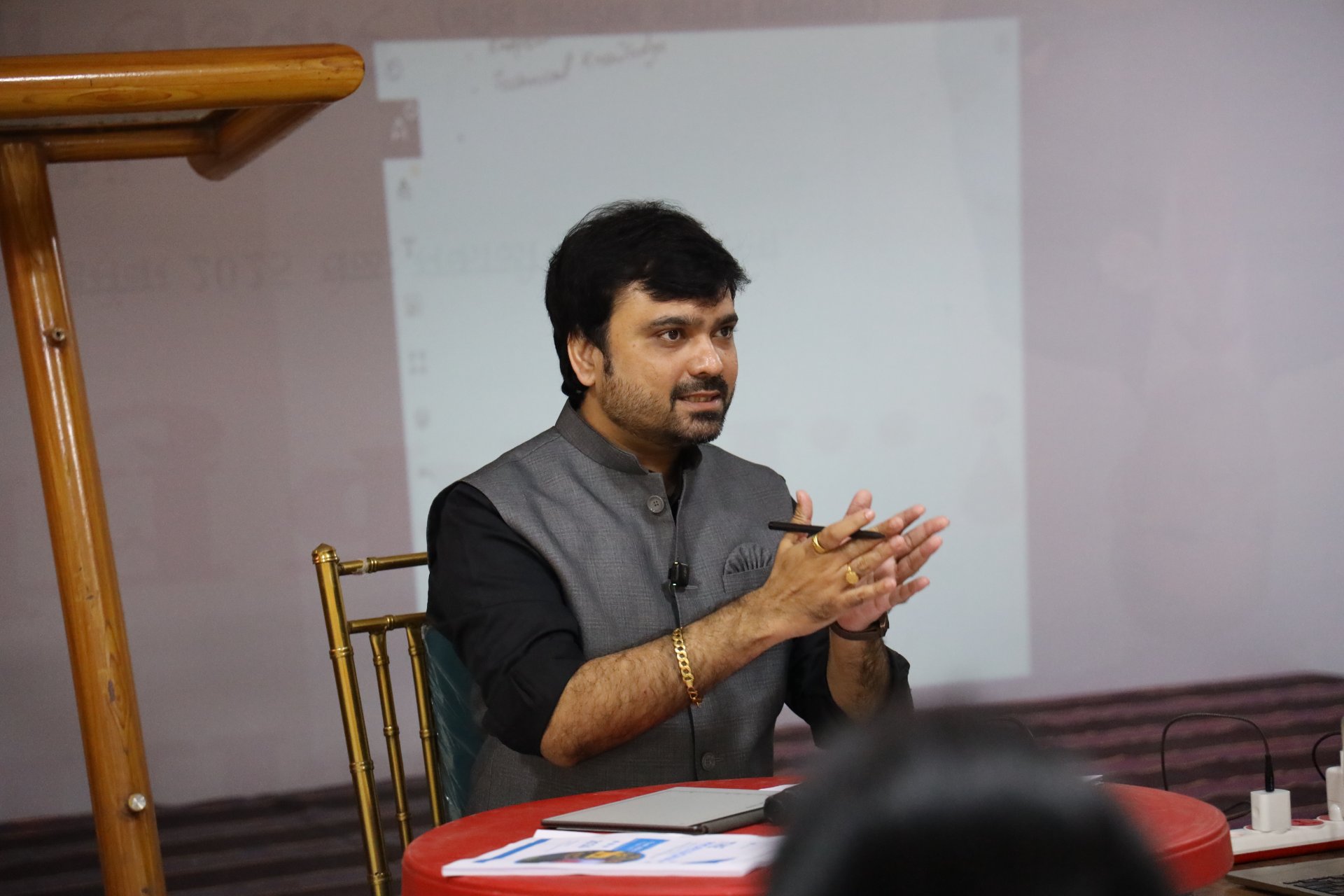
Here's the thing — I've trained managers at Bajaj Auto, Tata Tech, and L&T who hit every target but blow up relationships under pressure. LinkedIn India 2026 ranks leadership skills as the #1 workplace need, yet companies only measure PQ. That gap costs careers — and I've watched it happen up close.
TL;DR- PQ (Performance Quotient) earns you promotions; EQ and RQ determine whether you keep them
- Emotional outbursts and public reactions erode trust faster than any performance failure
- Low EQ creates a repeating cycle of conflict that eventually destroys your leadership image
- Relationship Quotient (RQ) is the hidden skill that separates good managers from great leaders
- You can train EQ — it is not fixed, and it is the smartest career investment you will make in 2026
What Is PQ, EQ, and RQ — and Why All Three Matter for Indian Leaders
Most of the managers I meet know exactly what they are paid for — results. That is your PQ, your Performance Quotient. Hit targets, get promoted. Simple equation, right? Trust me, it works — right up until it does not. The moment you move into a leadership role, two other quotients start to matter more: EQ (Emotional Quotient) and RQ (Relationship Quotient). PQ gets you into the room. EQ and RQ determine whether people want to stay in the room with you. And in my experience training thousands of managers across India, the gap between these three is where most leadership careers either take off or quietly collapse.
How One Emotional Outburst Can Undo Five Years of Hard Work
I have seen it play out dozens of times across L&T, Mahindra, and Infosys training rooms. A manager who is a top performer — 120% of targets, year after year — makes one public outburst during a review meeting. Just one. And what happens? The team stops volunteering ideas. The HR flags the incident. The promotion that was due gets quietly shelved. What most people do not realize is that trust is not built cumulatively — it erodes exponentially. One bad moment does not undo five years; it reframes them. The team starts reading every past interaction through the lens of that one moment.
| Quotient | Full Name | What It Measures | Career Stage Where It Dominates | Can It Be Trained? |
|---|---|---|---|---|
| PQ | Performance Quotient | Ability to deliver results, hit targets, solve problems | Individual contributor (0–5 years) | Yes — via skills & experience |
| EQ | Emotional Quotient | Ability to recognize, manage, and channel emotions (self & others) | Team lead & manager (5–15 years) | Yes — via awareness & coaching |
| RQ | Relationship Quotient | Ability to build, maintain, and repair professional relationships under pressure | Senior leader & executive (15+ years) | Yes — via deliberate practice |
The Repeating Cycle: Why Low-EQ Managers Keep Damaging Their Own Careers
Low EQ does not just cause a one-time problem — it creates a cycle. The manager reacts badly under pressure, the team withdraws, performance dips, pressure increases, and the manager reacts even more badly. I call this the EQ spiral. Once you are in it, most managers double down on PQ — work harder, deliver more — thinking results will fix the relationship damage. They will not. The workplace conflict I address in corporate training sessions at Bajaj Auto and Tata Tech is almost always rooted in this spiral, not in skills gaps or strategy failures. The spiral needs to be interrupted at the EQ level, not the PQ level.
Why Indian Corporates Promote on PQ and Fire on EQ
India's corporate culture has a specific problem here. We are extraordinarily good at building performers. Our B-schools, our IITs, our competitive exam culture — they all optimize for PQ. But they teach almost nothing about EQ. The result: we produce brilliant individual contributors who struggle when they become managers, because management is fundamentally a relationship game. According to LinkedIn India 2026, leadership skills are the #1 competency gap among mid-level Indian managers. The companies I work with — Tata Tech, Bosch, Siemens, KPIT — are all dealing with the same crisis at the team-leader level. They promote people for PQ, then wonder why the team dynamic falls apart.
5 Signs Your EQ Is Holding Back Your Leadership Growth in India
Here is a quick diagnostic. You might have an EQ gap if you: (1) find yourself repeatedly explaining to your team why they misunderstood you; (2) notice feedback sessions get defensive instead of productive; (3) see that high performers on your team keep transferring away; (4) react to bad news by assigning blame before asking questions; (5) feel that your good intentions are not landing the way you expect. If three or more of these sound familiar, the good news is — EQ is trainable. Unlike IQ, which is largely fixed, EQ grows with awareness and practice. That is the most important fact in this article.
How to Build Emotional Intelligence as a High-Performing Indian Manager
The first step is what I call the 6-second pause. Before responding to anything emotionally charged — a missed deadline, a bad client email, a team member's pushback — give yourself six seconds. That is enough time for your prefrontal cortex (the rational brain) to catch up with your amygdala (the reactive brain). Second, learn to separate the behavior from the person. When you are upset about results, stay specific: 'The report was late' instead of 'You are always disorganized.' Third, build your RQ deliberately — check in with team members not just about tasks, but about how they are feeling about those tasks. This is not soft — it is the most strategic thing a leader can do.
What Avinash Chate's Corporate Training Reveals About EQ in India's Boardrooms
In my sessions at Bajaj Auto, Ferrero, and the Indian Army, the most common feedback I get is this: 'No one has ever told me this before.' And that is the real problem. EQ training is not just a HR box-tick — it is the difference between a manager everyone respects and one everyone manages around. I have watched senior leaders at BARC and RBI completely transform their team dynamics within six months of focused EQ work. The change is not about becoming softer. It is about becoming more precise with your emotional responses so they work for you instead of against you.
RQ — The Third Quotient Nobody Teaches in B-Schools (But Should)
Relationship Quotient is the least talked-about of the three, but in my experience it is the one that makes or breaks leadership at scale. RQ is your ability to build, maintain, and repair relationships — especially under pressure. A high-RQ leader does not just avoid conflict; they use conflict productively. They know how to disagree without damaging trust, how to deliver hard feedback without creating defensiveness, and how to rebuild a relationship after it has been strained. In India's collectivist, hierarchy-conscious corporate culture, RQ is everything. It is what turns a good manager into someone people choose to follow — and that distinction is the entire game of leadership.
Book Avinash Chate for Your Next Event
TEDx speaker. 11+ yrs training Army, BRO, RBI, BARC, JSW. Available for keynotes, leadership training, team building & manager development at your office or event venue.
✅ Thanks! Avinash team will reach out within 24 hours.'}).catch(function(e){f.outerHTML='Something went wrong. WhatsApp +91 8793630001
'});return false;">Select ServiceKeynote / Motivational SpeakingLeadership Development TrainingTeam Building WorkshopManager DevelopmentEmployee TrainingOutbound TrainingBook Avinash Now →Or WhatsApp directly: +91 87936 30001
Related Articles by Avinash Chate
- Recession मध्ये Hyundai ने cars परत घेऊनही फायदा कसा कमावला
- Virender Sehwag Mindset That Most Corporate Professionals Fear
- Why Manufacturing Industry is Difficult to Start in India: 5 Key Challenges
Avinash Chate TEDx Speaker · Founder, The Future Corporate · 11+ yrs experience Avinash has trained Indian Army, BRO, RBI, BARC, JSW Steel and 1000+ corporate leaders across India. His work focuses on leadership development, communication skills, and behavioural training rooted in Indian values and modern business needs. |
Frequently Asked Questions
What is the difference between PQ, EQ, and RQ in the workplace?
PQ (Performance Quotient) measures your ability to deliver results — hitting targets, solving problems, producing output. EQ (Emotional Quotient) measures your ability to recognize, understand, and manage your own emotions and those of others. RQ (Relationship Quotient) measures your ability to build and maintain productive relationships across your team, peers, and stakeholders. In early career, PQ dominates. In leadership roles, EQ and RQ matter as much or more — because your results now depend entirely on the performance of others, which depends entirely on the quality of your relationships with them.
Can emotional intelligence (EQ) be improved with training in India?
Yes — this is one of the most important things to know about emotional intelligence. Unlike IQ, which research suggests is relatively stable across adulthood, EQ is highly trainable. Through structured awareness exercises, coaching, and deliberate practice — exactly the work done in Avinash Chate's corporate training programs across Bajaj Auto, Tata Tech, and Infosys — managers consistently improve their EQ scores within months. The critical factor is self-awareness: you need to first recognize your emotional patterns before you can change them. Most EQ training starts here and builds outward to team interactions and leadership presence.
Why do high performers often struggle when promoted to manager roles in India?
The promotion trap is real in Indian corporates. High performers are promoted because of their individual results (PQ), but management roles require completely different competencies — empathy, listening, conflict navigation, and the ability to motivate diverse personalities. Indian B-schools and competitive exam culture train almost exclusively for PQ. The transition from doing to enabling others to do requires a fundamental mindset shift, and without EQ training, many brilliant performers hit a wall at the manager level. This is the pattern I see most often in training sessions at Tata Tech, KPIT, and Mahindra — talented people who became managers before they were emotionally ready for the role.
How does low EQ affect team performance and employee retention in Indian companies?
The impact of low EQ on teams is both measurable and severe. Teams led by low-EQ managers show higher attrition, lower voluntary communication, reduced innovation (team members stop sharing ideas), and higher rates of quiet quitting — people who stay but disengage entirely. On the retention side, research consistently shows that people leave managers, not companies. If your EQ is creating friction, your best people — who have the most options — leave first, leaving you with a team that stays because it cannot find alternatives. This accelerates performance decline and makes the EQ spiral harder to escape with each passing quarter.
Avinash Chate services
Corporate Trainer in Maharashtra · Top Corporate Trainers in Maharashtra · Leadership Trainer in Maharashtra · Top Leadership Trainers in Maharashtra · Team Building Trainer in Maharashtra · Top Team Building Trainers in Maharashtra · Motivational Speaker in Maharashtra · Top Motivational Speakers in Maharashtra · All service locations
← Back to all articles · Book Avinash Chate
By Avinash Chate — Maharashtra’s #1 Corporate Trainer & Motivational Speaker. .