Roger Bannister's Secret: How He Broke the 4-Minute Mile Barrier in His Mind First
Roger Bannister broke the 4-minute mile not on the track first but in his mind. Discover the VAK visualisation secret that can transform your performance.
On May 6, 1954, a twenty-five-year-old British medical student did something that the entire medical and sports establishment said was humanly impossible. He ran a mile in 3 minutes 59.4 seconds. Roger Bannister did not just break a world record that day at Oxford — he shattered a belief that had imprisoned every runner on earth for centuries. And the most remarkable part of his story is not what happened on the track. It is what happened in his mind, weeks and months before he ever laced up his spikes for that historic attempt.
In my book The Winning Edge, The Champion Mindset, I dedicate an entire section of the Winning Edge Checklist to the principle Bannister used without even knowing its technical name — the VAK technique from Neuro-Linguistic Programming. VAK stands for Visual, Auditory and Kinesthetic — the three primary sensory channels through which we can feed our subconscious mind a vivid, believable picture of success before it actually arrives. When I share this story in my corporate training sessions across Pune, Mumbai and Maharashtra, I watch the moment it lands. People sit up straighter. Something shifts. Because this is not a story about a runner. It is a story about every one of us.
If you are a professional, a manager, a business owner or a student reading this in India today, the single most important performance upgrade you can make has nothing to do with your skill set, your network or your budget. It has everything to do with the picture you are holding in your mind right now. Let me show you exactly what I mean.
The Impossible Barrier That Was Never Physical
Before May 6, 1954, the four-minute mile was treated not as a difficult target but as an absolute physiological ceiling. Doctors and sports scientists of that era genuinely believed the human heart, lungs and muscles would give out before any runner could sustain the pace required. For nine years after the world mile record stood at 4 minutes 1.4 seconds, not a single athlete on the planet broke through. The barrier was discussed in newspapers as if it were a law of nature, as fixed and immovable as gravity.
But Roger Bannister was studying medicine. He understood anatomy and physiology well enough to question the consensus. More importantly, he understood something that most of his contemporaries did not — that the brain governs the body far more completely than the body governs the brain. The barrier, he reasoned, was not in the legs. It was in the mind. Specifically, it was in the collective belief system of every runner who had ever approached that finish line carrying the weight of everyone else's certainty that it could not be done.
The Role of Collective Belief in Individual Performance
Here is the detail from Bannister's story that I find most extraordinary, and the one I return to again and again in my workshops. Within 46 days of Bannister's run, another athlete — John Landy — also broke the four-minute barrier. Within a single year, 37 different runners had done it. Thirty-seven. In the nine years before Bannister, zero. In the twelve months after him, thirty-seven.
Nothing physical changed. The track surfaces were not upgraded overnight. Human lung capacity did not evolve in forty-six days. What changed was the belief system. Once Bannister's body on that Oxford track proved to every watching athlete that the thing was possible, their subconscious minds could finally allow them to pursue it. The limit was a mental construct. And mental constructs can be redesigned.
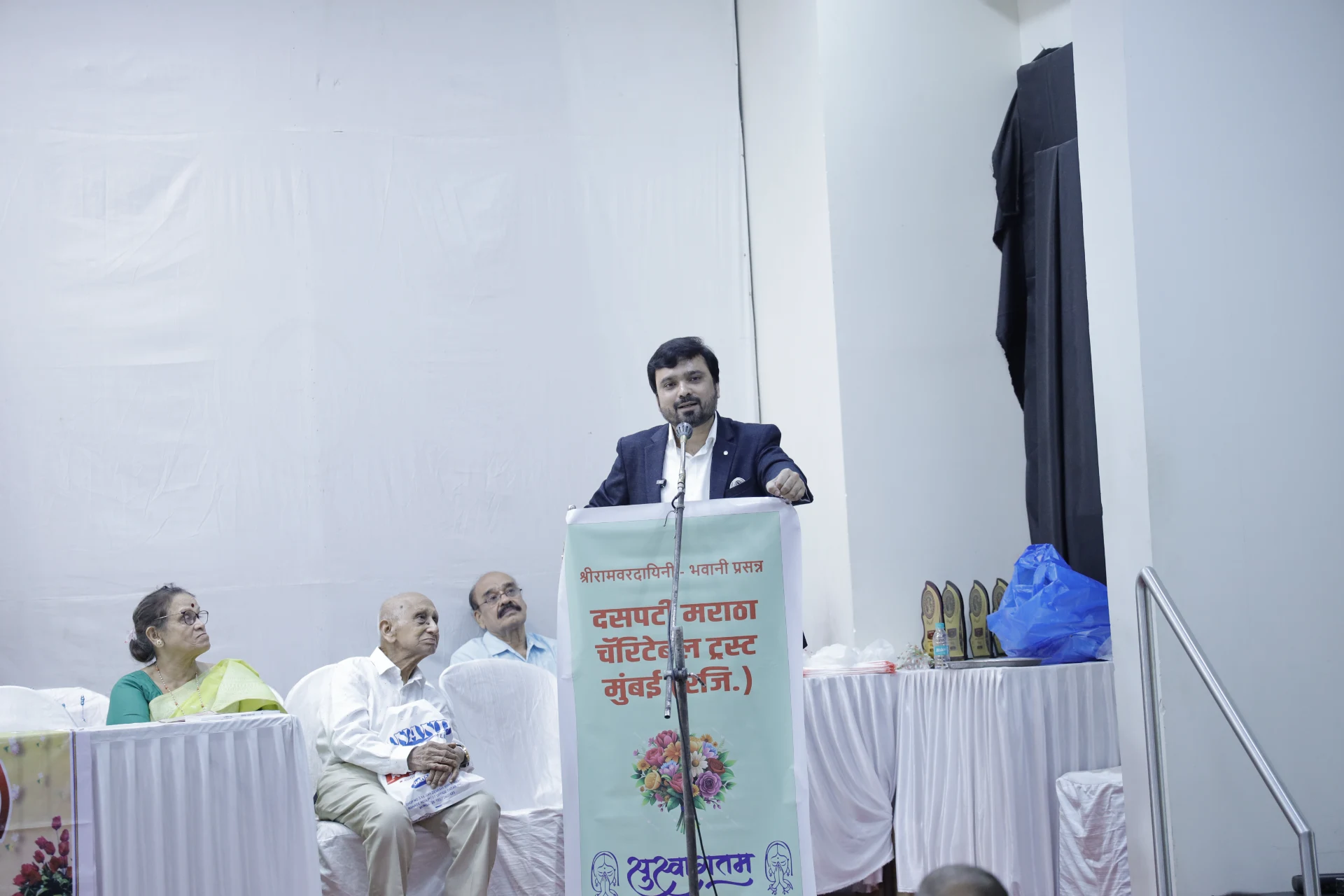
"The barrier was not in the body. It was in the belief. Once Bannister proved it was possible, thirty-seven others did it within a year. That is not physiology. That is the power of a reprogrammed mind."Avinash Chate conducting a corporate training session on mindset and mental performance for Indian professionals.
— Avinash Chate, The Winning Edge, The Champion Mindset
What Roger Bannister Actually Did: The VAK Technique Explained
Roger Bannister did not simply work harder in physical training than everyone else. What set him apart was a disciplined practice of mental rehearsal. He would close his eyes and run the race in his imagination — not vaguely, not as a passing daydream, but in precise, multi-sensory detail. He saw the track, the other runners, the finish line tape. He heard the sound of his own footfalls, his breathing, the crowd. He felt the exertion in his legs, the cold Oxford air in his lungs, and then — most critically — the sensation of crossing the line with the clock reading under four minutes.
In NLP, this is called the VAK model: Visual, Auditory and Kinesthetic. The premise is that your subconscious mind cannot distinguish clearly between an experience that is vividly imagined and one that is actually lived. When you feed it detailed, multi-sensory mental rehearsal, it begins to treat the desired outcome as something familiar, something already partially accomplished. Your nervous system literally starts to wire itself for success before you have even attempted the task.
The Three Channels of VAK
- Visual (V): See the outcome in detail. Where are you? What does the environment look like? What are you wearing? What expression is on your face when you succeed? Make the picture bright, large and as vivid as possible.
- Auditory (A): Hear the sounds associated with success. The applause, the congratulations, your own calm and confident voice, the silence before you deliver a crucial presentation, the sound of a contract being signed. Layer in sound deliberately.
- Kinesthetic (K): Feel it in your body. The posture of a person who has already achieved this. The lightness in the chest, the steadiness in the hands, the warmth of pride, the firm handshake at the close of a deal. Kinesthetic anchoring is the most powerful of the three channels because emotion is stored in the body.
Bannister used all three, day after day, before the race. He was not fantasising. He was training his nervous system. There is a crucial difference.
Visualisation vs. Daydreaming: The Distinction That Matters
Many people confuse visualisation with wishful thinking. They picture something nice for thirty seconds and then open their eyes expecting transformation. That is not what Bannister did. The distinction I draw in my book and in my workshops is this: daydreaming is passive, pleasant and random. VAK visualisation is active, structured and intentional. You are not watching a movie of your success. You are living it — placing yourself inside the experience with full sensory engagement, repeated daily, over weeks and months, until the subconscious accepts it as the baseline expectation.
"Daydreaming is the brain wandering. Visualisation is the brain training. One is entertainment. The other is engineering."
— Avinash Chate, The Winning Edge, The Champion Mindset
Your Mental Barriers Right Now: The Indian Professional Context
Let me bring this from 1954 Oxford to 2026 India, because the mechanism is identical. Every professional I have worked with across Maharashtra carries their own version of the four-minute mile myth. It sounds like this:
- "I am not the kind of person who gets promoted to VP."
- "Our team cannot close deals of that size — we have never done it."
- "I am not a confident public speaker. That is just who I am."
- "Companies like that do not hire people from a background like mine."
Each of these is a belief wearing the disguise of a fact. The moment you treat a limiting belief as a fact, you stop testing it. You stop training. You stop attempting. The race is lost before you reach the starting line. What Bannister showed us — what the VAK technique makes actionable — is that you can interrupt this cycle by changing what your subconscious is rehearsing.
The Specific Mental Barriers I See Most in Corporate India
In my work with companies across Pune, Mumbai and Maharashtra, I consistently encounter three categories of mental barrier that hold otherwise talented people back:
- The Imposter Barrier: "I do not deserve to be in this room." This shows up particularly strongly among first-generation professionals and people who have moved rapidly up in hierarchy. The fix is not more credentials. It is rewriting the internal narrative through consistent VAK rehearsal of being confidently present in high-stakes situations.
- The Historical Performance Barrier: "We tried this before and it did not work." Past failure becomes a prediction about the future. Teams and organisations carry this just as much as individuals. The antidote is collective visualisation of a new outcome — which is exactly why I integrate this in team workshops, not just individual coaching.
- The Permission Barrier: "Someone else needs to give me the go-ahead." High performers learn to give themselves internal permission through a deeply held vision of what they are working toward. VAK builds that internal authority.
How to Practice VAK Visualisation: A Practical Protocol
Here is the exact protocol I teach in my corporate training programs, drawn from the principles in The Winning Edge. You do not need special equipment. You need ten minutes and a quiet space.
The Daily VAK Session (10 Minutes)
- Choose a specific, concrete outcome. Not "I want to be successful." Something measurable and dated: "I want to deliver a 45-minute presentation to 200 people at our national conference in September and receive a standing ovation from at least the first three rows." The subconscious responds to specificity.
- Sit comfortably, close your eyes, and take three slow breaths. This shifts you from beta brainwave activity into the alpha state — the state in which the subconscious is most receptive to new programming.
- Build the Visual channel first. See the scene in vivid detail. The room, the lighting, the audience, your slides. See your own posture — upright, open, calm.
- Add the Auditory layer. Your voice, clear and steady. The silence as the audience listens. The applause at the end. Perhaps a colleague saying "That was exceptional."
- Lock in the Kinesthetic. Feel the confidence in your body. The evenness of your breath. The absence of the tightness in your chest that you usually carry. The warm feeling in your sternum when the applause starts.
- Hold the full multi-sensory experience for three to five minutes. Do not rush. Let it settle.
- Return to normal awareness and write one sentence about what you felt. This anchors the session in language, which activates another cortical pathway.
Repeat this every day for at least twenty-one days before the target event. You will notice that your preparation behaviour changes. You will notice that your anxiety about the event reduces. And you will notice that when the moment arrives, it feels — in a very specific way — familiar. Because to your subconscious, it already is.
Applying VAK to Team Goals, Not Just Individual Goals
One of the most powerful adaptations I have introduced in corporate training settings is the collective visualisation exercise. A sales team that has never closed a crore-level deal will carry a collective mental ceiling about what is possible. A manufacturing team that has always missed a particular production target will unconsciously replicate that pattern. When I facilitate a structured group VAK session — where the entire team jointly rehearses the outcome in sensory detail — the ceiling does not just shift for one person. It shifts for the room. And then the room starts behaving differently without even discussing strategy.
"You cannot consistently out-perform your own self-image. The champion's work begins with rebuilding that image from the inside out."Engaging with professionals on breaking mental barriers — a session theme drawn directly from The Winning Edge, The Champion Mindset.
— Avinash Chate, The Winning Edge, The Champion Mindset
The Neuroscience Behind Why This Works
Bannister was a medical student, not a mystic. He was applying an instinct about the brain that neuroscience has since confirmed in considerable depth. When you perform a physical action and when you vividly imagine performing that same action, many of the same neural pathways fire. This is not metaphor. It is measurable activity in the motor cortex and the premotor cortex.
Athletes who supplement physical training with structured mental rehearsal consistently outperform those who only train physically — this has been demonstrated across Olympic sport contexts for decades. The principle extends directly into corporate performance. A manager who mentally rehearses a difficult negotiation with multi-sensory VAK detail will walk into that room with their nervous system partially calibrated for the challenge already.
Why Most People Skip This Step
Honestly? Because it feels soft. Indian professionals — especially engineers, finance professionals and operations managers — tend to be deeply attached to tangible, measurable inputs. Spend another hour on the spreadsheet. Run one more practice presentation. Call three more clients. These feel productive because they are visible actions. Ten minutes of disciplined visualisation feels like doing nothing, even as it is, neurologically, doing a great deal.
In my workshops I often challenge participants to do a short VAK session in the room and then rate it. Almost universally, those who engage with it fully — who really commit to the sensory detail — report that it felt more real than they expected. That feeling of realness is exactly the point. That is the subconscious beginning to update its model of what is possible for you.
What Happened After Bannister: The Lesson for Leaders
I want to return to the most important number in this story: 37. Thirty-seven runners in one year, after zero in nine years. As a leader — whether you lead a team of five or a division of five thousand — this is your primary responsibility. Your job is not just to set targets. It is to break the belief barrier for your people first. You are the Bannister. If your team sees you operating with full VAK-powered conviction about a goal, their own subconscious constraints begin to loosen.
This is why leadership presence matters so much more than most leaders realise. Your certainty — the kind that comes from deep visualisation and mental rehearsal, not from bravado — is contagious. Your doubt is equally contagious. The picture in your mind is broadcasting, whether you intend it or not.
Three Leadership Applications of the Bannister Principle
- Vision articulation with sensory richness: When you describe a team goal, do not just state numbers. Paint the sensory picture. What does success look, sound and feel like for this team? The more sensory the description, the more it fires your team's subconscious in the right direction.
- Pre-mortem to post-mortem flip: Instead of asking "what could go wrong?" (which is often useful but can reinforce doubt), balance it with a deliberate "future success story" exercise where the team narrates the win in past tense as if it has already happened — activating the same VAK pathways.
- Personal public VAK commitment: When you as the leader say "I have already seen us succeed at this in my mind. Here is what I saw." — you are not performing. You are modelling. And that modelling gives your team subconscious permission to do the same.
Bring this to your team. I run VAK visualisation and mental performance-focused corporate training and keynotes for companies across Pune, Mumbai and all of Maharashtra. If your team is hitting a ceiling that skills training alone has not broken, the answer may be in the mind, not the manual.
Book a session · Explore corporate training programs
Frequently Asked Questions
What is the VAK visualisation technique and how does it work?
VAK stands for Visual, Auditory and Kinesthetic — the three primary sensory channels used in Neuro-Linguistic Programming (NLP) to create powerful mental rehearsal. When you visualise a desired outcome using all three channels (seeing it clearly, hearing the associated sounds, feeling it in your body), your subconscious mind begins to treat that outcome as familiar and achievable. Your nervous system starts to wire itself for the performance before the actual event. Roger Bannister applied this approach before breaking the four-minute mile in 1954, repeatedly rehearsing the run in complete sensory detail until his mind accepted it as possible.
Why is Roger Bannister's story relevant to Indian professionals and corporate teams?
The core lesson of Bannister's achievement is that the most significant barrier to extraordinary performance is rarely physical or skill-based — it is the belief held by the individual or team about what is possible. In Indian corporate settings, this shows up as imposter syndrome, fear of high-stakes presentations, reluctance to chase large deals, or a team's collective assumption that it cannot exceed a historical performance ceiling. Bannister's story demonstrates that once the mental barrier shifts — through deliberate VAK visualisation — performance changes rapidly and often dramatically. Within a year of Bannister's run, 37 other athletes also broke the barrier, purely because the belief system had changed.
How long does it take for VAK visualisation to show results in a corporate context?
In my experience running corporate training programs across Pune and Mumbai, participants who practise structured VAK sessions daily for 21 days before a target event — a major pitch, a leadership presentation, a difficult negotiation — typically report measurable shifts in confidence and performance by day 10 to 14. Some notice changes in preparation behaviour within the first week: they become more proactive, more specific in their planning, and less anxious about the outcome. The technique is not a one-session fix but a discipline. Consistency matters far more than duration per session; 10 focused minutes daily outperforms 90 minutes once a week.
Can VAK visualisation be used for team goals, not just individual performance?
Absolutely — and in my corporate training workshops, team-level VAK exercises are often the most transformative element. A sales team, a product team, or an entire business unit can participate in a facilitated collective visualisation of a shared target outcome. When the full team goes through the multi-sensory rehearsal of success together, they exit the session sharing a common internal reference point. This reduces the group's collective doubt, aligns energy and direction, and — just as importantly — creates social permission within the group for each individual to pursue the goal without fear of standing out. This mirrors what happened after Bannister: once the group's belief system updated, 37 individuals followed.
The story of Roger Bannister is ultimately not about running. It is about the extraordinary leverage that a disciplined, structured inner vision gives you over every external challenge you will face. I have seen this principle change individuals and transform teams across Maharashtra, and I believe it is one of the most underused performance tools available to Indian professionals today. If you want to bring this framework into your organisation, I would be glad to work with your team — visit my contact page or explore the corporate training programs I offer. For those particularly interested in the mindset dimension of leadership, you may also find value in the work I do as a leadership trainer in Pune.
This article is adapted from my book The Winning Edge, The Champion Mindset.Related Articles by Avinash Chate
- Recession मध्ये Hyundai ने cars परत घेऊनही फायदा कसा कमावला
- Virender Sehwag Mindset That Most Corporate Professionals Fear
- Ajit Agarkar's 21-Ball ODI Fifty Against Zimbabwe: The Silent Performer's Career Blueprint
| AC | Avinash ChateIndia's Leading Corporate Trainer | TEDx Speaker | Author With 80+ organizations trained including RBI, JSW Steels, and Ferrero, Avinash Chate delivers high-impact corporate training across India. Creator of the KITE Leadership Framework and bestselling author of "The Winning Edge." Website YouTube |
Avinash Chate services
Corporate Trainer in Maharashtra · Top Corporate Trainers in Maharashtra · Leadership Trainer in Maharashtra · Top Leadership Trainers in Maharashtra · Motivational Speaker in Maharashtra · Top Motivational Speakers in Maharashtra · All service locations
← Back to all articles · Book Avinash Chate
By Avinash Chate — Maharashtra’s #1 Corporate Trainer & Motivational Speaker. .