Strengthening Communication Skills: Corporate Training India 2026
LinkedIn India 2026 ranks communication as the #1 skill Indian professionals need. Here's how one client improved corporate communication through training.
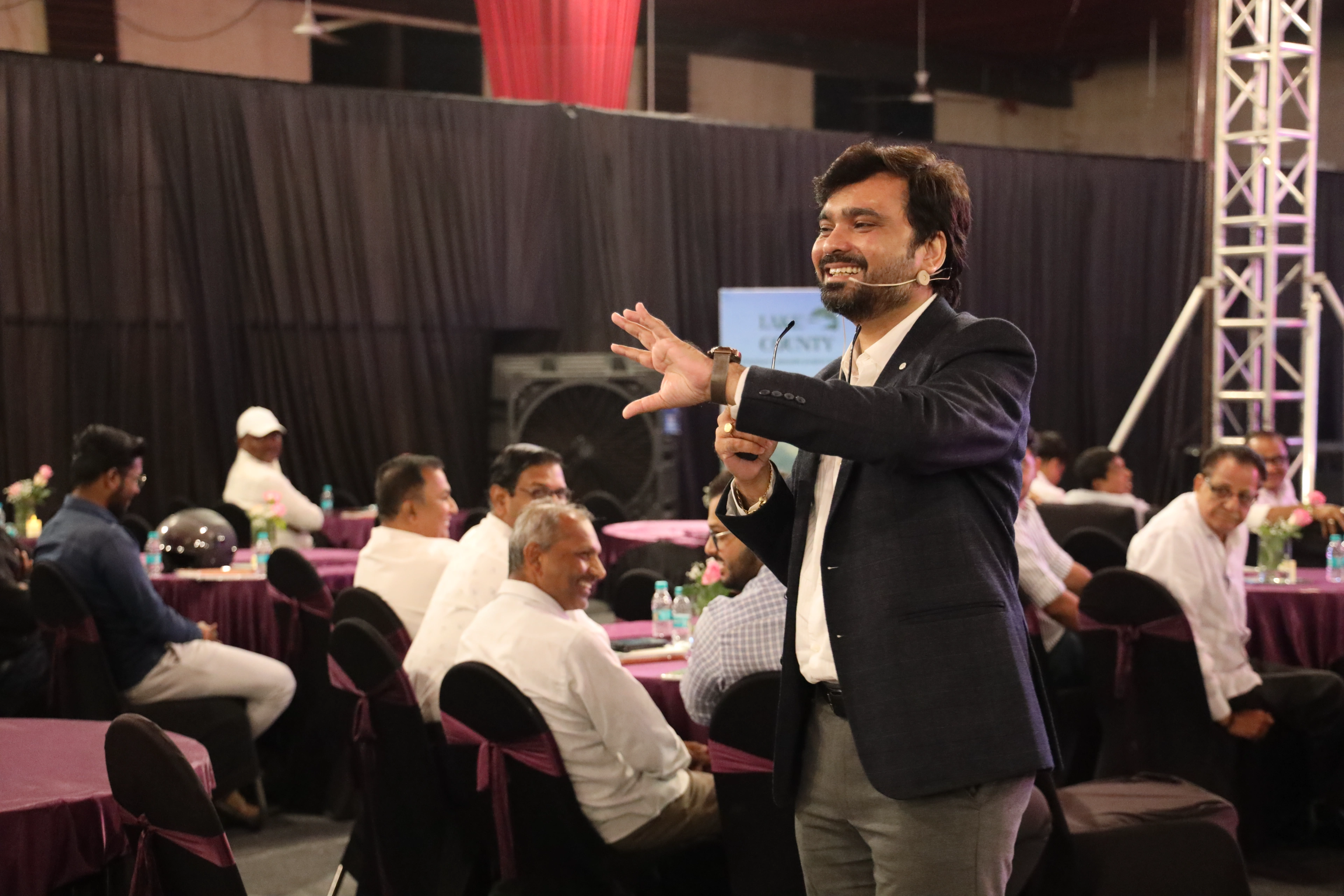
LinkedIn India 2026 ranks communication as the single most in-demand skill across Indian workplaces — and after training over 50,000 professionals at companies like Infosys, Mahindra, and the Indian Army, I know exactly why. Here's what this client discovered when they finally invested in building real communication skills inside their team.
TL;DR- LinkedIn India 2026: communication is the #1 skill gap across Indian corporations
- Poor workplace communication costs Indian businesses an estimated 25% in productivity losses
- Avinash Chate's communication training focuses on listening first — most programs do this backwards
- Cross-functional communication breakdowns are the #1 cause of project delays in Indian IT and manufacturing
- Real communication training builds behavioral habits, not just vocabulary and presentation polish
Why Communication Skills Are India's Biggest Corporate Skill Gap in 2026
Communication is the one skill that affects everything else. It determines whether your strategy gets executed or misunderstood. Whether your best employees stay or leave. Whether your clients feel heard or frustrated. LinkedIn India's 2026 report confirms what I've seen in 15+ years of corporate training — communication tops the list of skills Indian professionals need and organizations can't find. Yet most Indian companies still treat communication training as a nice-to-have, not a core business investment. That's a mistake that shows up in delayed projects, broken teams, and lost clients.
What This Client Discovered About Communication Breakdowns in Their Company
This client had a communication problem that had been normalized so long, people had stopped noticing it. Meetings ended without clear decisions. Emails were pages long and still required follow-up calls to clarify. Cross-team updates were filtered through managers so heavily that frontline teams were working on contradictory information. Deadlines were missed not because people weren't working hard, but because nobody had clearly agreed on what "done" looked like. When I first audited their communication patterns, I found they were spending over 30% of their collaborative time compensating for unclear communication.
| Communication Skill | Before Training | After 90-Day Program |
|---|---|---|
| Meeting Effectiveness | Long, inconclusive; 60% end without decisions | 22% shorter; agenda-driven; decisions logged in real time |
| Email Clarity | Long chains; multiple follow-ups per message | First-email clarity; chain length reduced by 40% |
| Feedback Culture | Vague or avoided; feedback given annually | Specific, weekly feedback; behavior-change focused |
| Cross-Team Communication | Siloed; handoffs missed; project delays common | Shared language; escalations reduced by 35% |
| Listening Quality | Passive; waiting to speak rather than hear | Diagnostic listening; intent understood, not just words |
| Conflict Handling | Escalated to managers; avoided at peer level | Resolved at team level using clear communication norms |
| Leadership Communication | Status updates; one-directional broadcasts | Purpose-driven; two-way; builds genuine team trust |
The Listening Problem Nobody Talks About in Indian Workplaces
Here's the thing about communication training — most programs teach people how to speak better, when what they actually need is to listen better. In Indian corporate culture, speaking is associated with confidence and competence. Listening is often associated with subordination. This creates a room full of people waiting for their turn to talk rather than genuinely processing what's being said. In my training, we start with listening — specifically, diagnostic listening that identifies not just what someone said, but what they meant and what they need. This shift alone changes meeting dynamics within weeks.
Why Most Corporate Communication Training Programs Fail to Stick
I've studied corporate training programs across India, and the ones that fail share a pattern: they're knowledge-transfer events, not behavior-change programs. Attendees leave with new vocabulary and a set of slides, but three months later they're communicating exactly as they did before. What makes communication training stick is practice, feedback, and accountability. In our program with this client, every manager practiced a specific communication skill each week — and had to report a real example from their team. This forced application, not passive learning.
Cross-Functional Communication: How to Break Down Silos in Indian Companies
Cross-functional communication breakdown is India Inc's hidden productivity killer. In my work at KPIT, Tata Tech, and Bosch, I consistently find that project delays trace back not to technical failures but to handoff failures — moments where information should have moved between teams but didn't, or moved incorrectly. The engineering team was waiting for specs that product had already finalized but hadn't shared. The sales team was promising features that delivery hadn't confirmed. These aren't systemic process failures — they're communication habits. Fixing them requires building shared language, clear escalation norms, and regular cross-team syncs that actually produce decisions.
How to Give Feedback That Improves Performance Without Damaging Relationships
Feedback is the form of communication that Indian corporate culture struggles with most — and avoids most. Senior professionals often conflate honest feedback with disrespect, so they give vague, non-actionable comments or say nothing at all. This leaves team members without the information they need to improve. In our training sessions, I teach a specific feedback structure: describe what you observed, describe the impact it had, and clarify what you'd like to see instead. No personal labels, no historical complaints, no vague encouragement. Just specific, actionable, respectful information.
Building a Communication-Strong Culture: What 90 Days of Training Achieves
After 90 days of structured communication training with this client, three things were measurable. First, meeting duration had dropped by 22% on average because agenda discipline and decision-logging had become habitual. Second, email response times improved and email chains shortened because people were writing the first email more clearly. Third, cross-team escalations dropped by 35%, because team leads were resolving communication breakdowns at their level instead of pushing them upward. These numbers tell you that the training wasn't just behavioral polish — it was operational improvement.
What Real Communication Mastery Looks Like for Indian Corporate Leaders
What real communication mastery looks like for Indian corporate leaders isn't about accent, vocabulary, or even presentation confidence. It's about this: can you make the person in front of you feel genuinely heard? Can you give feedback that makes someone want to improve rather than defend themselves? Can you convey a complex idea in one sentence before expanding? These skills don't come from reading a book or attending a one-day seminar. They come from deliberate practice, honest feedback, and a culture where communication is treated as a core professional competency — not just a soft skill.
Book Avinash Chate for Your Next Event
TEDx speaker. 11+ yrs training Army, BRO, RBI, BARC, JSW. Available for keynotes, leadership training, team building & manager development at your office or event venue.
✅ Thanks! Avinash team will reach out within 24 hours.'}).catch(function(e){f.outerHTML='Something went wrong. WhatsApp +91 8793630001
'});return false;">Select ServiceKeynote / Motivational SpeakingLeadership Development TrainingTeam Building WorkshopManager DevelopmentEmployee TrainingOutbound TrainingBook Avinash Now →Or WhatsApp directly: +91 87936 30001
Related Articles by Avinash Chate
- Recession मध्ये Hyundai ने cars परत घेऊनही फायदा कसा कमावला
- Virender Sehwag Mindset That Most Corporate Professionals Fear
- Ajit Agarkar's 21-Ball ODI Fifty Against Zimbabwe: The Silent Performer's Career Blueprint
Avinash Chate TEDx Speaker · Founder, The Future Corporate · 11+ yrs experience Avinash has trained Indian Army, BRO, RBI, BARC, JSW Steel and 1000+ corporate leaders across India. His work focuses on leadership development, communication skills, and behavioural training rooted in Indian values and modern business needs. |
Frequently Asked Questions
What are the most important communication skills for Indian corporate professionals?
In my experience training thousands of professionals at companies like Infosys, Mahindra, and L&T, the five most critical communication skills for Indian corporate professionals are: active and diagnostic listening, clear and concise written communication (especially email), structured feedback delivery, confident facilitation of meetings to actual decisions, and cross-functional communication across hierarchies. Most training programs focus only on presentation skills and public speaking, but these five skills have far greater impact on daily performance, project success, and team collaboration in Indian workplaces.
How does corporate communication training improve business performance?
Structured corporate communication training improves business performance in three measurable ways. First, it reduces the time wasted in unclear meetings, miscommunicated emails, and rework caused by misaligned expectations — in my client organizations, this has been as high as a 20-30% reduction in unproductive collaborative time. Second, it improves client relationships by ensuring customer-facing teams communicate value clearly and handle objections with confidence. Third, it accelerates team performance by enabling more effective feedback loops between managers and their teams. All three translate directly to revenue, retention, and operational efficiency.
What communication challenges are most common in Indian companies?
The most common communication challenges I find in Indian companies are: first, the culture of assumed understanding — where leaders communicate a direction once and assume it has been understood correctly by everyone. Second, avoidance of direct feedback — which leaves performance problems unaddressed for months before they become crises. Third, meeting overload without decisions — Indian companies hold far too many meetings that produce discussion but not action. Fourth, cross-functional silos — where teams communicate extensively within their function but barely at all across functions. All four are behavioral patterns that can be changed with the right training.
How long does it take to see results from communication skills training in India?
In a structured communication skills program, participants typically begin showing behavioral changes within 3-4 weeks of consistent practice. By the 60-day mark, managers report that their teams are communicating more clearly in written channels and meeting quality has measurably improved. The 90-day milestone usually shows the most significant operational outcomes: reduced escalations, faster decision cycles, and improved cross-team collaboration scores on internal surveys. The key to sustaining results is post-training accountability — without regular reinforcement, communication habits tend to revert within 3-6 months, which is why my programs include follow-up coaching sessions.
Avinash Chate services
Corporate Trainer in Maharashtra · Top Corporate Trainers in Maharashtra · Leadership Trainer in Maharashtra · Top Leadership Trainers in Maharashtra · Team Building Trainer in Maharashtra · Top Team Building Trainers in Maharashtra · Motivational Speaker in Maharashtra · Top Motivational Speakers in Maharashtra · All service locations
← Back to all articles · Book Avinash Chate
By Avinash Chate — Maharashtra’s #1 Corporate Trainer & Motivational Speaker. .