Team Collaboration Training That Works: Avinash Chate India 2026
Real team collaboration is built through shared language, clear ownership, and trust under pressure — not ropes courses. Here's what actually works in Indian corporate teams.
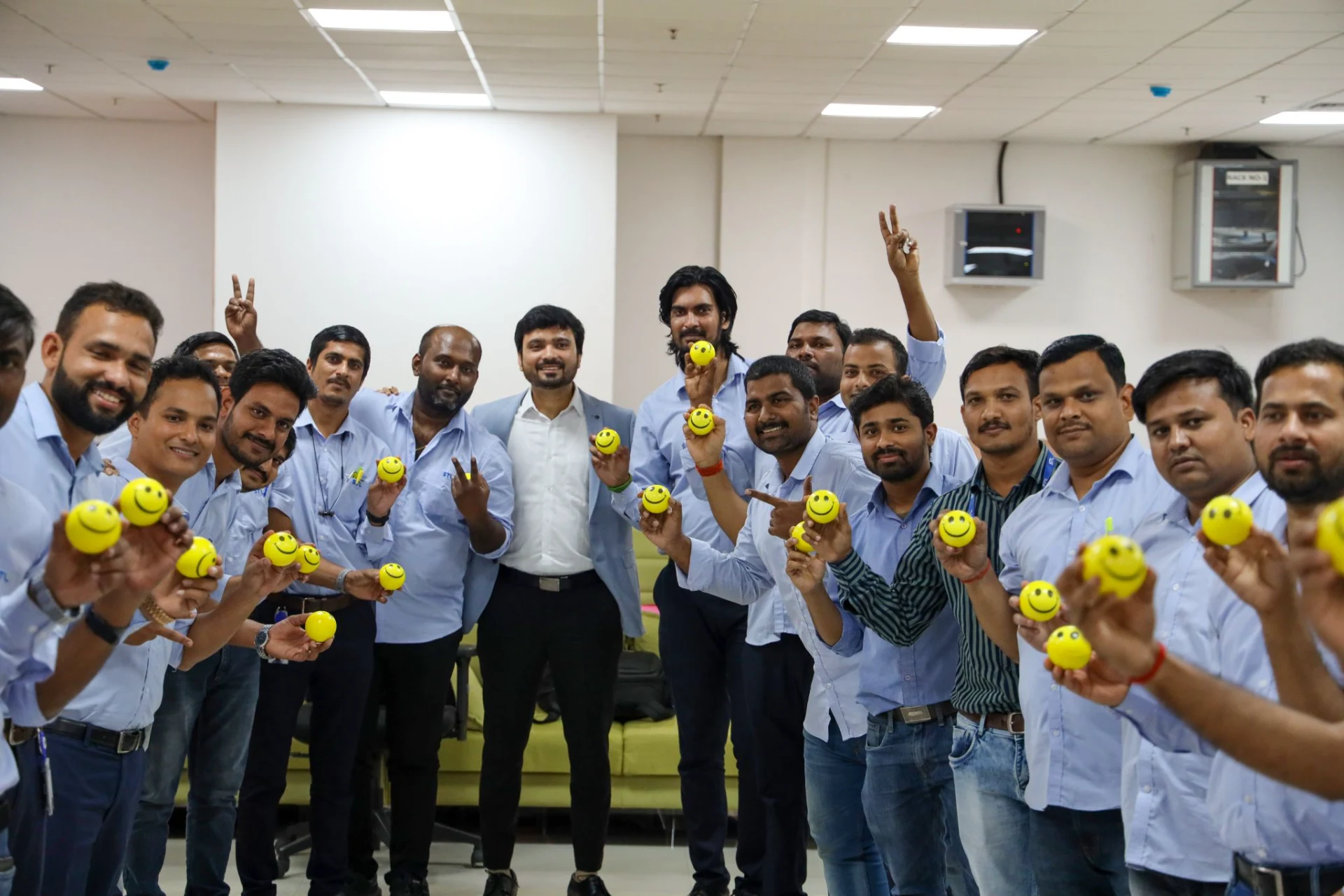
With 65% of Indian firms now investing in soft-skill and team training (NASSCOM 2026), the question isn't whether to invest in collaboration — it's whether what you're doing actually produces collaboration. Most team-building days don't. Here's what a session that does looks like, from twenty years of running them for teams at Bajaj Auto, L&T, Mahindra, and Tata Tech.
TL;DR- 65% of Indian firms invest in soft-skill training but most team-building doesn't produce real collaboration
- Real collaboration needs shared language, clear accountability structures, and trust built under actual pressure
- The most common collaboration killer is not personality conflict — it's unclear ownership
- Avinash Chate's team workshops have delivered measurable gains at Bajaj Auto, Tata Tech, L&T, and more
- Three practical actions any Indian team can take this week to genuinely collaborate better
Why Most Corporate Team-Building Days Don't Actually Build Teams
Here's what most corporate team-building days look like: a ropes course, a group lunch, a motivational speaker with a slide deck, and three days later everyone's back to the same communication patterns they had before. Trust me — I've walked into companies where the previous year's team-building photos are still on the breakroom wall and the same teams are still not talking to each other properly. The reason isn't that the people are bad. It's that the session created a good day, not a new structure. Good days don't change behaviour. Structures do.
What Real Collaboration Actually Looks Like in an Indian Workplace
Real collaboration is specific. It's the finance team and the product team using the same definition of done. It's the sales manager who knows how to disagree with the delivery head without triggering a defensive shutdown. It's the junior engineer who trusts that raising a problem won't result in a blame conversation. In India's corporate culture — across the Pune-Mumbai-Bengaluru corridor where I work most often — hierarchy pressure compresses collaboration. People defer when they should challenge; they stay silent when the team needs their signal. Collaboration training fixes the structure, not just the feeling.
| Training Type | Typical Outcome | Duration of Impact | Addresses Root Cause |
|---|---|---|---|
| Fun day out (games, ropes course) | Good mood, no structural change | 3-5 days | No |
| Generic motivational talk | Temporary energy boost | 1 week | No |
| Avinash Chate structured workshop | Shared language, ownership structures, reduced blame | 3-6 months+ | Yes |
| Ongoing coaching engagement | Sustained culture and behaviour shift | 12 months+ | Yes |
The Shared Language Problem: Why Teams Misfire Even When Everyone Tries Hard
The single most common collaboration failure I see — across industries from Bosch to Infosys to KPIT — is what I call the shared language problem. Two people in the same meeting use the same word, mean entirely different things, and both walk out thinking they agreed. I'll look into it means I will prioritise this today to one person and I noted this but have no timeline to another. With India's L&D market at Rs.1.5 trillion and growing, companies are investing seriously in individual skills; what they're often missing is the alignment layer that makes individual skills add up to team output.
Accountability Without Blame: The Structure That Changes Team Dynamics
What most people don't realize is that the absence of accountability is not kindness — it's chaos with a friendly face. When no one is clearly responsible, everyone assumes someone else is handling it, and the task falls through quietly. The teams I work with at RBI, JSW, and Ferrero learn a simple accountability structure: every action item from a meeting gets one name attached to it, one date, and one sentence describing what done looks like. That's the entire system. No complex tool required. That one habit, practised consistently in every meeting, rebuilds team trust faster than any team lunch or offsite retreat.
How Avinash Chate's Team Collaboration Workshops Work in Practice
My team collaboration sessions are not motivational talks. They are structured half-day or full-day workshops where the team works on their actual current challenge — a real project, a real communication breakdown, a real tension between two functions — using frameworks I've refined over twenty years and 1,000+ corporate sessions. The good news is that the insight a team needs is almost always already in the room. The workshop creates the conditions for it to surface and be acted on, rather than sitting as unspoken frustration that quietly drains performance and energy.
What Teams at Bajaj Auto, L&T, and Tata Tech Report After the Workshop
The most common feedback I receive after a team collaboration session is not this was inspiring. It's we finally said the thing we hadn't said in two years. Teams at Bajaj Auto described a shift in cross-functional ownership — production and quality stopped throwing problems at each other and started solving them together. A Tata Tech team rebuilt a project communication rhythm that had broken down over six months of remote work. At L&T, the workshop surfaced a misaligned success metric between two divisions that neither team had named — let alone resolved — in all the months before the session.
Three Actions Every Indian Team Can Take This Week to Collaborate Better
First: end every team meeting with three columns — what we decided, who owns it, and by when. Put these in writing before people leave the room. Second: run a 15-minute shared language audit — pick five words your team uses constantly (done, urgent, aligned, priority, feedback) and ask everyone to write what they actually mean by each word. Compare the answers. The differences will surprise you and often explain months of miscommunication. Third: create a standing slot — even monthly — where team members can surface blockers without being required to also bring solutions. Separating problem from solution reduces the silence that kills collaboration.
Book Avinash Chate for Your Next Event
TEDx speaker. 11+ yrs training Army, BRO, RBI, BARC, JSW. Available for keynotes, leadership training, team building & manager development at your office or event venue.
✅ Thanks! Avinash team will reach out within 24 hours.'}).catch(function(e){f.outerHTML='Something went wrong. WhatsApp +91 8793630001
'});return false;">Select ServiceKeynote / Motivational SpeakingLeadership Development TrainingTeam Building WorkshopManager DevelopmentEmployee TrainingOutbound TrainingBook Avinash Now →Or WhatsApp directly: +91 87936 30001
Related Articles by Avinash Chate
- Why Manufacturing Industry is Difficult to Start in India: 5 Key Challenges
- Ajit Agarkar's 21-Ball ODI Fifty Against Zimbabwe: The Silent Performer's Career Blueprint
- Zero Defects: How Sundram Fasteners Won GM Supplier of the Year 5 Times
Avinash Chate TEDx Speaker · Founder, The Future Corporate · 11+ yrs experience Avinash has trained Indian Army, BRO, RBI, BARC, JSW Steel and 1000+ corporate leaders across India. His work focuses on leadership development, communication skills, and behavioural training rooted in Indian values and modern business needs. |
Frequently Asked Questions
What makes corporate team collaboration training effective in Indian workplaces?
Effective team collaboration training works on structure, not just sentiment. A good session gives teams shared language — common definitions for the words they all use differently — plus clear single-owner accountability structures and a safe mechanism for surfacing blockers honestly. In Indian corporate culture, where hierarchy often suppresses upward communication, the workshop environment needs to actively create psychological safety for honest conversation. When those three elements are in place, the shift in how the team operates becomes visible within weeks, not months.
How long does a team collaboration workshop by Avinash Chate typically last?
Avinash Chate's team collaboration workshops are designed as focused half-day (4 hours) or full-day (8 hours) sessions, with options for a two-day deep-dive for larger cross-functional teams or those with complex communication challenges. The session works on the team's actual live challenges — not generic exercises — which means the frameworks and structures built in the room are immediately applicable the following Monday. A pre-session discovery call ensures the programme is designed around the specific team's situation and goals, not a generic template.
What is the most common collaboration problem in Indian corporate teams?
The most common collaboration failure I see across Indian corporate teams is the shared language problem: two people use the same word and mean completely different things. I'll follow up on that said in a Monday meeting carries five different meanings for five different team members. This invisible gap — harmless in individual performance but devastating in team output — is responsible for most missed handoffs, duplicated work, and cross-functional friction. Naming and resolving it is often the single highest-leverage thing a team collaboration session can accomplish.
How can I book Avinash Chate for a team collaboration training session in India?
To book Avinash Chate for a team collaboration training session in Maharashtra or anywhere across India, visit avinashchate.com or reach out directly through the website's contact form. Avinash works with teams across Pune, Mumbai, Nashik, Nagpur, Bengaluru, and pan-India, with both on-site and virtual formats available for distributed teams. Early booking is recommended for Q3 and Q4 2026 dates, which fill quickly during corporate annual training calendar planning. WhatsApp enquiries are also welcome at +91 87936 30001.
Avinash Chate services
Corporate Trainer in Maharashtra · Top Corporate Trainers in Maharashtra · Leadership Trainer in Maharashtra · Top Leadership Trainers in Maharashtra · Team Building Trainer in Maharashtra · Top Team Building Trainers in Maharashtra · Motivational Speaker in Maharashtra · Top Motivational Speakers in Maharashtra · All service locations
← Back to all articles · Book Avinash Chate
By Avinash Chate — Maharashtra’s #1 Corporate Trainer & Motivational Speaker. .