They Come Just for Salary?
💸 Some employees show up just for the paycheck. But inspired teams don’t just work — they contribute. 🎙️ Avinash Bhaskar Chate shares how leaders can transform ...
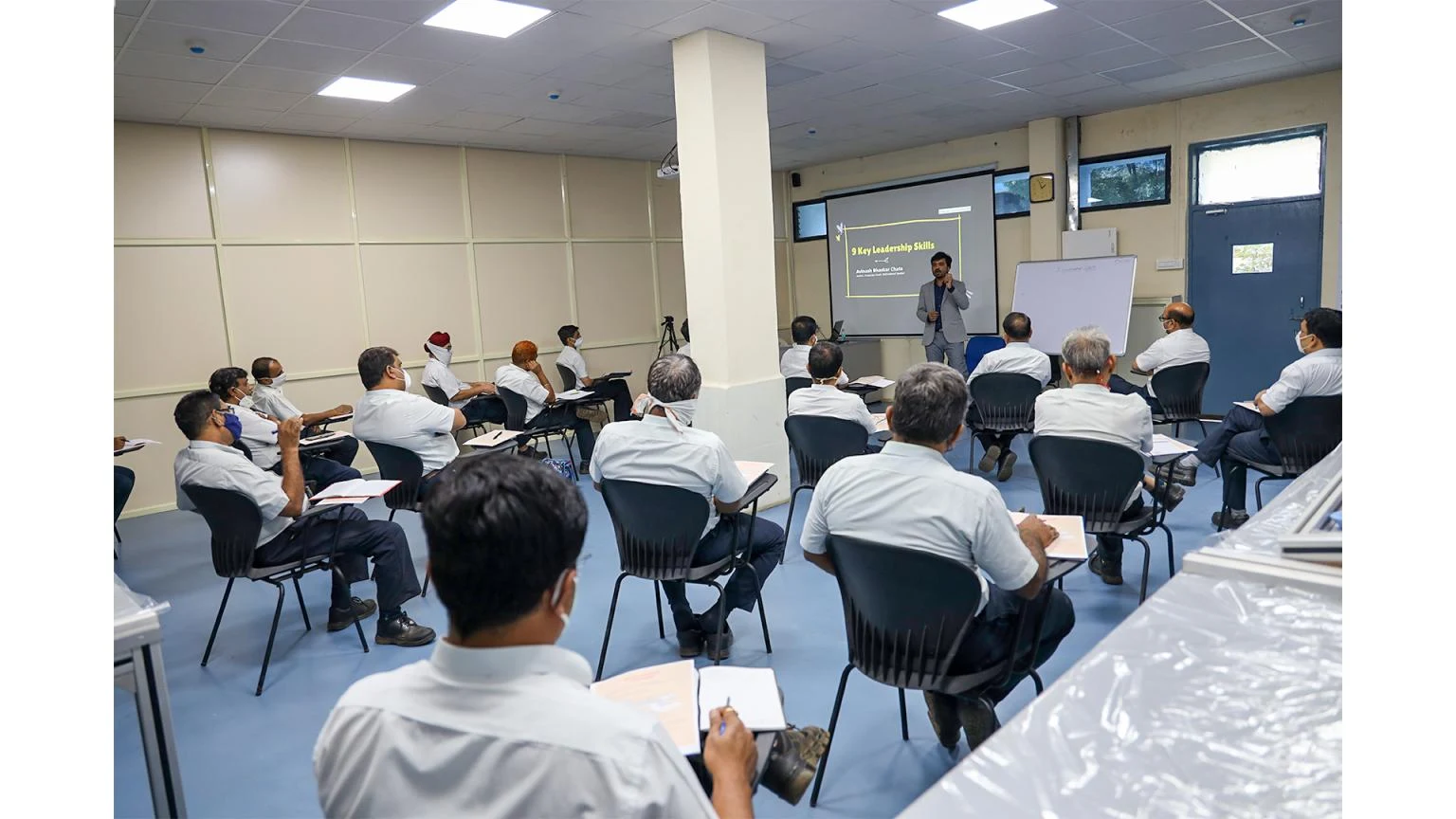
Here's the thing — when employees show up just for salary, most managers blame the employees. In 20+ years of training at Bajaj Auto, Infosys, and the Indian Army, I've never seen a disengaged team where leadership was excellent. Not once. McKinsey India data shows Indian managers spend 21 hours per week in meetings — 35% more than US peers — yet most of that time isn't building culture that makes people want to give more than the minimum.
TL;DR- Employees who show up just for salary are a symptom of poor leadership and culture, not poor character
- Indian managers spend 21 hours per week in meetings yet consistently underinvest in team engagement
- Genuine employee engagement requires purpose, recognition, growth, and psychological safety
- Team building training consistently improves engagement scores and reduces attrition in Indian companies
- Avinash Chate's corporate training transforms salary-only teams into purpose-driven, high-performing ones
Why Employees Come Just for Salary — and What It Really Tells You About Your Leadership
When I walk into a company and notice that people count down to lunch, leave exactly at closing time, and never volunteer for anything beyond their defined job description, I know the problem immediately — and it has nothing to do with the employees. These salary-only cultures are created by leadership, not by the workforce. Trust me, I've been to enough organisations across Maharashtra and India to say this with certainty. Every disengaged team I've ever encountered had a leadership team that was either absent, inconsistent, or failing to connect the work to any larger purpose. Fix the leadership, and the team follows.
The Real Cost of a Disengaged Team in Indian Companies Today
The real cost of a disengaged team in Indian companies is staggering, and most CEOs underestimate it significantly. Disengaged employees produce approximately 30-40% less output than engaged ones, according to HR research across Indian industries. They take more sick days, create more errors, serve customers worse, and leave more often — triggering expensive recruitment and onboarding cycles. At companies where I've measured it before and after training interventions, the financial cost of a salary-only team culture often exceeds the entire annual training budget many times over. Disengagement isn't a soft problem — it's a bottom-line problem.
What Genuinely Engaged Teams Look Like vs. Salary-Only Teams
Here's what a genuinely engaged team looks like in an Indian corporate context. Engaged employees volunteer for challenges outside their job description. They mention their company positively to friends and family. They proactively identify problems and suggest solutions without being asked. They stay late when there's genuine need — not out of fear, but out of care. They build relationships with colleagues that extend beyond transactional interaction. I've seen these characteristics in high-performing teams at Tata Tech, JSW, and KPIT — and in every case, the common factor is leadership that is present, appreciative, honest, and purpose-connected.
The 5 Leadership Failures That Create Salary-Only Employee Cultures in India
The 5 leadership failures that create salary-only cultures in India are consistent across industries. First, purpose vacuum: employees have no clear connection between their daily work and a meaningful company mission. Second, recognition deficit: contributions go unacknowledged, making effort feel pointless. Third, growth stagnation: employees see no development path and feel the company has stopped investing in them. Fourth, leadership inconsistency: managers say one thing and do another, destroying trust. Fifth, psychological unsafety: employees fear speaking up, so they disengage rather than advocate. Fix these five, and engagement improves dramatically — often within one quarter.
| Team Behaviour | Salary-Only (Disengaged) Team | Purpose-Driven (Engaged) Team |
|---|---|---|
| Discretionary effort | Does the minimum required; stops exactly at job description | Regularly goes beyond the role when the team needs it |
| Problem identification | Sees problems but waits for someone else to raise them | Proactively flags issues and comes with proposed solutions |
| Company advocacy | Neutral or negative about the employer in external conversations | Naturally recommends the company to friends and referrals |
| Response to feedback | Defensive or indifferent; feedback feels like criticism | Welcomes feedback as growth input; acts on it quickly |
| Collaboration style | Transactional — does their part and disengages | Genuinely invested in colleagues' success and team outcomes |
| Attrition tendency | Actively looking for the next better-paying option | Stays longer; leaves only for significant opportunity or growth |
How to Build a Team Culture Where People Bring Their Best — Not Just Their Bodies
Building a team culture where people genuinely want to give their best requires intentional leadership action, not just good intentions. Start with clarity of purpose — can every team member articulate in one sentence why their work matters? Then move to recognition — build a habit of specific, frequent appreciation that names the contribution, not just the outcome. Third, invest in visible growth — every team member should have a development plan they helped create and that their manager actively supports. Fourth, create psychological safety — reward honesty over performance in some contexts, so people know it's safe to speak up. These four practices transform team culture from transactional to motivational.
Avinash Chate's Corporate Training Approach to Transforming Employee Engagement in India
In my corporate training programmes at Bajaj Auto, Mahindra, L&T, and Ferrero, I use a structured three-day team engagement programme that addresses each of the five leadership failure points I identified above. The programme combines self-assessment for managers, structured team dialogue exercises, and a 90-day action planning process that creates accountability for culture change. Companies that have gone through this programme report measurable improvements in their employee engagement scores — typically 15-25 points — within 6 months of the intervention. These are not feel-good programmes. They are hard conversations followed by disciplined execution.
Your 90-Day Action Plan to Move Your Team From Salary-Only to Purpose-Driven
Here's your 90-day action plan to move your team from salary-only to purpose-driven. Month 1: have a genuine team conversation about what the team's work means — not the company mission statement, but what it means to each individual in the room. Month 2: implement a specific, public recognition practice — weekly team standups where one contribution is named and appreciated. Month 3: have individual development conversations with every team member — not performance reviews, development conversations. By Month 3, if you've done these honestly and consistently, you'll see a measurable difference in energy, initiative, and discretionary effort. Teams that feel seen, valued, and growing don't come just for salary.
Book Avinash Chate for Your Next Event
TEDx speaker. 11+ yrs training Army, BRO, RBI, BARC, JSW. Available for keynotes, leadership training, team building & manager development at your office or event venue.
✅ Thanks! Avinash team will reach out within 24 hours.'}).catch(function(e){f.outerHTML='Something went wrong. WhatsApp +91 8793630001
'});return false;">Select ServiceKeynote / Motivational SpeakingLeadership Development TrainingTeam Building WorkshopManager DevelopmentEmployee TrainingOutbound TrainingBook Avinash Now →Or WhatsApp directly: +91 87936 30001
Related Articles by Avinash Chate
- The Ferrari Insult That Created Lamborghini — A Mindset Story India Needs
- The Dark Marketing Secret Behind Listerine That Changed Everything
- Why Corporate Success Feels Empty and What Truly Makes It Meaningful
Avinash Chate TEDx Speaker · Founder, The Future Corporate · 11+ yrs experience Avinash has trained Indian Army, BRO, RBI, BARC, JSW Steel and 1000+ corporate leaders across India. His work focuses on leadership development, communication skills, and behavioural training rooted in Indian values and modern business needs. |
Frequently Asked Questions
Why do Indian employees come to work just for salary and how can this be changed?
Indian employees come to work just for salary when the leadership environment fails to give them any compelling reason to do otherwise. The cause is almost never the employee's character or attitude — it's a leadership culture that doesn't connect work to purpose, doesn't recognise contributions, doesn't invest in growth, and doesn't create psychological safety. The fix starts with honest leadership self-assessment: what does this team experience on a daily basis that would make them want to give more than the minimum? The answer to that question is your engagement improvement roadmap. It's leadership work first, culture work second, and employee engagement third.
What is the real cost of employee disengagement for Indian companies in 2026?
The real cost of employee disengagement for Indian companies in 2026 is significant and consistently underestimated. Research across Indian industries shows disengaged employees produce 30-40% less output than engaged peers. They are absent more often, create more errors, deliver lower customer service quality, and leave more frequently — generating expensive recruitment, onboarding, and knowledge transfer costs. HR data from companies I've worked with at Bajaj Auto and Mahindra shows that high-attrition teams — the clearest symptom of a salary-only culture — cost between 50-150% of an individual's annual salary to replace, when all direct and indirect costs are counted. Engagement isn't a nice-to-have; it's a profitability lever.
What does genuine team building training look like for Indian corporate teams?
Genuine team building training for Indian corporate teams looks nothing like the typical outdoor activity day or motivational lecture. The programmes I run are structured, diagnostic, and accountability-driven. They begin with an honest assessment of the team's current engagement reality — not the sanitised version leaders prefer to believe, but the actual experience of team members. They move through structured dialogue about purpose, recognition, growth, and safety — the four pillars of engagement. And they conclude with a specific 90-day action plan that each manager commits to executing, with measurable milestones. The follow-through accountability is where most training programmes fail, and where mine is deliberately different.
How quickly can employee engagement improve with the right leadership intervention?
Employee engagement can begin improving within 30 days of consistent, honest leadership action — but sustainable improvement requires 90-180 days of deliberate culture-building. The variables that determine speed of improvement are: how low engagement is starting from, how consistently leadership applies the new practices, and how much psychological safety exists for team members to respond honestly. In my experience training teams at Infosys, KPIT, and the Indian Army, teams where leadership implements specific recognition, purpose, and development practices consistently report measurable improvements in energy and discretionary effort within 4-6 weeks. Full engagement score improvement typically shows in quarterly or semi-annual surveys 3-6 months later.
Avinash Chate services
Corporate Trainer in Maharashtra · Top Corporate Trainers in Maharashtra · Leadership Trainer in Maharashtra · Top Leadership Trainers in Maharashtra · Team Building Trainer in Maharashtra · Top Team Building Trainers in Maharashtra · Motivational Speaker in Maharashtra · Top Motivational Speakers in Maharashtra · All service locations
← Back to all articles · Book Avinash Chate
By Avinash Chate — Maharashtra’s #1 Corporate Trainer & Motivational Speaker. .