Two Types of Employees at Work: Which One Are You? India 2026
Every Indian office has two fundamental types of employees. Knowing which one you are — and which one your team members are — changes how you lead, manage, and grow.
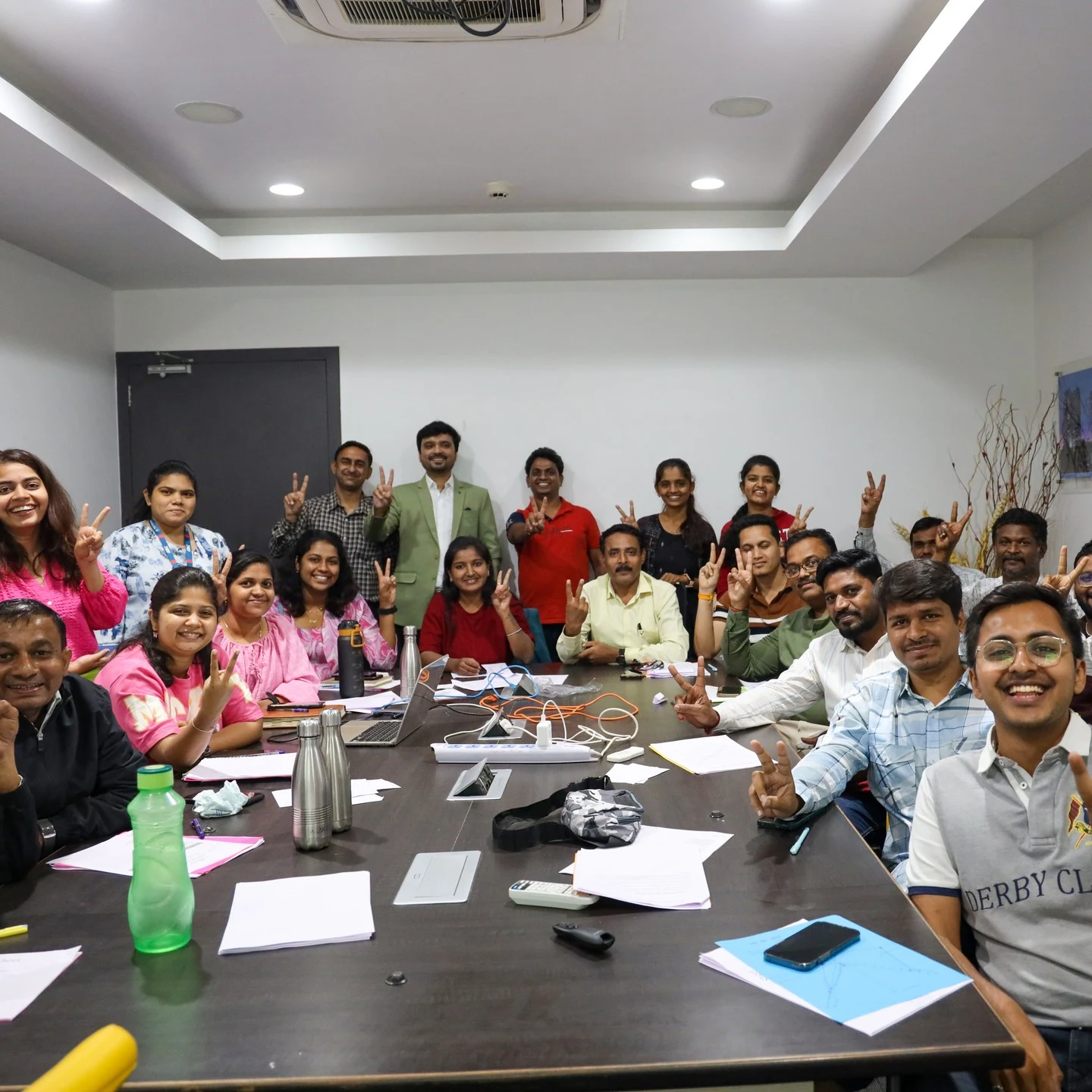
Walk into any Indian office — whether it's a startup in Bengaluru or a 50-year-old manufacturing plant in Pune — and you'll find the same two types of employees. One type shows up to give. The other shows up to get. According to NASSCOM-Deloitte, India needs 1.25 million AI-ready professionals by 2027, but the most important readiness isn't technical — it's mindset. Which type are you?
TL;DR- Two employee types exist in every Indian office: those who bring energy and initiative to their role, and those who wait for direction
- The proactive type takes ownership beyond their job description; the reactive type does exactly what is asked and nothing more
- Neither type is fixed — employees shift between these modes depending on leadership, culture, and motivation
- The manager's job is to understand what triggers each employee's proactive mode and build the environment for it
- Teams with a higher ratio of proactive employees consistently outperform on innovation, execution, and retention
The Two Employee Types Found in Every Indian Office
I've trained thousands of employees across India — at Bajaj Auto, Tata Tech, KPIT, JSW, and the Indian Army. Every single organisation has the same two fundamental types. Type One: the employee who sees a gap and fills it, who brings ideas to the manager instead of waiting to be told, who takes responsibility when things go wrong. Type Two: the employee who does what's asked — nothing more, nothing less — who waits for instructions and avoids ownership of outcomes. Both types exist in your team right now. The question is what you're doing about it.
The Proactive Employee: What They Do Differently and Why It Matters
Proactive employees don't just do their job — they define what their job could be. They look ahead, anticipate problems, volunteer for challenges, and treat the organisation's success as their own. At Mahindra and L&T, the highest-performing teams I've seen are dominated by proactive employees at every level — not just at the top. What sets them apart isn't intelligence or even skill — it's a deep sense of ownership. They behave as if they have equity in the outcome. And that psychological ownership is something any organisation can build, given the right leadership.
| Dimension | Proactive Employee | Reactive Employee |
|---|---|---|
| Problem Response | Spots and addresses before told | Waits to be informed and directed |
| Initiative | Goes beyond job description | Stays within defined role |
| Ambiguity | Clarifies and moves forward | Waits for clear instructions |
| Ownership | Takes responsibility for outcomes | Accountable only for assigned tasks |
| Leadership Need | Direction-setting and autonomy | Clear process and regular check-ins |
The Reactive Employee: Why They Play It Safe and What It Costs the Team
Reactive employees aren't lazy — that's a common mistake managers make. Most reactive employees are cautious, risk-averse, or have been burned before for stepping outside their lane. In Indian corporate culture, where hierarchy is strong and overstepping can carry real consequences, reactive behaviour is often the rational response to the environment. I've seen brilliant engineers at Bosch and Infosys disengage completely after being ignored or criticised for showing initiative. The reactive mode isn't a personality flaw — it's usually a scar. Understanding what created it is the first step to reversing it.
What Turns a Reactive Employee Into a Proactive One?
The good news is — you can move someone from reactive to proactive. I've done it systematically at RBI, JSW, and Tata Tech. The triggers are: clear ownership of outcomes (not just tasks), visible recognition when they take initiative, a manager who doesn't punish initiative that fails, and access to information that allows them to make good calls. Reactive employees are almost always reacting to the leadership environment. Change the environment and you change the behaviour. In my 90-day team culture programs, we typically shift 30–40% of reactive-mode employees into proactive-mode through these four levers alone.
How Leaders Can Identify and Develop Both Types
How do you identify which mode each team member is in? Watch what happens when something goes wrong that isn't technically their problem. Does the proactive employee step in or step back? Watch what happens when an opportunity appears that's slightly outside their role — do they flag it or ignore it? Watch how they handle ambiguity: do they seek clarity proactively, or wait to be told? At Bajaj Auto and Ferrero, I run structured observation frameworks with team leaders over 30 days — and the pattern for each employee becomes clear within the first week of consistent observation.
Building a Proactive-Majority Team Culture in Indian Companies
Building a proactive-majority culture isn't about hiring differently — it's about leading differently. Start by making ownership the currency of your team. Every task should have a named owner, not a group responsibility. Every project should have a person who speaks to it when things go wrong, not a "we tried our best" committee. Celebrate initiative, even when it fails — publicly. At BARC and the Indian Army, I've seen how quickly culture shifts when leaders consistently reward the attempt, not just the result. Within 60 days, more people try. Within 90, it's the new normal.
Lessons from India's High-Performance Corporate Teams
At a manufacturing company in Nashik — 300 floor supervisors in the room — I asked: "How many of you have an idea that could save the company money or time, but you haven't shared it?" Over 200 hands went up. Then I asked: "Why not?" The answers were consistent: nobody asked, it's not my job, last time I said something nothing happened. The ideas were there. The proactive impulse was there. The system had just trained it out of them. Unlocking that is one of the highest-ROI things any Indian company can do — and it costs nothing except leadership attention.
Book Avinash Chate for Your Next Event
TEDx speaker. 11+ yrs training Army, BRO, RBI, BARC, JSW. Available for keynotes, leadership training, team building & manager development at your office or event venue.
✅ Thanks! Avinash team will reach out within 24 hours.'}).catch(function(e){f.outerHTML='Something went wrong. WhatsApp +91 8793630001
'});return false;">Select ServiceKeynote / Motivational SpeakingLeadership Development TrainingTeam Building WorkshopManager DevelopmentEmployee TrainingOutbound TrainingBook Avinash Now →Or WhatsApp directly: +91 87936 30001
Related Articles by Avinash Chate
- Why Manufacturing Industry is Difficult to Start in India: 5 Key Challenges
- Ajit Agarkar's 21-Ball ODI Fifty Against Zimbabwe: The Silent Performer's Career Blueprint
- Clive Lloyd's 1975 World Cup Final Leadership: How Bold Captaincy Wins Under Pressure
Avinash Chate TEDx Speaker · Founder, The Future Corporate · 11+ yrs experience Avinash has trained Indian Army, BRO, RBI, BARC, JSW Steel and 1000+ corporate leaders across India. His work focuses on leadership development, communication skills, and behavioural training rooted in Indian values and modern business needs. |
Frequently Asked Questions
What are the two types of employees found in every Indian workplace?
The two fundamental employee types I see in every Indian organisation are the Proactive type — who takes initiative, anticipates problems, and treats ownership as a default — and the Reactive type — who waits for direction, stays within assigned tasks, and avoids unsolicited risk. These aren't personality types, they're behavioural modes that are heavily influenced by the work environment, leadership style, and past experiences in the organisation. The same employee can be proactive in one team and reactive in another depending on how they are managed.
How can a manager tell if an employee is proactive or reactive?
The clearest indicators are: what does the employee do when something goes wrong that isn't technically their problem? Do they step in or step back? What do they do when they spot an opportunity outside their role — do they flag it or ignore it? How do they handle ambiguity — do they seek clarity proactively, or wait to be told? I use a 30-day observation framework in my leadership training programs at Bajaj Auto and L&T. Within two weeks of structured observation, managers can reliably classify the dominant mode of each team member.
Can reactive employees become proactive, and how?
Yes — and this is one of the most important skills a leader can develop. Reactive behaviour is almost always a response to the environment, not a fixed personality trait. The key levers are: give clear ownership of outcomes (not just tasks), publicly recognise initiative even when it doesn't succeed, ensure the employee has enough information to make good independent calls, and create safety for stepping outside the lane. In my 90-day culture programs at JSW and Tata Tech, we consistently shift 30–40% of reactive-mode employees into proactive mode through these four environmental changes alone.
What percentage of Indian employees are proactive vs reactive?
There is no definitive India-specific data, but in my experience training over 1,000 corporate teams across Maharashtra, Karnataka, and the NCR over 11 years, roughly 25–30% of employees are naturally proactive in their current environment, 40–50% are situationally proactive (they become proactive under the right conditions), and 20–30% are stuck in reactive mode due to past experiences or current leadership. The key insight is that the middle 40–50% is entirely within a leader's influence — and shifting even half of them to proactive mode measurably transforms team output within 90 days.
Avinash Chate services
Corporate Trainer in Maharashtra · Top Corporate Trainers in Maharashtra · Leadership Trainer in Maharashtra · Top Leadership Trainers in Maharashtra · Team Building Trainer in Maharashtra · Top Team Building Trainers in Maharashtra · Motivational Speaker in Maharashtra · Top Motivational Speakers in Maharashtra · All service locations
← Back to all articles · Book Avinash Chate
By Avinash Chate — Maharashtra’s #1 Corporate Trainer & Motivational Speaker. .