Volvo Gave Away a Billion-Dollar Idea? The Truth About Real Leadership Thinking
In many workplaces today, people hesitate to share knowledge because they fear losing their importance or advantage. This short-term thinking often limits both ...
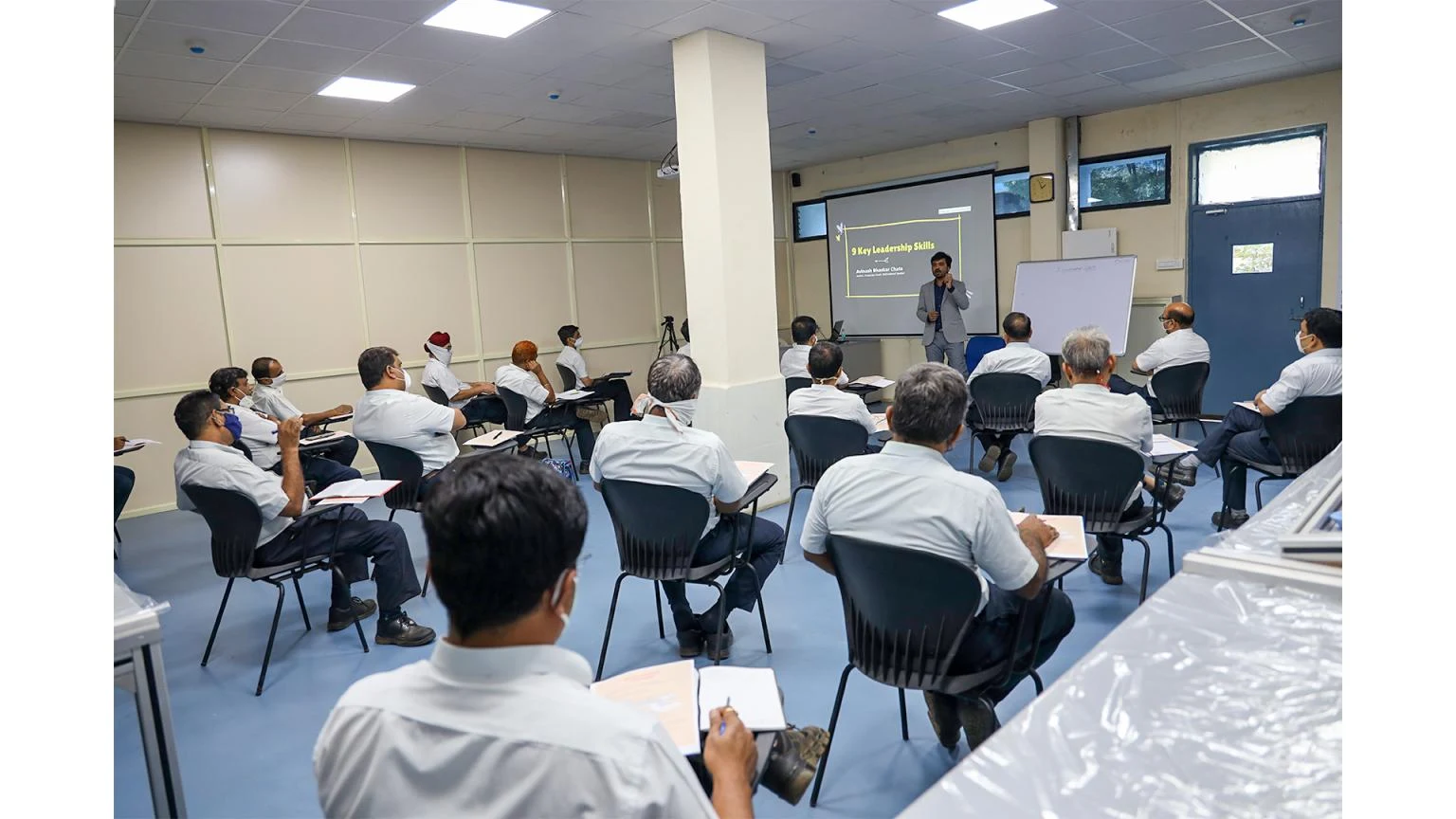
Here's the thing — Volvo invented the three-point seatbelt and then gave the patent away for free. What most people don't realise is this wasn't a mistake — it was one of history's most brilliant leadership decisions. I use this story with every leadership team I train at Bajaj Auto and the Indian Army. LinkedIn India 2026 confirms leadership is the single most in-demand professional skill this year — and Volvo's story is the perfect illustration of why real leadership thinking matters.
TL;DR- Volvo gave away the three-point seatbelt patent — a billion-dollar decision that proved visionary
- Real leadership thinking prioritises long-term impact over short-term financial gain
- Indian leaders often fall into short-term profit traps that limit organisational growth
- The Volvo model of generosity and vision is a competitive strategy, not just ethics
- Avinash Chate's leadership training helps Indian companies make braver, more visionary decisions
The True Story of Volvo's Billion-Dollar Giveaway That Changed the World
In 1959, Nils Bohlin, a Volvo engineer, invented the three-point seatbelt — the same design still used in every car in the world today. Volvo held the patent. They had the legal right to licence it and collect royalties from every other car manufacturer on the planet. Instead, Volvo's leadership made a radical decision: give the patent away for free, so every car in the world could have it, and every driver would be safer. That decision cost them billions in potential royalties — and built a safety brand worth far more.
Why Volvo's Decision Was Actually the Smartest Business Move in Automotive History
Here's why Volvo's decision was actually the smartest business move in automotive history. By giving away the seatbelt patent, Volvo positioned safety as the core of their brand identity. Every time a life was saved by a seatbelt — anywhere in the world, in any car — Volvo was mentioned. They didn't own the patent, but they owned the story. By 2026, Volvo's safety reputation is arguably their most valuable competitive asset. Real leadership thinking asks: 'What do we want to be famous for in 50 years?' — not 'How do we maximise this quarter's revenue?'
| Decision Type | Short-Term Leadership Thinking | Real (Long-Term) Leadership Thinking |
|---|---|---|
| Resource allocation | Cut training budgets to hit quarterly profit targets | Invest in people development as long-term competitive infrastructure |
| Brand building | Spend on immediate sales conversion marketing | Build authentic reputation through actions that outlast campaigns |
| Talent decisions | Keep underperformers to avoid short-term disruption | Make honest calls that protect team culture and long-term performance |
| Innovation investment | Fund only projects with guaranteed near-term ROI | Bet on ideas that will define the category in 5-10 years |
| Sharing knowledge | Hoard proprietary knowledge as competitive moat | Share expertise to build industry authority and trust (the Volvo way) |
| Customer relationships | Maximise revenue per transaction | Build lifetime relationships that create referrals and loyalty |
What Real Leadership Thinking Looks Like vs. What Most Managers Actually Do
Real leadership thinking is long-term, purpose-driven, and willing to sacrifice short-term gain for long-term positioning. What most Indian managers actually do is the opposite: optimise for this quarter's targets, this year's bonus, and this month's efficiency metrics. I see this pattern consistently when I train leadership teams at Mahindra, L&T, and Siemens. The question I always ask is: 'What decision could you make today that would look brilliant in 10 years, even if it looks expensive today?' That's the Volvo question. And most Indian leaders haven't asked it yet.
The Indian Leadership Trap: How Short-Term Thinking Is Costing Companies Millions
The Indian leadership trap is very real. I see it in virtually every company I work with. Leaders focus on defensive decisions — don't lose this quarter, don't upset this client, don't take this risk. The result is a culture of incrementalism where big ideas die in committee and bold moves never get made. This costs Indian companies in missed opportunities — and in talent. The best people leave organisations where they can't think big. HR data from Infosys and TCS shows attrition among high-potential employees is consistently highest in organisations with the most short-term-focused leadership cultures.
How Visionary Leaders in India Are Building for the Long Game in 2026
The good news is that 2026 is producing a new generation of Indian business leaders who are genuinely thinking long-term. At KPIT, the leadership team made a brave bet on electrification years before it was obvious — and it's now paying off enormously. At Bajaj Auto, I've seen leadership decisions prioritise brand and culture over short-term profit, with measurable long-term results. These leaders aren't lucky — they're applying exactly the same thinking Volvo applied in 1959. They're asking: 'What do we want to be known for, and what are we willing to give up to get there?'
How Avinash Chate's Leadership Training Rewires Short-Term Thinking in Indian Companies
My leadership training programmes help Indian companies break out of short-term thinking traps by using real case studies — Volvo, Tata, Bajaj, the Indian Army — to show what visionary leadership actually looks like in practice. When I run leadership workshops at RBI, Bosch, or Indian Army officer programmes, I use the Volvo story as the centrepiece because it's so counter-intuitive and so powerful. Leaders leave those sessions asking fundamentally different questions about their own decisions. That shift in perspective is worth more than any framework or tool I could give them.
Action Steps for Indian Leaders Ready to Think Like Volvo — Starting This Quarter
Here's how to start thinking like Volvo this quarter. First, identify one long-term strategic decision your organisation has been postponing because of short-term costs. Second, calculate the 10-year value of making that decision now vs. deferring it. Third, identify what your organisation could give away — knowledge, process, or resource — that would build brand and reputation without destroying your core business. Fourth, have a leadership team conversation about what you want your organisation to be famous for in 2036. These are the questions that produce Volvo-level decisions. They start with the courage to ask them.
Book Avinash Chate for Your Next Event
TEDx speaker. 11+ yrs training Army, BRO, RBI, BARC, JSW. Available for keynotes, leadership training, team building & manager development at your office or event venue.
✅ Thanks! Avinash team will reach out within 24 hours.'}).catch(function(e){f.outerHTML='Something went wrong. WhatsApp +91 8793630001
'});return false;">Select ServiceKeynote / Motivational SpeakingLeadership Development TrainingTeam Building WorkshopManager DevelopmentEmployee TrainingOutbound TrainingBook Avinash Now →Or WhatsApp directly: +91 87936 30001
Related Articles by Avinash Chate
- The Ferrari Insult That Created Lamborghini — A Mindset Story India Needs
- The Dark Marketing Secret Behind Listerine That Changed Everything
- Why Corporate Success Feels Empty and What Truly Makes It Meaningful
Avinash Chate TEDx Speaker · Founder, The Future Corporate · 11+ yrs experience Avinash has trained Indian Army, BRO, RBI, BARC, JSW Steel and 1000+ corporate leaders across India. His work focuses on leadership development, communication skills, and behavioural training rooted in Indian values and modern business needs. |
Frequently Asked Questions
Is the Volvo seatbelt patent giveaway story actually true?
Yes, the Volvo seatbelt story is completely true. In 1959, Volvo engineer Nils Bohlin invented the three-point seatbelt — the design used in all cars today. Volvo held the patent but made the decision to make it freely available to all other car manufacturers. Their reasoning was explicitly safety-first: they believed the societal benefit of every car having seatbelts outweighed the commercial benefit of holding the patent exclusively. This decision is now studied in business schools globally as a masterclass in visionary leadership and brand-building through generosity.
Why did Volvo decide to give away the three-point seatbelt patent?
Volvo gave away the patent because their leadership believed safety was more important than profit in this specific case. They recognised that the seatbelt was so fundamentally important to human survival that restricting it for commercial gain would be ethically indefensible. But there was also brilliant strategic thinking: by releasing the patent and allowing universal adoption, they ensured that Volvo's name would be permanently associated with the invention that saved millions of lives. They traded a short-term revenue stream for a long-term brand reputation that has been their competitive moat for over 60 years.
How can Indian companies apply the Volvo leadership model in their context?
Indian companies can apply the Volvo leadership model by first asking: 'What do we want to be famous for in 10-20 years?' and then making decisions today that build towards that future, even when those decisions have short-term costs. This might mean sharing a proprietary process with the industry to establish thought leadership, investing in a community initiative that builds brand trust, or making a long-term talent development commitment that doesn't show immediate ROI. Tata Group's century-long reputation for nation-building is an Indian example of Volvo-style long-term brand investment — and it's produced one of India's most trusted conglomerates.
What makes leadership thinking real versus reactive or short-term?
Real leadership thinking is distinguished from reactive thinking by its time horizon and its willingness to act on principle rather than just data. Reactive thinking asks: 'What's the safest decision right now?' Real leadership thinking asks: 'What decision will we be proud of in 10 years?' In my experience training leaders at Bajaj Auto, L&T, and the Indian Army, the leaders who make the biggest impact are those who've deliberately extended their thinking horizon from quarters to years — and whose decisions reflect that longer view consistently.
Avinash Chate services
Corporate Trainer in Maharashtra · Top Corporate Trainers in Maharashtra · Leadership Trainer in Maharashtra · Top Leadership Trainers in Maharashtra · Team Building Trainer in Maharashtra · Top Team Building Trainers in Maharashtra · Motivational Speaker in Maharashtra · Top Motivational Speakers in Maharashtra · All service locations
← Back to all articles · Book Avinash Chate
By Avinash Chate — Maharashtra’s #1 Corporate Trainer & Motivational Speaker. .