What Is Power in Leadership? The Four Key Elements — India 2026
Avinash Chate breaks down the four real elements of leadership power: Intellectual, Man Power, Financial, and Enthusiasm and Morale — and how to build each one.
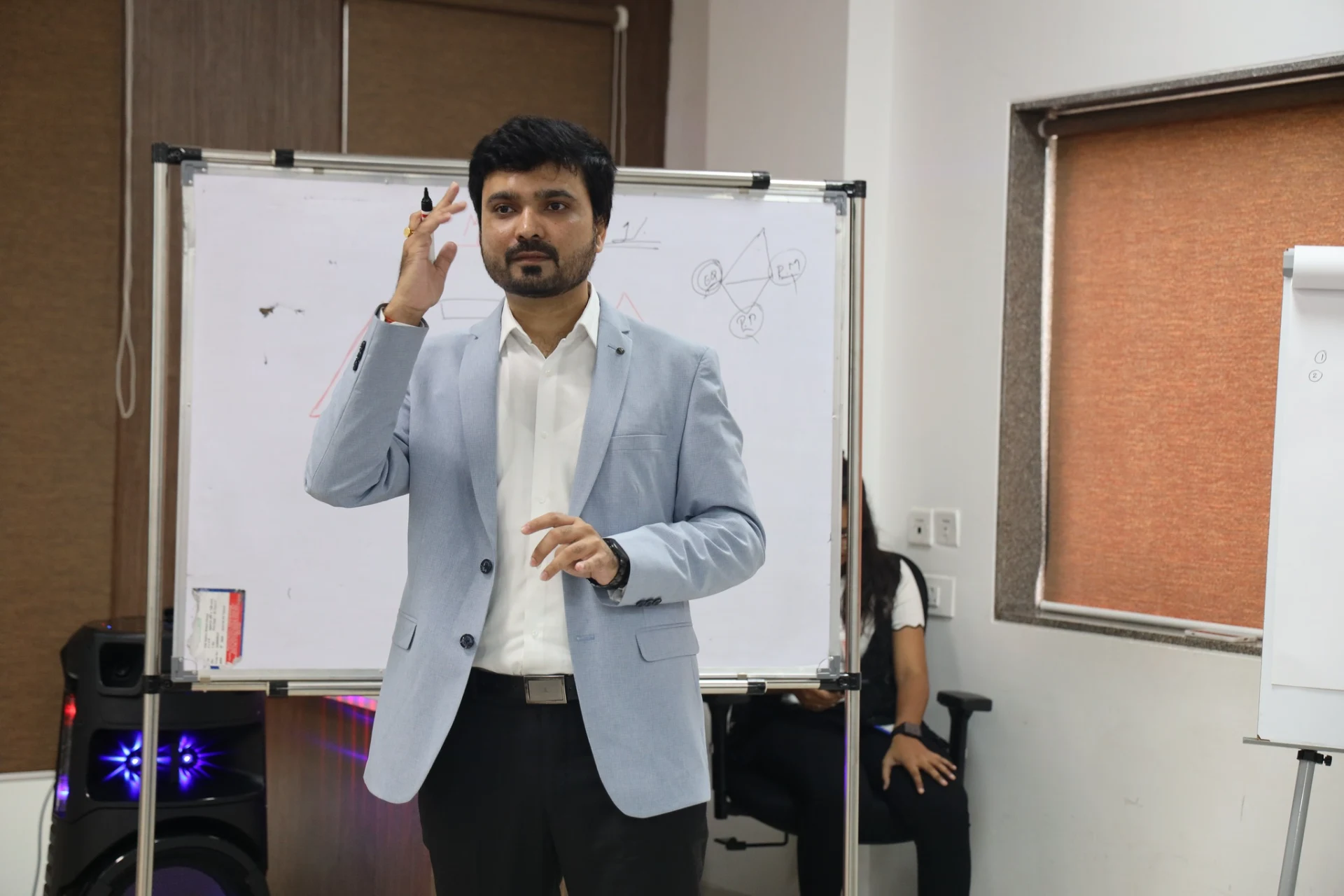
What is power in leadership? Most people name one or two things — usually a senior title or a large budget. But in two decades of corporate training with organizations like L&T, Infosys, and the Indian Army, I've arrived at a clear answer: there are exactly four elements that create real, sustainable leadership power — Intellectual Power, Man Power, Financial Power, and the Power of Enthusiasm and Morale. LinkedIn India's 2026 report ranks leadership skills #1 among sought-after professional capabilities. Knowing these four elements and actively building them is how you get there.
TL;DR- Intellectual Power — the knowledge, expertise, and thinking quality that earns genuine leadership credibility
- Man Power — the strength of your team, relationships, and the trust you have built with people around you
- Financial Power — the resource command that enables you to execute vision at scale and back decisions with action
- Power of Enthusiasm and Morale — your ability to energize yourself and others even in the face of adversity
- True leadership power comes from building all four elements, not just one or two in isolation
Why Most Leadership Power Definitions Miss Three of the Four Key Elements
In my corporate training sessions — whether at Bajaj Auto in Pune, Siemens in Nashik, or KPIT in Bangalore — I ask leaders to write down what gives them power at work. The answers cluster around two things: their designation and their budget. These aren't wrong. But they're incomplete. Both designation and budget are forms of just two of the four powers. The leaders who frustrate themselves by feeling powerless despite having a senior title are usually missing one or two of the other three elements. This framework gives you a complete diagnostic — and a complete development path.
Intellectual Power: How Thinking Quality and Expertise Define Your Leadership Credibility
Intellectual Power is the quality of your thinking, the depth of your expertise, and your ability to solve problems others can't. It's what earns you a seat at the table before the position does. I've watched mid-level managers at organizations like TCS and Infosys command the attention of senior leadership rooms purely on the strength of their analytical clarity. Intellectual Power compounds aggressively — every book you read, every problem you solve, every domain insight you develop adds to an irreplaceable personal asset. No restructuring, no layoff, no recession can take your Intellectual Power away.
| Power Element | What It Is | How to Build It | What Happens Without It |
|---|---|---|---|
| Intellectual Power | Expertise, thinking quality, problem-solving ability | Daily learning, domain deepening, sharing insights | Respected but not sought for key decisions |
| Man Power | Team strength, relationships, trust capital | Proactive relationship-building, following through on commitments | Stalled ideas, poor execution, isolation |
| Financial Power | Resource command, budget authority, capital access | Deliver financial results, earn resource control, build business case skills | Good ideas starved of execution capacity |
| Enthusiasm and Morale | Energy, optimism, ability to inspire under pressure | Mindset practice, physical health, deliberate positivity habits | Team morale sinks, performance degrades |
Man Power: Why Your People Network Is Your Greatest Leadership Asset in India
Man Power — the human power that flows from your team, your relationships, and the trust you've built across an organization — is the leadership power most commonly underestimated. I've seen MDs with enormous formal authority stall major decisions because they hadn't invested in the informal relationships needed to build consensus. And I've seen quiet department heads at L&T and JSW move mountains because they'd spent years genuinely investing in people. The good news is — Man Power is entirely within your control. Every relationship you build authentically adds to your leadership power base. Start today.
Financial Power: How Resource Command Enables Leaders to Execute Vision at Scale
Financial Power — the ability to command and deploy resources — matters enormously in leadership because ideas without execution are just intentions. Leaders with Financial Power can hire, invest, experiment, and back their convictions with real capital. But here's what I've seen in training hundreds of senior leaders: Financial Power is most effective when it's backed by the other three elements. Leaders who have Financial Power without Intellectual Power make expensive mistakes. Leaders with Financial Power but low Man Power struggle to execute. The four powers are a system — each amplifies the others.
Power of Enthusiasm and Morale: The Most Underrated Element of Leadership Power
The Power of Enthusiasm and Morale is the most underrated of the four — and in Indian organizations, the most chronically underdeveloped. This is the ability to bring energy, optimism, and infectious belief to your team even when the situation is difficult. I've observed it at Ferrero and Bosch: when a leader enters a room carrying genuine enthusiasm, the team's cognitive performance measurably improves. Conversely, a leader who radiates stress and anxiety pulls the entire team's morale down with every interaction. Enthusiasm isn't a personality trait. It's a leadership skill. You can practice it deliberately.
How the Four Powers Work Together — and What Happens When One Is Missing
What happens when one of the four powers is missing? Intellectual Power without Man Power: you're the smartest person in the room but your ideas die in committee. Man Power without Intellectual Power: you're liked but not respected — people follow you socially but won't stake their career on your judgment. Financial Power without Enthusiasm and Morale: you can buy compliance but you can't build commitment. Enthusiasm without Financial Power: you inspire people but can't resource the dream. The leaders I've trained who achieved the most — from corporate CEOs to military officers — worked deliberately on all four simultaneously.
How to Audit and Build All Four Leadership Powers as an Indian Professional
Here's your four-power audit. Rate yourself honestly from 1 to 10 on each: Intellectual Power (am I the person others genuinely seek for thinking and problem-solving?), Man Power (do I have deep, trust-based relationships across my organization and industry?), Financial Power (do I control or influence sufficient resources to execute my key responsibilities?), Enthusiasm and Morale Power (do I consistently energize my team even in difficult periods?). For any element below 6, identify one specific action to take this week. Repeat the audit every quarter. Watch how the composite score predicts your leadership effectiveness.
Book Avinash Chate for Your Next Event
TEDx speaker. 11+ yrs training Army, BRO, RBI, BARC, JSW. Available for keynotes, leadership training, team building & manager development at your office or event venue.
✅ Thanks! Avinash team will reach out within 24 hours.'}).catch(function(e){f.outerHTML='Something went wrong. WhatsApp +91 8793630001
'});return false;">Select ServiceKeynote / Motivational SpeakingLeadership Development TrainingTeam Building WorkshopManager DevelopmentEmployee TrainingOutbound TrainingBook Avinash Now →Or WhatsApp directly: +91 87936 30001
Related Articles by Avinash Chate
- Why Manufacturing Industry is Difficult to Start in India: 5 Key Challenges
- Ajit Agarkar's 21-Ball ODI Fifty Against Zimbabwe: The Silent Performer's Career Blueprint
- Clive Lloyd's 1975 World Cup Final Leadership: How Bold Captaincy Wins Under Pressure
Avinash Chate TEDx Speaker · Founder, The Future Corporate · 11+ yrs experience Avinash has trained Indian Army, BRO, RBI, BARC, JSW Steel and 1000+ corporate leaders across India. His work focuses on leadership development, communication skills, and behavioural training rooted in Indian values and modern business needs. |
Frequently Asked Questions
What are the four key elements of power in leadership according to Avinash Chate?
The four key elements of leadership power as taught by Avinash Chate are: Intellectual Power (the quality of thinking and depth of expertise that earns genuine credibility), Man Power (the strength of relationships, team trust, and human network), Financial Power (the ability to command and deploy resources to execute vision), and the Power of Enthusiasm and Morale (the capacity to energize oneself and others even in adversity). Each element is independently buildable and they amplify each other when developed together. This framework comes from Avinash Chate's 20 years of corporate training across 200+ organizations in India.
Why is Intellectual Power the foundation of leadership credibility in Indian organizations?
Intellectual Power is the foundation because it's the only form of power that earns voluntary trust — people seek your thinking not because they have to but because your judgment has proven valuable. In Indian organizations, Intellectual Power creates a form of influence that survives role changes, restructuring, and industry disruptions. It's also the power that opens doors before you have the position or the budget. Avinash Chate consistently observes that the professionals who build Intellectual Power first tend to naturally attract Man Power and Financial Power over time, because credibility is the prerequisite for trust and resource allocation.
How does the Power of Enthusiasm and Morale actually affect business performance?
Enthusiasm and Morale power has direct, measurable impact on team performance. Research by Gallup shows that teams led by highly engaged, enthusiastic leaders are 21% more productive than those led by disengaged leaders. In Indian organizations specifically, where team culture is heavily influenced by the visible emotional state of the leader, a leader's enthusiasm sets the team's performance ceiling. Avinash Chate's corporate training programs include specific exercises for building deliberate enthusiasm — because it's a skill that can be practiced and strengthened, just like any other leadership capability.
How can Indian leaders assess and build all four leadership powers simultaneously?
Start with a quarterly four-power audit: rate yourself 1 to 10 on each element honestly. For any element below 6, identify one specific development action for the next 30 days. For Intellectual Power: commit to one learning input per day — a book chapter, an industry article, a podcast. For Man Power: schedule one genuine relationship-building conversation per week outside your immediate team. For Financial Power: focus on delivering financial results that justify expanded resource authority. For Enthusiasm and Morale: build a morning ritual that generates genuine energy — exercise, reflection, or a brief visualization practice. Avinash Chate's leadership workshops walk leaders through this exact audit process.
Avinash Chate services
Corporate Trainer in Maharashtra · Top Corporate Trainers in Maharashtra · Leadership Trainer in Maharashtra · Top Leadership Trainers in Maharashtra · Team Building Trainer in Maharashtra · Top Team Building Trainers in Maharashtra · Motivational Speaker in Maharashtra · Top Motivational Speakers in Maharashtra · All service locations
← Back to all articles · Book Avinash Chate
By Avinash Chate — Maharashtra’s #1 Corporate Trainer & Motivational Speaker. .