When Your Team Goes Silent: Silent Resignation vs Resistance in Indian Workplaces
They're not arguing. They're just silent. Avinash Chate explains what team silence really means — it's not resistance, it's resignation — and why Indian leaders cannot afford to ignore this signal.
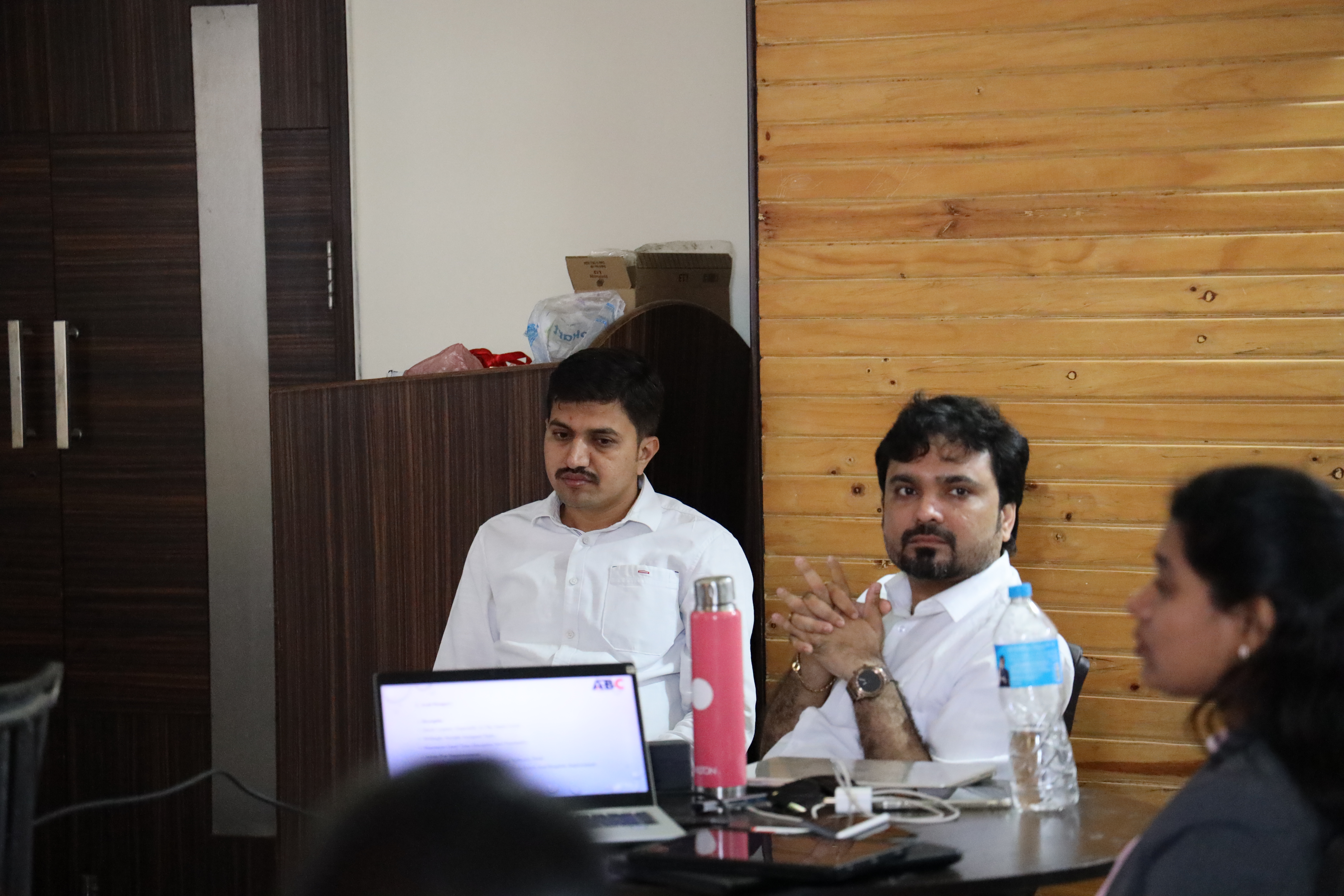
Here's a pattern I see in boardrooms from Pune to Bengaluru — a leader speaks, and the team just nods. No pushback, no questions, no energy. Most leaders call this compliance. What it actually is, is resignation. LinkedIn India 2026 confirms leadership skills as the #1 workforce priority, yet the most dangerous leadership failure isn't loud conflict — it's the silence that follows when a team quietly checks out.
TL;DR- Team silence is not compliance or agreement — it's a signal that people have quietly resigned from engaging with leadership
- Silent resignation is more dangerous than open conflict because it's invisible until the damage is done
- Indian leaders who mistake silence for harmony are missing the most critical early-warning signal of team breakdown
- Re-engaging a silent team requires psychological safety, honest conversations, and leadership behaviour change — not team-building games
- Avinash Chate helps Indian corporate leaders decode team silence and rebuild authentic team engagement before attrition hits
They're Not Arguing — They're Just Silent: What Team Silence Really Means
The most alarming team signal is not a raised voice or a heated argument — it's the absence of both. When a team stops pushing back, stops asking questions, and starts giving monosyllabic answers in meetings, most leaders breathe a sigh of relief. They interpret silence as agreement, as smooth execution, as a well-managed team. This interpretation is almost always wrong. What that silence actually signals is that the team has quietly decided that speaking up is no longer worth the effort — or the risk.
Silent Resignation vs Resistance: The Critical Difference Indian Leaders Must Understand
Resistance and resignation may look similar from the outside, but they are fundamentally different in what they signal about team health. A resistant team is still engaged — they care enough to push back, to argue, to challenge decisions. That energy can be redirected. A resigned team has given up on influence altogether. They attend meetings, complete tasks, and say the right things in performance reviews — but they have mentally and emotionally checked out. Their silence is not peace. It is the stillness before people start updating their LinkedIn profiles.
| Indicator | Team Resistance (Still Engaged) | Silent Resignation (Checked Out) |
|---|---|---|
| Meeting behaviour | Pushback, debate, counterproposals | Nods, monosyllables, no energy |
| Feedback quality | Honest, sometimes uncomfortable | Polite, vague, non-committal |
| Effort level | Full output, fights for outcomes | Minimum acceptable, no discretionary effort |
| Risk signal | Manageable — energy can be redirected | Critical — attrition risk is high |
| Leader response | Facilitated dialogue, channel energy | Structured listening, behaviour change |
Why Team Silence Is the Most Dangerous Signal a Leader Can Miss in India
Team silence is dangerous precisely because it is invisible to most leadership diagnostics. Engagement surveys often miss it because resigned employees answer survey questions in the same compliant way they do everything else — carefully, neutrally, without revealing anything real. Performance metrics may not catch it either, because silent teams often maintain minimum acceptable output while completely withdrawing from discretionary effort. By the time the data shows a problem, the best people have already left. I have seen this happen at mid-size manufacturing companies in Pune and at large IT firms in Hyderabad — the warning was always there, just unread.
What Does It Look Like When a Team Quietly Checks Out From Leadership?
A quietly disengaged team in an Indian corporate setting has recognisable patterns if you know what to look for. Meetings where the only voice is the manager's. Questions from leadership that are met with polite nods rather than genuine discussion. Team members who complete exactly what was assigned and not a single thing more. A drop in informal communication — fewer chai conversations, fewer Slack messages, fewer spontaneous questions. These are not signs of a focused team. They are signs of a team that has decided investing more is not worth the return.
The Leadership Behaviours That Drive Teams Into Silent Resignation
Silent resignation almost always follows specific leadership behaviours. When a manager dismisses ideas publicly, even politely, people stop sharing. When feedback is sought but never acted on, people stop giving it. When politics and hierarchy consistently override merit, people stop trying to contribute above the minimum. I discuss these patterns in detail when I run leadership development programs at Tata Tech, Mahindra, and L&T — because the fastest way to re-engage a team is to first understand exactly what leadership behaviour drove them into silence in the first place.
How to Decode and Respond to Team Silence Before It Becomes Attrition
Decoding team silence requires leaders to create the conditions in which honest communication can re-emerge. This means one-on-one conversations that are genuinely curiosity-driven, not performance-oriented. It means asking questions like — what would make this team worth investing in for you? — and being prepared to hear uncomfortable answers. It means visible, public responses to what the team shares — so that speaking up is seen to produce change. Without these conditions, a silent team will remain silent regardless of how many off-sites or town halls you run.
Re-Engaging Silent Teams in Indian Corporates: What Actually Works in 2026
Re-engaging silent teams in Indian corporate settings requires a structured intervention, not a one-day motivational session. Start by identifying the specific leadership behaviours that created the silence. Then implement structured listening sessions, not just open door policies. Create small, visible wins where team input led to a real decision change — this rebuilds the trust that speaking up matters. Follow with regular check-ins that measure engagement quality, not just output metrics. This is the approach I implement at ABC Trainings, and it consistently turns silent resignation into active, voluntary contribution within 60 to 90 days.
Book Avinash Chate for Your Next Event
TEDx speaker. 11+ yrs training Army, BRO, RBI, BARC, JSW. Available for keynotes, leadership training, team building & manager development at your office or event venue.
✅ Thanks! Avinash team will reach out within 24 hours.'}).catch(function(e){f.outerHTML='Something went wrong. WhatsApp +91 8793630001
'});return false;">Select ServiceKeynote / Motivational SpeakingLeadership Development TrainingTeam Building WorkshopManager DevelopmentEmployee TrainingOutbound TrainingBook Avinash Now →Or WhatsApp directly: +91 87936 30001
Related Articles by Avinash Chate
- Karoly Takacs: Lost His Right Hand in 1938, Won Olympic Gold in 1948 With His Left
- Why Most Team Building Activities Fail: It's Not the Games, It's the Gaps
- One Thank You That Says It All: Inside the Sahakari Bank Majalgaon Session
Avinash Chate TEDx Speaker · Founder, The Future Corporate · 11+ yrs experience Avinash has trained Indian Army, BRO, RBI, BARC, JSW Steel and 1000+ corporate leaders across India. His work focuses on leadership development, communication skills, and behavioural training rooted in Indian values and modern business needs. |
Frequently Asked Questions
What does it mean when a team goes silent and stops engaging with leadership?
When a team goes silent and stops engaging with leadership, it signals silent resignation — the team has decided that speaking up is not worth the effort or the risk. Unlike resistance, which shows engagement energy, silence shows withdrawal. People attend meetings, complete tasks, and say the minimum required — but they have mentally checked out from contributing beyond survival-level participation. This is a critical early-warning signal of attrition and cultural breakdown that must be addressed before the data shows a problem.
How is silent resignation different from resistance in a corporate team?
Silent resignation is a withdrawal from engagement — people stop trying to influence outcomes because they no longer believe their input matters or is safe. Resistance is active disengagement — people push back, debate, and challenge because they still care enough to fight for outcomes. A resistant team can be redirected with skilled leadership. A resigned team requires a deeper intervention that rebuilds the fundamental trust that speaking up produces results and will not be punished or ignored.
What leadership behaviours most commonly drive Indian teams into silent disengagement?
The leadership behaviours most commonly driving Indian teams into silent resignation include publicly dismissing ideas even politely, seeking feedback but never visibly acting on it, allowing politics to consistently override merit, and responding to honest input with neutrality or subtle discouragement. When team members experience that speaking up produces no change or subtle negative consequences, they rationally choose silence. The leader's behaviour, not the team's personality, is almost always the root cause of chronic team silence in Indian corporate settings.
How can leaders re-engage a team that has quietly checked out in an Indian corporate setting?
To re-engage a quietly resigned team, start with genuine one-on-one conversations that are curiosity-driven, not performance-oriented. Ask what would make this work worth investing in for you and be prepared to act on the answers visibly. Create small wins where team input demonstrably changed a decision — this rebuilds the belief that speaking up matters. Follow with structured listening sessions and regular engagement check-ins that measure contribution quality, not just output. Avinash Chate recommends this structured approach because one-off motivational talks cannot rebuild the trust that silent resignation has eroded.
Avinash Chate services
Corporate Trainer in Maharashtra · Top Corporate Trainers in Maharashtra · Leadership Trainer in Maharashtra · Top Leadership Trainers in Maharashtra · Team Building Trainer in Maharashtra · Top Team Building Trainers in Maharashtra · Motivational Speaker in Maharashtra · Top Motivational Speakers in Maharashtra · All service locations
← Back to all articles · Book Avinash Chate
By Avinash Chate — Maharashtra’s #1 Corporate Trainer & Motivational Speaker. .