अजिंक्य रहाणे संघातून बाहेर का झाला?
अनेक प्रोफेशनल्सना वाटते की त्यांचे काम पाहून नव्हे तर वैयक्तिक मतांवर त्यांचे मूल्यांकन केले जाते. यामुळे टीममध्ये निराशा, गोंधळ आणि विश्वास कमी होतो. जेव्हा न...
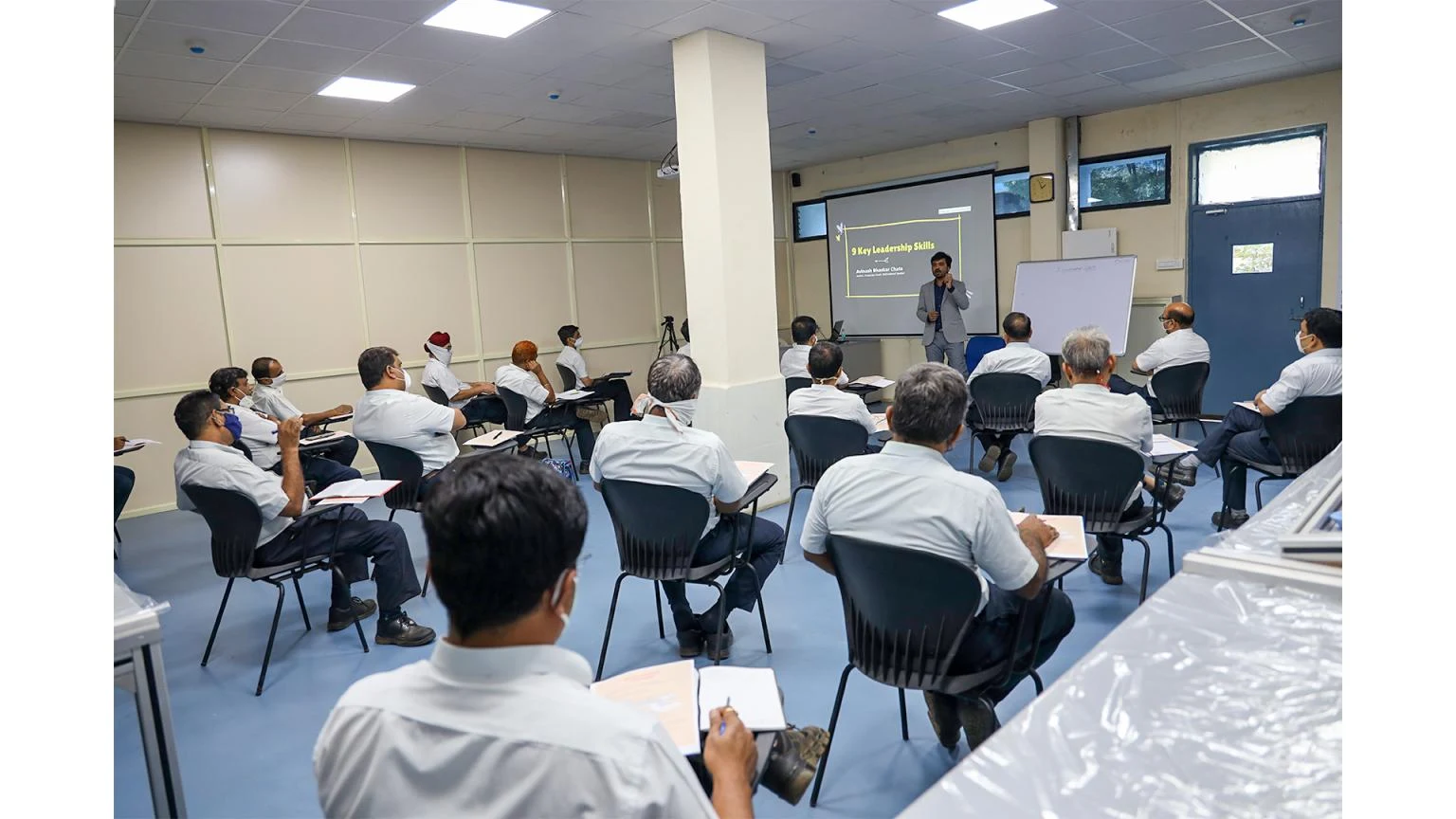
Here's the thing — Ajinkya Rahane's departure from Team India is one of the most powerful leadership case studies I've used in my training sessions. It illustrates a truth most professionals resist: past performance doesn't guarantee future relevance. LinkedIn India 2026 ranks adaptability and continuous growth as the top leadership skills employers now evaluate. Rahane's story makes this abstract lesson very concrete — and very urgent.
TL;DR- Ajinkya Rahane's exclusion from Team India is a masterclass in performance accountability
- Past achievements do not guarantee continued selection — in cricket or in corporate life
- Complacency and declining output will eventually override reputation and seniority
- Team cultures that prioritise merit over loyalty ultimately perform better and win more
- Avinash Chate uses Rahane's story to teach Indian corporate teams about sustained performance
The Real Reason Ajinkya Rahane Was Dropped From Team India
Ajinkya Rahane was one of India's most celebrated Test batsmen. His 2021 Boxing Day century at Melbourne — when he captained India to a historic series win — is one of the most memorable performances in Indian cricket history. Yet despite that legacy, he was dropped from the Test squad because his consistent performance in the following seasons didn't meet the standard required. Selectors had to choose between sentiment and performance. They chose performance — and that's exactly what high-performance organisations do, and what most Indian companies still struggle with.
Why Past Performance Is Never a Permanent Guarantee in Cricket or Corporate Life
The most dangerous phrase in any organisation is 'you can't drop him — look what he did in 2021.' I hear versions of this in boardrooms across Maharashtra and India. A senior manager who delivered extraordinary results five years ago is being protected from accountability for current underperformance. A top performer from last decade is being shielded from honest feedback. What most leaders don't realise is that this 'loyalty over performance' culture doesn't protect the individual — it destroys the team. And eventually, it destroys the individual too, because they never get the honest feedback needed to improve.
| Performance Factor | Rahane's Career Situation | Corporate Parallel |
|---|---|---|
| Historical achievement | Melbourne 2021 century — hero of a historic series win | Senior employee who delivered a transformational project 3-5 years ago |
| Recent performance | Batting average significantly declined in subsequent seasons | Output has plateaued or declined; KPIs consistently below target |
| Team requirement | BCCI needed the highest-performing available combination | Organisation needs current performance, not past reputation |
| Selection decision | Dropped despite legacy — merit chose the team's direction | Hard role change or exit despite seniority — performance drove the decision |
| Common leadership error | Keeping player for morale/sentiment rather than performance | Protecting underperformer to avoid difficult conversation |
| Outcome of doing it right | Team performs better; eventually wins; new stars emerge | Team culture strengthens; high performers feel valued; results improve |
What Rahane's Exit Teaches About Performance Standards and Team Accountability
What Rahane's exit teaches us is that performance standards must be consistent, non-negotiable, and applied fairly regardless of seniority. The BCCI didn't drop Rahane out of malice — they did it because the team's performance depended on playing the best available combination. Indian corporate teams need the same clarity: define the performance standard, measure it consistently, and apply it fairly. When I work with leadership teams at Bajaj Auto and Mahindra, I help them build performance frameworks where seniority gives you credibility, not immunity. That single distinction changes organisational culture profoundly.
The Leadership Lesson Most Indian Companies Refuse to Implement
The leadership lesson most Indian companies refuse to implement is this: you must be willing to make the hard call when performance consistently falls below standard — regardless of who it is. This requires two things most Indian leaders lack: the courage to have direct conversations about underperformance, and a clear, agreed-upon definition of what acceptable performance looks like. Many Indian organisations have annual performance reviews that produce ratings of 3 or 4 out of 5 for everyone because nobody wants the discomfort of honest feedback. That's how you build a team that never wins anything significant.
How High-Performance Teams Make Difficult Decisions — and Why Softer Cultures Fail
High-performance teams — whether in the BCCI or at Tata Tech — make difficult decisions based on merit and future potential, not sentiment and past contribution. When I work with teams at KPIT and Bosch, I help leaders separate two distinct conversations: 'Here's what you've contributed' (the appreciation conversation) and 'Here's what the team needs going forward' (the performance conversation). These are not the same conversation. The best leaders can honour a person's past contribution while also being clear that the current role requires performance that isn't currently being delivered. Both truths can coexist.
Avinash Chate on Using Cricket Case Studies in Corporate Leadership Training
Cricket case studies are among the most effective tools in my corporate training programmes because every Indian professional has an emotional connection to the game and can intuitively understand the dynamics. When I discuss Rahane's case in leadership workshops — at RBI, at BARC, or at Infosys — the room responds differently than it does to abstract management theory. People immediately see the parallel to their own organisation. They start asking: 'Are we protecting someone in our team who's underperforming because of their history?' That honest self-examination is where leadership transformation begins.
What Indian Professionals Must Do to Ensure They're Never the One Who Gets Dropped
If you want to ensure you're never the Rahane in your organisation — the person being dropped despite a great past — here's what you must do. First, consistently monitor your own performance metrics against the team's current needs, not just your historical highs. Second, adapt your skills as the team's requirements evolve — don't assume your 2021 skill set is enough for 2026. Third, seek honest feedback regularly rather than waiting for a performance review. Fourth, stay visible and relevant in your organisation — make sure decision-makers see your current contribution, not just remember your past glory. Past performance got you here. Present performance determines what comes next.
Book Avinash Chate for Your Next Event
TEDx speaker. 11+ yrs training Army, BRO, RBI, BARC, JSW. Available for keynotes, leadership training, team building & manager development at your office or event venue.
✅ Thanks! Avinash team will reach out within 24 hours.'}).catch(function(e){f.outerHTML='Something went wrong. WhatsApp +91 8793630001
'});return false;">Select ServiceKeynote / Motivational SpeakingLeadership Development TrainingTeam Building WorkshopManager DevelopmentEmployee TrainingOutbound TrainingBook Avinash Now →Or WhatsApp directly: +91 87936 30001
Related Articles by Avinash Chate
- The Ferrari Insult That Created Lamborghini — A Mindset Story India Needs
- The Dark Marketing Secret Behind Listerine That Changed Everything
- Why Corporate Success Feels Empty and What Truly Makes It Meaningful
Avinash Chate TEDx Speaker · Founder, The Future Corporate · 11+ yrs experience Avinash has trained Indian Army, BRO, RBI, BARC, JSW Steel and 1000+ corporate leaders across India. His work focuses on leadership development, communication skills, and behavioural training rooted in Indian values and modern business needs. |
Frequently Asked Questions
Why was Ajinkya Rahane dropped from the Indian Test team?
Ajinkya Rahane was dropped from the Indian Test team primarily because his batting performance in the period following his 2021 Melbourne heroics did not consistently meet the standard required for Test cricket at the top level. Despite his significant contributions to Indian cricket history, the selection process is merit-based and forward-looking — the team needed the best available combination for upcoming challenges. His batting average in the period before his exclusion was substantially below the standard expected of a top-order Test batter, leading selectors to make the difficult but clear decision to move forward with higher-performing options.
What does Rahane's exclusion teach Indian corporate leaders about performance management?
Rahane's exclusion teaches Indian corporate leaders that performance standards must be consistent, non-negotiable, and applied fairly regardless of an individual's historical contribution. The most important lesson is the distinction between honouring someone's past contribution and making clear-eyed decisions about their current and future role. Many Indian companies conflate these two, protecting underperformers out of loyalty and gratitude — which ultimately hurts the entire team. A healthy performance culture can say 'thank you for what you built' and simultaneously 'the role now requires more than what's currently being delivered' — without contradiction.
How should Indian companies handle senior employees whose performance has declined?
Indian companies facing senior employee performance decline should follow a three-step approach: first, have a direct, honest conversation about the performance gap — not a vague annual review, but a specific discussion about measurable underperformance. Second, co-create a clear improvement plan with specific milestones and timelines. Third, follow through on both the support and the consequences. The critical mistake most Indian companies make is skipping straight to either protecting the person completely or surprising them with sudden consequences. The honest, supported improvement conversation — the one most Indian leaders avoid — is the one that produces the best outcomes for everyone.
Can cricket leadership lessons actually apply to Indian corporate training?
Cricket leadership lessons are among the most effective tools in Indian corporate training precisely because of the deep emotional and cultural connection Indians have with the game. The dynamics of cricket — individual performance within a team context, selection and deselection, captaincy and followership, pressure performance, and the tension between form and reputation — map almost perfectly onto corporate team dynamics. In my training sessions at Bajaj Auto, BARC, and the Indian Army, cricket case studies generate more genuine self-examination and insight than abstract management frameworks. If it works in Indian cricket, it usually has a direct parallel in Indian corporate life.
Avinash Chate services
Corporate Trainer in Maharashtra · Top Corporate Trainers in Maharashtra · Leadership Trainer in Maharashtra · Top Leadership Trainers in Maharashtra · Team Building Trainer in Maharashtra · Top Team Building Trainers in Maharashtra · Motivational Speaker in Maharashtra · Top Motivational Speakers in Maharashtra · All service locations
← Back to all articles · Book Avinash Chate
By Avinash Chate — Maharashtra’s #1 Corporate Trainer & Motivational Speaker. .