Why Loyalty and Trust Matter More Than Skills in Manufacturing India
Ranjit Patil, VP of a ₹250 crore manufacturing empire, reveals why loyalty and trustworthiness matter more than technical skills or experience in building a strong workforce.
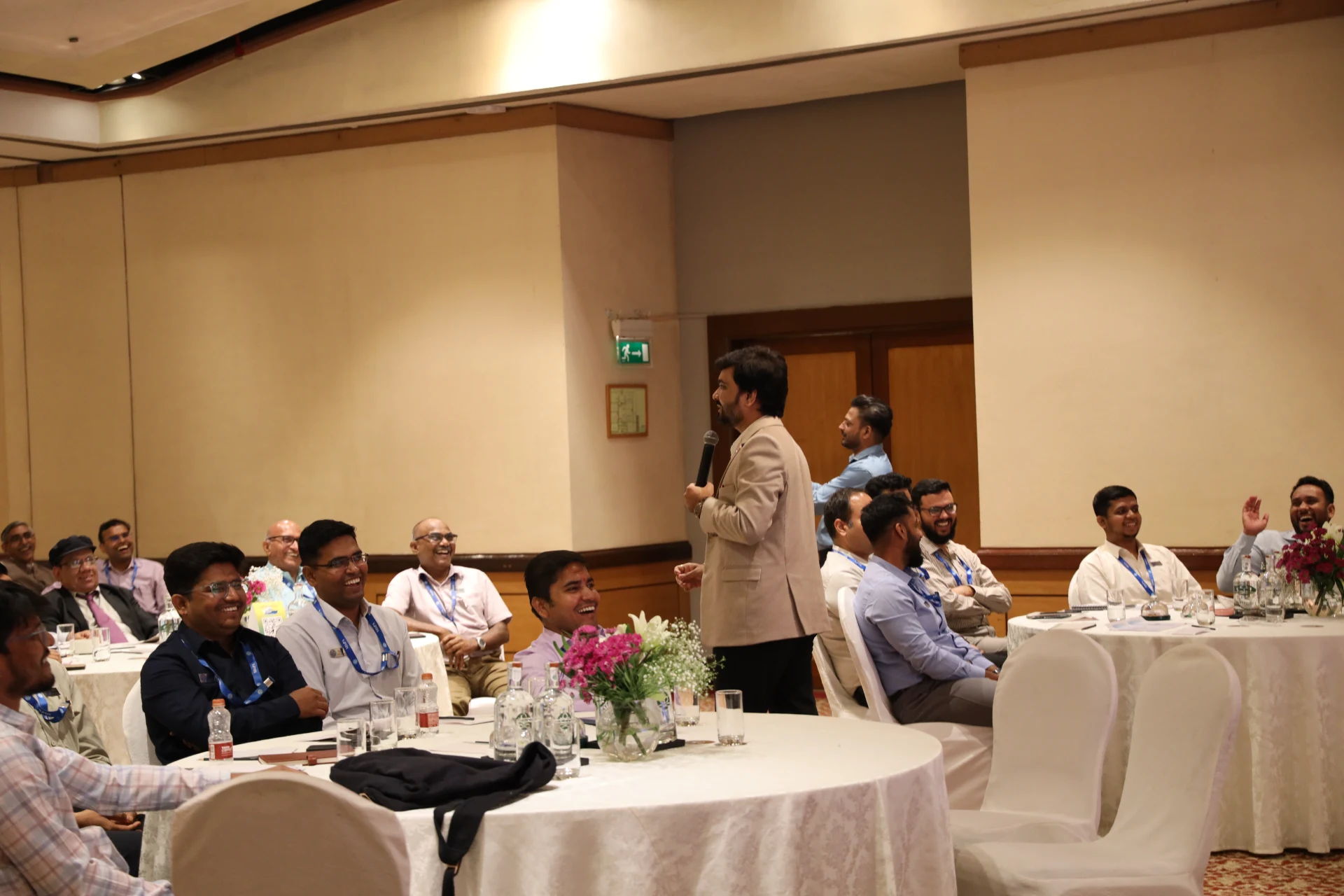
What matters more in an employee — skills or loyalty? Mr. Ranjit Patil, VP of a ₹250 crore manufacturing empire, has a clear answer: loyalty and trustworthiness. India's ₹1.5 trillion L&D market trains for skills every day — but the employees who actually build great manufacturing empires are the ones who show up with loyalty and character alongside their capabilities.
TL;DR- Ranjit Patil, VP of a ₹250 crore manufacturing empire, says loyalty and trustworthiness are the most crucial employee qualities — more important than technical skills or years of experience
- Loyal employees don't just do their jobs — they take initiative, stay through difficult periods, and invest emotionally in the organisation's success
- Trustworthy employees create a culture where managers can delegate effectively, which is what enables genuine operational scale in manufacturing
- The absence of loyalty and trust in key roles is the single biggest silent killer of manufacturing culture and long-term business growth
- Skills can be trained — but loyalty and character must be selected, recognised, and actively cultivated through the way you lead
Why Ranjit Patil Says Loyalty and Trustworthiness Matter More Than Skills in Indian Manufacturing
Mr. Ranjit Patil, Vice President of a ₹250 crore manufacturing empire, made a statement that stopped me when I first heard it: loyalty and trustworthiness are the most crucial qualities in an employee — more important than technical skills or years of experience. This isn't a sentimental position — it's a strategic one. A highly skilled employee who isn't loyal will leave at the first better offer, taking institutional knowledge with them. A talented employee who isn't trustworthy will cut corners when unsupervised, and you'll pay for it in quality failures, client complaints, or regulatory risk. Skills can be trained. Character cannot be installed after the fact.
What Loyal Employees Actually Do That Skilled But Disloyal Employees Never Will
Here's the thing — loyal employees don't just fulfil their job descriptions. They show up differently in every situation. When a production target is behind, loyal employees stay late without being asked. When a problem arises that isn't technically their job, they don't walk past it — they fix it. When the organisation goes through a difficult period, loyal employees don't immediately update their profiles — they choose to be part of the solution. I've trained teams at Bajaj Auto, Mahindra, and Tata Tech, and in every high-performing team I've seen, the backbone has always been a core of deeply loyal people who chose the organisation over the competition of the open market.
| Situation | Disloyal / Untrustworthy Employee | Loyal / Trustworthy Employee |
|---|---|---|
| Target missed | Waits for instruction, looks for excuse | Stays late, finds solutions proactively |
| Quality problem | Conceals issue to avoid blame | Reports immediately with proposed fix |
| Delegation given | Does minimum, passes decisions upward | Owns outcome, escalates only when needed |
| Company in difficulty | Updates profile, considers exits | Doubles effort, supports the team |
| Conflict with manager | Undermines quietly | Raises concern directly, then commits |
| Long-term value | Transfers out knowledge when leaving | Builds institutional capital over years |
How Trustworthy Employees Enable Delegation and Real Operational Scale in Manufacturing
Trustworthy employees are the foundation of operational scale in manufacturing. Here's why: every manufacturing organisation has a critical bottleneck — the owner or senior leader who feels they can't delegate because they don't fully trust their team. When that bottleneck exists, the organisation can only grow as fast as the leader's personal bandwidth allows. The moment you have genuinely trustworthy people in key roles, you can delegate decisions, decentralise operations, and focus on strategy rather than firefighting. I've seen this transformation at L&T, JSW Steel, and KPIT — when trust is genuinely present in the team, the organisation scales in ways that simply weren't possible before.
Why the Absence of Loyalty Is the Silent Killer of Manufacturing Culture in India
The absence of loyalty is one of the most destructive forces in Indian manufacturing culture — and it often goes undiagnosed for too long. The symptoms are there: key decisions being second-guessed, institutional knowledge walking out the door with departing employees, a culture of minimal effort rather than ownership, and constant firefighting because the people in critical roles aren't emotionally invested. Ranjit Patil has seen this pattern across manufacturing operations in India, and his diagnosis is consistent: where loyalty is absent, productivity is limited, innovation is suppressed, and the organisation is most vulnerable at its most critical moments.
How to Identify Loyal and Trustworthy Candidates During the Hiring Process in India
Identifying loyalty and trustworthiness in the hiring process requires going beyond the resume. In interviews, I ask candidates to describe a time when they disagreed with an organisational decision and what they did about it. A loyal candidate raised the concern through appropriate channels, gave the decision a fair chance, and then committed to it fully. An untrustworthy candidate either stayed silent to avoid conflict or undermined the decision while publicly complying. I also look at tenure patterns — not as a rigid requirement, but as a signal. People who've stayed and grown in previous organisations have usually done so because the loyalty flows both ways.
How to Build a Culture That Attracts and Retains Loyal Employees in Your Manufacturing Business
Loyalty isn't born in a vacuum — it's earned through the way you lead. The manufacturing operations I've seen with the highest employee loyalty share a common set of leadership behaviours: they deliver on promises consistently, treat employees with respect across all hierarchy levels, invest in their people's growth not just their performance, and create a sense of shared purpose. Ranjit Patil's ₹250 crore empire demonstrates clearly that loyalty is a response to leadership, not a personality characteristic that employees either arrive with or don't. You create the conditions; the loyalty follows naturally.
What Loyalty and Trust Look Like in Practice on a Manufacturing Floor in India
On a manufacturing floor, loyalty and trust manifest in specific, observable behaviours. Loyal workers report a machine issue before it fails, rather than waiting for the breakdown on someone else's shift. Trustworthy supervisors provide accurate quality data even when the numbers are bad, rather than adjusting records to look better. Loyal department heads escalate problems to leadership proactively before they become crises, even when the escalation reflects poorly on their own team. These behaviours are rare, genuinely valuable, and they directly determine the health, safety, and sustained performance of the entire manufacturing operation.
Why Ranjit Patil's ₹250 Crore Manufacturing Empire Is Built on Character Over Credentials
Ranjit Patil's ₹250 crore manufacturing empire was built over years by a team of people who chose the organisation and the mission over easier alternatives. That's not an accident — it's the result of a leadership philosophy that consistently rewards loyalty and trustworthiness above surface credentials. This philosophy is accessible to any manufacturing leader willing to apply it. Lead with integrity. Recognise loyalty publicly and specifically. Invest in the people who invest in you. And never mistake a brilliant resume for a trustworthy character. The most valuable people in your manufacturing business are the ones who stay when staying is hard — and those are the people worth building your entire operation around.
Book Avinash Chate for Your Next Event
TEDx speaker. 11+ yrs training Army, BRO, RBI, BARC, JSW. Available for keynotes, leadership training, team building & manager development at your office or event venue.
✅ Thanks! Avinash team will reach out within 24 hours.'}).catch(function(e){f.outerHTML='Something went wrong. WhatsApp +91 8793630001
'});return false;">Select ServiceKeynote / Motivational SpeakingLeadership Development TrainingTeam Building WorkshopManager DevelopmentEmployee TrainingOutbound TrainingBook Avinash Now →Or WhatsApp directly: +91 87936 30001
Related Articles by Avinash Chate
- Why Manufacturing Industry is Difficult to Start in India: 5 Key Challenges
- 4 Biggest Mistakes Industrial Manufacturing Companies Make in India
- How to Gain Customers for Your Manufacturing Business in India
Avinash Chate TEDx Speaker · Founder, The Future Corporate · 11+ yrs experience Avinash has trained Indian Army, BRO, RBI, BARC, JSW Steel and 1000+ corporate leaders across India. His work focuses on leadership development, communication skills, and behavioural training rooted in Indian values and modern business needs. |
Frequently Asked Questions
Why are loyalty and trustworthiness more important than skills in manufacturing employees?
According to Ranjit Patil, VP of a ₹250 crore manufacturing empire, loyalty and trustworthiness matter more than skills because skills can be trained but character cannot be easily changed. A highly skilled but disloyal employee will leave at the first better offer, taking institutional knowledge with them. A talented but untrustworthy employee will cut corners when unsupervised, creating quality, safety, or regulatory risks. The most productive and stable manufacturing teams are built on a foundation of loyal, trustworthy people — skills are the second layer, not the first.
How do loyal employees drive long-term success in Indian manufacturing businesses?
Loyal employees drive long-term success in several ways. They stay through difficult periods rather than leaving at the first sign of challenge. They take initiative beyond their formal job descriptions. They build institutional knowledge that compounds over years. They mentor and stabilise newer colleagues. And they invest emotionally in the organisation's success in a way that creates genuine ownership culture from the inside out. I've seen loyal core teams at Bajaj Auto and L&T consistently outperform newer, technically stronger teams because loyalty creates the kind of engagement that no incentive scheme can manufacture.
How do you build a culture of loyalty and trust in a manufacturing company?
Building a culture of loyalty starts with leadership behaviour. It requires consistently delivering on promises — big and small. Treating employees with respect across all hierarchy levels. Investing in their growth, not just their performance. Creating transparency about business challenges. And recognising loyalty explicitly — naming it, celebrating it, and making it clear that you see and value it. Ranjit Patil's operation demonstrates that loyalty is a response to how leadership behaves, not a trait that employees either arrive with or don't. You create the conditions; the loyalty follows naturally.
How do you identify loyal and trustworthy candidates during the hiring process in India?
Look for patterns of staying and growing in previous organisations as a positive signal. In the interview, ask about a time they disagreed with an organisational decision and what they did. A loyal candidate raised the concern appropriately, committed to the decision once made, and can articulate what they learned from the experience. Also ask why they're leaving their current role — the answer reveals whether they're running toward something or away from something, and that distinction tells you more about their character than any skills test or technical assessment.
Avinash Chate services
Corporate Trainer in Maharashtra · Top Corporate Trainers in Maharashtra · Leadership Trainer in Maharashtra · Top Leadership Trainers in Maharashtra · Team Building Trainer in Maharashtra · Top Team Building Trainers in Maharashtra · Motivational Speaker in Maharashtra · Top Motivational Speakers in Maharashtra · All service locations
← Back to all articles · Book Avinash Chate
By Avinash Chate — Maharashtra’s #1 Corporate Trainer & Motivational Speaker. .