Your Team Works Only If You are Present
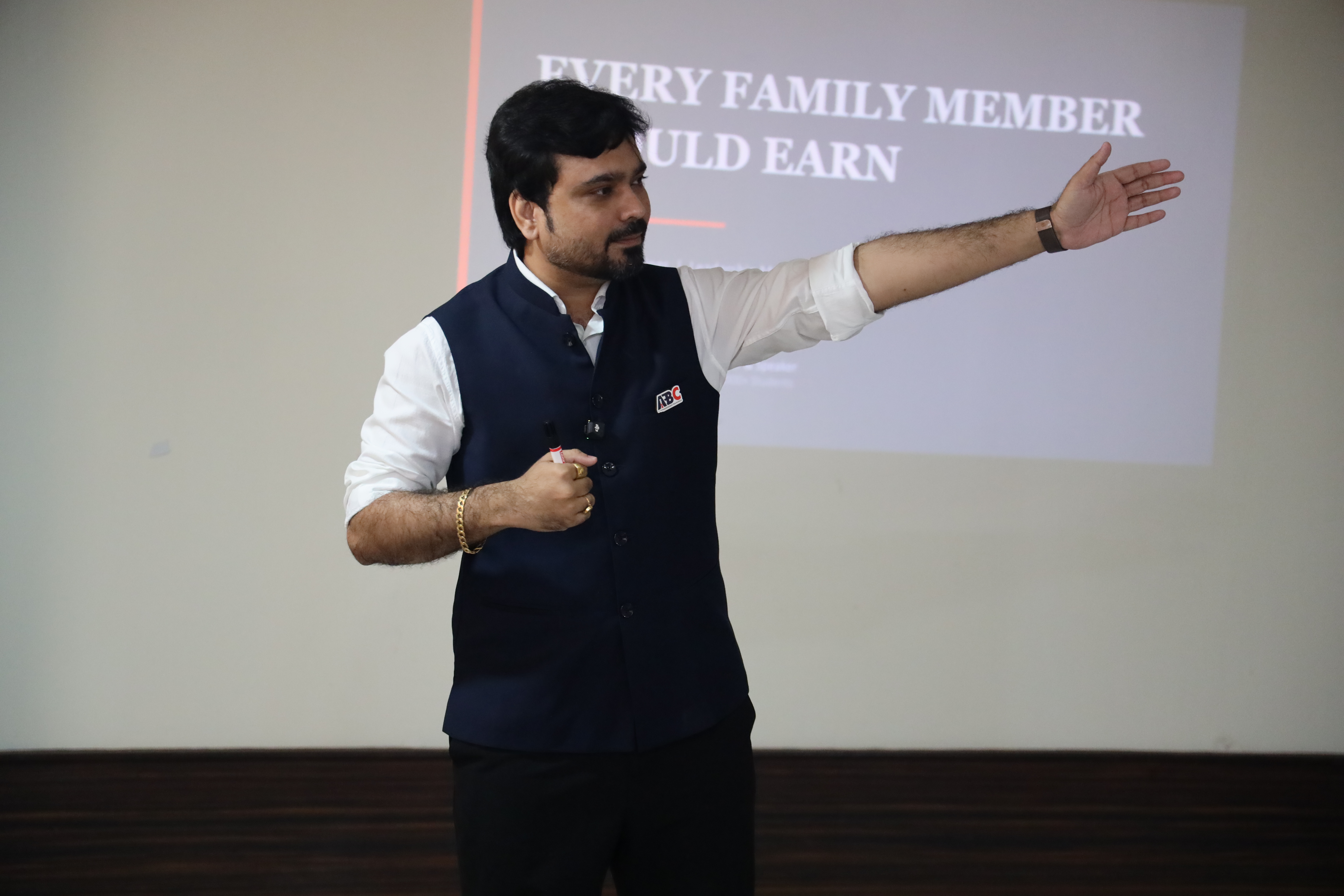
👀 If your team moves only when you're watching… That's not leadership — that's surveillance. 🎙️ Avinash Bhaskar Chate explains why real leadership means buildin...
LinkedIn India 2026 ranks leadership skills as the #1 competency employees demand from their managers. Yet I see a pattern across my training sessions with teams at Bajaj Auto, Tata Tech, and Mahindra — when the leader steps out, output drops. That's not a team problem. That's a presence dependency problem, and it's costing Indian companies lakhs every month.
TL;DR- Your team's dependency on your presence signals a systems failure, not a people failure
- Self-reliant teams need clear processes and decision authority — not constant supervision
- Accountability without authority is punishment — give your team both
- True leadership builds teams that perform better when you're NOT there
- The best leaders make themselves replaceable by design
Why Your Team Only Works When You're Watching
Trust me, this is the most common pattern I see in my corporate workshops. The manager walks in — suddenly every screen lights up, every call gets made. The manager steps out — energy drops within twenty minutes. This isn't about lazy employees. What you're seeing is a team that's never been given the tools, trust, or process to work without someone watching. That's a leadership design failure, not a character flaw.
The Real Cost of Leader Dependency in Indian Companies
Here's the real cost nobody talks about. When your team can't function without you, you become the bottleneck. I've worked with manufacturing teams in Pune where production decisions stalled for three days because the plant head was at a conference in Mumbai. Three days. The cost ran into lakhs. The root cause? A culture where nobody was empowered to decide. This is what leader-dependency costs Indian businesses every single day — and it compounds year after year.
| Attribute | Leader-Dependent Team | Self-Reliant Team |
|---|---|---|
| Decision Speed | Waits for manager approval (2–3 days avg.) | Decides within authority same day |
| Productivity When Leader Travels | Drops 30–50% | Maintains 90%+ output |
| Problem Resolution | Escalates most issues upward | Resolves tier-1 issues independently |
| Employee Confidence | Low — seeks constant validation | High — owns outcomes |
| Leader's Time Split | 70% operational, 30% strategic | 30% operational, 70% strategic |
| Team Retention | High exit rate (talent feels stunted) | Lower exit rate (growth is visible) |
How to Build Self-Reliant Teams That Don't Need Babysitting
The good news is you can fix this without replacing your people. What it requires is building systems. At Mahindra, I've seen this work beautifully: clear decision-making authority charts, documented processes for every recurring task, and a weekly 'what would you have decided?' review. Within six months, the team ran projects end-to-end. The leader's job shifted from executing to reviewing. That's the evolution every great Indian leader needs to make.
The Accountability Framework Top Indian Leaders Use
The accountability framework I teach at Tata Tech and Bosch is simple: every team member owns a zone. Not micromanagement — clear ownership. When something breaks in your zone, you fix it. When something works, you own the win. The manager becomes the reviewer, not the executor. What most people don't realize is that accountability without authority is just punishment. Give your team the authority that matches their responsibility — and watch performance shift.
When Should a Leader Step In vs. Step Back?
Knowing when to step in is a skill as important as knowing when to step back. Step in when: the stakes are existential, the team is stuck for more than 24 hours, or a relationship is at risk. Step back when: the decision is reversible, the team has handled similar situations before, or the lesson of failure is worth more than the outcome of success. I've seen leaders at L&T and JSW master this rhythm — and their teams are elite.
5 Warning Signs Your Team Is Too Dependent on You
Watch for these five warning signs that your team is too dependent on you. First: they ask permission before making small decisions. Second: productivity drops measurably when you travel. Third: they loop you on emails you don't need to see. Fourth: they say 'I wasn't sure what you'd want' instead of using their judgment. Fifth: nobody has ever challenged your decision in a team meeting. Any two of these? You have a dependency problem that needs attention now.
Building Processes That Outlast Your Presence
Processes outlast people — that's the principle I teach at every corporate training session. A Siemens team in Pune lost three senior managers in eight months due to transfers. The team with documented processes survived the transition. The team that relied on the manager's memory — collapsed. Document your decision-making logic, not just your decisions. Write your escalation paths. Create your 'while I'm away' playbook. The best leaders make themselves replaceable by design, because that's what makes them truly irreplaceable.
Book Avinash Chate for Your Next Event
TEDx speaker. 11+ yrs training Army, BRO, RBI, BARC, JSW. Available for keynotes, leadership training, team building & manager development at your office or event venue.
✅ Thanks! Avinash team will reach out within 24 hours.'}).catch(function(e){f.outerHTML='Something went wrong. WhatsApp +91 8793630001
'});return false;">Select ServiceKeynote / Motivational SpeakingLeadership Development TrainingTeam Building WorkshopManager DevelopmentEmployee TrainingOutbound TrainingBook Avinash Now →Or WhatsApp directly: +91 87936 30001
Related Articles by Avinash Chate
- The Ferrari Insult That Created Lamborghini — A Mindset Story India Needs
- The Dark Marketing Secret Behind Listerine That Changed Everything
- Why Corporate Success Feels Empty and What Truly Makes It Meaningful
Avinash Chate TEDx Speaker · Founder, The Future Corporate · 11+ yrs experience Avinash has trained Indian Army, BRO, RBI, BARC, JSW Steel and 1000+ corporate leaders across India. His work focuses on leadership development, communication skills, and behavioural training rooted in Indian values and modern business needs. |
Frequently Asked Questions
Why do Indian employees wait for manager approval before acting?
Most Indian employees have been conditioned by hierarchical work cultures where decisions flow from the top. The good news is this isn't a personality trait — it's a learned behavior that can be unlearned with the right systems and explicit encouragement from leadership. The fix starts with the leader giving permission to decide, not just telling people to be more confident.
How do I build a self-reliant team without losing control?
Start by identifying three decisions your team currently escalates to you that they could handle themselves. Give them explicit authority for those decisions. Review outcomes weekly, not daily. Over 90 days, expand the list. What most people don't realize is that control doesn't come from being present — it comes from systems, metrics, and clear ownership. The paradox is: the more you delegate, the more in control you actually are.
What is the 'presence dependency' problem in corporate India?
Presence dependency is when a team's performance is directly tied to their leader being physically or virtually available. The moment the leader is unavailable, productivity drops, decisions stall, and confidence collapses. It's common in Indian corporate environments where hierarchical cultures reward deference over initiative — and it costs companies far more than they ever measure.
How long does it take to build a team that works independently?
In my experience working with teams at Bajaj Auto, KPIT, and Infosys, it typically takes 60 to 90 days of consistent process implementation to build meaningful independence. The key is consistency from the leader — every time you step back and let the team decide, you build a muscle. Every time you override a decision unnecessarily, you destroy one. Sixty days of discipline changes the culture permanently.
Avinash Chate services
Corporate Trainer in Maharashtra · Top Corporate Trainers in Maharashtra · Leadership Trainer in Maharashtra · Top Leadership Trainers in Maharashtra · Team Building Trainer in Maharashtra · Top Team Building Trainers in Maharashtra · Motivational Speaker in Maharashtra · Top Motivational Speakers in Maharashtra · All service locations
← Back to all articles · Book Avinash Chate
By Avinash Chate — Maharashtra’s #1 Corporate Trainer & Motivational Speaker. .