Why Your Team Won't Take Initiative — It's Not Laziness India 2026
Your team is not lazy — they lack clarity, trust, and psychological safety. Here is the real reason no one takes initiative and how to fix your environment in India.
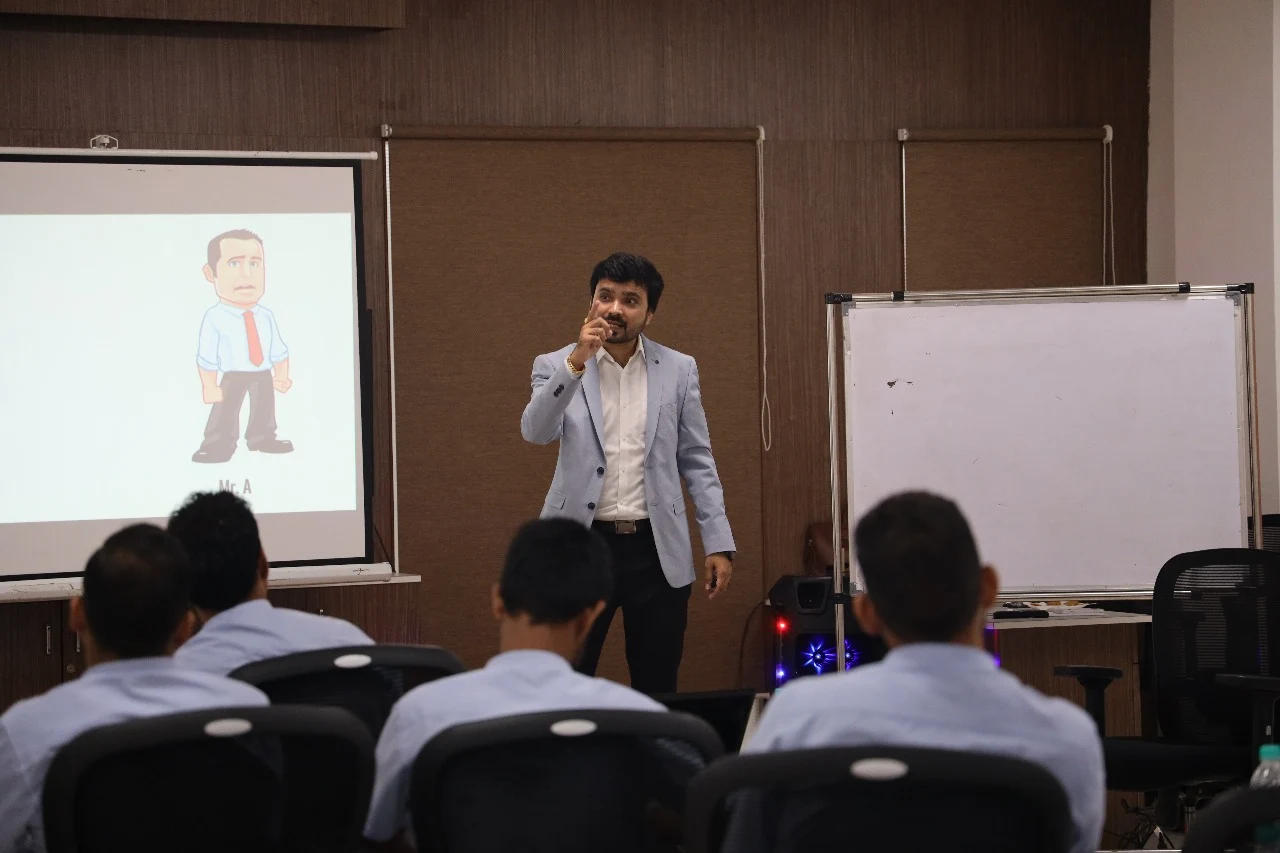
McKinsey's India research shows Indian managers spend 21 hours a week pushing their teams — and yet, in most organizations, the team still waits to be told what to do. Here is the diagnosis that most leaders get wrong: your team is not lazy. What they lack is clarity, trust, and psychological safety. Fix the environment, not the employees. That is the only intervention that actually works, and I have seen it transform teams from passive executors to genuine owners at Bajaj Auto, KPIT, and the Indian Army.
TL;DR- Teams that avoid initiative are not lazy — they lack clarity about what is expected, trust that their efforts will be supported, and safety to act without fear of being penalized for mistakes
- When no one takes initiative, the problem is almost always the environment the leader has created, not the personality of the team
- Psychological safety is the single most important predictor of whether team members will act proactively or wait to be told
- Clarity + trust + safety = initiative; remove any one of the three and proactive behaviour collapses
- Indian leaders who want more initiative from their teams must audit their own behaviour first — the environment is a mirror of the leader
Why Your Team Keeps Waiting to Be Told What to Do — The Real Reason
In every leadership workshop I run, I ask managers one question: "How many of you are frustrated that your team won't take initiative?" Almost every hand goes up. Then I ask: "How many of you have specifically told your team what taking initiative looks like in your context?" Almost no hands go up. That gap — between the expectation of proactivity and the absence of clarity about what it means — is where most initiative problems begin. Your team is not passive because they lack ambition. They are passive because nobody has made it safe and clear for them to be anything else.
It's Not Laziness: The Three Real Causes of Low Initiative in Indian Teams
The three causes of low initiative in Indian corporate teams are almost never the ones managers assume. Laziness is rarely the problem — most Indian professionals I have worked with at Tata Tech, Infosys, KPIT, and Mahindra are genuinely motivated and want to contribute. What stops them is: one, lack of clarity — they do not know where their authority ends and their manager's begins, so they default to waiting; two, lack of trust — they have learned, through past experience, that taking initiative without approval creates problems; three, lack of psychological safety — they believe that a wrong move will be held against them longer than any right move will be remembered for. Address these three things and initiative follows almost automatically.
How Lack of Clarity Paralyses Otherwise Capable Team Members
Clarity is the most underrated leadership tool for building initiative. When team members do not know what "taking initiative" looks like in their specific role, they default to the safest interpretation: do what you are told, nothing more. The leader who says "I want you to be more proactive" without defining what that means in operational terms has given their team a vague aspiration, not a clear invitation. What does initiative look like in your team? Does it mean flagging a problem without being asked? Proposing a solution before the deadline? Taking ownership of a task without receiving a formal assignment? Specify it. What you define gets done.
Why Trust Determines Whether Your Team Acts or Waits in Indian Corporate Culture
Trust is what makes it safe to act. In organizations where past initiative was punished — where the person who raised a problem became the person blamed for it, or where the person who tried something new without approval was publicly corrected — the rational response is to stop acting without permission. I have seen this at multiple Indian manufacturing clients: teams of capable, experienced professionals who wait passively not because they lack ideas but because they learned that acting on ideas without explicit authorization creates more risk than reward. Rebuilding trust in these environments requires a consistent, visible leadership behaviour change — not a one-time speech about empowerment.
| Root Cause | What It Looks Like in the Team | What the Leader Must Do |
|---|---|---|
| Lack of clarity | Team waits for instruction on every task | Define explicitly what initiative looks like in each role |
| Lack of trust | Team seeks approval for every decision | Build a track record of supporting proactive action, even imperfect attempts |
| Lack of psychological safety | Team stays silent in meetings; avoids flagging problems | Reward honesty and effort publicly; never punish a good-faith attempt |
| Unclear authority | Team defers all decisions upward | Define bounded autonomy: "You own these decisions; these need my input" |
| Past punishment for initiative | Team has "seen what happens" when someone acts without approval | Explicitly reset expectations and demonstrate new behaviour consistently |
| No model for proactivity | Team does not know what proactive looks like | Show concrete examples of what initiative means in your specific context |
Psychological Safety: The Foundation That Makes Initiative Possible
Psychological safety — the belief that you can speak up, suggest something, try something, or fail at something without lasting negative consequences — is the foundation of all proactive team behaviour. Research from Google's Project Aristotle (which studied over 180 teams) found it to be the single strongest predictor of team performance. In India's hierarchical corporate culture, psychological safety is often especially fragile: one dismissive response from a senior, one public correction for a wrong assumption, one "this is not how we do things here" without explanation, is enough to extinguish proactivity for months. Leaders build psychological safety through cumulative small signals, not through policy.
How I Fixed Low-Initiative Environments at Bajaj Auto and KPIT Without Firing Anyone
At Bajaj Auto and KPIT, I have worked with teams where the initiative problem was solved not by training the team members but by changing three specific leader behaviours. The first change: leaders stopped solving problems that team members brought to them and started asking "what do you think we should do?" instead. The second change: leaders started publicly celebrating a proactive attempt that failed, not just the ones that succeeded. The third change: leaders gave explicit, bounded autonomy — "in these specific decision areas, you do not need my approval" — so team members knew exactly where their authority ended. Within 60 days, the initiative level in both organizations was measurably different.
Your 60-Day Action Plan to Build a Proactive Team Culture in India 2026
Here is your 60-day action plan to build a proactive team culture in India. In week one, define initiative for your team: write down exactly what it looks like for someone in each role to act proactively without waiting for instruction. In weeks two to four, change your response pattern: when someone brings you a problem, ask them for their proposed solution before offering yours. In weeks five to eight, create a bounded autonomy agreement with each team member — a written understanding of which decisions they own completely and which need your input. In weeks nine to twelve, celebrate one proactive attempt per week in your team meeting, whether it succeeded or not. At 60 days, re-ask the question: how many of you are waiting to be told what to do? The answer will be different.
Book Avinash Chate for Your Next Event
TEDx speaker. 11+ yrs training Army, BRO, RBI, BARC, JSW. Available for keynotes, leadership training, team building & manager development at your office or event venue.
✅ Thanks! Avinash team will reach out within 24 hours.'}).catch(function(e){f.outerHTML='Something went wrong. WhatsApp +91 8793630001
'});return false;">Select ServiceKeynote / Motivational SpeakingLeadership Development TrainingTeam Building WorkshopManager DevelopmentEmployee TrainingOutbound TrainingBook Avinash Now →Or WhatsApp directly: +91 87936 30001
Related Articles by Avinash Chate
- Team Building at Piller Global India: Lessons for India's MNC Teams
- Why Old and New Team Members Don't Bond in Indian Companies 2026
- What an Influencer Really Means: Impact Over Followers in India 2026
Avinash Chate TEDx Speaker · Founder, The Future Corporate · 11+ yrs experience Avinash has trained Indian Army, BRO, RBI, BARC, JSW Steel and 1000+ corporate leaders across India. His work focuses on leadership development, communication skills, and behavioural training rooted in Indian values and modern business needs. |
Frequently Asked Questions
Why does no one on my team take initiative even though they are capable professionals?
When capable professionals do not take initiative, the cause is almost always environmental rather than motivational. The three most common environmental blockers are: lack of clarity about what initiative looks like in their specific role and context; lack of trust that their proactive actions will be supported rather than criticized; and lack of psychological safety — the belief that acting without explicit approval exposes them to risk that outweighs the potential reward. Addressing any one of these three factors will produce a measurable increase in proactive behaviour. Addressing all three simultaneously produces a fundamentally different team culture.
What is psychological safety and why does it determine initiative in Indian teams?
Psychological safety is the team member's belief that they can act, speak up, try something new, or make a mistake without facing lasting negative consequences from their colleagues or manager. In Indian hierarchical corporate culture, psychological safety is fragile because status and approval matter greatly — and a single dismissive response from a senior person can extinguish a team member's willingness to take initiative for months. Psychological safety determines initiative because initiative requires acting before you are certain of the outcome. If the cost of being wrong is high, the rational choice is to wait for certainty. Leaders build safety by consistently rewarding effort and honesty, not just success.
How do I give my team more autonomy without losing control of outcomes in India?
Giving your team more autonomy without losing control requires defining bounded autonomy clearly and in writing. For each team member or team function, specify exactly which categories of decisions they own completely, which they own with notification, and which require your input before action. This clarity eliminates the ambiguity that drives passive behaviour — team members know precisely where their authority ends and where they must involve you. Start narrow and expand the autonomy boundary as trust develops. Review and update the boundaries quarterly. The goal is not to remove oversight but to make proactivity the path of least resistance rather than the path of highest risk.
What specific leader behaviours kill initiative in Indian corporate teams?
The leader behaviours that most consistently kill initiative in Indian teams are: solving problems for team members instead of asking what they think the solution should be; publicly correcting or criticizing proactive attempts that produced imperfect outcomes; having inconsistent standards — sometimes rewarding initiative, sometimes punishing it depending on mood; using "we have always done it this way" to shut down suggestions without explanation; and taking credit for team members' proactive contributions without acknowledgment. Each of these behaviours, repeated across time, teaches the team that the safest professional strategy is to wait for explicit instruction. The lesson is learned quickly and unlearned slowly.
Avinash Chate services
Corporate Trainer in Maharashtra · Top Corporate Trainers in Maharashtra · Leadership Trainer in Maharashtra · Top Leadership Trainers in Maharashtra · Team Building Trainer in Maharashtra · Top Team Building Trainers in Maharashtra · Motivational Speaker in Maharashtra · Top Motivational Speakers in Maharashtra · All service locations
← Back to all articles · Book Avinash Chate
By Avinash Chate — Maharashtra’s #1 Corporate Trainer & Motivational Speaker. .