You Too Can Become an Entrepreneur Book Review: Lessons from HNIMR Pune
Team Udyam reviewed You Too Can Become an Entrepreneur at HNIMR with a lipstick skit. The real lesson: listen, ask questions, then build SOPs.
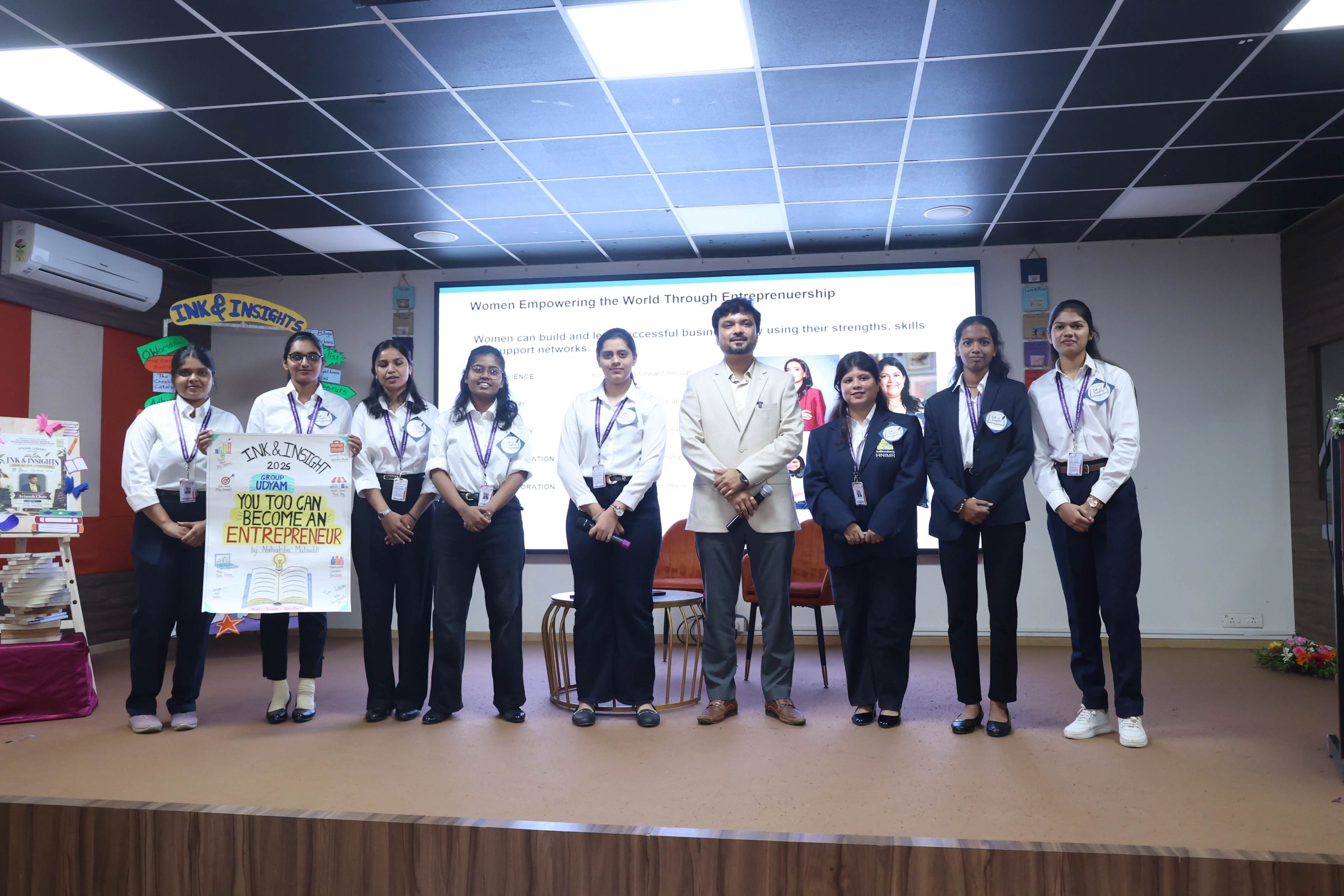
On 29 October 2026 I was chief guest and judge at "Ink & Insights", the book review competition at MKSSS's Smt. Hiraben Nanavati Institute of Management and Research for Women (HNIMR), Karvenagar, Pune. The theme was "Entrepreneurship: From Vision to Venture". Twenty-one MBA teams each reviewed one business book with slides and a skit, and then faced my questions.
Before Team Udyam began, I asked them what their name means. "It is a Sanskrit word for enterprise," they said. Exactly. And anyone who has registered a small business in India knows the Udyam registration certificate. A good name for a team presenting You Too Can Become an Entrepreneur, by Nalinaksha Mutsuddi.
How Team Udyam presented the book
The team turned the room into business partners. Imagine we all have five thousand rupees to start a business, they said. Do we buy products, design a logo, or first understand what people want? Their answer was idea, then plan, then action.
They walked us through a customised gifts business. Sales are good at first, then customers start asking for something we cannot deliver. Do we ignore them or adapt? We adapt. Then they made a sharp point. Putting all your money into a product nobody wants is not risk taking, it is guessing. So do a market survey, talk to people, ask about their problems, and use the answers to decide.
They had a section on women entrepreneurs too, about a woman who starts a business from home with a few customers and grows it through creativity, collaboration, empathy, resilience and communication. Then came the plot twist: sales drop, supply is low, a competitor arrives. Their advice was to respond positively and think smartly, not panic.
And then the skit. A customer walks into a shop wanting a lipstick. Two sales executives keep pushing random shades at her. Too bright, too glossy, too sticky. She gets more and more annoyed. Then the entrepreneur walks in and says, "Rather than offering you a random product, may I ask you a few questions to understand your preferences?" Budget? Around five hundred. Shade? Occasion? Office and casual. She recommends one lipstick, and the customer says, "Exactly what I want."
Simple, funny and very true. I told them it was one of the best presentations I had seen till then.
My question: what happens when you are not in the shop?
I asked the student who played the entrepreneur a harder question. You understood the customer because you were there. But suppose you have five outlets. After lunch you go to your Baner outlet, and this same customer walks into your Kothrud outlet. Your sales team would have let her walk away. As the entrepreneur, how will you make sure every salesperson asks the same kind of questions you asked?
Her answer impressed the whole hall. She said, think of Domino's. They have so many outlets, but the taste and the service never change. You feel you are in Domino's wherever you go. So she would focus on the process.
That is the right answer. In business, SOPs and systems are the most important thing. Where there are SOPs and systems, the entrepreneur does not need to be present. I told the students about our own ABC Trainings outlet in Sangli. I have not been there for six months, because the right systems and SOPs are built there. If a businessman is stuck in one outlet, that is shopkeeping, not entrepreneurship. Entrepreneurship means you have the freedom to move around while your team takes care of the business.
Get work done, do not do all the work
I asked the whole hall to repeat one line after me in Marathi: "काम करण्यापेक्षा काम करून घेता आलं पाहिजे." Rather than doing the work yourself, you must be able to get the work done.
Doing the work is fine while the business is new and needs you. But I have seen many business owners running around alone while the team sits idle. Those businesses never grow. The owner may be good, but he needs to learn delegation. Look at Mahendra Singh Dhoni. After he became captain, he often batted at six or seven, and sometimes did not bat at all. His thinking was simple: if I bat every time, what are the others for? The entrepreneur comes last.
Listening is the most powerful weapon
I asked the team what technique the entrepreneur used in the skit. They said politeness, body language leaning towards the customer, respect, patience. All true. But the most important thing was listening. Listening means understanding. And she asked a lot of questions, after first taking permission to ask. That is the whole sales technique in one small scene.
One more moment I enjoyed. The book's title says you too can. She already has.
I also asked which tool they had used to make their slides. It was an AI tool, Claude. I told them that is completely fine. I use it too. AI tools are not pickles to be kept in a jar. Use them. What matters is whether you understand and present the idea yourself.
5 lessons for an Indian student or young founder
1. Ask before you sell
Take permission, ask about budget, need and occasion, and then recommend. Customers buy from people who understand them.
2. Survey before you spend
Talk to twenty possible customers before you invest your savings. Investing in a product nobody asked for is guessing, not risk taking.
3. Write down how you do things
The day you start, note how you greet a customer, take payment and handle a complaint. These notes become your SOPs, and SOPs let you open a second outlet.
4. Learn to delegate early
Your job is to build a team that can do the work. If everything depends on you, the business is only as big as your day.
5. Small innovations count
The team agreed that business does not always need brand new ideas. Little improvements, done again and again, keep a business ahead.
Team Udyam reminded me that every student in that hall has the ability to become an entrepreneur. The skills are listening, asking, building systems and trusting a team. All of them can be learnt.
If you run a college or company
I run book review sessions, entrepreneurship workshops and sales and leadership programmes for colleges and companies, built around practical exercises like the ones in this article. If you would like one for your students or team, contact me here.
With thanks to HNIMR
My thanks to Dr. Priyanka Singh, Director of HNIMR; Mrs. Manjushree K. Nawale, Librarian, and her library team, who organised Ink & Insights 2026; Mr. Vishwajeet Deshmukh, Placement Officer; Mr. Devadatta Sant; and Ms. Minal Kotwal, for hosting me so warmly and making the day run so smoothly. And to every student who stood on that stage with a book in hand: thank you for the courage and the creativity.
Related Articles by Avinash Chate
- Why Has My Business Stopped Growing? The Mindset Fix
- Why Indian Entrepreneurs Work Hard But Never Enjoy What They Earn
- AI Dashboard for Business Owners in Latur: Build It by Describing It
Work with Avinash Chate
- Best Motivational Speaker in Pune →
- Best Motivational Speaker in Maharashtra →
- Motivational Speaking for Corporate Events →
| AC | Avinash ChateIndia's Leading Corporate Trainer | TEDx Speaker | Author With 1000+ organizations trained including RBI, JSW Steels, and Ferrero, Avinash Chate delivers high-impact corporate training across India. Creator of the KITE Leadership Framework and bestselling author of "The Winning Edge." Website YouTube |
Avinash Chate services
Corporate Trainer in Pune · Top Corporate Trainers in Pune · Leadership Trainer in Pune · Top Leadership Trainers in Pune · Team Building Trainer in Pune · Top Team Building Trainers in Pune · Motivational Speaker in Pune · Top Motivational Speakers in Maharashtra · All service locations
← Back to all articles · Book Avinash Chate
By Avinash Chate — Maharashtra’s #1 Corporate Trainer & Motivational Speaker. .