Your Team Has Unique Barcodes: Tune In for Stronger Collaboration India 2026
Just like products have unique barcodes, every team member has distinct strengths and patterns. Avinash Chate explains how tuning in to these barcodes builds stronger Indian teams.
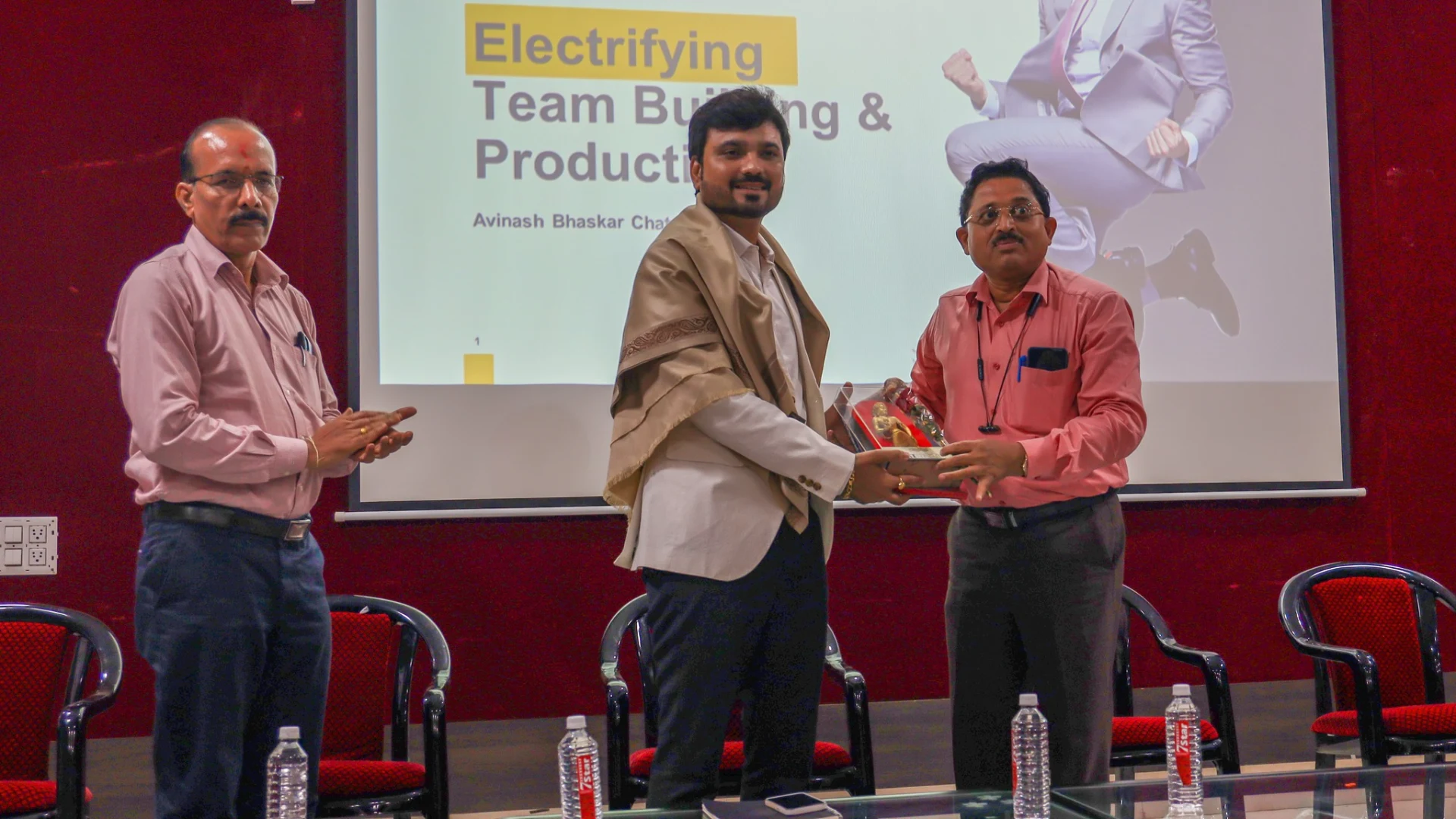
Here's the thing — just like every product has a unique barcode that tells you exactly what it is, every person on your team has a unique barcode that tells you how they work, what they need, and where they'll thrive. The problem is most Indian managers never bother to scan it. LinkedIn India's 2026 report names leadership skills as the #1 gap — and learning to tune in to your teammates' unique barcodes is the most practical leadership skill you can develop this year.
TL;DR- Every team member has a unique barcode — a distinct combination of strengths, weaknesses, and working patterns, just like a product barcode identifies what's inside
- Tuning in to your teammates' barcodes means learning their communication style, motivation triggers, stress response, and collaboration preferences
- Teams that understand each other's barcodes collaborate faster, conflict less, and deliver better results
- Most Indian teams default to guessing how their colleagues work — formalising this knowledge through dialogue creates measurable performance gains
- Strong team collaboration in India starts with curiosity about teammates, not just skills or processes
Why Every Team Member Has a Unique Barcode
Think about a barcode on a product. It contains all the essential information about that item — its category, its specifications, its origin. You just need a scanner to read it. Your team members are no different. Every person carries a unique barcode of information about how they work best: Do they need detailed instructions or big-picture direction? Do they work best independently or in close collaboration? Do they get energised by new challenges or by mastering a single domain? At Bajaj Auto, Mahindra, and the Indian Army, I've seen how quickly teams improve once leaders stop guessing and start reading.
How to Tune In to Your Teammates' Barcodes at Work
Tuning in to a teammate's barcode starts with one simple practice: asking genuinely curious questions and actually listening to the answers. Not "how's the project going?" — but "what kind of work gives you the most energy right now?" and "what type of feedback helps you most?" These questions reveal barcode information that no performance review ever captures. At KPIT and Tata Tech, I run structured "barcode discovery conversations" as part of team onboarding — a 30-minute structured dialogue between teammates that surfaces working preferences, communication styles, and collaboration needs. Teams that do this at the start of a project report significantly fewer mid-project conflicts.
The Key Barcode Differences That Affect Team Collaboration in India
The barcode differences that create the most friction in Indian teams are: Detail vs. Big Picture (one person needs thorough briefing; their partner gets bored with it), Independent vs. Collaborative work style (one person wants autonomy; their partner wants constant check-ins), Toward vs. Away motivation (one is energised by what we're building; the other is focused on what could go wrong), and Fast vs. Deliberate pace (one wants to move and iterate; the other wants to plan before acting). None of these is right or wrong — but when teammates don't know each other's barcode, these differences become sources of daily friction instead of team strengths.
| Barcode Trait | Type A | Type B | Collaboration Tip |
|---|---|---|---|
| Information Need | Big Picture overview | Detailed briefing | Always give both — summary first, detail on request |
| Work Style | Independent focus | Collaborative check-ins | Agree on check-in frequency at project start |
| Motivation | Toward (achieve) | Away (prevent problems) | Frame the goal with both — the win and the risk |
| Pace | Move fast, iterate | Plan thoroughly first | Agree on decision threshold: when is enough planning enough? |
What Happens When Teams Ignore Each Other's Barcodes
What I've seen repeatedly at L&T, Infosys, and Bosch: when teams don't know each other's barcodes, they project their own barcode onto everyone else. The Big Picture person assumes everyone can work from a high-level direction. The Detail person assumes everyone needs the same thorough briefing they do. The independent worker assumes their collaborative teammate is needy; the collaborative one assumes the independent worker is cold and disengaged. These projections create low-grade conflict that saps team energy for months. It doesn't require a restructuring to fix — it requires 90 minutes of structured barcode-sharing to clear.
Practical Exercises to Map Your Team's Barcodes
The most effective barcode-mapping exercise I run takes 90 minutes and requires no technology. Split the team into pairs. Each person answers five questions about their work preferences (given in advance) — then shares their answers with their partner. Pairs discuss where they differ and agree on one adjustment each will make to how they work together. In the second round, pairs share insights with the full team. At Ferrero and JSW, we run this at the start of every new project team — and the difference in collaboration quality from week one compared to teams that skip this exercise is always visible.
Building a Barcode-Aware Team Culture in Indian Companies
Building a barcode-aware team culture means making it normal to talk about how you work, not just what you produce. It means a manager asking "how does this type of work land for you?" rather than just "can you deliver this by Friday?" It means a team that has explicit conversations about working preferences at the start of each new project cycle. This doesn't require a full-day offsite — 30 minutes of structured dialogue per quarter is enough to keep the barcode knowledge current. At Siemens and RBI, teams that maintain this practice show consistently higher scores on collaboration and psychological safety surveys.
Results from Barcode-Based Team Development Across India
Across 11 years of team development work in India, one result is consistent: teams that invest in knowing each other's barcodes outperform teams that don't — on nearly every measurable dimension. Faster decision-making, lower conflict rates, higher retention of top performers, and better client satisfaction scores. At a Pune-based engineering company, one team went from a 6-month project overrun to on-time delivery on the next project after a single barcode workshop. The technical capability hadn't changed. The collaboration quality had. That's the power of tuning in to your team's unique barcodes — and it's available to every Indian team right now.
Book Avinash Chate for Your Next Event
TEDx speaker. 11+ yrs training Army, BRO, RBI, BARC, JSW. Available for keynotes, leadership training, team building & manager development at your office or event venue.
✅ Thanks! Avinash team will reach out within 24 hours.'}).catch(function(e){f.outerHTML='Something went wrong. WhatsApp +91 8793630001
'});return false;">Select ServiceKeynote / Motivational SpeakingLeadership Development TrainingTeam Building WorkshopManager DevelopmentEmployee TrainingOutbound TrainingBook Avinash Now →Or WhatsApp directly: +91 87936 30001
Related Articles by Avinash Chate
- Why Manufacturing Industry is Difficult to Start in India: 5 Key Challenges
- Ajit Agarkar's 21-Ball ODI Fifty Against Zimbabwe: The Silent Performer's Career Blueprint
- Clive Lloyd's 1975 World Cup Final Leadership: How Bold Captaincy Wins Under Pressure
Avinash Chate TEDx Speaker · Founder, The Future Corporate · 11+ yrs experience Avinash has trained Indian Army, BRO, RBI, BARC, JSW Steel and 1000+ corporate leaders across India. His work focuses on leadership development, communication skills, and behavioural training rooted in Indian values and modern business needs. |
Frequently Asked Questions
What does it mean that every team member has a unique barcode?
The barcode metaphor means every person has a unique combination of working preferences — how they process information, how they like to communicate, what motivates them, how they respond to pressure, and how they collaborate. Just like a product barcode contains all the essential data about that product, a person's behavioural barcode contains all the information you need to work with them effectively. The key difference: product barcodes are printed and permanent; people's barcodes can evolve — but in any given context and role, they are consistent enough to predict and work with.
How can I tune in to my teammate's barcode without making it awkward?
The most natural way to tune in to a teammate's barcode is through a direct, genuine conversation framed around work preferences rather than performance. Ask questions like: "What kind of tasks do you find most energising?" "What type of feedback helps you most?" "Do you prefer to work things out independently first, or think out loud with others?" These questions feel respectful and curious, not evaluative. You can also observe over time — how they handle ambiguity, what they get frustrated by, how they celebrate success — and synthesise those observations into a barcode hypothesis you can test and refine.
What barcode differences cause the most team conflict in Indian workplaces?
The most friction-causing barcode differences in Indian corporate teams are: Detail vs. Big Picture (one person needs thorough briefing, the other gets bored by it), Independent vs. Collaborative work styles (one wants autonomy, the other needs constant check-ins), and Fast vs. Deliberate pace (one wants to move and iterate, the other wants a full plan before acting). These three differences are responsible for the majority of team conflicts I see across India — at L&T, Bosch, Infosys, and manufacturing companies. Naming these differences explicitly, rather than letting them fester as "personality clashes," resolves most of them quickly.
How long does it take for a team to benefit from barcode-aware collaboration?
In my experience running barcode-based team workshops across India, most teams see measurable improvement in collaboration quality within 30 days of a structured barcode-mapping session. Conflict frequency drops, communication quality improves, and task assignment becomes more accurate. The full performance benefit — improved delivery speed, higher satisfaction scores, reduced attrition — typically shows up at the 60–90 day mark. The investment is minimal: 90 minutes for the initial workshop, followed by 30-minute barcode refresh conversations at the start of each new project cycle. The return, in terms of team output and manager time saved, is consistently high.
Avinash Chate services
Corporate Trainer in Maharashtra · Top Corporate Trainers in Maharashtra · Leadership Trainer in Maharashtra · Top Leadership Trainers in Maharashtra · Team Building Trainer in Maharashtra · Top Team Building Trainers in Maharashtra · Motivational Speaker in Maharashtra · Top Motivational Speakers in Maharashtra · All service locations
← Back to all articles · Book Avinash Chate
By Avinash Chate — Maharashtra’s #1 Corporate Trainer & Motivational Speaker. .