Team Building Trainer in Nagpur for MIHAN and Defence Teams | Avinash Chate
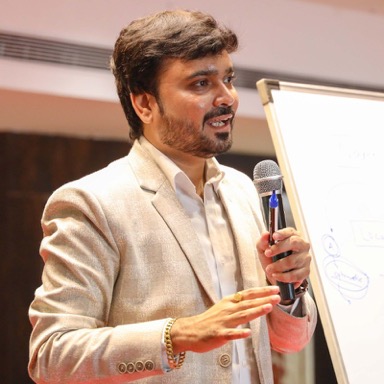
Nagpur teams operate at the centre of India — long supply chains, multi-state coordination and high-stakes defence and logistics workflows. Coordination gaps cost more here than in single-city operations. Avinash Chate, TEDx speaker and creator of The Winning Kite (KITE) framework, runs Team Building Excellence offsites that turn cross-functional friction into shared rituals teams will keep using. With clients including BRO, Indian Army, BARC, JSW Steels and Hitachi, sessions are designed for high-discipline contexts — mission, plant safety and on-time logistics — not just generic ice-breakers. Outbound formats use the Pench-Khindsi tiger-circuit; on-site formats run inside MIHAN SEZ tenants and Butibori plants over weekend shifts. Marathi-Hindi-English delivery is standard.
Marathi, Hindi and English
Built for Nagpur MIHAN, Defence and Heavy Industry Teams
Nagpur team building must bridge SEZ tenants, MIDC plants and defence-supply organisations. Activities are tracked separately by sector and recombined for the leadership cohort that touches all three.
The Winning Kite Framework for Teams
KITE — EQ, RQ, PQ and Success — anchors every offsite. EQ to surface real conversation, RQ to repair cross-function and cross-state trust, PQ to commit to shared sprints, Success to define a 90-day team scorecard signed before everyone leaves Pench.
Where We Train in Nagpur
Indoor at Nagpur city hotels and MIHAN convention venues. Outbound at Pench, Khindsi, Tadoba and Ramtek. On-site at MIHAN SEZ, Butibori MIDC, Hingna MIDC and Kalmeshwar.
Format and Languages
Half-day, full-day and 2-night residential offsites in Marathi, Hindi and English.
Recent Team-Building Engagement in Nagpur
A heavy-engineering MIHAN SEZ tenant recently ran a 2-night residential offsite at Pench for 28 cross-functional leads spanning logistics, production planning, defence-supply liaison and quality. The brief was specifically Nagpur — long supply chains across three states meant that small coordination gaps were compounding into mission-critical delays, and the leadership team itself was operating in silos that didn't show up on any org chart. We anchored the engagement in the KITE framework, opening with EQ exercises that surfaced unspoken tensions between SEZ commercial-mindset leads and defence-supply discipline-mindset leads. RQ rebuilding ran through cross-state paired challenges and a tracked wilderness simulation. PQ converted insight into three committed rituals — a fortnightly cross-state sync, a single shared logistics dashboard, and a monthly mission-debrief format. The debrief on day three produced a signed 90-day action plan owned by the COO, with check-ins at the 30 and 90-day marks. The on-time delivery metric trended cleanly upward over the quarter that followed.
MIHAN's hard problem is keeping people, not finding them
The SEZ gave Nagpur's engineers a reason to stay home, and the campuses fill easily, because VNIT, the IIM, the new AIIMS and a dense college belt see to supply. The struggle starts two or three years in, when Pune and Bengaluru begin calling. Team leads here are typically first-generation corporate employees, promoted for technical skill, running their first one-on-ones with no model to copy. That is the layer where Avinash's EQ, PQ and RQ work earns its keep: a team lead who can run a decent one-on-one and hold a difficult conversation retains engineers longer than a pay correction does.
Campus-to-corporate cohorts are the other steady MIHAN brief, made up of new hires who write clean code and then go quiet on client calls. Those sessions run activity-first, in English with Hindi alive in the room, because that is how those floors actually talk.
The one-on-one nobody in the room has ever seen done
Ask a batch of MIHAN team leads how their own manager runs a one-on-one and you will get a long, slightly embarrassed pause. Most of them have never had one that was not a status update with a chair. That is not a criticism of anybody in particular. It is what happens when an entire management layer is first-generation corporate, learning the job from the only example available, which is the manager immediately above them who learned it the same way.
So the session has to supply the missing model rather than talk about it. The cohort watches one done properly, then runs one badly, then runs one better, and the room laughs at the first attempt because everybody recognises it. Nothing about that is sophisticated. It is simply the difference between a lead who knows what a good conversation sounds like and one who is improvising from a book he has not read.
The pattern repeats a level up. Delivery managers here often carry teams larger than anything they were prepared for, and their instinct under pressure is to become the escalation point for every decision. I have seen the same fix work again and again, and it is unglamorous: name the three decisions the team can now take without you, in writing, and then survive the first week of it going slightly wrong. The engineers stay for the manager who does that. The pay correction only buys time.
Butibori and Hingna run on supervisors
Butibori is among Maharashtra's largest MIDC areas and Hingna one of its oldest, and between them they hold everything from tower manufacturing and synthetic fibre to castings and machined components. Plants there succeed or fail at the shift-supervisor level, on handovers, contractor discipline, scrap and absenteeism. The briefs that arrive are rarely labelled leadership. They are labelled communication gaps, quality culture, my supervisors will not own the line. The work underneath is always the same: giving technically promoted men and women the people skills nobody ever taught them, at exactly the point in a career where a man is least willing to admit he needs teaching.
These sessions belong in the plant training hall rather than a hotel. Same-shift batches of twenty to thirty, Marathi-Hindi delivery, examples drawn from that floor's own last quarter. Names like JSW Steel, Hitachi Astemo and MAHATRANSCO on Avinash's national roster mean the manufacturing vocabulary is already in the room when he walks in.
A Marathi city with a Hindi accent
Nagpur talks differently from Pune. Varhadi Marathi at home, an easy Hindi in the bazaar and on most shop floors, which is the old Central Provinces and Berar inheritance, and English inside the SEZ. A trainer who works in a single register reaches a third of the room. Avinash delivers in Marathi, Hindi and English. He switches mid-session, which matters most in mixed batches where a supervisor's confidence collapses the moment the slides turn to English. Bilingual working material is standard, so nobody is decoding a foreign language while trying to learn a new behaviour.
Frequently Asked Questions — Team Building in Nagpur
How long is a typical team-building program in Nagpur?
Formats range from a focused half-day at a Nagpur city hotel or MIHAN convention venue, to a full-day onsite at Butibori or Hingna MIDC, to a 2-night residential offsite at Pench or Tadoba. Most Nagpur HR partners pick a full-day for plant cohorts and a 2-night residential for leadership groups that span SEZ, plant and defence-supply contexts.
Indoor or outbound — which works better for Nagpur teams?
Indoor is efficient for short resets, but Nagpur cohorts — especially those bridging high-discipline defence-supply and commercial functions — benefit from the change of register that an outbound at the Pench tiger-circuit creates. The wilderness setting is a great equaliser between hierarchies that boardrooms reinforce.
What languages can sessions be delivered in?
Sessions run in Marathi, Hindi and English. Defence and BARC-adjacent cohorts often prefer English-led with Hindi support, while Butibori, Hingna and Kalmeshwar plant teams respond better to Hindi-Marathi mixed delivery. Language is locked during the design call.
How is success measured after the program?
Every Nagpur engagement closes with a 90-day team scorecard signed before everyone leaves Pench. We run a structured debrief, capture committed behaviours, and revisit them via a 30-day and 90-day check-in. Outcomes are tracked against the KITE pillars — EQ, RQ, PQ and Success — not against generic activity-recap forms.
Plan your Nagpur team offsite
On-site, indoor and outbound team building — in Marathi, Hindi and English.
Request a Proposal →Planning this for your team?
Share your name and WhatsApp number and you will get a reply within one business day — usually the same day. Tell us the audience, the objective and rough dates and you get a specific proposal.
Prefer to talk now? ☎ +91 87936 30001 · WhatsApp · Email