The 12 Emotional Qualities of a Star Performer at Work
From my book The Winning Edge, here are the 12 emotional qualities that separate star performers from average ones, plus a simple monthly self-scoring method to grow them.
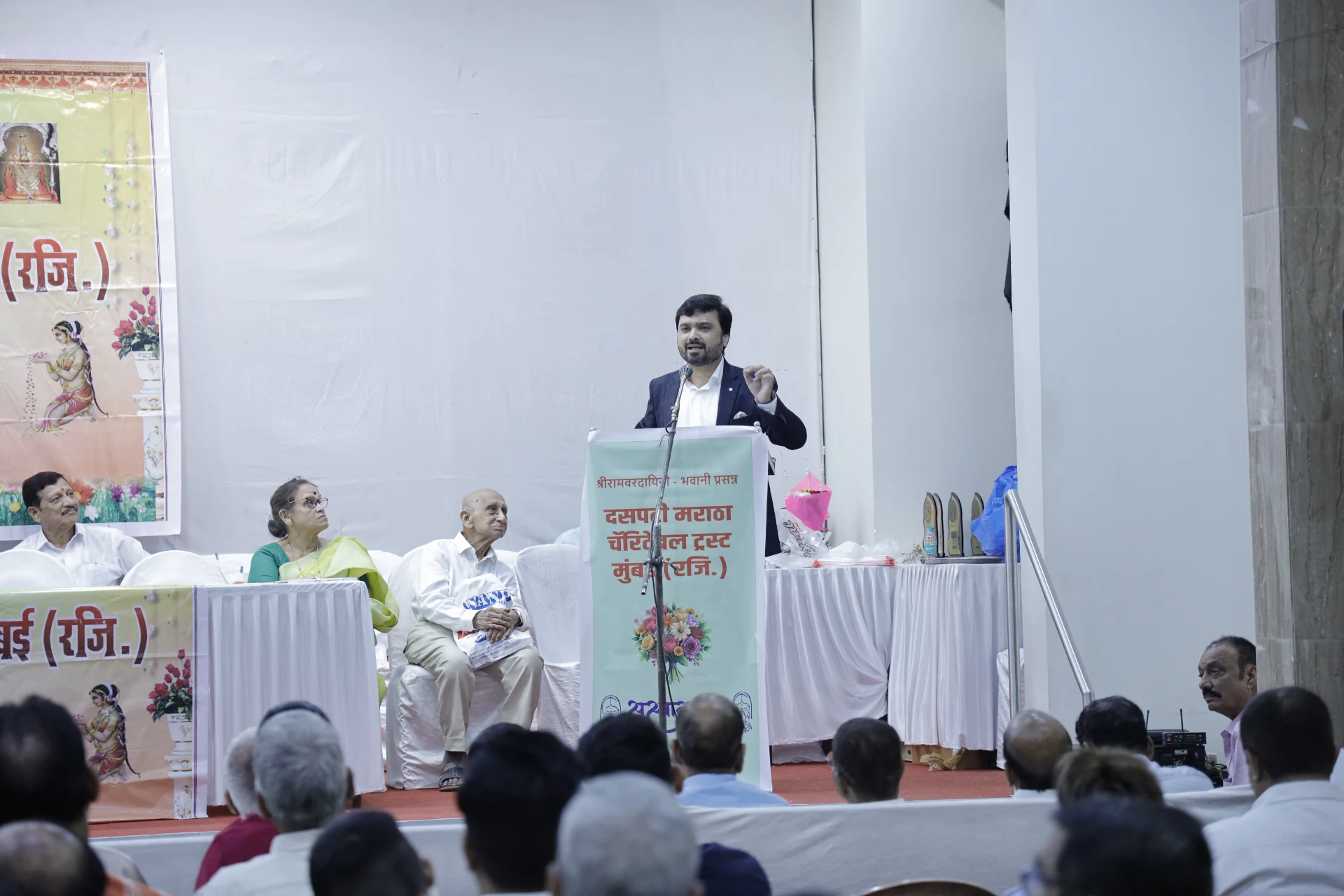
In nearly two decades of training professionals across Maharashtra, I have noticed something that surprises almost every room I stand in front of. The people who get promoted, who get trusted with the big project, who calm a tense client meeting and walk out with a bigger order, are rarely the ones with the highest marks or the deepest technical knowledge. They are the ones who manage emotions well. As I write in my book The Winning Edge, The Champion Mindset, we are hired for our technical skills, but we are fired for our emotional skills.
This is the part of work that no engineering degree, no MBA and no certification course taught us. Emotional intelligence, or EQ, is the ability to manage and use emotions in yourself and in others. It is a learnable skill, not a personality trait you are born with. And once you can measure it, you can grow it.
In this article I will share the Champion pyramid of emotions at the workplace, built on the work of Daniel Goleman, and the 12 star qualities I ask every professional in my workshops to score themselves on. Most importantly, I will give you the exact monthly practice that turns these qualities from theory into a real edge.
Why You Are Hired for IQ and Fired for EQ
Think of the last person you saw lose a job or a key relationship at work. In my experience it almost never happens because they could not do the technical part. It happens because of a short temper, an inability to take feedback, an ego that could not bend, or a lack of empathy with the team. That is the emotional side, and it decides careers far more than we admit.
When dealing with people, remember you are not dealing with creatures of logic, but with creatures of emotion. — Dale Carnegie
Daniel Goleman popularised the truth that EQ often matters more than IQ for real-world success. The good news for every ambitious professional reading this is simple: IQ is largely fixed by adulthood, but EQ can be built at any age through deliberate practice. That single fact is the reason I built an entire section of my training around it.
EQ is a skill, not a mood
People assume some are just born calm and likeable. The science says otherwise. EQ is a set of competencies you can name, measure and improve, the same way you would improve at cricket or public speaking, with feedback and reps.
The Champion Pyramid: Five Steps of Emotional Intelligence
In my workshops I teach EQ as a pyramid of five steps. Each step rests on the one below it. You cannot skip to the top.
- Self-Awareness. Knowing your moods as they happen, in the moment, not an hour later. This is the foundation. I often recommend a simple meditation practice to sharpen this awareness.
- Self-Control. Regulating fear, anger and anxiety. This matters because under stress the emotional brain hijacks the rational brain and actually shrinks your working memory. The angry version of you is, quite literally, a less intelligent version of you.
- Self-Motivation. Pushing beyond your limits with optimism, and learning to enter a state of flow where your best work happens.
- Empathy. Understanding what others are feeling. Notice that empathy is built on self-awareness; you cannot read others if you cannot read yourself.
- Motivating Others. Inspiring a team, managing ego and friction, and getting people to give their best willingly.
The emotional brain responds to an event more quickly than the thinking brain. — Daniel Goleman
The order is the lesson
Most managers rush straight to step five, trying to motivate others, while skipping their own self-awareness and self-control. It never works. As Stephen Covey taught, private victory must come before public victory. You master yourself first, then you lead others.
Working through the five steps of emotional intelligence with a corporate team in Pune.The 12 Emotional Qualities of a Star Performer
Now we come to the heart of it. Within the first three steps of the pyramid sit 12 star qualities. These are the specific virtues I have seen in every high performer I have trained. I group them under the step they belong to.
Under Self-Awareness
- Awareness of your own emotions — you can name what you are feeling as it arises.
- Accurate self-assessment — you know your real strengths and your real limits, without ego inflating or deflating them.
- Self-confidence — a grounded belief in your own worth and capability.
Under Self-Control
- Managing your emotions — you keep disruptive feelings in check instead of letting them run the show.
- Trustworthiness — you are honest and act with integrity, so people can rely on your word.
- Taking responsibility — you own your performance and your mistakes rather than blaming circumstances.
- Adaptability — you flex with change instead of resisting it.
- Innovation — you stay open to new ideas, approaches and information.
Under Self-Motivation
- Achievement drive — an inner push to improve and meet a standard of excellence.
- Commitment — you align with the goals of your team and organisation.
- Initiative — you act on opportunities without waiting to be told.
- Optimism — you persist toward goals despite setbacks and obstacles.
Notice how many of these are the very qualities that make someone a true professional. As Subroto Bagchi beautifully put it, a professional is someone who works unsupervised and is accountable. Trustworthiness, taking responsibility and initiative are exactly that quality, broken into parts.
How to Score and Grow Your 12 Qualities
Knowing the list is useless without a method. Here is the exact practice I give every participant, and it costs nothing but honesty.
- Score each quality out of 10. Go through all 12 and rate yourself honestly today.
- Bring in a peer. Ask a colleague who sees you at work to score you on the same 12. Their numbers will differ from yours, and that gap is gold. It shows your blind spots.
- Pick your two weakest. Do not try to fix everything. Choose the two lowest scores and work only on those.
- Apply deliberate practice. Create small, daily situations to practise that quality. If adaptability is low, deliberately say yes to one change you would normally resist.
- Re-score every month. Mark a date each month and score again, with your peer.
What gets measured grows.
This is the whole secret. The reason most self-improvement fails is that it is never measured. The moment you put a number on a quality and revisit it monthly, your brain starts noticing opportunities to improve it. The number itself becomes the coach.
A note on self-control under stress
If your lowest scores are in self-control, start there, because it protects everything else. Remember, under stress the emotional brain hijacks the rational brain and shrinks your working memory. Robert Cooper and other EQ researchers have shown how much of our intelligence simply goes offline when we are flooded with anger or fear. A few seconds of pause, a few deep breaths, is often the highest-return skill a professional can build.
From Personal EQ to Ethical Leadership
As these 12 qualities grow, something larger happens. You stop being merely a good performer and start becoming a leader people want to follow. Howard Gardner, in Five Minds for the Future, describes the ethical mind, the ability to act with integrity toward your work and your community. EQ is the foundation that makes the ethical mind possible, because you cannot act well toward others until you can govern yourself.
In every organisation I train, the leaders who last are not the loudest or the most technically brilliant. They are the ones who scored low once, admitted it, and did the quiet monthly work of growing. That is the champion mindset in practice.
A leadership group scoring themselves on the 12 star qualities during a session.Bring this to your team. I run emotional intelligence-focused corporate training and keynotes for companies across Pune, Mumbai and all of Maharashtra.
Book a session · Explore corporate training programs
Frequently Asked Questions
What is emotional intelligence at work?
Emotional intelligence, or EQ, is the ability to manage and use emotions in yourself and others. At work it shows up as self-awareness, self-control, self-motivation, empathy and the ability to motivate others. It is a learnable skill, not a fixed personality trait.
What are the 12 emotional qualities of a star performer?
They are awareness of your own emotions, accurate self-assessment and self-confidence under self-awareness; managing emotions, trustworthiness, taking responsibility, adaptability and innovation under self-control; and achievement drive, commitment, initiative and optimism under self-motivation.
How can I improve my emotional intelligence?
Score each of the 12 qualities out of 10, ask a peer to score you too, pick your two weakest, apply deliberate daily practice, and re-score every month. What gets measured grows. Self-awareness can also be sharpened with a simple meditation habit.
Why is EQ more important than IQ for a career?
IQ is largely fixed by adulthood, but EQ can be built at any age. We are hired for technical skills but fired for emotional ones, so the quality of your career often depends more on how you manage emotions than on your technical knowledge.
I have watched these 12 qualities change careers, and I would love to help your people build them. If you want this as a hands-on workshop, get in touch, explore my corporate training programs, or look at my EQ training in Pune. This article is adapted from my book The Winning Edge, The Champion Mindset.
Related Articles by Avinash Chate
- Talent Is a Myth: The Deliberate Practice Secret of Champions
- The Ray Dalio 5-Step Model to Achieve Any Goal
- The 5 Steps of Deliberate Practice to Master Any Skill
| AC | Avinash ChateIndia's Leading Corporate Trainer | TEDx Speaker | Author With 80+ organizations trained including RBI, JSW Steels, and Ferrero, Avinash Chate delivers high-impact corporate training across India. Creator of the KITE Leadership Framework and bestselling author of "The Winning Edge." Website YouTube |
Avinash Chate services
Corporate Trainer in Maharashtra · Top Corporate Trainers in Maharashtra · Leadership Trainer in Maharashtra · Top Leadership Trainers in Maharashtra · Motivational Speaker in Maharashtra · Top Motivational Speakers in Maharashtra · All service locations
← Back to all articles · Book Avinash Chate
By Avinash Chate — Maharashtra’s #1 Corporate Trainer & Motivational Speaker. .