Active Listening Skills in Sales: The 80/20 Rule That Wins Trust
Why do sales conversations fail even when the pitch is perfect? Avinash Chate explains the 80/20 listening rule that builds real trust and closes more deals.
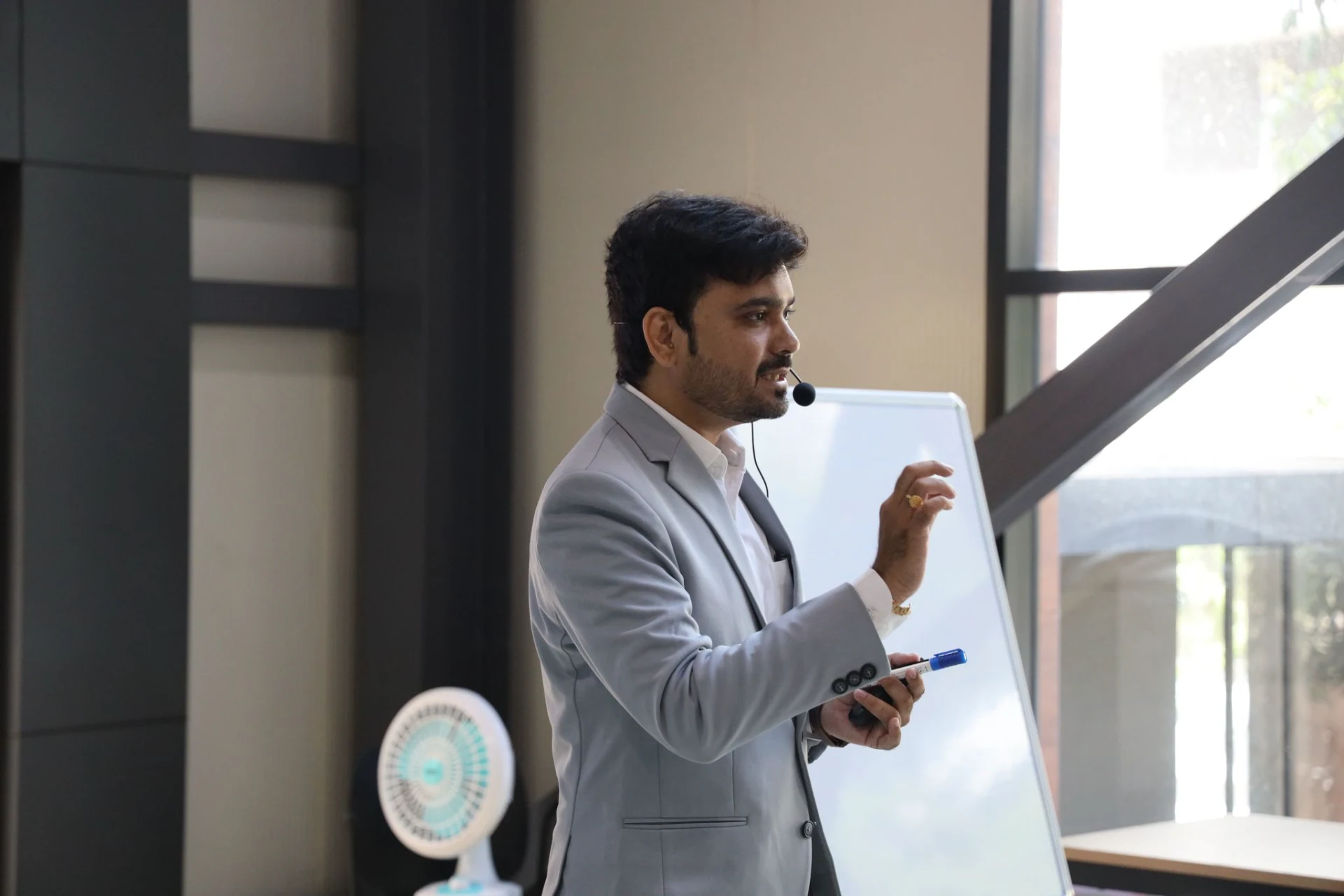
Active listening in sales means listening 80% of the time and speaking only 20% -- asking questions that get customers talking instead of pitching non-stop. It works because trust builds when people feel heard, not sold to. With 65% of Indian firms now investing in soft-skill training, listening is finally being treated as a core sales skill, not an afterthought.
TL;DR- Listen 80%, talk 20% -- the ratio that builds trust in sales conversations
- Silence isn't passive -- ask open questions that get the customer talking
- Uninterrupted listening (no jumping in to pitch or fix) earns credibility fast
- Two people staying silent kills a conversation -- the skill is knowing when to ask
- Works for sales calls, client reviews and internal team conversations alike
What Is the 80/20 Rule in Sales Conversations?
The 80/20 rule is simple: in a sales conversation, you should be listening about 80% of the time and speaking only 20%. Most salespeople get this backwards -- they explain, pitch and convince, while the customer barely gets a word in. When that happens, the customer never feels heard, and without feeling heard, there's no trust. The 80/20 rule flips the default: your job shifts from talking about your product to helping the customer talk about their actual problem.
Why Salespeople Talk Too Much (And Lose the Deal)
Most salespeople talk too much for one reason: silence feels uncomfortable, so they fill it. The moment a customer pauses to think, an anxious rep jumps in with another feature, another benefit, another reason to buy. That instinct kills the conversation. Every time you interrupt a pause, you signal that you weren't actually listening -- you were just waiting for your turn to talk. Sales teams that go through structured corporate sales training programs practise sitting with that discomfort until silence stops feeling like a threat.
| Conversation Moment | Old Habit (Talk 80%) | 80/20 Habit (Listen 80%) |
|---|---|---|
| Customer explains their problem | Interrupt with a feature that "solves" it | Ask "What else is part of this?" and wait |
| Customer goes quiet | Fill the silence with another benefit | Let the pause sit 3-5 seconds |
| Customer raises a price objection | Defend the price immediately | Ask what would make it feel worth it |
| Customer finishes a sentence | Jump straight to the next pitch point | Reflect back what you heard, then ask more |
| Call wraps up | Recap every feature discussed | Recap the customer's own words and the next step |
How to Ask Questions That Get Customers Talking
Listening 80% of the time doesn't mean staying silent -- it means asking questions sharp enough that the customer wants to keep talking. Skip generic openers like "How can I help you today?" Ask instead: "What made this a priority right now?" or "What have you already tried that didn't work?" Questions like these get past the rehearsed pitch and into the real problem. Once a customer starts explaining their actual situation, you're no longer selling -- you're solving, and that's a completely different conversation.
What Uninterrupted Listening Actually Looks Like
Uninterrupted listening isn't just staying quiet -- it's staying present. That means no scrolling through your notes for the next pitch point, no rehearsing your response while the customer is still talking, no jumping in the second they pause to breathe. It means letting a silence sit for two or three extra seconds, because that's usually when the customer adds the detail that actually matters. This is uncomfortable at first for anyone trained to fill every gap with a benefit statement, but it's the single habit that separates order-takers from trusted advisors.
The 80/20 Rule in Action: A Sales Call Example
Picture a customer hesitating over price. An untrained rep immediately defends the price with three more features. A rep using the 80/20 rule asks, "What would need to be true for this to feel worth it?" and waits. The customer, given room to think out loud, often reveals the real objection -- a budget cycle, a past bad experience, an internal approval hurdle -- that no amount of extra features would have fixed. That single question, followed by real silence, usually does more work than the entire rest of the pitch.
How to Build This Skill in Your Sales Team
This isn't a personality trait some reps have and others don't -- it's a trained behaviour. Role-play calls where the only rule is "ask, then wait five seconds before speaking again." Record real calls and count who talks more, rep or customer. Bring in structured communication skills programs that drill open questions and silence tolerance specifically, rather than generic soft-skills workshops. Teams that measure and coach this ratio consistently see it show up in shorter sales cycles and fewer stalled deals.
Common Mistakes When Practising Active Listening
The most common mistake is confusing listening with waiting to talk -- nodding along while mentally queuing up your next point. Another is asking a good question and then answering it yourself before the customer responds. A third is over-correcting into passive silence, where you stop guiding the conversation altogether and the call drifts with no direction. Active listening still needs structure: ask a sharp question, let the answer land, then ask a sharper follow-up based on what you actually heard, not what you'd already planned to say.
FAQs on the 80/20 Listening Rule
A few questions sales teams ask most often once they start putting this rule into practice with real customers.
Book Avinash Chate for Your Next Event
TEDx speaker. 11+ yrs training Army, BRO, RBI, BARC, JSW. Available for keynotes, leadership training, team building & manager development at your office or event venue.
✅ Thanks! Avinash team will reach out within 24 hours.'}).catch(function(e){f.outerHTML='Something went wrong. WhatsApp +91 8793630001
'});return false;">Select ServiceKeynote / Motivational SpeakingLeadership Development TrainingTeam Building WorkshopManager DevelopmentEmployee TrainingOutbound TrainingBook Avinash Now →Or WhatsApp directly: +91 87936 30001
Related Articles by Avinash Chate
- What a Great Leadership Training Program in Pune Actually Covers: Agenda and Checklist
- Sustainability Training for Employees: Why Mindset Beats Labels
- Corporate Training for Call Center and BPO Teams in Pune
Work with Avinash Chate
- Best Motivational Speaker in Maharashtra →
- Team Building Trainer in Pune →
- Motivational Speaking for Corporate Events →
Avinash Chate TEDx Speaker · Founder, The Future Corporate · 11+ yrs experience Avinash has trained Indian Army, BRO, RBI, BARC, JSW Steel and 1000+ corporate leaders across India. His work focuses on leadership development, communication skills, and behavioural training rooted in Indian values and modern business needs. |
Frequently Asked Questions
What does the 80/20 rule mean in sales?
It means spending roughly 80% of a sales conversation listening and only 20% talking -- asking sharp questions instead of pitching non-stop, so the customer does most of the talking.
How do I stop talking too much during a sales call?
Start by tracking one habit: after you ask a question, count to five silently before speaking again. Most reps interrupt within two seconds of a pause; that five-second pause alone forces you to listen instead of filling the gap.
What kind of questions should I ask to get customers talking?
Ask open, specific questions tied to their situation -- "What made this a priority now?" or "What have you already tried?" -- instead of generic openers. Specific questions get specific, honest answers.
Does the 80/20 listening rule work for B2B sales too?
Yes -- B2B deals often involve more stakeholders and longer cycles, which makes uncovering the real internal objection (budget, approval, timing) through listening even more valuable than in a quick transactional sale.
Avinash Chate services
Corporate Trainer in Maharashtra · Top Corporate Trainers in Maharashtra · Leadership Trainer in Maharashtra · Top Leadership Trainers in Maharashtra · Team Building Trainer in Maharashtra · Top Team Building Trainers in Maharashtra · Motivational Speaker in Maharashtra · Top Motivational Speakers in Maharashtra · All service locations
← Back to all articles · Book Avinash Chate
By Avinash Chate — Maharashtra’s #1 Corporate Trainer & Motivational Speaker. .