Arjun the Office Assistant: The Man Who Taught Me That Integrity Has No Job Title
Arjun has swept no floors of glory and holds no title, yet after eight years as an office assistant he has become the most trusted person in the building. His quiet integrity is the clearest lesson in Trait #5 of the Winning Kite.
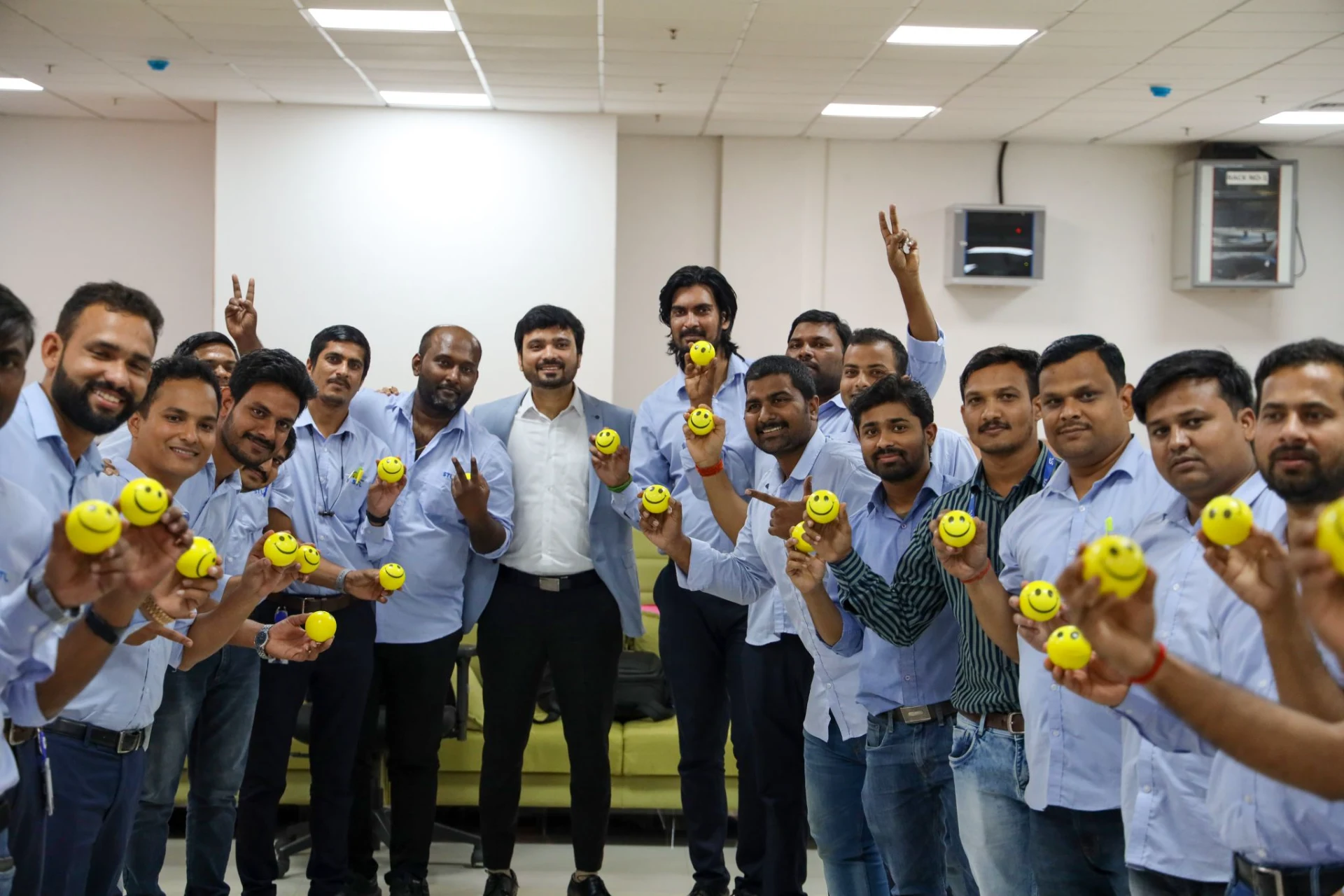
Arjun has worked in our office for eight years. He has no managerial title, no corner office, and no line item in an org chart that says "ethics owner." And yet, when something is wrong in that building, Arjun is very often the first person to say so — out loud, to whoever needs to hear it.
In short- Arjun, an office assistant with eight years of service, speaks up whenever he sees someone bypassing rules or misusing office resources — without being asked to and without anyone watching.
- He never used "I'm just an office boy, why should I care?" as an excuse. His integrity comes from character, not from designation.
- Senior colleagues now consult him on small but important ethical calls — proof that trustworthiness at any level shapes team morale and culture.
- Integrity and Trustworthiness is Trait #5 on the EQ (left) side of the Winning Kite — and it is the trait that makes every other trait believable.
- Trustworthiness is not inborn. It is a habit, built through small kept promises, owned mistakes, and doing right when nobody is checking.
Where this sits on your Winning Kite
In the Winning Kite (KITE Leadership Framework), Integrity and Trustworthiness is Trait #5, sitting on the EQ — the left — side of the kite. EQ is one of three sides holding up Success at the top, alongside RQ (Relationship Intelligence) and PQ (Productivity). Here is the part people miss: you can be brilliant on RQ and unstoppable on PQ, but if people don't trust you, none of it compounds. Trustworthiness is the trait that lets every other trait be believed.
A strict professor and a lesson I resented for years
I want to start somewhere other than the office, because that's where I first ran into this trait — and I got it completely wrong at the time.
I was a college student in Pune. Our Head of Department, Mr. Anandrao Deshmukh, was known across the campus for being extremely strict about rules and punctuality. Back then, I found him "too strict." I got detained once for low attendance, and I was furious about it. I blamed him for being harsh on us.
Years later — after I'd started my own business and moved into corporate training — something clicked. Mr. Deshmukh's discipline wasn't harshness. It was him teaching us responsibility and integrity the only way that actually works: consistently, without exceptions, regardless of who was in front of him. He didn't cut corners. If you broke a rule, even by a small margin, he held you accountable — no matter who you were. Over time I understood that this unbending sense of right and wrong was exactly what made him trustworthy.
Today, whenever I talk about ethics in business, I go back to those days in college. If Mr. Deshmukh had bent the rules for the "important students," none of us would have learned why trustworthiness matters. The very strictness I once resented is now a principle I admire and try to live by. That is the first thing to understand about this trait: it rarely feels good in the moment. It only makes sense in hindsight, once you've seen what it protects.
The power of being trustworthy — and what it opens up
In professional life, trustworthiness plays out in ways that are easy to underestimate until you watch them compound:
Earning respect. People notice, quickly and quietly, who they can rely on. When you consistently keep your word, clients, colleagues, and bosses respect you — and that respect paves the way for promotions, better projects, and leadership roles.
Opening doors. If senior management knows you won't compromise on ethics, they hand you bigger responsibilities. Trust is the real currency behind "who gets the sensitive project."
Building strong relationships. Customers return to people they trust. Teammates share problems and feedback more freely with someone who has never betrayed a confidence.
Enhancing your credibility in a crisis. In a tough sales quarter or a sudden project snag, trustworthy people stand out precisely because they don't panic or deceive — they find solutions without sacrificing their values.
But trustworthiness is easy to talk about when life is smooth. The real test arrives under pressure — a looming deadline, an angry client, a tough sales target. That's when the temptation whispers, "Let me just fudge this a little to fix it quickly." The moment you do, you start spending down trust you spent years building. The more stressful the situation, the more critical it becomes to follow the rules, keep your promises, and be transparent about mistakes. Standing by your ethics under difficulty is precisely what proves you can be counted on.
Arjun: integrity with no title attached
This is where Arjun enters the story — and why I chose him, of everyone in our organisation, to anchor this chapter.
Arjun is an office assistant. He's been with us for eight years. He doesn't manage anyone. He doesn't sit in strategy meetings. On paper, his job is the kind that rarely gets written about in leadership books — the day-to-day, unglamorous work of keeping an office running.
And yet his trustworthiness is extraordinary. Here is what that actually looks like, in practice, not in theory:
If he sees someone bypassing a rule, he doesn't hesitate to speak up — regardless of who that person is or how senior they are.
He ensures no one misuses office resources, quietly and consistently, without needing a supervisor standing over him to enforce it.
He has never once used his position as an excuse to look away. He doesn't think, "I'm just an office boy, why should I care?" Instead, every one of his actions says the opposite: integrity isn't tied to your position on the org chart. It's tied to your character.
Here's the detail that struck me most, and the one I keep returning to when I train managers: many colleagues far more senior than Arjun have taken note of his honesty and started consulting him on small but important details. Not because he has authority. Because he has earned trust — and trust, unlike authority, cannot be assigned. It has to be built, one honest moment at a time, and it can be built from any seat in the building.
Arjun's example carries a second, harder lesson: being trustworthy also means not ignoring wrongdoing when you see it. Yes, it feels awkward to speak up when a colleague is bending the rules or inflating an expense report. Staying silent feels like the easier, safer choice. But silence isn't neutral — it's a quiet vote that wrong behaviour is acceptable. When you bravely address the problem instead, you show your colleagues that fairness matters and that wrong behaviour won't be tolerated. That single act makes the whole work environment more honest, and less stressful, for everyone in it.
Employee A vs. Employee B
Over years of training corporates, I've found it useful to lay this out side by side, because trustworthiness often shows up as a pattern of small choices rather than one big decision:
| Employee A — Trustworthy | Employee B — Untrustworthy |
|---|---|
| Keeps promises, even when it's hard | Makes commitments but doesn't follow through |
| Admits mistakes immediately, without excuses | Hides mistakes, blames others, makes excuses |
| Confronts colleagues who break rules | Stays silent when colleagues act unethically |
| Transparent about challenges and limitations | Hides information to close deals or avoid conflict |
| Follows rules even under pressure | Bends rules under pressure or self-interest |
| Works with the same integrity whether supervised or not | Performs differently when supervised vs. unsupervised |
Over time, Employee A earns trust, respect, and bigger responsibilities. Employee B may succeed in the short term, but eventually loses credibility and opportunities. Arjun, without ever seeing this table, has spent eight years living entirely in the left-hand column.
Why don't more professionals get this right?
If integrity is this valuable, why do so many capable professionals still struggle with it? In my training rooms, I see the same five patterns again and again:
1. Short-term thinking. People prioritise an immediate win over long-term credibility. Cutting a corner feels easier in the moment, but it erodes trust with every repetition.
2. Pressure and fear. Under stress, people panic. They convince themselves that bending the rules will save them right now — and it usually creates a bigger problem later.
3. Lack of role models. If you've never seen integrity modelled consistently — by a boss, a professor, a parent — it's genuinely harder to practise it yourself. This is exactly what Mr. Deshmukh gave me, even though I didn't recognise it as a gift at the time.
4. Self-interest over team interest. When personal gain conflicts with organisational values, many people choose themselves and rationalise it as "everyone does it."
5. No consequences for dishonesty. In workplaces where unethical behaviour goes unpunished, integrity starts to feel optional. It never is, if you're building something meant to last.
The cost of losing integrity isn't abstract. I've watched senior executives lose major clients because they hid crucial information at the wrong moment. I've seen talented professionals get quietly sidelined from confidential projects because nobody could fully trust them with the details. I've coached managers whose teams fell apart because no one believed their promises any more. Rebuilding trust is always far harder than maintaining it — one moment of dishonesty can erase years of good work in a single conversation.
Howard Gardner's four mirror tests
Harvard psychologist Howard Gardner, whose work on cultivating an ethical mind offers useful supporting colour here, suggests four signposts for checking your own trustworthiness. I use a version of these with every leadership batch I train:
1. The Mission Test. What do you want to achieve through your work? Whatever your role — teacher, accountant, salesperson, office assistant — what's your purpose? A clear mission keeps you aligned with your values even under pressure.
2. The Role Models Test. Who do you follow? Positive role models show you the right attitude and behaviour to emulate; negative ones teach you what to avoid. Choose carefully — Arjun, in his own quiet way, has become that role model for people much senior to him.
3. The Personal Mirror Test. Look at yourself honestly. Are you working with complete transparency? Are you following the rules, or quietly cutting corners because no one's checking?
4. The Professional Mirror Test. How are you treating the trustworthy, loyal people around you? Are you recognising their contribution — and, just as important, are you willing to confront the people causing harm? If you manage others, this is your responsibility, not an optional extra.
These aren't one-time exercises. They're daily reflections. Ask them of yourself often enough, and you build a genuinely strong ethical foundation — the kind Arjun has clearly built, one small honest decision at a time.
How to build trustworthiness like Arjun's
Trustworthiness isn't a trait you either have or don't. It's a habit, built through consistent, unglamorous practice. Here's how I coach professionals to build it:
Start with small promises. Keep every commitment, however minor. If you say you'll send an email by 3 pm, send it by 3 pm. Small kept promises compound into a reputation.
Admit mistakes immediately. Don't wait, don't deflect, don't make excuses. Own the error and focus on fixing it — people respect honesty far more than they respect the illusion of perfection.
Speak up against wrongdoing. If you see something unethical, don't stay silent, the way Arjun never does. Address it directly and respectfully. Your courage sets the tone for everyone watching.
Do the right thing when no one is watching. This is where real integrity lives — Trivikrama Mahadeva, another figure from this same chapter of the book, performs last rites for the unclaimed with total dignity despite having no supervisor at all. Your character is tested in private, not in public.
Align your actions with your values. Write your core values down. Then audit your own behaviour against them regularly. If there's a gap, close it.
Build a circle of accountability. Surround yourself with people who hold you to a high standard, and ask trusted colleagues or mentors for honest feedback on your integrity — not just your performance.
Use the front-page test. Before a tough decision, ask: if this were on tomorrow's front page, would I be proud of it? If the answer is no, reconsider.
This links back to the broader emotional-awareness work I write about in the Winning Kite framework — self-realisation is the starting point for self-control, and self-control is what lets integrity survive real pressure instead of collapsing under it. I explore this connection further in the training sessions I run under our Signature Programs, and across the wider set of corporate training topics we deliver for teams across India.
The final reflection
Integrity is the foundation everything else is built on. Without it, your skills don't matter. Your intelligence doesn't matter. Your ambition doesn't matter — because none of it can be trusted to hold weight when it counts.
Arjun never set out to become a case study. He shows up, notices what's wrong, and says something — the same way, every single day, whether anyone important is in the room or not. That consistency, more than any title, is what has made colleagues far senior to him walk over and ask for his read on a situation. It's the clearest, quietest proof I know that Trait #5 on the EQ side of your Winning Kite has nothing to do with your designation, and everything to do with your character.
Bring These Ideas to Your Team
Avinash Chate turns the traits in Stars at India Inc. into live leadership & emotional-intelligence workshops. TEDx speaker · 11+ yrs training Army, BRO, RBI, BARC, JSW & 1000+ leaders.
✅ Thanks! Avinash team will reach out within 24 hours.'}).catch(function(e){f.outerHTML='Something went wrong. WhatsApp +91 8793630001
'});return false;">Select ServiceKeynote / Motivational SpeakingLeadership Development TrainingTeam Building WorkshopManager DevelopmentEmployee TrainingBook Avinash Now →Or WhatsApp directly: +91 87936 30001
Work with Avinash Chate
- Signature Corporate Training Programs →
- The Winning Kite (KITE Leadership Framework) →
- All Corporate Training Topics →
Avinash Chate TEDx Speaker · Founder, The Future Corporate · Author of Stars at India Inc. Avinash has trained the Indian Army, BRO, RBI, BARC, JSW Steel and 1000+ corporate leaders across India. His work focuses on leadership, emotional intelligence and behavioural training rooted in Indian values and modern business needs. |
Frequently Asked Questions
Who is Arjun in Avinash Chate's book Stars at India Inc.?
Arjun is an office assistant who has worked at Avinash Chate's organisation for eight years. He has no managerial title, but he is used in the book as the clearest example of Trait #5, Integrity and Trustworthiness, because he polices ethics in the office without being asked to and without anyone supervising him.
What did Arjun the office assistant actually do that made him trustworthy?
He speaks up when he sees someone bypassing rules, he ensures office resources are not misused, and he never uses his junior position as an excuse to stay silent. Senior colleagues have started consulting him on small but important ethical details because of this consistent behaviour.
Where does Integrity and Trustworthiness sit on the Winning Kite framework?
Integrity and Trustworthiness is Trait #5 on the EQ side (the left side) of the Winning Kite, also called the KITE Leadership Framework. EQ combines with RQ (Relationship Intelligence) and PQ (Productivity) to hold up Success, the top of the kite.
How can I build trustworthiness like Arjun's at my own workplace?
Start with small promises and keep every one of them, admit mistakes immediately without excuses, speak up against wrongdoing even when it feels awkward, and do the right thing exactly the same way whether or not anyone is watching. Trustworthiness is a habit built through consistent small acts, not a personality trait you either have or don't.
Related Articles by Avinash Chate
- Leadership: The Trait That Ties All 25 Together
- Mukesh Ambani: The Hunger That Never Saturates
- Dhoni's Helicopter Shot: The Thappad Move That Won India the World Cup
Avinash Chate services
Corporate Trainer in Pune · Top Corporate Trainers in Pune · Leadership Trainer in Pune · Top Leadership Trainers in Pune · Team Building Trainer in Pune · Top Team Building Trainers in Pune · Motivational Speaker in Pune · Top Motivational Speakers in Maharashtra · All service locations
← Back to all articles · Book Avinash Chate
By Avinash Chate — Maharashtra’s #1 Corporate Trainer & Motivational Speaker. .