Bangalore-to-Pune Plant Relocation: How a Transformational Leader Wins Change
When a plant moves from Bangalore to Pune, spreadsheets don't convince employees to relocate — leadership does. Avinash Chate unpacks the Change Catalyst trait and the ADKAR Model for leading people, not just logistics, through change.
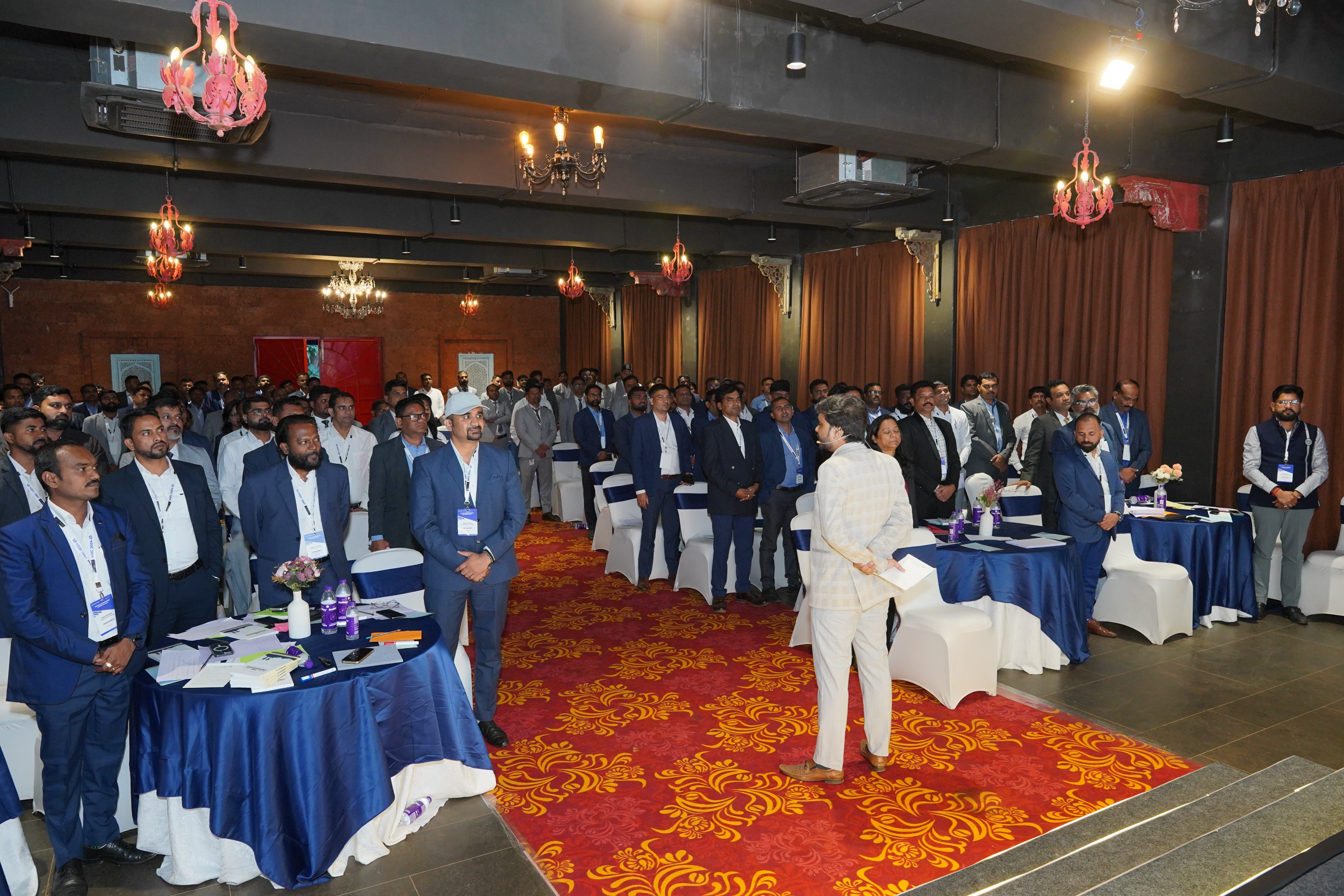
Picture this: a company that has run its manufacturing plant out of Bangalore for years suddenly announces it is shifting operations to Pune. The spreadsheets make sense — cost savings, better logistics, access to new markets. The people don't care about the spreadsheets. They care about their homes, their children's schools, their parents nearby. This is where a Change Catalyst either makes or breaks the transition.
In short- The Bangalore-to-Pune plant relocation is a workplace scenario I use to show why technical planning alone cannot carry a major organizational change.
- A Change Catalyst is Trait #24 on the EQ side of the Winning Kite — it builds on every one of the 23 traits before it.
- The leader who succeeds here is a transformational leader, not necessarily an innovator — their job is to inspire, not to invent.
- The ADKAR Model (Awareness, Desire, Knowledge, Ability, Reinforcement) gives any Change Catalyst a practical five-step sequence to follow.
- Real-world Change Catalysts — from Gary Kirsten with the Indian cricket team to Salil Parekh at Infosys — show this trait at work at scale.
Where this sits on your Winning Kite
Change Catalyst is Trait #24 on the EQ — left — side of your Winning Kite (KITE Leadership Framework). It sits near the very top of the EQ ladder because it is cumulative — it borrows self-awareness from the first trait, empathy and communication from the middle traits, and adaptability and resilience from the traits right before it. You cannot fake your way into being a Change Catalyst. You earn it by building the twenty-three traits that come before it, and then you apply all of them at once, under pressure, when people are afraid of losing something they value.
The scenario: a plant that has to move
Let's set the scene the way I do in workshops. A large company has operated a manufacturing plant in Bangalore for several years. One day, the management team announces the plant is shifting to Pune — maybe it's cost savings, maybe better logistics, maybe access to new markets. On paper, the decision is sound. On the shop floor and in the cabins, it lands very differently.
Employees who have built their lives around Bangalore — a rented flat close to work, a child settled into a school, a spouse with their own job in the city, ageing parents living ten minutes away — suddenly have to weigh uprooting all of it. Some will simply refuse to move. Others will show up to work distracted, resentful, or half-committed. Productivity dips before the first machine is even packed. This is the upheaval that any relocation triggers, and it is exactly the moment a Change Catalyst is needed most.
Why this needs a transformational leader, not a project manager
A project manager can build the Gantt chart for the physical move — trucks, timelines, vendor contracts, new lease agreements. That part is mechanical. What a project manager's checklist cannot do is make three hundred employees want to go to Pune.
That's a different kind of leadership altogether — what I call, following the classic literature on the subject, transformational leadership. A transformational leader doesn't order people to relocate and expect compliance. Instead, they appeal to people's emotions and sense of meaning. They paint a picture of what the new chapter in Pune actually looks like for each employee — a better commute for some, a bigger campus, new growth opportunities, a chance to be part of something being built fresh rather than something legacy and cramped. When people feel emotionally invested in a vision rather than merely instructed to comply, they put in more effort and perform better. This is a theme Daniel Goleman and others in the emotional intelligence literature return to again and again as supporting colour to what I see constantly on the ground in Indian companies — but the practical playbook I use with clients is the one I'll walk you through below.
Here's the detail that surprises people in my workshops: a transformational leader does not have to be an innovator. They don't need to invent a new product or a clever new process. Their entire value is in the inspiring and motivating — getting a team to walk toward a shared goal even when the ground under them (literally, in this case) is shifting.
What the Change Catalyst actually does in the Bangalore-to-Pune scenario
In this specific relocation, the change catalyst's job breaks down into a few concrete moves:
- Recognize the need for change honestly. They don't pretend the move is painless. They acknowledge upfront that this is disruptive for real families.
- Remove the obstacles, not just announce the decision. That means relocation packages, help finding schools in Pune, transitional housing support, and flexible timelines for employees with genuine constraints.
- Give employees a voice. Rather than a one-way memo, the change catalyst creates forums where employees can ask hard questions and where leadership actually answers them — building the culture of trust and transparency that turns resistance into buy-in.
- Show the personal upside, not just the company upside. Career growth in the new Pune facility, better infrastructure, a chance to be an early leader in the new site — these are the things that move an individual's decision, not the company's cost savings.
- Stay visibly steady through the wobble. Change catalysts need real resilience — the strength to keep going, keep communicating, and keep showing up even when the first few weeks in Pune are messy.
None of this happens by accident. It happens because the leader running this relocation has spent years building self-awareness, empathy, communication skill, and adaptability — the very traits that sit earlier on the Winning Kite's EQ side. Change Catalyst is where all of that prior work gets tested at once.
The ADKAR Model: a practical sequence for any Change Catalyst
Wanting to be a good change catalyst is one thing. Having a structure to actually execute it is another. I lean on the ADKAR Model, developed by change-management expert Jeff Hiatt, because it turns "manage the change well" into five concrete, sequential steps. It works for a plant relocation exactly as well as it works for something as small as rolling out new project management software on a team.
1. Awareness — of the need for change
Before anyone can support a change, they need to understand why it's happening. In a software rollout, this looks like a team leader laying out the data on why the new tool improves efficiency and collaboration. In the Bangalore-to-Pune case, it means leadership being upfront and specific about the cost, logistics, and market reasons behind the move — not vague corporate language, but real numbers and real trade-offs employees can understand.
2. Desire — to support and participate in the change
Awareness alone doesn't create willingness. The change catalyst now has to address individual concerns directly and highlight what's in it for each person — easier tasks, time saved, career growth, a better facility. In the relocation scenario, this is where relocation support, spousal job assistance, and school-transfer help turn a forced move into a chosen one.
3. Knowledge — of how to change
Now people need the practical know-how. For the software rollout, that's training sessions and identifying "change champions" who help their colleagues. For the plant move, that's clear logistics support, city orientation, housing assistance, and named points of contact in Pune who can answer day-to-day questions before anyone even arrives.
4. Ability — to implement the change
Knowing what to do and being able to actually do it under real conditions are different things. The change catalyst monitors progress, identifies where people are struggling, and offers one-on-one coaching or troubleshooting — whether that's help using new software or help settling a family into a new city.
5. Reinforcement — to sustain the change
The final step is what separates a change that sticks from one that quietly reverses. The change catalyst recognizes and celebrates early wins, addresses lingering issues honestly, and folds the new way of working — or the new location — into the team's everyday routine. They keep gathering feedback so small frustrations don't calcify into regret.
Run through these five steps and a chaotic, resented relocation becomes a managed transition that people actually buy into.
Real Change Catalysts, at very different scales
I use the Bangalore-to-Pune scenario as a teaching tool because it's realistic and relatable, but the same trait plays out at the highest levels of Indian business and sport.
Take Gary Kirsten, who took over as coach of the Indian cricket team after their humiliating first-round exit from the 2007 World Cup. Kirsten had no magic new technique to teach players like Sachin Tendulkar, Virender Sehwag, Gautam Gambhir, Yuvraj Singh, M.S. Dhoni, Virat Kohli, Zaheer Khan, and Harbhajan Singh — most of them were already among the best in the world. What Kirsten did was build trust and credibility with each player individually, understand each one's strengths and weaknesses, and tailor his approach accordingly. Four years later, in 2011, India won the World Cup for the first time in 28 years — Dhoni hitting the winning six, Yuvraj Singh named Player of the Tournament. Kirsten wasn't an innovator of technique. He was a transformational leader who changed how a talented group of individuals worked as one team.
At Infosys, when the company faced a rapidly changing market and intensifying global competition, the board brought in Salil Parekh as CEO — a catalyst for change who helped shift the business model, restore growth, and reposition the company's market standing. And at Tata Group, Ratan Tata demonstrated this same competence over a much longer arc — persuading, staying committed, taking initiative, and staying optimistic as he diversified and globalized the group into one of India's most respected conglomerates.
I've also met change catalysts up close, away from the headlines. At the Islampur Business Forum, I spent time with Mr. Pratik Jayant Patil — son of Maharashtra MLA Jayant Patil — who chose entrepreneurship and philanthropy over the more conventional path of political power that his background would have made easy. He founded the Islampur Business Forum specifically to give local entrepreneurs a platform to collaborate and grow together. What struck me most was how humble and down-to-earth he was, constantly learning, constantly open to new ideas that could bring change. That combination — genuine conviction plus the ability to bring others along — is the real signature of a change catalyst, whether the "change" is a business forum in a small Maharashtra town or a plant relocation across two major Indian cities.
How to build this trait in your own team
If you are the leader facing your own version of the Bangalore-to-Pune moment — a restructuring, a merger, a new system, a relocation — here is how to start acting like a change catalyst rather than just announcing a decision:
- Name the change honestly and explain the "why" with real data, not corporate euphemism.
- Talk to people one-on-one before you talk to the whole room. Their individual fears are rarely what you'd guess from a distance.
- Build a support structure — training, resources, relocation help, whatever the change demands — before you expect adoption.
- Identify a few respected people on the team who believe in the change early, and let them help carry it — Hiatt's "change champions" idea works in Indian offices exactly as well as anywhere else.
- Celebrate the early wins loudly. People need to see the new way is actually working, not just hear that it will.
None of this is complicated in concept. It is demanding in practice because it asks you to hold empathy and decisiveness at the same time — comforting people while still moving the plant, the software, or the strategy forward on schedule. That's precisely why Change Catalyst sits so late on the EQ side of the Winning Kite: it's the trait where everything else you've built finally gets used together.
If you're working on developing this capability in yourself or your leadership team, explore our Signature Programs or browse the full list of corporate training topics we run for organizations navigating exactly this kind of change.
Bring These Ideas to Your Team
Avinash Chate turns the traits in Stars at India Inc. into live leadership & emotional-intelligence workshops. TEDx speaker · 11+ yrs training Army, BRO, RBI, BARC, JSW & 1000+ leaders.
✅ Thanks! Avinash team will reach out within 24 hours.'}).catch(function(e){f.outerHTML='Something went wrong. WhatsApp +91 8793630001
'});return false;">Select ServiceKeynote / Motivational SpeakingLeadership Development TrainingTeam Building WorkshopManager DevelopmentEmployee TrainingBook Avinash Now →Or WhatsApp directly: +91 87936 30001
Work with Avinash Chate
- Signature Corporate Training Programs →
- The Winning Kite (KITE Leadership Framework) →
- All Corporate Training Topics →
Avinash Chate TEDx Speaker · Founder, The Future Corporate · Author of Stars at India Inc. Avinash has trained the Indian Army, BRO, RBI, BARC, JSW Steel and 1000+ corporate leaders across India. His work focuses on leadership, emotional intelligence and behavioural training rooted in Indian values and modern business needs. |
Frequently Asked Questions
What is a Change Catalyst in leadership?
A Change Catalyst is a leader who recognizes when the status quo is no longer working, removes the obstacles blocking progress, and inspires others to move toward a new goal. It is Trait #24 on the EQ side of Avinash Chate's Winning Kite framework and builds on all 23 traits before it.
What is the Bangalore-to-Pune plant relocation example about?
It is a scenario from Avinash Chate's book Stars at India Inc. where a company shifts its manufacturing plant from Bangalore to Pune for cost, logistics, or market reasons. The example shows why a transformational leader, not just a project planner, is needed to help employees accept and embrace the move.
Does a transformational leader need to be an innovator?
No. A transformational leader does not have to invent new products or ideas. Their job is to inspire and motivate their team toward a shared goal, especially during uncertainty, by using emotional intelligence rather than technical innovation alone.
How does the ADKAR Model help a Change Catalyst?
The ADKAR Model, developed by Jeff Hiatt, breaks change into five steps: Awareness, Desire, Knowledge, Ability, and Reinforcement. A Change Catalyst uses this sequence to move people from resistance to genuine ownership of the change, whether it is a plant relocation or new software.
Related Articles by Avinash Chate
- Jamwant and Hanuman: Why You Need Someone to Remind You Who You Are
- Kiran Gems – Patel/Lakhani change-catalyst leaders
- Virat Kohli – Channeling His Temper
Avinash Chate services
Corporate Trainer in Bengaluru · Top Corporate Trainers in India · Leadership Trainer in Bengaluru · Top Leadership Trainers in India · Team Building Trainer in Bengaluru · Top Team Building Trainers in India · Motivational Speaker in Bengaluru · Top Motivational Speakers in India · All service locations
← Back to all articles · Book Avinash Chate
By Avinash Chate — Maharashtra’s #1 Corporate Trainer & Motivational Speaker. .