BB Thombare: The Chairman Who Never Stopped Being Hungry
BB Thombare built Natural Milk into one of Maharashtra's top dairy suppliers over two decades — yet at 22 years in, he told Avinash Chate his real mission was still ahead of him. This is the story of Achievement Drive: the hunger that doesn't stop at success.
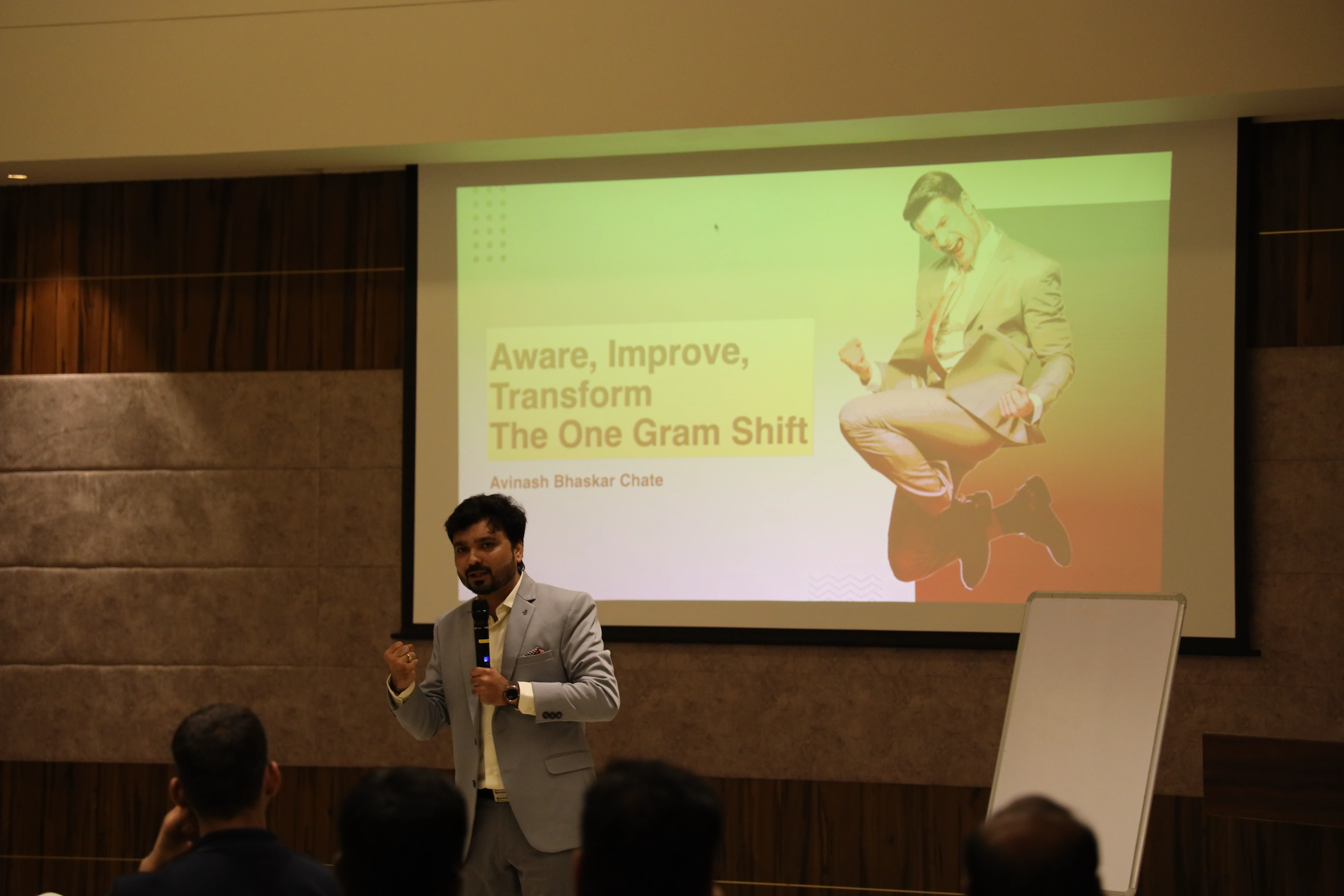
In 2019, I sat across from BB Thombare, Chairman of Natural Sugar, Natural Milk & Milk Products, and Ellora Seeds, and asked him what was next. He had already built one of Maharashtra's top milk suppliers over two decades. His answer had no trace of satisfaction in it — only a bigger target. That conversation became one of the clearest examples I've used in twenty years of corporate training to explain a trait most professionals quietly lose the moment they succeed: Achievement Drive.
In short- BB Thombare built Natural Milk into a top Maharashtra dairy brand — and at 22 years in, told Avinash his real mission (No.1 in India by 2030) was still ahead.
- Achievement Drive is the hunger to chase excellence and set higher goals even after you've already won — not competition with others, but with your own yesterday.
- Most professionals hit "saturation" — a comfortable plateau after one big goal — and the fire quietly goes out. Thombare's HR policy, "doing better than yesterday," is built to prevent exactly that.
- Virat Kohli hitting the gym after a 167-run innings and Ashish Nehra's injury comeback in the 2011 World Cup final over are the same trait, different arenas.
- You can diagnose and rebuild Achievement Drive using five markers — risk-taking, goal-setting, supporting others, hunger for more, and information-seeking — plus the psychology of flow.
Where this sits on your Winning Kite
Achievement Drive is Trait #12 in the Winning Kite (KITE Leadership Framework), and it lives under the Self-Motivation cluster on the EQ — left — side of your kite. EQ is one of three sides (EQ, RQ, PQ) that lift the kite toward Success at the top. A leader can be brilliant with people (RQ) and disciplined with time (PQ), but without the internal hunger that Achievement Drive supplies, growth stalls at "good enough." You rise on balance, not on any one side alone — and Thombare's story shows what happens when this particular string is pulled taut for twenty-two straight years.
The Accountant from Ambajogai
BB Thombare's story doesn't start in a boardroom. It starts as an accountant at a sugar factory in Ambajogai, doing the unglamorous, number-crunching work that most people forget the moment they move up. For twenty-five years, he moved through the industry, gaining experience at Godavari, Jai Jawan Jai Kisan, Manjara, and Vaijanath sugar factories — four different operations, four different sets of lessons, four different chances to plateau and stop learning.
He didn't stop. In 1998, he took the leap and started his own private industry — Naturals Sugar & Allied Industries. That was the beginning of what would become Natural Sugar, Natural Milk & Milk Products, and Ellora Seeds — a business empire built not on inherited wealth or a lucky break, but on two and a half decades of compounding effort.
By the time I met him in 2019, Natural Milk was already one of Maharashtra's top milk suppliers. Most leaders, at that point — twenty-two years into building something — would allow themselves a lap of honour. Thombare told me instead: "Natural Milk is already one of Maharashtra's top milk suppliers. But our mission is to make it the number one in Maharashtra and India by 2030 — and expand it to as many districts as possible across the country."
Twenty-two years in, and he was still chasing a bigger goal. Still hungry.
What Achievement Drive Actually Looks Like Day to Day
It's easy to admire a headline like "top milk supplier in Maharashtra." It's more instructive to look at how Thombare runs the company day to day, because that's where Achievement Drive actually lives.
His leadership is defined by his willingness to take risks and challenge traditional methods. While his competitors in the dairy and sugar industry stuck to tried-and-tested approaches, Thombare aggressively pursued innovative ideas that set his company apart — in an industry that, frankly, doesn't reward experimentation easily. Under his guidance, Natural Sugar implemented HR policies that reward excellence and let go of non-performers, a hard, unpopular discipline that most founders avoid because it creates short-term friction. But it's exactly in line with the company's core value, one line that tells you everything about how Thombare thinks: "Doing better than yesterday."
Not "doing better than the competitor." Not "doing better than last year's target." Better than yesterday. That's Achievement Drive distilled into a corporate value — a daily, almost impossible-to-escape standard, because yesterday is always right behind you.
What Is Achievement Drive?
Achievement Drive is the relentless hunger to chase excellence, to set challenging goals, and to constantly improve yourself — even when you've already achieved success. It is not about competition with others. It's about pushing yourself to the next level, against your own last best effort.
Most of us start our careers with big dreams — the first job, the first house, the first car, that one big promotion. We chase it hard. But what happens after we get it?
For many professionals, that's exactly where the story ends. They reach what I call a saturation point. They become comfortable. They settle. The fire that once burned inside them slowly dies down. In Hindi we have a saying for it: "Jo haath lag gaya, wo kya lage?" — once you've got it in hand, what's the thrill left in it? People start telling themselves, "Yaar, bahut ho gaya. Ab aish karne ka time hai. Bas, ab ho gaya." — enough has been achieved, now it's time to enjoy, that's it.
Stars at the workplace are wired differently. They never stop. They never settle. No matter how much they've achieved, they still carry that hunger — that drive — to do more, learn more, be more. In Hindi we call this भूख (bhookh) — hunger. Not physical hunger. Emotional hunger. A hunger for mastery, a hunger for excellence. It's a kind of shappat — an oath you silently take with yourself: "Nahi, mujhe aur behtar karna hai. Mujhe aur next level par jana hai." — No, I need to do better. I need to go to the next level.
Self-Motivation, in the Winning Kite framework, is the broader cluster where you learn to pump yourself up without waiting for external validation. And when you look at leaders like BB Thombare, it's this one specific quality — Achievement Drive — that separates them from otherwise capable business leaders who quietly plateaued a decade ago.
Two Cricket Stories That Prove the Same Point
I often pair Thombare's story with two examples from Indian cricket, because Achievement Drive shows up identically whether you're running a dairy company or chasing a World Cup.
Virat Kohli's Gym Session After 167 Runs
Saurav Ganguly once shared a story in an interview. His trainer — himself a former cricketer — saw Virat Kohli walking into the gym one evening in Vizag, hours after Kohli had just finished batting for six to seven hours to score 167 runs. The trainer was genuinely shocked and asked him directly: "Virat, you just batted for six to seven hours. And now you're going to the gym?"
Kohli's answer was simple and, to me, the whole chapter in one sentence: "I want to convert scores like 167 into double hundreds and triple hundreds. And that can only happen if I work on my fitness — if I can train even when I'm exhausted, if I can take my body to the next level."
That's Achievement Drive. Even after a brilliant century-plus innings, Kohli wasn't satisfied. He'd noticed something important back in 2012 — that the level of world cricket had shifted, that Australian bowlers were dominating teams purely on fitness, and that fitness had become the one thing separating good players from great ones. Had he stuck with old methods, he wouldn't have survived at the top. Today, count the records he holds, the years he's spent ranked number one, the matches he's won for India. What more is there to achieve? And yet he doesn't operate from saturation — he operates from Achievement Drive.
Ashish Nehra's Comeback After Injury
Ashish Nehra is another example I return to often. A talented left-arm fast bowler who played for India for over eighteen years, Nehra faced countless setbacks across his career — injuries, competition from younger players, comebacks that would have broken most people's spirit permanently.
In the 2003 World Cup, facing England, Nehra was tasked with defending a modest total of 250. He took six crucial wickets and helped India reach the final. Then came the 2011 World Cup — Nehra had been battling injuries and wasn't initially in the squad. But his passion and dedication pushed him to work his way back in. In the final against Sri Lanka, he bowled a critical over in the dying moments of the match, helping India win the World Cup after a 28-year wait.
Nehra's story shows the other face of Achievement Drive: it's not only about pushing further after success, it's also what pulls you back into the fight after a setback, when everyone else has quietly given up on you.
Raj and Priya: Who Has It, Who Doesn't
To make this concrete for a corporate audience, let me contrast two IT professionals I've used in training rooms — Raj and Priya.
Raj learned C++ and Java five years ago and became comfortable with them. When his manager suggested he pick up Python or AI-related tools, Raj's response was, "I'm already doing well with what I know. Why should I change?" Result: his career stagnated. Younger colleagues who learned Python and AI overtook him in promotions and salary hikes. Raj now complains that the company doesn't value experience anymore.
Priya also started with C++ and Java. But when Python and AI became important in her field, she didn't resist — she took online courses, practiced after work hours, and became proficient within a year. She's now working on cutting-edge AI projects and leading a team.
The difference between them isn't talent. It's Achievement Drive. Raj settled into a comfort zone the moment his first skill set felt "enough." Priya never let a skill set become a finish line.
Why Achievement Drive Fades — and Why Thombare's Never Did
Three forces quietly kill Achievement Drive in most careers, and understanding them is what makes Thombare's twenty-two-year streak so unusual.
Saturation. Most professionals have one goal in mind — the first job, a house, a car, a target salary. Once achieved, they relax. Think of Sanjay Manjrekar, the cricketer — after playing at the highest level for a few years, his desire to practice diminished and he moved toward music and singing. That's not a criticism, it's just what saturation does: once the drive disappears, a comeback becomes nearly impossible, because it requires starting from scratch again. The same pattern plays out in business. Entrepreneurs start with fire in the belly, stay hungry until a certain point, then saturate, then turn defensive: "Jitna hai, use hi bacha lo. Mujhe ab isse zyada nahi karna hai" — just protect what I have, I don't want to do more than this. That's precisely where decline begins. Thombare's "doing better than yesterday" HR value exists specifically to interrupt this pattern inside his own company.
Fear of uncertainty. Achievement Drive requires embracing challenge, and challenge brings uncertainty. When companies introduce new ERP systems, new software, automation — most employees resist, because change is effortful and uncomfortable. Thombare did the opposite: while competitors stuck to tried-and-tested dairy-industry methods, he aggressively pursued innovation, accepting the uncertainty that came with it.
Not tracking progress. What gets measured gets improved. Professionals low on Achievement Drive don't set goals or track performance — they drift, reacting to whatever comes their way. Stars are obsessed with feedback; they constantly ask, "How can I do better than yesterday?" — which, not coincidentally, is the literal wording of Thombare's company value.
More Indian Examples of the Same Fire
Thombare isn't an isolated case. I see the same signature in a friend of mine, Mr. Nitin, founder of a training company in Pune. When I first met him, I assumed he was simply lucky — settled business, good team, everything running smoothly. Over years of knowing him better, I realised it wasn't luck. Even nine years into a successful business, Nitin still approaches digital marketing, sales, and new software with the same aggression he had on day one. He's mastered design software, car design, IT, automation, animation — and whenever something new launches, he has the drive to learn it, master it, and implement it immediately.
Mr. Karaiadiselvan, Managing Director of CADD Centre Training Services Pvt Ltd, is another. Starting as a trainee in 1992, he rose over 28 years to head what is now the largest training institution in engineering design software in Asia. Even managing 500+ entrepreneurs every year, his drive never stops — he's a voracious reader, constantly seeks feedback, and lives by the line, "Feedback is the breakfast of champions." When I hear the words Achievement Drive, he's often the first person who comes to mind.
Sharad Pawar has been Chief Minister and Union Minister — he has achieved nearly everything possible in Indian politics. Yet his drive to achieve more, gain more, push further hasn't diminished with age or position. And Mukesh Ambani, despite coming from wealth that could have made ambition optional, has continuously pushed Reliance into new territory — launching Reliance Jio, which disrupted India's entire telecom industry, and building Mumbai Indians into a multiple-time IPL champion. His hunger, like Thombare's, appears limitless.
The Five Markers of Achievement Drive
If you want to diagnose Achievement Drive in yourself or someone on your team, look for these five behaviours:
| Marker | Has it | Lacks it |
|---|---|---|
| Calculated risk | Constantly challenges self, pushes past comfort zone | Avoids risk, settles for what's already known |
| Goal-setting & innovation | Sets ambitious goals, constantly improves | Resists change, sticks to safe and familiar |
| Supporting others | Lifts colleagues and partners, not just self | Purely self-focused, transactional |
| Hunger for more | Never satisfied, always seeking the next level | Content once an early goal is reached |
| Information-seeking | Actively pursues information to reduce uncertainty | Settles for whatever information comes easily |
Research across hundreds of organisations shows that this need to achieve — this hunger for more, the fourth marker — is what most powerfully separates star performers from average ones.
Finding Your Flow: How to Actually Build This
Achievement Drive isn't just willpower. There's a psychological mechanism behind it, and understanding it makes the trait far easier to build deliberately.
Research tracking decades of data shows that once you cross a basic income threshold, more money doesn't meaningfully increase happiness. So where does real happiness — and real drive — come from? It comes from being in a state of flow, a concept developed by psychologist Mihaly Csikszentmihalyi, author of Finding Flow. As a light nod to Csikszentmihalyi's research alongside Avinash's own framework, flow is best understood on two axes — challenge and skill. If a task is too challenging, you feel anxiety. If it's too easy, you feel bored. Flow exists in the narrow channel where challenge and skill are balanced.
Think of riding a bike through Ladakh — cruising through cold valleys, controlling the bike effortlessly, complete awareness on the cold breeze on your face, mind fully calm. Those moments stay with you forever. That's flow: a mental state where nothing else matters, where creativity, concentration, and efficiency become effortless. Surgeons feel it mid-operation, musicians while composing, batsmen while batting, businessmen while closing deals. Inside flow, the brain releases dopamine, endorphins, anandamide, and serotonin — the same reward chemicals that drive both motivation and genuine happiness.
Here's how to use it practically: start with a task that challenges you moderately. As your skill improves, increase the difficulty. Keep pushing yourself back into the flow channel every time you master a level. Find your goal, then make it a little more challenging every day. That's precisely what Thombare did across four sugar factories and twenty-two years before setting a fresh 2030 target — he kept resetting the goal just ahead of his growing skill, and stayed in flow instead of sliding into saturation.
This mirrors what Daniel Goleman calls self-motivation within emotional intelligence — the ability to marshal your own drive without waiting for outside pressure — though Avinash's Achievement Drive trait sharpens it into something you can diagnose and coach directly in an Indian corporate context.
Bringing This to Your Team
If you're leading a team, Achievement Drive is not a trait you can mandate by memo. You build it by changing what gets rewarded, what gets measured, and what stories get told in the room. Thombare didn't just personally stay hungry — he wrote "doing better than yesterday" into his company's HR policy, rewarding excellence and being honest about non-performance. That's how one leader's Achievement Drive becomes an organisation's culture.
Explore the full framework at the Winning Kite (KITE Leadership Framework), browse related corporate training topics, or see how Achievement Drive fits alongside other EQ traits in our Signature Programs.
Bring These Ideas to Your Team
Avinash Chate turns the traits in Stars at India Inc. into live leadership & emotional-intelligence workshops. TEDx speaker · 11+ yrs training Army, BRO, RBI, BARC, JSW & 1000+ leaders.
✅ Thanks! Avinash team will reach out within 24 hours.'}).catch(function(e){f.outerHTML='Something went wrong. WhatsApp +91 8793630001
'});return false;">Select ServiceKeynote / Motivational SpeakingLeadership Development TrainingTeam Building WorkshopManager DevelopmentEmployee TrainingBook Avinash Now →Or WhatsApp directly: +91 87936 30001
Work with Avinash Chate
- Signature Corporate Training Programs →
- The Winning Kite (KITE Leadership Framework) →
- All Corporate Training Topics →
Avinash Chate TEDx Speaker · Founder, The Future Corporate · Author of Stars at India Inc. Avinash has trained the Indian Army, BRO, RBI, BARC, JSW Steel and 1000+ corporate leaders across India. His work focuses on leadership, emotional intelligence and behavioural training rooted in Indian values and modern business needs. |
Frequently Asked Questions
Who is BB Thombare?
BB Thombare is the Chairman of Natural Sugar, Natural Milk & Milk Products, and Ellora Seeds. He started as an accountant at a sugar factory in Ambajogai and, over 25 years of learning across four sugar factories, built his own private industry, Naturals Sugar & Allied Industries, in 1998, later growing Natural Milk into one of Maharashtra's top milk suppliers.
What is Achievement Drive in the Winning Kite framework?
Achievement Drive is Trait #12 in Avinash Chate's Winning Kite (KITE Leadership Framework), sitting under Self-Motivation on the EQ side. It is the relentless hunger to chase excellence, set challenging goals, and keep improving even after you've already achieved success.
What is saturation and why does it stop career growth?
Saturation is the point where a professional achieves an early goal — a job, a house, a promotion — and becomes comfortable, letting the original drive fade. People with low Achievement Drive settle here; people with high Achievement Drive, like BB Thombare, keep resetting the goal and never let success turn into a stopping point.
How can I build Achievement Drive in myself or my team?
Find your flow by matching challenge to skill and raising both gradually, track your progress with specific measurable goals, treat feedback as essential information rather than criticism, and deliberately choose calculated risk over comfort. Avinash Chate builds these behaviours into his leadership and EQ workshops for corporate teams.
Related Articles by Avinash Chate
- Mastering Office Problems: Your Key to Career Growth in India 2026
- Break the Rubber Band: SMART PURE CLEAR Goals for Career Freedom India 2026
- Seattle Fish Market Mindset: John Yokoyama's Near-Bankruptcy Win
Avinash Chate services
Corporate Trainer in Maharashtra · Top Corporate Trainers in Maharashtra · Leadership Trainer in Maharashtra · Top Leadership Trainers in Maharashtra · Team Building Trainer in Maharashtra · Top Team Building Trainers in Maharashtra · Motivational Speaker in Maharashtra · Top Motivational Speakers in Maharashtra · All service locations
← Back to all articles · Book Avinash Chate
By Avinash Chate — Maharashtra’s #1 Corporate Trainer & Motivational Speaker. .