From Print Shop Boy to America's First Genius: Benjamin Franklin's Apprenticeship Blueprint
Benjamin Franklin dropped out of school at 10, taught himself everything, and retired wealthy at 42. Here is the apprenticeship blueprint every Indian student and professional needs today.
What if I told you that one of the greatest geniuses in human history dropped out of school at the age of ten — not because he wanted to, but because his family simply could not afford to keep him there? That man went on to become a scientist, a diplomat, an inventor, a philosopher, a best-selling author, and the founding father of a nation. He retired financially independent at forty-two. His name was Benjamin Franklin.
I first encountered Franklin's story not in a classroom but in the pages I devoured as a young man hungry to understand what separates people who merely survive from those who truly thrive. When I sat down to write The Winning Edge, The Champion Mindset, I knew Chapter 14 had to belong to him — because his life is the most complete blueprint for self-made success I have ever studied. In my workshops across Pune, Mumbai and Maharashtra, I return to this blueprint again and again, especially when I am speaking to students and young professionals who believe a degree or a privileged background is the only path to greatness.
It is not. Benjamin Franklin proved that two and a half centuries ago. And in 2026, his apprenticeship model is more relevant in India than ever before.
The Boy Who Could Not Afford School
Benjamin Franklin was born on January 17, 1706, in Boston, Massachusetts. His father, Josiah Franklin, was a candle and soap maker — a humble tradesman with a large family and limited means. When young Benjamin showed exceptional promise at school, Josiah had grand dreams. But the money ran out after just two years of formal education. At the age of ten, Benjamin Franklin left school permanently.
Let that land for a moment. No school certificate. No board exam. No graduation. At ten years old, the future that society had mapped out for him was already closed.
But here is what separates a champion mindset from a victim mindset: Benjamin Franklin never accepted society's map as his territory. At twelve, he became an apprentice in his older brother James's printing shop. Most boys in that position would have learned just enough to do the job and collect their keep. Benjamin did something different. He used the printing shop as a university.
The Printing Shop as a Classroom
Every book that came through those presses, Franklin read. He borrowed volumes from booksellers, stayed up through the night to finish them, and returned them before the shops opened in the morning so no one would know he had taken them. He studied writing by copying essays from The Spectator, then putting them aside and trying to recreate them from memory — comparing his version to the original and correcting his own gaps. He taught himself mathematics, navigation, grammar, logic and rhetoric. He did not wait for a teacher. He became his own teacher.
"An investment in knowledge pays the best interest." — Benjamin Franklin
I quote this line in my keynotes because it answers a question I hear constantly from young Indians: "Sir, I cannot afford expensive courses or coaching. What should I do?" Franklin's answer, lived before it was spoken, is simple: use whatever access you have, with everything you have got, and never stop learning.
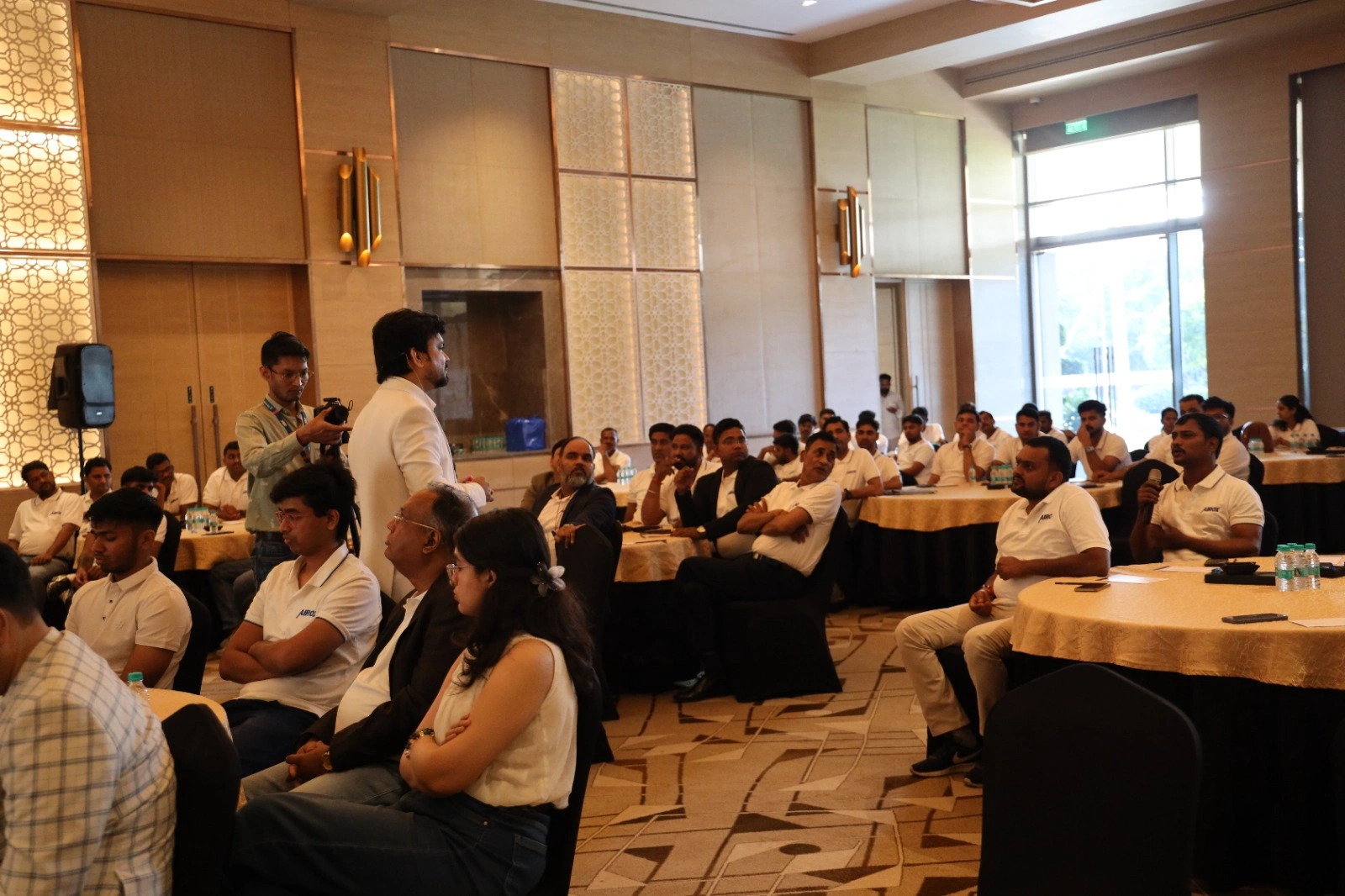
Avinash Chate sharing the Benjamin Franklin blueprint with professionals at a corporate training session in Pune.From Apprentice to Independent: The Self-Made Arc
By his early twenties, Franklin had left his brother's shop — not without conflict — and made his way to Philadelphia. He worked in print shops, travelled to London, and returned with a plan. By his mid-twenties he owned and operated his own printing business. He published the Pennsylvania Gazette, one of the most successful newspapers in colonial America. He created Poor Richard's Almanack, an annual publication packed with practical wisdom and witty proverbs that became a bestseller for twenty-five consecutive years.
At forty-two, Benjamin Franklin retired from active business. He was wealthy, respected, and completely self-made — with no formal education, no family connections to power, and no inherited fortune.
What He Did After Retirement Is Even More Remarkable
Most people dream of retirement as an ending. For Franklin, it was a beginning. After forty-two, he:
- Invented the lightning rod, protecting buildings across the world from fire and destruction.
- Invented bifocal glasses and the Franklin stove, improving daily life for millions.
- Proved through his famous kite experiment that lightning is electrical in nature.
- Served as America's diplomat to France, negotiating the alliance that ultimately won American independence.
- Signed all four of the founding documents of the United States of America.
- Became a philosopher, essayist and institution-builder — founding the first public library in America, among other contributions.
He called himself "the first American" — meaning the first person to embody the ideal of the self-made individual, the person who rises not through birth but through effort, learning, character and persistence.
"Tell me and I forget. Teach me and I remember. Involve me and I learn." — Benjamin Franklin
This is exactly what the apprenticeship model does. It involves you. It makes you responsible for your own growth. And that is what I teach in every corporate training session I run for organisations across Maharashtra.
The 13 Virtues: Franklin's Personal Operating System
In my book The Winning Edge, The Champion Mindset, I use Franklin's system for character development as the implementation model for the entire book. It is one of the most practical self-improvement frameworks ever devised — and it was invented by a man with no formal education, tested only against his own real-world behaviour.
Franklin identified thirteen virtues he believed were essential to a successful and ethical life:
- Temperance
- Silence
- Order
- Resolution
- Frugality
- Industry
- Sincerity
- Justice
- Moderation
- Cleanliness
- Tranquillity
- Chastity
- Humility
One Virtue Per Week, Four Cycles Per Year
Here is the genius of his system: he did not try to master all thirteen virtues simultaneously. He focused on one virtue per week, tracking his performance against it every single day in a small notebook. After thirteen weeks — one full cycle — he started again from the top. Four full cycles per year. Year after year.
This is what I call "deliberate character development." It is not inspiration. It is not motivation. It is a repeatable, measurable, habit-based system for becoming better. In my workshops on the Champion Mindset, I walk managers and young professionals through exactly this kind of weekly self-audit — because the leaders and salespeople who grow fastest are never the most talented; they are the most intentional about their own development.
Why This System Works for Indian Professionals in 2026
We live in a culture of instant results. Rapid promotions. Viral success. The get-rich-quick seminar. Franklin's system is the antidote. It asks: what kind of person do you need to become to deserve the result you want? Then it gives you a structured, weekly, measurable path to become that person.
In India today, millions of young people are entering the workforce with degrees but without character frameworks. They know what to do but not how to be. Franklin's thirteen virtues — adapted to a modern Indian professional context — address exactly this gap. Frugality teaches financial discipline. Industry builds the work ethic that no AI can replace. Resolution means following through on commitments even when motivation has faded. Humility keeps the ego in check even when success arrives.
The Apprenticeship Blueprint: Four Lessons for Indian Students and Professionals
Drawing from Franklin's life and from my experience training thousands of professionals across Pune, Mumbai and Maharashtra, here are the four core lessons of what I call the Franklin Apprenticeship Blueprint.
Lesson 1: Your Environment Is Your University
Franklin did not wait for the right school, the right teacher or the right moment. He used the environment he was already in — a printing shop — as his learning laboratory. For you, that environment might be your first job, your internship, your family business, or even a WhatsApp group of mentors. The question is not "Is this the best possible environment?" The question is "Am I extracting everything possible from where I am right now?"
Lesson 2: Skills Stack, Degrees Do Not Expire
Franklin stacked skill upon skill over decades. Printer. Writer. Publisher. Scientist. Diplomat. Philosopher. Each skill made the next one easier and more powerful. For Indian professionals navigating the 2026 economy — where AI is reshaping entire job categories — this stacking approach is not optional. It is survival strategy. Build a skill. Deploy it. Build the next one on top of it.
Lesson 3: Character Is a Competitive Advantage
Franklin's thirteen-virtue system was not spiritual or philosophical decoration. It was a competitive strategy. He became one of the most trusted men in America because he practised trustworthiness systematically. In a marketplace crowded with talented people, character is often the last differentiator standing. I see this every week in the organisations I work with: two people of equal technical skill — the one with better character always wins the long game.
Lesson 4: Retire Young by Building Value Early
Franklin retired at forty-two because he had spent two decades building genuine value for others — through his newspapers, his almanac, his civic work. He was not lucky. He was strategic. The Indian professionals I mentor who achieve financial independence earliest are the ones who ask: "How much value am I creating for the people around me?" not "How much am I being paid right now?" Shift the question. Shift the trajectory.
Avinash Chate delivering the Champion Mindset framework to young professionals — the same framework rooted in Benjamin Franklin's apprenticeship model.How I Bring the Franklin Blueprint to Corporate Teams
In my corporate training programmes and keynotes across Maharashtra, I use Franklin's life not as a history lesson but as a mirror. When a manager tells me their team lacks ownership, I show them Franklin's Lesson 1. When a sales team is plateauing, I walk them through Lesson 2. When an organisation is losing trust with its clients, Lesson 3 is the prescription. And when a high-potential young employee is burning out chasing short-term rewards, Lesson 4 reorients their entire relationship with work.
The beauty of the Franklin blueprint is that it requires no budget, no special equipment and no prestigious background. It requires only one thing: the decision to take your own development seriously.
"Energy and persistence conquer all things." — Benjamin Franklin
Bring this to your team. I run Champion Mindset and apprenticeship-blueprint-focused corporate training and keynotes for companies across Pune, Mumbai and all of Maharashtra.
Book a session · Explore corporate training programs
Frequently Asked Questions
What is the Benjamin Franklin apprenticeship blueprint?
The Benjamin Franklin apprenticeship blueprint is the self-made learning model Franklin used to go from a school dropout at age ten to a scientist, diplomat and founding father who retired financially independent at forty-two. It is built on three pillars: using your current environment as your university, stacking skills deliberately over time, and developing character through a structured weekly virtue practice. In my book The Winning Edge, The Champion Mindset, I use this blueprint as the implementation model for the entire book.
How can Indian students apply Franklin's 13 virtues in 2026?
Indian students and young professionals can apply Franklin's thirteen virtues by choosing one virtue to focus on each week and tracking their performance against it daily in a journal or notes app. Over thirteen weeks, you complete one full cycle, then restart. Four cycles in a year means you are consistently measuring and improving your own character. Virtues like Industry, Resolution, Frugality and Humility are especially powerful for young Indians navigating a competitive and fast-changing economy.
Is it possible to succeed in India without a formal degree?
Yes — and Franklin's life is one of the greatest historical proofs. A formal degree is one path, not the only path. What matters more is deliberate skill-stacking, character development, and the habit of continuous self-education. In India's 2026 economy, skills, credibility and the ability to create genuine value for others matter far more than the name on a certificate. That said, I always encourage young people to make the most of every educational opportunity available to them — the key is to never stop learning, regardless of your formal qualifications.
How does Avinash Chate use the Benjamin Franklin framework in corporate training?
In my corporate training sessions across Pune, Mumbai and Maharashtra, I use the four lessons from Franklin's apprenticeship blueprint — using your environment as a university, stacking skills, building character as a competitive advantage, and creating long-term value — as practical frameworks for managers, sales teams and young professionals. Participants leave with a weekly self-audit system modelled on Franklin's virtue-tracking practice, adapted for their specific professional goals.
Benjamin Franklin's story is ultimately a story of permission — permission that he gave himself. He did not wait for the world to recognise his potential. He developed it, relentlessly, one book and one virtue at a time. That is the champion mindset. That is the winning edge. And it is available to every Indian student and professional who chooses to claim it today. If you want to bring this energy and this framework into your organisation, I invite you to reach out directly, explore my corporate training programmes, or learn more about my approach to leadership development in Pune.
This article is adapted from my book The Winning Edge, The Champion Mindset.Related Articles by Avinash Chate
- Talent Is a Myth: The Deliberate Practice Secret of Champions
- The Ray Dalio 5-Step Model to Achieve Any Goal
- The 5 Steps of Deliberate Practice to Master Any Skill
| AC | Avinash ChateIndia's Leading Corporate Trainer | TEDx Speaker | Author With 80+ organizations trained including RBI, JSW Steels, and Ferrero, Avinash Chate delivers high-impact corporate training across India. Creator of the KITE Leadership Framework and bestselling author of "The Winning Edge." Website YouTube |
Avinash Chate services
Corporate Trainer in Maharashtra · Top Corporate Trainers in Maharashtra · Leadership Trainer in Maharashtra · Top Leadership Trainers in Maharashtra · Motivational Speaker in Maharashtra · Top Motivational Speakers in Maharashtra · All service locations
← Back to all articles · Book Avinash Chate
By Avinash Chate — Maharashtra’s #1 Corporate Trainer & Motivational Speaker. .