Brian Tracy Entrepreneurship Book Review: Lessons Indian Students Took Away at HNIMR
Team The Start Up Squad reviewed Brian Tracy's Entrepreneurship at HNIMR Pune. What fits India, what does not, and how to build a reputation in year one.
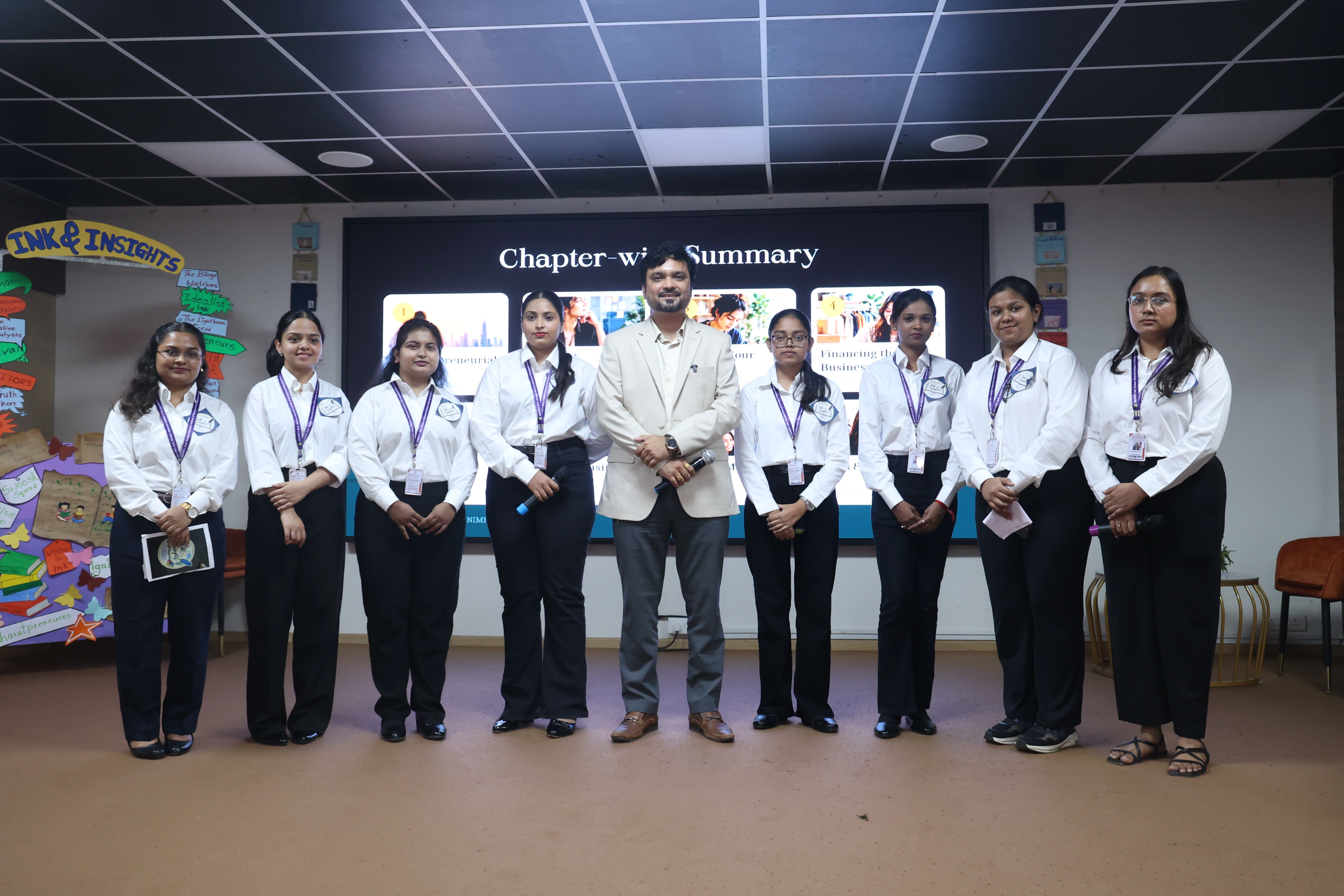
On 29 October 2026 I was chief guest and judge at "Ink & Insights", a book review competition at MKSSS's Smt. Hiraben Nanavati Institute of Management and Research for Women (HNIMR), Karvenagar, Pune. The theme was "Entrepreneurship: From Vision to Venture". Twenty-one MBA teams each presented one business book in seven or eight minutes, with slides and a skit, and then answered my questions.
Team The Start Up Squad took the most direct book of the day: Brian Tracy's Entrepreneurship: How to Start and Grow Your Own Business. And they started not with slides, but with a skit.
The book in one line
Brian Tracy is a business coach and speaker, best known for Eat That Frog, his advice to do your hardest task first. This is a short, practical book on starting and growing a small business. Its punch line is one I wish every student would stick on their wall: "Nothing happens in business until somebody sells something." Around it sit Tracy's well-known themes: write clear goals and plan backwards from them, keep the customer at the centre, use the 80/20 rule because a few activities bring most of the results, and keep learning, because your income grows with your skills.
How Team The Start Up Squad presented it
The skit was called "The Dreamers versus the Doers". One student played a dreamer with an amazing business idea who first needed more money, more confidence, the perfect team and the perfect timing. Another played the entrepreneur, who simply started with a small idea, researched her customer, made a plan and took the first step. When the dreamer asked, "But what if I fail?", the entrepreneur asked back, "But what if you succeed?" The narrator closed it with a line I liked: you do not need to know everything, you need to be willing to learn. Stop waiting and start creating.
Then the team walked chapter by chapter through the book: why the barriers to starting a business have fallen, the myths that stop people (like needing a lot of money or a brand-new idea), choosing a business you love that helps people, financing and cash flow, the entrepreneur mindset, a realistic business plan built around key questions, hiring and managing talent, and sales and marketing.
Their biggest takeaway was the difference between the employee mindset, which seeks security and a regular income, and the entrepreneur mindset, which seeks opportunity and takes responsibility. "No blaming, no excuses," they quoted. They boiled the book down to four management lessons: cash is king, ask the right questions before spending a single rupee, hire right and manage well, and let sales fuel growth. And they closed with a filmy flourish in Hindi: "Picture abhi baaki hai, mere doston." Do not just dream; turn the dream into a business.
What I asked them: what does not fit India?
This book is written for an American reader. So I asked the team what in it they did not agree with, or felt was not relevant to the Indian context.
They gave two thoughtful answers. First, they felt some of the ready-made frameworks and survey-based numbers come from a different market and a different time, and India now has so many kinds of businesses that one framework does not fit all. Second, they questioned the book's picture of the employee mindset as only about safety and salary. They pointed to the Tata group, where employees have long been treated as the biggest asset, and those employees work hard for the company in return. I thought that was a sharp, very Indian observation.
Then I picked one line from their slide, "Reputation creates long-term value", and pushed. Suppose you open a petrol pump tomorrow. How will you build a reputation in one year? The first answer was "good service". I asked what that means, specifically. Slowly, the team got there, and the answers became real Indian business problems: crowds and long queues at the pump, pure petrol with no mixing, clean washrooms, and the common worry that you pay for 200 rupees of petrol and get less. Their conclusion was exactly right: if the service is great and you are honest with customers, your reputation will take care of itself.
Five lessons for an Indian student or young founder
1. Be the doer, not the dreamer
The skit said it best. The dreamer waits for money, confidence, the team and the timing. The doer starts with one customer and learns along the way. Decide on one step you can take this week, and take it.
2. Cash is king, so watch every rupee
The team reminded us that many businesses fail not because of a bad idea but because they run out of cash. Before you spend, ask the right questions. Know how many days of expenses you can survive without a sale.
3. Sell first
Nothing happens until somebody sells something. Before you design a logo or print a card, find out who your first paying customer is and how you will reach her. A sale is the only proof that your idea is a business.
4. Reputation is built in boring details
Nobody remembers a petrol pump for its slogan. They remember the correct quantity, the clean washroom and the honest attendant. Whatever you sell, pick the two or three basics your customer worries about most, and never fail on them.
5. Read foreign books with Indian eyes
The best part of this review was the team's willingness to disagree with the author. Take the fundamentals, cash, team, customers and sales, and question everything else against how business really works in your city.
What I took home
The Start Up Squad turned a practical how-to book into a clear message for young women stepping into business: entrepreneurship is a skill, not a gift, and anyone can learn it. As they put it, you do not need a perfect idea or a big fund to start. You need a decision, and the discipline to follow it through.
If you run a college or company
I run book-review and entrepreneurship sessions for colleges and companies, where people do not just read a book, they argue with it, act it out and turn it into a plan they can try on Monday. If you would like one for your students or your team, write to me here.
With thanks to HNIMR
My thanks to Dr. Priyanka Singh, Director of HNIMR; Mrs. Manjushree K. Nawale, Librarian, and her library team, who organised Ink & Insights 2026; Mr. Vishwajeet Deshmukh, Placement Officer; Mr. Devadatta Sant; and Ms. Minal Kotwal, for hosting me so warmly and making the day run so smoothly. And to every student who stood on that stage with a book in hand: thank you for the courage and the creativity.
Related Articles by Avinash Chate
- AI Dashboard for Business Owners in Latur: Build It by Describing It
- No Shortcuts Book Review: 5 Founder Lessons from HNIMR Pune
- Why Ford Failed in India: The Entry-to-Exit Business Case Study Every Leader Must Know
Work with Avinash Chate
- Best Motivational Speaker in Pune →
- Team Building Trainer in Pune →
- Signature Corporate Training Programs →
| AC | Avinash ChateIndia's Leading Corporate Trainer | TEDx Speaker | Author With 1000+ organizations trained including RBI, JSW Steels, and Ferrero, Avinash Chate delivers high-impact corporate training across India. Creator of the KITE Leadership Framework and bestselling author of "The Winning Edge." Website YouTube |
Avinash Chate services
Corporate Trainer in Pune · Top Corporate Trainers in Pune · Leadership Trainer in Pune · Top Leadership Trainers in Pune · Team Building Trainer in Pune · Top Team Building Trainers in Pune · Motivational Speaker in Pune · Top Motivational Speakers in Maharashtra · All service locations
← Back to all articles · Book Avinash Chate
By Avinash Chate — Maharashtra’s #1 Corporate Trainer & Motivational Speaker. .