Communication Skills That Transform Team Dynamics in Indian Corporates 2026
Effective communication isn't about talking more — it's about being understood completely. Here are the communication skills that actually build stronger collaboration and team dynamics across India's corporate world.
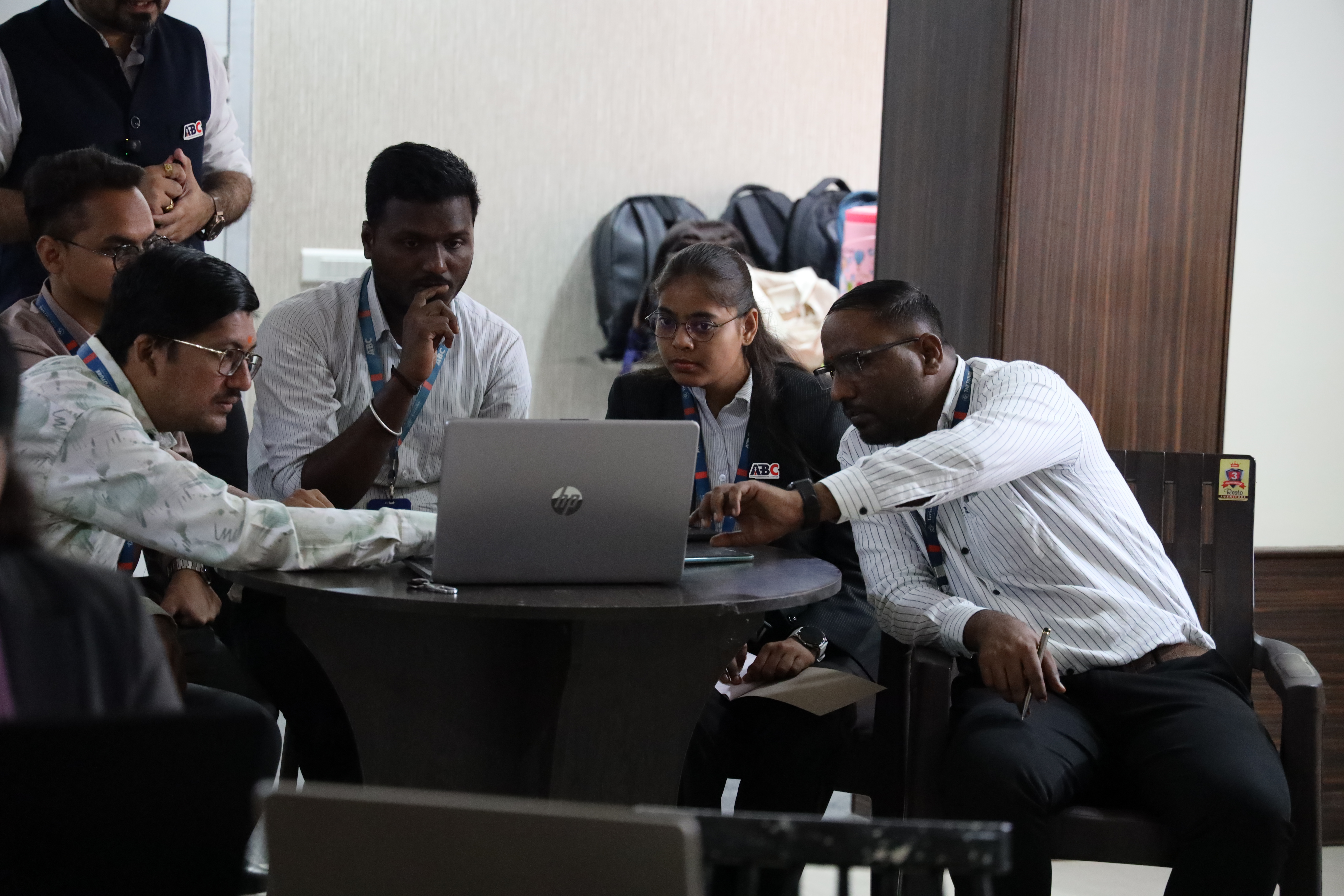
Here's what most communication training gets wrong: it focuses on speaking, when the real skill is being understood. LinkedIn India 2026 has ranked communication skills among the top three competencies that determine career advancement — yet McKinsey data shows Indian managers spend 21 hours per week in meetings, much of it generating miscommunication rather than clarity. The teams that break this cycle are the ones that treat communication as a craft, not a default.
TL;DR- Effective communication is about being understood completely — not just speaking clearly
- Most Indian corporate miscommunication stems from assumed context, not language barriers
- Three core communication skills transform team dynamics: clarity, active listening, and structured feedback
- Meeting communication efficiency is one of the highest-ROI improvements any Indian team can make
- Leaders who model communication excellence set the standard their entire team rises to
Why Communication Is the Foundation of Every High-Performing Indian Team
Every breakdown I've ever seen in a corporate team — project delays, inter-departmental friction, failed client relationships, talent leaving — has a communication failure somewhere in its root cause. Not always the obvious kind. Sometimes it's a critical piece of context that was assumed rather than shared. Sometimes it's feedback that was given so vaguely it never landed. Sometimes it's a decision that was made but never communicated clearly enough for the team to execute on. With 65% of Indian companies now investing in soft-skill training, communication sits at the very top of the skills list — and rightly so. It's the infrastructure through which everything else in an organisation runs.
The Assumed Context Problem: India's Biggest Workplace Miscommunication Trap
India's corporate communication challenge is distinctive. We operate in a high-context culture — one where significant meaning is conveyed through what is not said, through relationship hierarchy, and through shared background assumptions. In homogeneous teams where everyone shares the same context, this works. In the diverse, cross-functional, multi-generational teams of modern Indian corporates, it creates catastrophic assumption gaps. I've worked with engineering teams at KPIT and Tata Tech where a project was delayed by three weeks because the senior engineer assumed the junior team understood the technical context — and never explicitly shared it. The fix took one hour. The delay cost three weeks.
| Communication Skill | Common Gap in Indian Teams | Quick Improvement Practice |
|---|---|---|
| Structural Clarity | Assumed context, missing specifics | State the what, why, and by-when explicitly every time |
| Active Listening | Responding before fully hearing | Paraphrase what you heard before responding |
| Structured Feedback | Vague, delayed, or only negative | Use SBI model: Situation, Behaviour, Impact |
| Meeting Communication | No clear purpose, no documented actions | End every meeting with 3 minutes for actions and owners |
Three Communication Skills That Immediately Strengthen Team Dynamics
The three communication skills that most immediately transform team dynamics are: structural clarity (saying exactly what you mean, in the order that makes it easiest to understand), active listening (being fully present and confirming understanding before responding), and structured feedback (giving observations that are specific, timely, and growth-oriented). Most professionals are adequate at structural clarity but significantly underdeveloped in active listening and almost universally undertrained in structured feedback. These three skills, practiced consistently, compound into measurably stronger team performance within 90 days.
Active Listening: The Most Underrated Communication Skill in Indian Corporates
Active listening is the communication skill that separates the most effective leaders I've worked with — from RBI officers to Mahindra managers — from those who are technically competent but struggle with team cohesion. Active listening is not waiting for your turn to speak. It's making the other person feel genuinely heard before any response is formed. It involves specific practices: making eye contact, allowing silences without filling them, paraphrasing what you heard before responding, and asking clarifying questions before offering solutions. Teams where active listening is a cultural norm resolve conflicts faster, make better decisions, and report higher psychological safety than those where it's absent.
Giving and Receiving Feedback: The Communication Skill That Drives Growth
Feedback is where most Indian corporate communication completely breaks down. Two failure modes dominate: feedback that is so vague it provides no actionable information ("you need to improve your presentation skills"), and feedback that is delivered so infrequently it arrives only during annual reviews when it's too late to be useful. The structure I teach in my corporate sessions is the SBI model: Situation (when exactly), Behaviour (what specifically you observed), Impact (what effect it had). This structure forces specificity, removes subjectivity, and makes feedback feel fair rather than personal. Teams at Siemens and Bosch that adopt this structure report a dramatic shift in how openly their members ask for and receive feedback.
How to Radically Improve Meeting Communication Efficiency in Your Team
If I could fix one communication problem across Indian corporates overnight, it would be meeting culture. The average Indian knowledge worker loses 8–10 hours per week to meetings that produce no clear decisions, no documented actions, and no clarity about who does what by when. The fix is structural: every meeting needs a purpose statement (why are we here?), a clear decision or outcome expected, a maximum duration, and 3-5 minutes at the end to document actions and owners. At JSW and Ferrero, teams that implement this simple structure report cutting meeting time by 30% while producing better outcomes — because the communication that happens in those meetings is purposeful rather than performative.
Leaders as Communication Role Models: Setting the Standard Your Team Follows
The single most powerful lever a leader has over their team's communication culture is how they personally communicate. Leaders who speak with precision and clarity train their teams to value precision and clarity. Leaders who listen actively in meetings signal that listening is important work. Leaders who give specific, timely, growth-oriented feedback create cultures where feedback flows freely in all directions. At Bajaj Auto and L&T, the divisions with the strongest communication cultures are almost always led by individuals who have deliberately developed their own communication skills — not just those who happen to be naturally articulate. Communication excellence is a leadership practice, and like all practices, it compounds with repetition.
Book Avinash Chate for Your Next Event
TEDx speaker. 11+ yrs training Army, BRO, RBI, BARC, JSW. Available for keynotes, leadership training, team building & manager development at your office or event venue.
✅ Thanks! Avinash team will reach out within 24 hours.'}).catch(function(e){f.outerHTML='Something went wrong. WhatsApp +91 8793630001
'});return false;">Select ServiceKeynote / Motivational SpeakingLeadership Development TrainingTeam Building WorkshopManager DevelopmentEmployee TrainingOutbound TrainingBook Avinash Now →Or WhatsApp directly: +91 87936 30001
Related Articles by Avinash Chate
- Fun Team Building Activities That Foster Trust and Collaboration for Indian Corporates 2026
- When Leadership Crosses the Line: How Favoritism and Blind Support Destroy Team Credibility India 2026
- Hitachi Leadership Training: Employee Engagement and Professional Growth for Workplace Excellence India 2026
Avinash Chate TEDx Speaker · Founder, The Future Corporate · 11+ yrs experience Avinash has trained Indian Army, BRO, RBI, BARC, JSW Steel and 1000+ corporate leaders across India. His work focuses on leadership development, communication skills, and behavioural training rooted in Indian values and modern business needs. |
Frequently Asked Questions
What are the most important communication skills for Indian corporate professionals?
The three most critical communication skills for Indian corporate professionals are structural clarity (saying exactly what you mean in the order that is easiest to understand), active listening (being fully present and confirming understanding before responding), and structured feedback (giving observations that are specific, timely, and growth-oriented). Most professionals in India are moderately strong in structural clarity but significantly underdeveloped in active listening and almost universally undertrained in delivering and receiving feedback. Developing all three creates compounding improvements in team performance, conflict resolution speed, and professional credibility.
What is the assumed context problem in Indian workplace communication?
The assumed context problem is the most common and costly source of miscommunication in Indian corporate teams. India is a high-context communication culture — one where significant meaning is traditionally conveyed through shared background, relationship hierarchy, and what is left unsaid. In modern corporate environments with diverse, cross-functional, multi-generational teams, these shared assumptions no longer hold reliably. When a senior professional assumes a junior team member understands implicit context and never explicitly shares it, the result is misaligned work, wasted effort, and avoidable delays. The fix is making context explicit: state the what, the why, and the by-when, even when it feels obvious.
How do you give effective feedback in an Indian corporate environment?
The most effective feedback model for Indian corporate environments is SBI: Situation (when exactly did this happen?), Behaviour (what specific action or communication did I observe?), Impact (what was the specific effect on the team, project, or outcome?). This structure removes subjectivity and makes feedback feel like useful data rather than personal criticism. Equally important is timing: feedback given within 48 hours of the event is dramatically more useful than feedback delivered at an annual review. Teams that adopt the SBI model and practice frequent, low-stakes feedback report higher psychological safety and faster individual growth than those who reserve feedback for formal review cycles.
How can leaders improve communication culture across their team?
Leaders improve communication culture by modelling the behaviours they want the team to adopt. Leaders who speak with precision signal that precision is valued. Leaders who listen actively in meetings — asking clarifying questions, paraphrasing before responding, allowing silence — signal that listening is important work. Leaders who give specific, timely, growth-oriented feedback create environments where feedback flows in all directions, including upward. The most effective single practice a leader can implement immediately is to end every team meeting with a 3-minute structured close: what was decided, who does what, by when. This single habit, consistently applied, transforms meeting communication culture within one quarter.
Avinash Chate services
Corporate Trainer in Maharashtra · Top Corporate Trainers in Maharashtra · Leadership Trainer in Maharashtra · Top Leadership Trainers in Maharashtra · Team Building Trainer in Maharashtra · Top Team Building Trainers in Maharashtra · Motivational Speaker in Maharashtra · Top Motivational Speakers in Maharashtra · All service locations
← Back to all articles · Book Avinash Chate
By Avinash Chate — Maharashtra’s #1 Corporate Trainer & Motivational Speaker. .