Hitachi Leadership Training: Employee Engagement and Professional Growth for Workplace Excellence India 2026
At Hitachi's corporate training session, we focused on the skills that matter most — leadership, employee engagement, and building a culture of trust and innovation for India's competitive workplace in 2026.
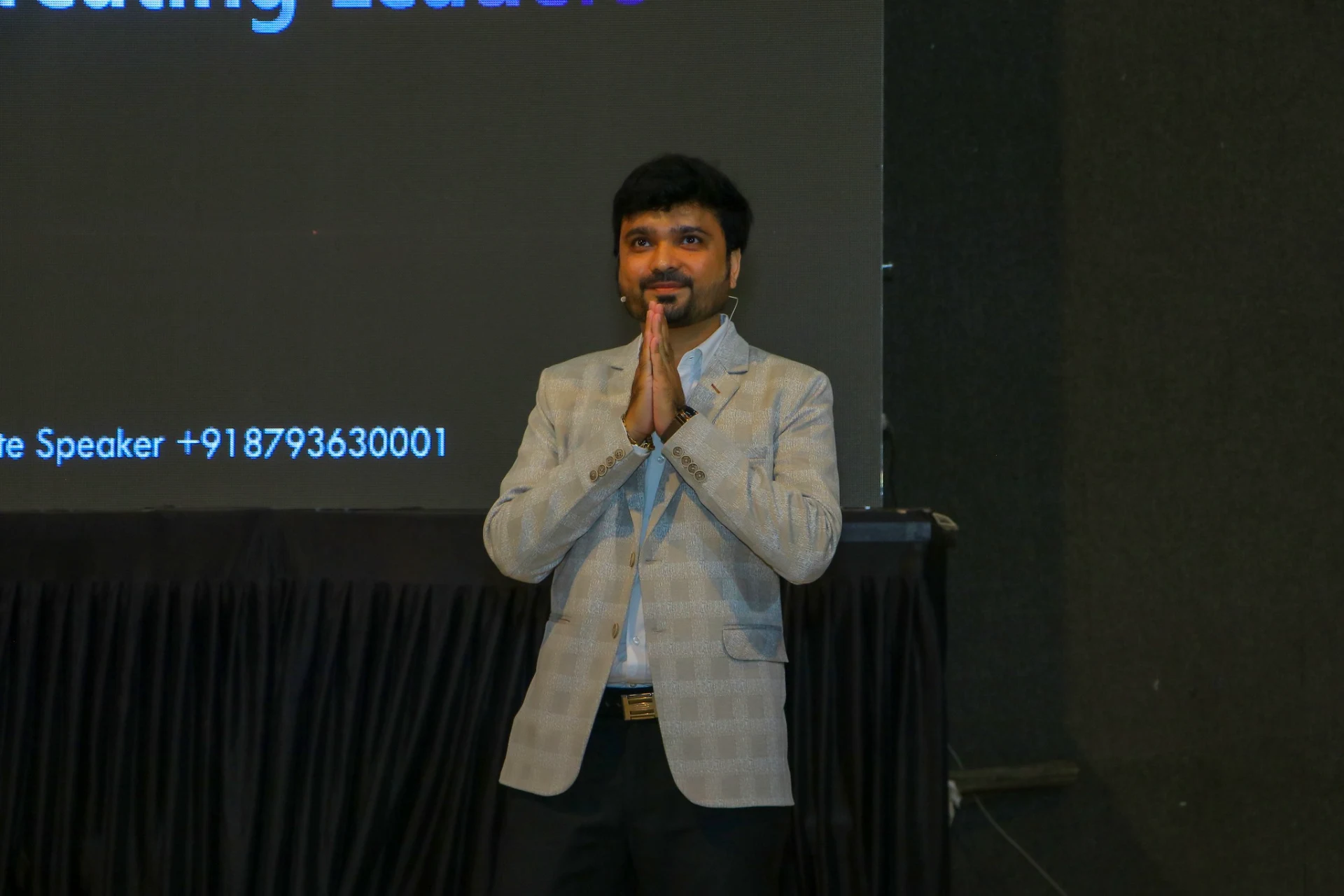
I recently completed a leadership and professional development session with the team at Hitachi — one of the world's most respected engineering and technology organisations. LinkedIn India 2026 confirms leadership skills as the #1 career differentiator, and what I saw at Hitachi reinforced exactly why: teams don't just need technical skill — they need the human skills to collaborate, lead, and grow together.
TL;DR- Hitachi's corporate training session focused on leadership, engagement, teamwork, and professional growth
- Employee engagement is the single biggest predictor of team performance in Indian organisations
- Building a culture of trust and innovation requires deliberate leadership habits — not just values statements
- Effective teamwork and collaboration are learnable skills, not personality traits
- Professional growth in corporate India requires both technical excellence and behavioural leadership
What Hitachi's Leadership Training Session Focused On and Why It Matters
The Hitachi session was designed around four pillars: leadership skills for corporate success, strategies for effective teamwork and collaboration, enhancing professional growth through engagement, and building a culture of trust and innovation. These aren't soft topics — they're the exact competencies that separate organisations that scale from those that stall. In a competitive Indian market where 65% of firms now invest in soft-skill training, Hitachi's commitment to intentional people development is a strategic advantage, not a nice-to-have.
Employee Engagement: The Foundation of Every High-Performing Corporate Team
Here's what most leaders underestimate: employee engagement isn't about perks or ping-pong tables. It's about whether your people feel their work matters, their voice is heard, and their growth is supported by the organisation. India's ₹1.5 trillion L&D market reflects a recognition that engagement drives retention, productivity, and innovation. At Bajaj Auto and Tata Tech, I've seen divisions with genuinely high engagement outperform disengaged peers by 30–40% on productivity metrics — not because the engaged teams worked harder, but because they worked smarter and stayed longer.
| Training Pillar | What Was Covered | Business Impact |
|---|---|---|
| Leadership Skills | KITE Framework, authority vs. influence, decision-making | Faster decisions, clearer direction |
| Employee Engagement | Meaningful work, voice, recognition, growth support | Higher retention, stronger productivity |
| Teamwork & Collaboration | Role clarity, communication, productive disagreement | Fewer bottlenecks, faster delivery |
| Professional Growth | 70-20-10 framework, stretch assignments, feedback habits | Measurable skill uplift in 90 days |
Leadership Skills for Corporate Success in India's 2026 Workplace
Leadership in 2026 India requires a dual capability: technical credibility and human leadership. The days when a subject-matter expert could rely purely on technical authority are over. At every organisation I train — from Mahindra to RBI to BARC — the leaders who drive the most impact are those who combine deep domain knowledge with the ability to inspire, communicate clearly, and make their team members feel genuinely valued. The good news is that these are learned skills. My KITE Leadership Framework, developed over 11 years and tested across 1,000+ corporate leaders, gives professionals a practical structure to develop both dimensions simultaneously.
Building Effective Teamwork and Collaboration in Engineering-Led Organisations
Engineering and technology organisations like Hitachi often underestimate the human dimension of teamwork. Trust me — I've worked with some of India's most technically excellent organisations, and the bottleneck is almost never technical capability. It's cross-functional communication, role clarity, psychological safety in meetings, and the ability to disagree productively without destroying relationships. The organisations that solve these collaboration challenges consistently outperform their technically equivalent peers. The Hitachi team session addressed these directly, with practical tools rather than theory.
Creating a Culture of Trust and Innovation That Outlasts Any One Leader
Culture is what your team does when you're not watching. I say this in every session because it's the simplest test of whether culture is real or performative. Building a genuine culture of trust and innovation requires three non-negotiable leadership habits: transparency in communication (sharing context, not just instructions), consistent follow-through (doing what you say you will do), and rewarding learning from failure rather than just celebrating success. Organisations that build this culture attract and retain the calibre of people who build their competitive advantage.
Professional Growth Strategies for Employees at Every Level
Professional growth doesn't happen by accident — it requires deliberate design at both the individual and organisational level. For individuals, the most powerful growth habit is the 70-20-10 framework: 70% growth from challenging on-the-job assignments, 20% from learning through others (mentors, feedback, coaching), and 10% from formal training. For organisations, this means building structures that create stretch assignments, formal mentoring relationships, and a feedback culture where honest input is both given and received without defensiveness. The Hitachi session built specific habits around each dimension.
How to Bring Hitachi-Level Training Impact to Your Organisation
If you're looking to bring this quality of leadership training to your organisation, the starting point is always a diagnostic: where are your leaders strong, and where are the specific gaps costing you performance? I don't run generic training — every session I deliver for organisations like Siemens, Bosch, Ferrero, and JSW is customised around the specific challenges that team faces. The result is training that lands, sticks, and translates into measurable behaviour change within 90 days. If you'd like to explore what a session for your team looks like, reach out directly through the booking form below.
Book Avinash Chate for Your Next Event
TEDx speaker. 11+ yrs training Army, BRO, RBI, BARC, JSW. Available for keynotes, leadership training, team building & manager development at your office or event venue.
✅ Thanks! Avinash team will reach out within 24 hours.'}).catch(function(e){f.outerHTML='Something went wrong. WhatsApp +91 8793630001
'});return false;">Select ServiceKeynote / Motivational SpeakingLeadership Development TrainingTeam Building WorkshopManager DevelopmentEmployee TrainingOutbound TrainingBook Avinash Now →Or WhatsApp directly: +91 87936 30001
Related Articles by Avinash Chate
- Fun Team Building Activities That Foster Trust and Collaboration for Indian Corporates 2026
- Team Motivation Strategies That Energize and Inspire Corporate Teams India 2026
- Communication Skills That Transform Team Dynamics in Indian Corporates 2026
Avinash Chate TEDx Speaker · Founder, The Future Corporate · 11+ yrs experience Avinash has trained Indian Army, BRO, RBI, BARC, JSW Steel and 1000+ corporate leaders across India. His work focuses on leadership development, communication skills, and behavioural training rooted in Indian values and modern business needs. |
Frequently Asked Questions
What did Avinash Chate's Hitachi leadership training cover?
The Hitachi corporate training session with Avinash Chate focused on four key pillars: leadership skills for corporate success, strategies for effective teamwork and collaboration, enhancing professional growth through employee engagement, and building a culture of trust and innovation. Each pillar was addressed with practical tools and frameworks rather than theory, ensuring participants left with specific habits and systems to implement in their daily work at Hitachi.
How does employee engagement affect corporate team performance in India?
Employee engagement is one of the strongest predictors of team performance in Indian organisations. Highly engaged teams consistently outperform disengaged peers on productivity, quality, and retention metrics — typically by 30–40% on measurable output indicators. Engagement is driven not by perks but by meaningful work, a sense of voice and agency, visible growth support from the organisation, and consistent recognition. In India's competitive talent market, organisations that invest in genuine engagement retain top performers significantly longer than those that rely on compensation alone.
What is the KITE Leadership Framework Avinash Chate uses in training?
The KITE Leadership Framework is Avinash Chate's proprietary leadership development model, developed over 11 years of training 1,000+ corporate leaders across India. KITE stands for the four competency domains that define effective leadership in the Indian corporate context: Knowledge (domain expertise and learning agility), Influence (communication, relationships, and persuasion), Trust (consistency, transparency, and follow-through), and Execution (goal clarity, accountability, and result delivery). The framework is used in training sessions for organisations including Bajaj Auto, Tata Tech, Mahindra, Siemens, and the Indian Army.
How can organisations build a genuine culture of trust and innovation?
Building a genuine culture of trust and innovation requires three non-negotiable leadership habits consistently practiced at every level of the organisation. First, transparency in communication — sharing context and rationale, not just instructions. Second, consistent follow-through — doing what you say you will do, every time. Third, rewarding learning from failure, not just celebrating success — this signals that innovation and risk-taking are genuinely valued. Organisations that embed all three habits attract and retain people who drive competitive advantage through creative, committed work.
Avinash Chate services
Corporate Trainer in Maharashtra · Top Corporate Trainers in Maharashtra · Leadership Trainer in Maharashtra · Top Leadership Trainers in Maharashtra · Team Building Trainer in Maharashtra · Top Team Building Trainers in Maharashtra · Motivational Speaker in Maharashtra · Top Motivational Speakers in Maharashtra · All service locations
← Back to all articles · Book Avinash Chate
By Avinash Chate — Maharashtra’s #1 Corporate Trainer & Motivational Speaker. .