Creating Employment in India: Why It Means More Than Just Profits
Ranjit Patil, VP of a ₹250 crore manufacturing empire, says creating employment isn't about profits — it's about empowering families and driving India's manufacturing growth.
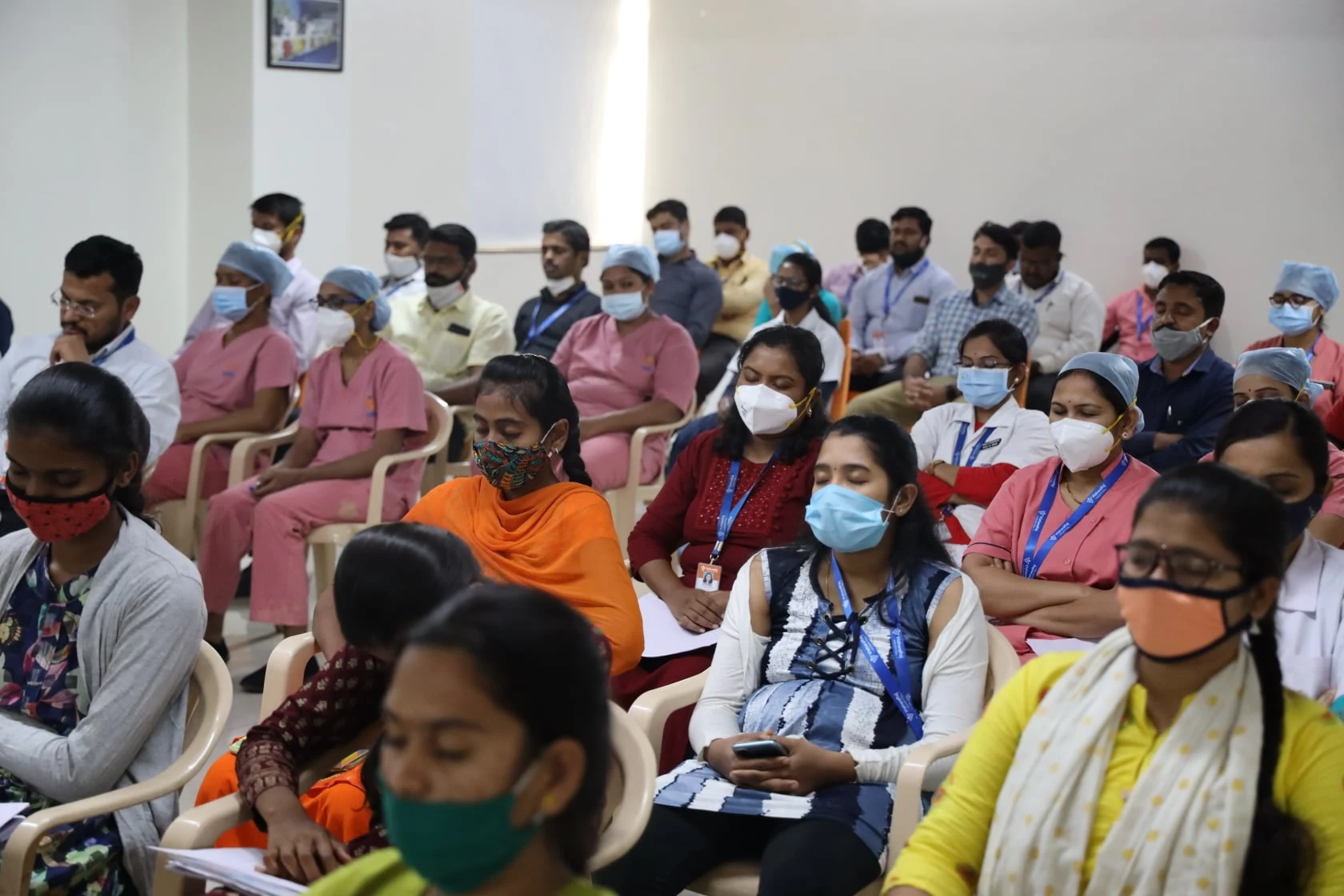
What does it really feel like to create employment? I had the privilege of sitting with Mr. Ranjit Patil, VP of a ₹250 crore manufacturing empire, and his perspective on job creation changed mine completely. India's ₹1.5 trillion L&D market exists because of leaders like him — people who understand that building a company means building lives, not just balance sheets.
TL;DR- Ranjit Patil, VP of a ₹250 crore manufacturing empire, says creating employment is not about profits — it is about empowering families and entire communities
- Every manufacturing job in India supports an average of 4-5 family members — the impact multiplies far beyond the factory floor
- India's manufacturing growth depends on leaders who view employment as a responsibility, not just a cost item on a spreadsheet
- Creating jobs builds workforce loyalty, productivity, and a sense of purpose that no incentive scheme can replicate alone
- For Indian manufacturing leaders, the most sustainable advantage is a workforce that feels genuinely valued and invested in the mission
Why Ranjit Patil Says Creating Employment in Manufacturing Is About Empowering Families Not Just Profit
Mr. Ranjit Patil, Vice President of a ₹250 crore manufacturing empire, said something I've never forgotten: creating employment isn't just about filling positions — it's about empowering families. That one sentence shifts everything. When you sign a salary cheque, you're not just paying someone for eight hours of work — you're supporting a household, enabling children's education, and helping a community grow. I've trained leadership teams at Bajaj Auto, L&T, and JSW Steel, and the leaders who carry this perspective consistently run operations that outperform all benchmarks, because their workforce feels the weight of that responsibility and rises to meet it.
The Ripple Effect of Job Creation in India's Manufacturing Industry
Here's a number every Indian business leader should internalize. A single manufacturing job in India supports an average of four to five family members. That means a factory with 200 employees isn't creating 200 lives of stability — it's creating stability for nearly 1,000 people. India's manufacturing sector employs over 27 million people directly. The ripple effect of that employment — in purchasing power, local business activity, school enrollment, and healthcare access — is immeasurable. Ranjit Patil understands this viscerally. That's why his perspective on employment goes far beyond operational efficiency. For him, it's about being an anchor for the communities that depend on the business.
| Mindset | Employment as Cost | Employment as Investment |
|---|---|---|
| View of workforce | Expense to be minimised | Asset to be developed |
| Training spend | Minimal or compliance-only | Ongoing and business-linked |
| Career development | Unclear or non-existent | Structured and communicated |
| Attrition rate | High, seen as normal | Low, seen as a leadership metric |
| Workforce loyalty | Transactional | Genuinely committed |
| Long-term outcome | High cost, low productivity | Lower cost, high performance |
How Building a ₹250 Crore Manufacturing Empire Changes the Way You Think About Employment
Building a manufacturing business at scale changes how you see employment. When you're managing a small team, every hire feels personal. As you scale to hundreds of employees, there's a real risk that employment becomes a line item — a cost to manage rather than a responsibility to honour. The leaders who resist that drift are the ones who build genuinely great manufacturing cultures. And there's a direct business case for it: manufacturing teams that feel valued by their leadership have consistently lower attrition, higher productivity, and better quality outcomes. It's not charity. It's strategy grounded in human reality.
What Most Indian Business Leaders Get Wrong About the Real Value of Creating Jobs
What most people don't realize is that many Indian business leaders still treat employment primarily as a cost rather than an investment. They spend crores on machines and almost nothing on people development. They optimize pay packages downward while expecting maximum output, and then wonder why attrition is 30-35% and quality is inconsistent. Ranjit Patil's ₹250 crore manufacturing empire works differently — because the leadership understands that the machines are only as good as the people running them. India's corporate landscape is full of businesses with great infrastructure and weak teams. The businesses that win long-term invest in their people as seriously as their plant and equipment.
Why Employment Creation Is the Highest Form of Corporate Leadership in India
I've been asked many times what I consider the highest form of corporate leadership. My honest answer: creating stable, meaningful employment for people who depend on you. A leader who creates employment responsibly builds a community of people invested in the organisation's success. They show up on difficult days. They go beyond the job description. They care about quality because they feel the organisation cares about them. Trust me, I've seen this dynamic at work in every great manufacturing company I've trained — the correlation between how valued employees feel and how well the business performs is absolutely undeniable.
How to Build a Manufacturing Workforce That Feels Valued, Loyal, and Unstoppable
Here's what actually creates a workforce that feels valued in Indian manufacturing. First, pay fairly and on time — non-negotiable. Second, invest in skill development. India's PMKVY 4.0 has trained over 2.1 crore workers, but the real transformation happens when companies build internal training programs that go beyond compliance. Third, create career paths — every employee should be able to answer "where can I go from here?" If the answer is unclear, the best people leave. Fourth, celebrate contribution publicly. Fifth, involve workers in improvement initiatives. These principles are why Ranjit Patil's operation has the loyalty and stability that most manufacturers only dream about.
Retention Lessons From a ₹250 Crore Manufacturer: How to Keep Your Best People in India 2026
Retention in Indian manufacturing is one of the most undervalued strategic advantages available. I've sat with HR leaders at Bajaj Auto, Mahindra, and KPIT who tell me the cost of replacing a skilled worker is three to six months of their salary — in training time, lost productivity, and quality disruption. That math alone should make every manufacturing leader invest more seriously in retention. But beyond the financial case, there's the cultural case: when good people stay, they mentor others, carry institutional knowledge, and elevate the entire team. When they leave, you lose more than one person — you lose everything they knew and everyone they influenced.
Why India's Manufacturing Future Depends on Leaders Who Take Employment Seriously
India is at a generational crossroads in manufacturing. The government's Make in India initiative, PLI schemes, and the China+1 supply chain shift are creating real tailwinds for Indian manufacturers. But the bottleneck isn't capital — it's leadership. The companies that will capture this opportunity are the ones with leaders who understand that manufacturing growth is people growth. Ranjit Patil's career is proof of what's possible when a leader combines operational excellence with genuine investment in the people who run the machines. India needs thousands more manufacturing leaders with this mindset to fulfil the extraordinary potential of this historical moment.
Book Avinash Chate for Your Next Event
TEDx speaker. 11+ yrs training Army, BRO, RBI, BARC, JSW. Available for keynotes, leadership training, team building & manager development at your office or event venue.
✅ Thanks! Avinash team will reach out within 24 hours.'}).catch(function(e){f.outerHTML='Something went wrong. WhatsApp +91 8793630001
'});return false;">Select ServiceKeynote / Motivational SpeakingLeadership Development TrainingTeam Building WorkshopManager DevelopmentEmployee TrainingOutbound TrainingBook Avinash Now →Or WhatsApp directly: +91 87936 30001
Related Articles by Avinash Chate
- Why Manufacturing Industry is Difficult to Start in India: 5 Key Challenges
- 4 Biggest Mistakes Industrial Manufacturing Companies Make in India
- Why Loyalty and Trust Matter More Than Skills in Manufacturing India
Avinash Chate TEDx Speaker · Founder, The Future Corporate · 11+ yrs experience Avinash has trained Indian Army, BRO, RBI, BARC, JSW Steel and 1000+ corporate leaders across India. His work focuses on leadership development, communication skills, and behavioural training rooted in Indian values and modern business needs. |
Frequently Asked Questions
Why does creating employment matter more than just making profits in manufacturing?
Creating employment in manufacturing supports entire families and communities — not just individual workers. Mr. Ranjit Patil, VP of a ₹250 crore manufacturing empire, understands that every manufacturing job empowers an average of four to five family members. This ripple effect means a manufacturing business is not just an economic entity — it's a social institution with the power to change lives at scale. Leaders who understand this build more loyal, motivated, and productive workforces than those who view employment purely as a cost item to be managed down.
How do successful Indian manufacturers like Ranjit Patil build loyal workforces?
Successful Indian manufacturers build loyal workforces by treating employment as an investment rather than a cost. This means paying fairly and on time, investing in skill development and internal training programs, creating clear career paths for every employee, celebrating contributions publicly, and involving workers in improvement initiatives. Companies like Bajaj Auto and JSW Steel that I've trained demonstrate consistently that when employees feel genuinely valued, attrition drops, quality improves, and productivity increases — producing measurable financial results alongside the human impact.
What is the biggest mistake Indian manufacturing companies make with their workforce?
The biggest mistake is treating employment as a cost to be minimised rather than a capability to be invested in. Companies that slash training budgets, suppress wages, and provide no career development then wonder why their best workers leave and quality is inconsistent. The most successful manufacturing operations I've seen — from L&T to Bajaj Auto to JSW — invest heavily in their people while also investing in plant and equipment. The combination is what creates manufacturing excellence and competitive advantage, not machines alone.
How does India's manufacturing growth depend on employment creation?
India's manufacturing sector needs to create millions of new jobs over the next decade to absorb its demographic dividend. The government's PLI schemes and Make in India initiative are providing real tailwinds, but the limiting factor is the quality of manufacturing leadership. Leaders who view employment creation as a responsibility — not just a consequence of business success — build organisations that attract talent, retain expertise, and innovate continuously. India's manufacturing future belongs to the leaders who see creating good jobs as both their highest purpose and their strongest competitive strategy.
Avinash Chate services
Corporate Trainer in Maharashtra · Top Corporate Trainers in Maharashtra · Leadership Trainer in Maharashtra · Top Leadership Trainers in Maharashtra · Team Building Trainer in Maharashtra · Top Team Building Trainers in Maharashtra · Motivational Speaker in Maharashtra · Top Motivational Speakers in Maharashtra · All service locations
← Back to all articles · Book Avinash Chate
By Avinash Chate — Maharashtra’s #1 Corporate Trainer & Motivational Speaker. .