Darwin in the Office: Why Survival of the Fittest Is the Brutal Truth About Your Career
Charles Darwin never walked into a boardroom, yet his principle — that adaptability, not strength or intelligence, determines survival — is the most brutally honest career advice you will ever receive.
Charles Darwin never walked into a boardroom. He never sat through a performance review, never lost a promotion to a younger colleague who had upskilled faster, and never watched an entire department get automated away. Yet the principle he gave the world in 1859 is, in my experience training thousands of professionals across Maharashtra and beyond, the most brutally honest career advice any of us will ever receive.
"It is not the strongest of the species that survives, nor the most intelligent, but the one most responsive to change."
I open my book The Winning Edge, The Champion Mindset with this quote — not because it sounds inspiring, but because it is operationally true. In my workshops with companies across Pune, Mumbai and the rest of India, I ask one question before anything else: "Are you the most adaptable person in your team?" The silence that follows tells me everything I need to know about why so many talented, hardworking professionals plateau, stagnate, or get left behind. This article is my attempt to change that for you.
The Darwinian Office: India 2026 Is Not the India of 2010
When I started my career, the rules were simple: study hard, join a good company, put in the years, and the ladder would hold you. That world is gone. The Indian business environment of 2026 is a genuinely Darwinian arena — and I say that without drama.
- Global competition has arrived at the doorstep of every Indian city, not just the metros. A startup in Nashik now competes with platforms headquartered in Singapore or San Francisco.
- Technology disruption is not a future threat — it is the present condition. AI tools are being adopted by companies that, eighteen months ago, did not even have a digital marketing team.
- Talent wars mean that your employer can replace you upward or downward — a younger hire who learns faster, or an automated workflow that never takes a day off.
- Rapid market shifts mean that the product your company built its reputation on may be obsolete within a planning cycle.
In this environment, being the strongest — the most experienced, the most senior, the one with the biggest network — is no longer a sufficient moat. Neither is being the most intelligent. I have sat across from brilliantly educated professionals who could not adapt to a new reporting structure, a new software tool, or a new leadership expectation — and watched their careers stall while less credentialled colleagues surged ahead.
"The question I pose to every client is not 'are you the strongest or the smartest?' — it is 'are you the most adaptable?' That single shift in framing has changed more careers than any other insight I share."
— Avinash Chate, The Winning Edge
Why Strength and Intelligence Are Not Enough
I want to sit with this uncomfortable truth for a moment, because our Indian professional culture is deeply invested in both strength and intelligence as the primary currencies of success.
The Strength Trap
Strength in a career context usually means tenure, authority, domain expertise, or institutional weight. These are real assets — I am not dismissing them. But strength is a lagging indicator. It reflects what you have already built. The Darwinian environment rewards leading indicators: your speed of learning, your willingness to unlearn, your openness to feedback that contradicts your current worldview. Many senior professionals I work with carry their strength like armour — and that very armour prevents them from absorbing the new signals that would save their relevance.
The Intelligence Trap
Intelligence is even more seductive, because our education system worships it. We grow up in a culture that sorts people by marks, ranks, and entrance exam scores. By the time a person reaches mid-career, they have had fifteen to twenty years of positive reinforcement for being smart. The problem is that intelligence, without adaptability, becomes rigidity. The smartest person in the room is often the last to admit that the room has changed.
In my training sessions, I regularly meet managers with post-graduate degrees from premier institutions who are struggling — not because they lack intelligence, but because they have stopped being curious. They stopped adapting. And in Darwin's framework, that is the definition of a species at risk.
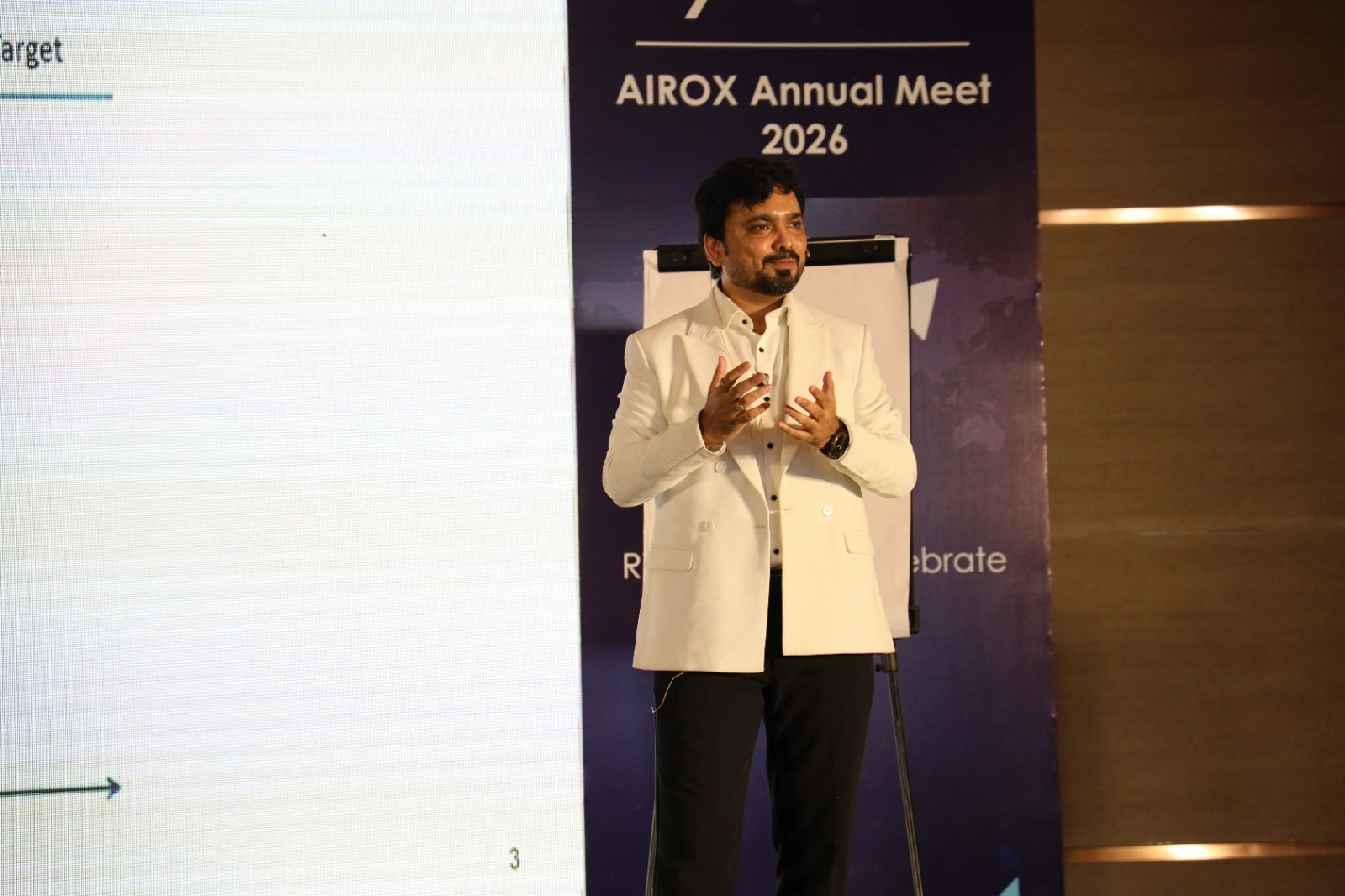
Avinash Chate leading an adaptability workshop for corporate teams — the conversation that changes careers.The Four Adaptation Tools From The Winning Edge
In The Winning Edge, The Champion Mindset, I lay out a set of tools that I have tested in hundreds of workshops with professionals across India. Each tool is, at its core, an adaptation mechanism. Understanding them through the Darwinian lens makes their purpose immediately clear.
1. Deliberate Practice — Adapting Your Skills Before the Market Demands It
Adaptation is not passive. Organisms that thrived through evolutionary change were not the ones that waited for the environment to punish them into action — they were the ones whose variations happened to make them more fit for the new conditions. In career terms, deliberate practice is the professional equivalent of generating that variation proactively.
- Identify the skills your role will require eighteen to twenty-four months from now — not what it requires today.
- Build a structured practice routine around those skills, not around the tasks you are already comfortable with.
- Seek feedback specifically in areas of discomfort, where your current competence is lowest.
The professionals I have coached who advanced most rapidly in their careers shared one habit: they practised the future, not the present.
2. Emotional Intelligence — Adapting to the Human Environment
The business world is not just a technological or economic ecosystem. It is a human one. And the human environment changes constantly — new leaders arrive, team cultures shift, client expectations evolve, organisational structures get reorganised. Emotional intelligence is the tool that lets you read and respond to these human-environment changes with speed and accuracy.
- Self-awareness tells you when your emotional state is blocking your adaptability.
- Empathy lets you understand the pressures and motivations of the people you must now work differently with.
- Social skill — the ability to influence and collaborate — determines whether your adaptation is supported or sabotaged by the people around you.
3. Triggers Management — Adapting Your Reactions
One of the most reliable indicators of a professional who cannot adapt is their reaction to change triggers. A new system, a restructuring announcement, a change in KPIs — watch how people respond to these moments and you will see their adaptability score in real time.
In my workshops, I teach triggers management as a core survival skill. When a change trigger fires — your manager delivers unexpected feedback, your company announces a pivot, your industry gets disrupted — your automatic reaction is your organism's first response to a new environment. That first response determines whether you adapt or resist. Learning to pause, reframe, and respond deliberately is not a soft skill. It is the hardest and most important skill in the Darwinian office.
4. Optimism — The Fuel of Adaptation
Darwin's survivors were not the strongest. But they also were not the most pessimistic. Adaptation requires action, and action requires belief that the action is worth taking. Optimism, properly understood, is not naive positivity — it is the operational belief that your current situation is changeable and that your effort matters.
In the Indian professional context, I see pessimism about change masquerading as realism. "This is how companies in India work." "Management will never actually implement this." "EQ doesn't matter in our industry." These are not realistic assessments — they are adaptation-blocking beliefs. The professionals who thrive are the ones who maintain what I call calibrated optimism: they see the difficulty clearly and still choose to act.
"Adaptability without optimism is paralysis. You can see clearly that you need to change, and still not move. Optimism is the fuel that converts insight into action."
— Avinash Chate, The Winning Edge
Practical Adaptability: What It Looks Like at Your Desk on Monday
Theory is only valuable if it changes behaviour. So let me be specific about what practising adaptability looks like in the Indian professional context of 2026.
Accept That Your Current Job Description Is Already Outdated
The role you were hired for, and the role your organisation needs you to play, are diverging faster than at any point in modern Indian business history. The most adaptable professionals I know treat their job description as a floor, not a ceiling. They proactively ask: What does success in this role look like in two years? What new skills will that require? What am I doing today to close that gap?
Build Feedback Loops That Tell You the Truth
Evolution works through feedback. Organisms that were poorly fitted to their environment received feedback in the harshest possible form. In a career, you want feedback early and often — before the environment delivers it in the form of a poor review, a missed promotion, or a redundancy notice.
- Ask your manager explicitly: "What is one thing I could do differently that would make the biggest difference to my performance?"
- Ask a trusted peer: "What do you see me doing that limits my effectiveness?"
- Ask yourself, weekly: "What did I learn this week that I did not know last week?"
Make Discomfort a Leading Indicator of Growth
Every adaptation involves discomfort. The organism that adapted to a new climate was not comfortable in that climate — it was the one whose discomfort produced change. When you feel uncomfortable in a professional situation, that discomfort is signal, not noise. It is telling you that your current capabilities are being tested by a new demand. The response of the adaptable professional is curiosity, not avoidance.
Helping professionals across India reframe change as opportunity — from keynotes to deep-dive corporate workshops.The Competitive Advantage That Cannot Be Outsourced
In the current environment, many skills can be automated, outsourced, or replicated. A software tool can generate a report. An AI can draft a proposal. A junior hire can manage a process that once required your seniority. But adaptability — the genuine, ongoing capacity to sense change, learn fast, and reconfigure your approach — cannot be automated. It is the one competitive advantage that compounds with time rather than depreciating.
I have trained professionals at every level, from fresh graduates to CXOs, and the most consistent pattern I observe is this: the people who remain valuable and vital across decades of career change are the ones who made adaptability a discipline, not an accident. They did not simply respond to change when they had no choice. They cultivated responsiveness as a habit — through deliberate practice, through emotional intelligence, through triggers management, and through the disciplined optimism that makes continued effort possible.
"In my experience, the gap between a professional who thrives through change and one who is crushed by it is rarely talent. It is almost always the quality of their adaptation habits."
— Avinash Chate, The Winning Edge
A Note to Organisations: This Is a Leadership Priority
If you are reading this as a business leader, HR head, or L&D manager, the Darwinian principle applies to your organisation as surely as it applies to individuals. The companies I have worked with that navigate disruption most successfully are not the ones with the largest budgets or the most experienced leadership teams. They are the ones that have deliberately built a culture of adaptability — where learning is structured, where feedback is normalised, where change triggers are met with curiosity rather than defensiveness.
Building that culture is not an HR initiative. It is a strategic imperative. And it requires equipping every layer of your organisation — not just the C-suite — with the tools and mindset frameworks that make adaptation habitual. That is precisely what I design my corporate training programmes around.
Bring this to your team. I run adaptability and career-resilience focused corporate training and keynotes for companies across Pune, Mumbai and all of Maharashtra.
Book a session · Explore corporate training programs
Frequently Asked Questions
What does "adaptability" actually mean in a corporate career context in India?
Adaptability in a corporate career means the ongoing ability to sense changes in your work environment — new technology, shifting team dynamics, evolving business priorities — and adjust your skills, behaviours, and mindset to stay effective and valuable. In India's current business landscape, this includes being open to upskilling rapidly, receiving and acting on feedback, managing your emotional reactions to change triggers, and maintaining the optimism to keep taking action even in uncertain conditions. It is less about a single dramatic pivot and more about a continuous, daily habit of learning and reconfiguring.
How is adaptability different from just "being flexible" or "going with the flow"?
Flexibility and going with the flow are passive responses — you simply do not resist what happens to you. Adaptability, as I define it in The Winning Edge, is active and deliberate. It involves proactively identifying where change is coming, building the skills and emotional resources to meet that change before it arrives, and making conscious choices about how to respond to disruption. Flexible professionals survive change; adaptable professionals use change as a growth accelerator. The difference shows up most clearly when the change is unwelcome — when a restructuring happens, a product fails, or a market shifts. Flexible people endure it; adaptable people find the next move.
Can adaptability be trained, or is it a personality trait you either have or do not have?
Adaptability is absolutely trainable. In over a decade of corporate training across India, I have seen professionals who started out deeply resistant to change develop genuine adaptability habits through structured practice and the right mindset tools. The core components — deliberate practice, emotional intelligence, triggers management, and optimism — are all learnable skills, not fixed personality traits. What it takes is the willingness to practise discomfort deliberately, to build honest feedback loops, and to reframe change as signal rather than threat. My workshops are designed specifically to build these habits at both the individual and team level.
Which industries or roles in India are most at risk from not adapting?
In my experience, no industry or role is immune. However, the professionals I see most at risk are those in mid-to-senior roles in traditional sectors — manufacturing, banking, insurance, and established IT services — who have built their career identity around a specific technical skill or domain expertise that is now being disrupted or automated. Sales professionals who rely on relationship-only strategies without digital fluency, managers who lead by authority rather than influence, and executives who have not updated their understanding of customer expectations are all in the high-risk category. The good news is that these are exactly the profiles where targeted corporate training produces the fastest and most measurable results.
The Darwinian principle gives us no comfort and no excuses — but it gives us something far more useful: clarity. The rules of career survival in India 2026 are not arbitrary or unfair. They are precise. If you build the adaptability habits I describe in The Winning Edge, The Champion Mindset, you do not just survive change — you become the professional that organisations compete to retain. If you would like to bring this conversation to your team, I invite you to reach out through my contact page or explore the corporate training programmes I have developed for exactly this purpose. You can also read more about my journey and philosophy on my about page.
This article is adapted from my book The Winning Edge, The Champion Mindset.Related Articles by Avinash Chate
- Talent Is a Myth: The Deliberate Practice Secret of Champions
- The Ray Dalio 5-Step Model to Achieve Any Goal
- The 5 Steps of Deliberate Practice to Master Any Skill
| AC | Avinash ChateIndia's Leading Corporate Trainer | TEDx Speaker | Author With 80+ organizations trained including RBI, JSW Steels, and Ferrero, Avinash Chate delivers high-impact corporate training across India. Creator of the KITE Leadership Framework and bestselling author of "The Winning Edge." Website YouTube |
Avinash Chate services
Corporate Trainer in Maharashtra · Top Corporate Trainers in Maharashtra · Leadership Trainer in Maharashtra · Top Leadership Trainers in Maharashtra · Motivational Speaker in Maharashtra · Top Motivational Speakers in Maharashtra · All service locations
← Back to all articles · Book Avinash Chate
By Avinash Chate — Maharashtra’s #1 Corporate Trainer & Motivational Speaker. .