How Persuasive Negotiation Skills Training Changes Indian Professionals
Negotiation is the most underrated skill in Indian corporate life. Here's what actually happens when professionals commit to mastering persuasion and strategic conflict resolution in a real workshop.
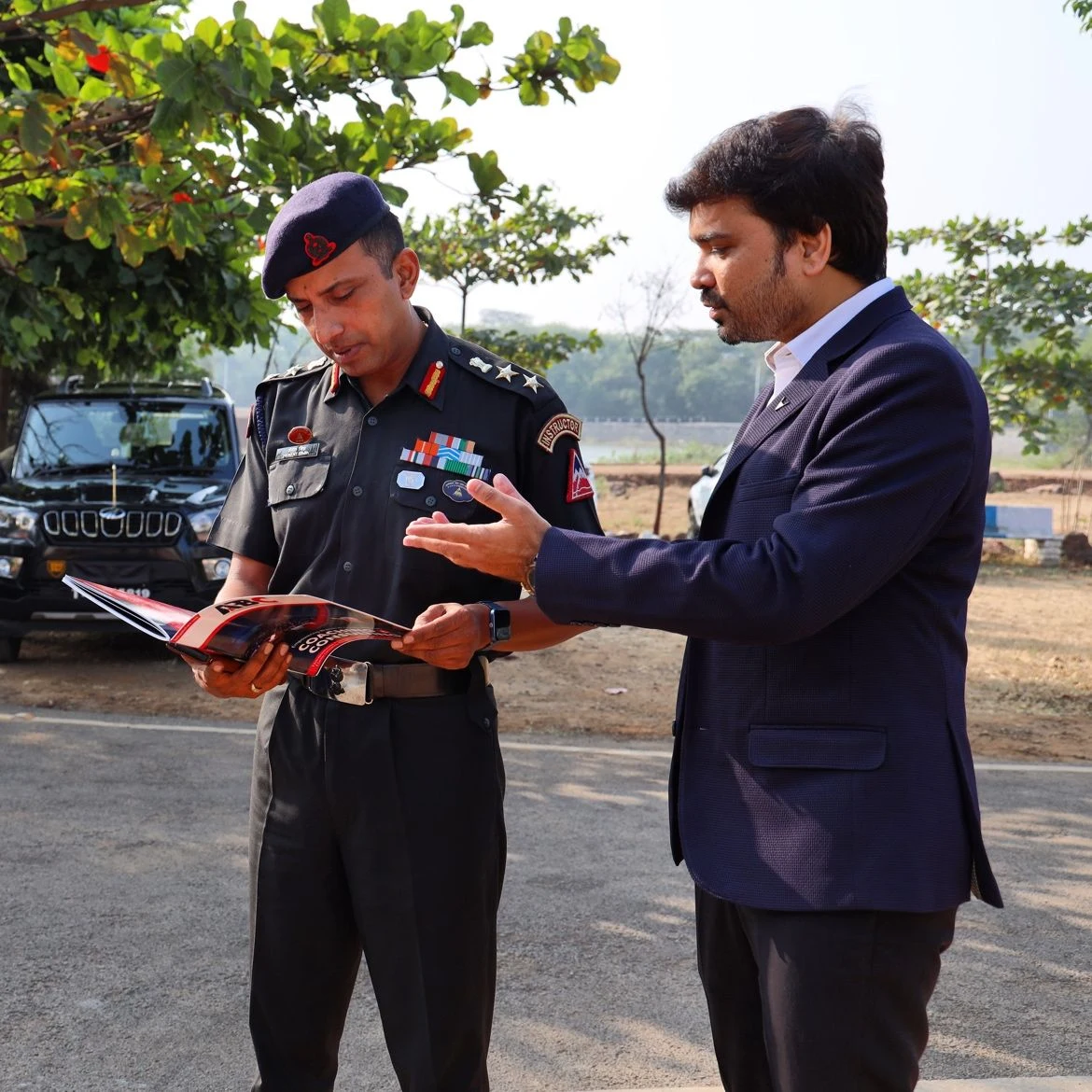
Here's the thing about negotiation: most Indian professionals were never taught it. They were taught to work hard, deliver on time, and stay quiet in meetings. But India's ₹1.5 trillion L&D market is waking up to the fact that persuasive communication and strategic conflict resolution are the skills that actually move careers and contracts forward. I've run negotiation workshops for professionals across manufacturing, IT, and finance — and the transformation in the room is visible within hours.
TL;DR- Negotiation skills workshops teach Indian professionals to move from position-based to interest-based negotiation — a shift that changes every conversation
- Persuasive communication is not manipulation: it is understanding the other side well enough to find outcomes both parties genuinely want
- Strategic conflict resolution reduces meeting cycles and speeds up decision-making in Indian corporate teams
- Workshop participants report real success stories: better vendor deals, faster approvals, improved team alignment
- India's AI/ML hiring surge (+25% YoY) makes negotiation even more critical as professionals compete for fewer, higher-value roles
Why Negotiation Is the Most Underrated Corporate Skill in India
Ask any senior HR leader in Maharashtra why their teams underperform in vendor discussions, salary negotiations, or cross-functional alignment — and they'll tell you the same thing: nobody was ever trained to negotiate. Indian education rewards technical competence and compliance. What it doesn't reward is the ability to sit across from another person, understand their interests, and craft an agreement that moves both parties forward. This gap is costing Indian companies enormous value every single day.
What Happens Inside a Negotiation Skills Workshop: The Real Experience
When professionals walk into one of my negotiation skills workshops, the first hour is often uncomfortable. I ask them to recall a recent negotiation they lost — not a business deal, but any conversation where they left feeling like they gave more than they got. What I see in that room is recognition: most Indian professionals negotiate reactively, not strategically. By the end of day one, they're learning the BATNA framework, practising interest-based negotiation, and recording their own body language on camera. Trust me, that camera exercise changes everything.
Persuasive Communication vs. Aggressive Tactics: Why Indian Professionals Get This Wrong
There's a widespread misconception in Indian corporate culture that negotiation means being aggressive or manipulative. What most people don't realize is that the most effective negotiators are often the calmest people in the room. Persuasive communication is about deep listening, precise framing, and the ability to make the other side feel genuinely understood. I've trained teams at Bajaj Auto, RBI, and Ferrero — and in every case, the biggest breakthrough was when professionals stopped trying to "win" and started trying to "understand." That shift alone changes outcomes.
| Negotiation Approach | Position-Based (Old Way) | Interest-Based (Workshop Way) |
|---|---|---|
| Focus | What I want | Why I want it + what they need |
| Conflict Style | Win-lose | Win-win where possible |
| Communication | Aggressive or passive | Assertive and empathetic |
| Outcome Quality | Short-term gains, long-term damage | Durable agreements, better relationships |
| Preparation | Rehearse your demands | Map their interests and BATNA |
| Indian Context Fit | Often burns relationships | Respects hierarchy and relationship norms |
Strategic Conflict Resolution: Turning Workplace Friction Into Productive Outcomes
Conflict in Indian offices is expensive. McKinsey's data on Indian managers shows 21 hours per week lost in meetings — much of that time is people defending positions instead of resolving them. Strategic conflict resolution is not about avoiding disagreement; it's about moving through it faster with less relationship damage. In my workshops, I teach a structured resolution framework: identify the underlying interest, separate it from the stated position, and find the creative zone where both interests can be met. It sounds simple. It takes practice.
Real Success Stories From Negotiation Workshop Participants Across India
I've seen the workshop results play out in the real world. An HR professional from a Pune manufacturing firm used interest-based negotiation to renegotiate a vendor contract and saved 18% on annual procurement. A sales manager from Mumbai restructured her client proposal language after the workshop and improved closure rates by 23% over the next quarter. A team leader at a Bengaluru tech company reduced his team's conflict escalations by half in 60 days. These aren't outliers — they're what happens when Indian professionals get actual negotiation training instead of just reading about it.
The Negotiation Techniques That Actually Work in Indian Business Culture
Indian business culture has specific negotiation norms that generic international training ignores. Relationship-first dynamics mean you need to invest in trust before you can push on terms. Hierarchy sensitivity means framing matters enormously — how you say something to a senior person is as important as what you say. Time orientation in Indian negotiations often runs longer than Western counterparts expect. In my workshops, I build these cultural nuances into every module so participants come away with techniques that actually work in their specific context — not techniques designed for a Wall Street boardroom.
How to Prepare for High-Stakes Negotiations at Work in 2026
The best preparation for a high-stakes negotiation is not rehearsing what you want to say. It's mapping what the other side needs. I use a simple pre-negotiation worksheet in my training: list the other party's stated position, their probable underlying interest, their best alternative to a negotiated agreement, and one creative option that serves both interests. When I ran this exercise at a leadership workshop for L&T and Tata Tech participants, the shift in mindset was immediate. Professionals who came in thinking about "what I'll ask for" left thinking about "what problem we're solving together."
Why Avinash Chate's Negotiation Workshops Get Results Across India's Corporate Sector
What makes my negotiation training different is that I bring 11 years of working with India's most demanding corporate environments — Indian Army, BRO, BARC, JSW Steel, RBI. These are not organisations where you can afford to negotiate poorly. The principles I teach are the same: understand the other side's constraints, create options before positions harden, and close with clarity. Whether you're an HR leader negotiating a talent retention package or a sales professional closing a ₹10 crore deal, the same framework applies. The workshop gives you a repeatable process, not just inspiration.
Book Avinash Chate for Your Next Event
TEDx speaker. 11+ yrs training Army, BRO, RBI, BARC, JSW. Available for keynotes, leadership training, team building & manager development at your office or event venue.
✅ Thanks! Avinash team will reach out within 24 hours.'}).catch(function(e){f.outerHTML='Something went wrong. WhatsApp +91 8793630001
'});return false;">Select ServiceKeynote / Motivational SpeakingLeadership Development TrainingTeam Building WorkshopManager DevelopmentEmployee TrainingOutbound TrainingBook Avinash Now →Or WhatsApp directly: +91 87936 30001
Related Articles by Avinash Chate
- Corporate Team Building and Behaviour Training for Indian Companies
- HR Efficiency Training for Maharashtra's Corporate Professionals 2026
- The REST Model: Unlock Creativity and Innovation in Indian Business
Avinash Chate TEDx Speaker · Founder, The Future Corporate · 11+ yrs experience Avinash has trained Indian Army, BRO, RBI, BARC, JSW Steel and 1000+ corporate leaders across India. His work focuses on leadership development, communication skills, and behavioural training rooted in Indian values and modern business needs. |
Frequently Asked Questions
What is negotiation skills training and who is it for in India?
Negotiation skills training is structured learning that teaches professionals how to reach better agreements through interest-based communication, strategic preparation, and conflict resolution. In India, this training is most valuable for sales managers, HR professionals, procurement teams, project managers, and any leader who needs to align stakeholders across hierarchy levels. The goal is not to teach manipulation — it is to teach clarity, empathy, and structured problem-solving that leads to outcomes both parties commit to.
How does persuasive communication differ from aggressive negotiation in Indian workplaces?
Aggressive negotiation focuses on winning at the other person's expense, which in India's relationship-first business culture creates long-term damage even when it produces short-term gains. Persuasive communication, by contrast, is about understanding the other side's genuine interests well enough to frame your proposal in terms that genuinely serve them. This approach is far more effective in Indian corporate settings where trust, hierarchy sensitivity, and long-term relationship quality determine who gets the best deals over time.
What results do professionals see after attending a negotiation mastery workshop?
Workshop participants across India consistently report measurable improvements: faster closure on vendor negotiations, better salary negotiation outcomes, fewer escalated conflicts in cross-functional teams, and stronger client relationships. One HR professional from Pune saved 18% on annual vendor procurement; a Mumbai sales manager improved quarterly closure rates by 23%. The shift from reactive to strategic negotiation shows up in numbers because it changes the quality of every business conversation the professional has.
How can I book a negotiation skills workshop for my corporate team in India?
To book a negotiation skills workshop for your corporate team in India, contact Avinash Chate's team directly. I run customised programmes for HR leaders, sales teams, and management cohorts — available as half-day, full-day, or 2-day residential formats across Maharashtra and across India. WhatsApp +91 87936 30001 or email connect@avinashchate.com with your team size, location, and preferred dates. I've delivered this programme for organisations including Bajaj Auto, L&T, and Ferrero, and the content is always contextualised for your specific industry and audience.
Avinash Chate services
Corporate Trainer in Maharashtra · Top Corporate Trainers in Maharashtra · Leadership Trainer in Maharashtra · Top Leadership Trainers in Maharashtra · Team Building Trainer in Maharashtra · Top Team Building Trainers in Maharashtra · Motivational Speaker in Maharashtra · Top Motivational Speakers in Maharashtra · All service locations
← Back to all articles · Book Avinash Chate
By Avinash Chate — Maharashtra’s #1 Corporate Trainer & Motivational Speaker. .