The REST Model: Unlock Creativity and Innovation in Indian Business
Most Indian professionals were never taught a structured framework for creative thinking. The REST Model — Relax, Explore, Synthesize, Transform — changes that. Here's how to move from ordinary ideas to extraordinary ones at work.
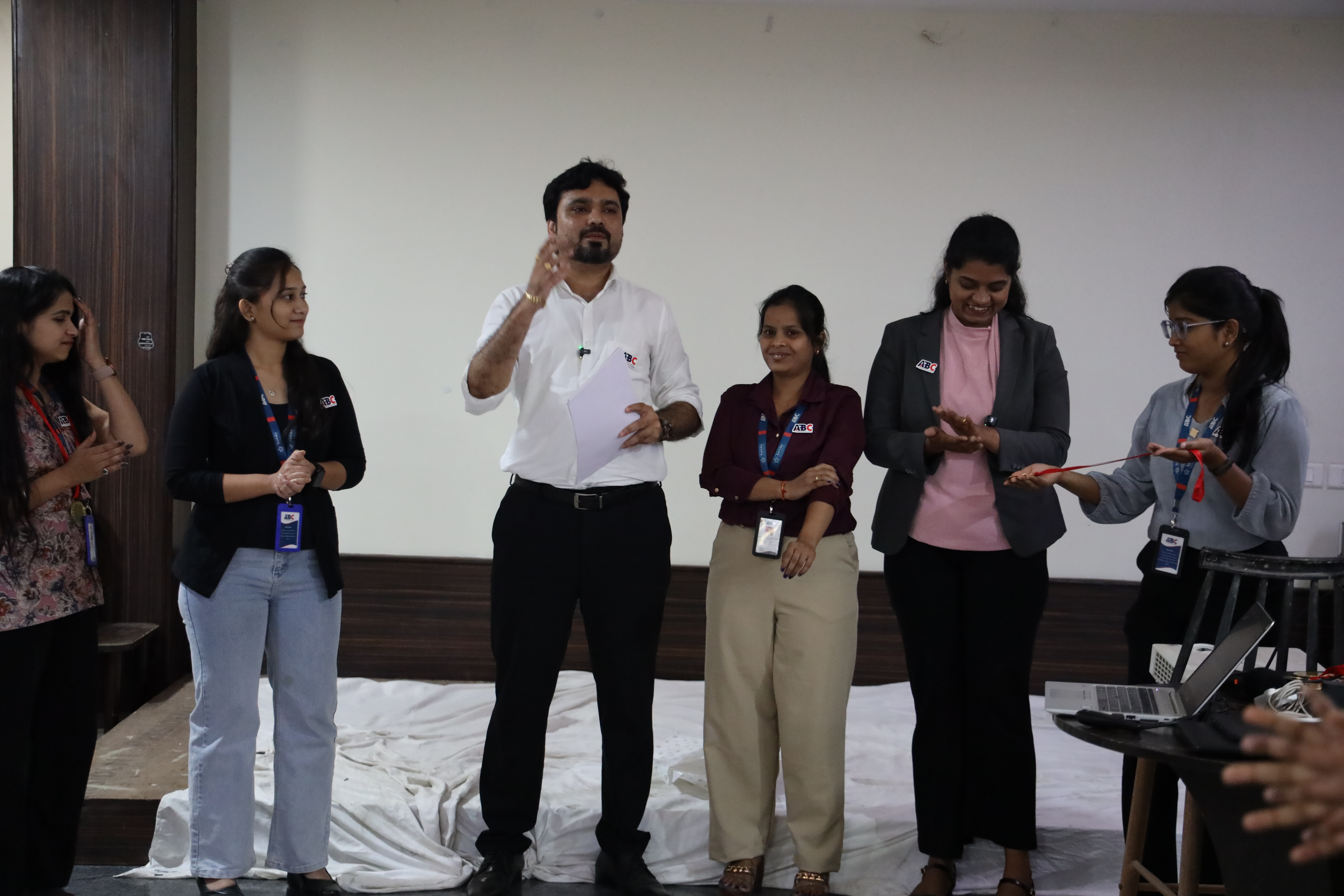
The good news is there's a structured way to think outside the box — and it doesn't require you to be born creative. The REST Model (Relax, Explore, Synthesize, Transform) is a four-step framework I developed to help professionals and entrepreneurs break free from conventional thinking patterns and generate genuinely innovative solutions. India's ₹1.5 trillion L&D market is full of companies wanting more innovation from their teams — but almost none of them teach people how to actually think differently. REST changes that.
TL;DR- The REST Model gives Indian professionals a 4-step structured framework — Relax, Explore, Synthesize, Transform — to generate breakthrough ideas consistently
- Relax is not laziness: it is deliberate mental decompression that enables the subconscious to make connections the busy mind cannot
- Explore means actively seeking inputs from outside your domain — the best ideas in Indian business have almost always come from cross-domain thinking
- Synthesize is where divergent ideas are shaped into a coherent, actionable concept worth testing
- Transform is the execution phase — turning the idea from ordinary to extraordinary through iteration and real-world testing
Why Indian Professionals Struggle to Think Outside the Box at Work
Here's what I observe in most Indian corporate training rooms: people are smart, hardworking, and technically competent — but when I ask them to generate a creative solution to a real business problem, there's an unusual silence. Not because they lack ideas. Because nobody ever gave them a process. Indian education rewards getting the right answer, not generating multiple answers. Corporate culture rewards efficiency, not experimentation. By the time a professional reaches a senior role, they've been so thoroughly trained to stay within known boundaries that thinking outside them feels genuinely uncomfortable.
What Is the REST Model: Relax, Explore, Synthesize, Transform Explained
The REST Model is a four-step framework for structured creative thinking. R stands for Relax — deliberately clearing mental clutter so the mind can make fresh connections. E stands for Explore — actively seeking inputs from domains outside your own. S stands for Synthesize — combining divergent inputs into a coherent, actionable idea. T stands for Transform — refining and executing that idea until it shifts from ordinary to extraordinary. What makes REST different from other creativity frameworks is that it's designed for the real constraints of Indian professional life: busy schedules, hierarchical cultures, and teams that value practical output over ideation for its own sake.
| REST Step | What It Means | How to Practice It at Work |
|---|---|---|
| R — Relax | Deliberate mental decompression | 10-min silent walk before creative sessions |
| E — Explore | Cross-domain input gathering | Read one article from outside your field weekly |
| S — Synthesize | Shaping divergent ideas into one concept | Use 2x2 feasibility-impact matrix |
| T — Transform | Refining idea through iteration | 3-round sceptical feedback loop before execution |
The Relax Step: Why Slowing Down Produces Better Ideas in Indian Business
The Relax step sounds counterintuitive in a culture that equates productivity with busyness. But the science is clear: the brain's default mode network — the system responsible for creative insight — is most active when you're not actively problem-solving. This is why your best ideas arrive in the shower, on a walk, or just before you fall asleep. In my training sessions, I teach professionals how to build deliberate Relax intervals into their workday: a 15-minute walk without phone, a morning journaling practice, or a structured end-of-day shutdown routine. These are not luxuries. They are inputs to the creative process.
The Explore Step: How Cross-Domain Thinking Unlocks Innovation in India
Explore is where the REST Model becomes genuinely exciting. The most innovative ideas in Indian business almost always come from cross-domain thinking — borrowing a principle from one field and applying it to a completely different problem. ISRO borrowed fuel management principles from Formula 1. Indian fintech companies borrowed gamification mechanics from consumer apps. When I run Explore exercises in corporate workshops, I ask teams to spend 30 minutes reading about industries they know nothing about and then report back on what they found. The ideas that follow are almost always better than anything the team generated before.
The Synthesize Step: Turning Diverse Inputs Into a Winning Idea
Synthesize is where creativity meets discipline. You've relaxed, you've explored, and now you have a collection of raw inputs — observations, analogies, borrowed principles, half-formed connections. The Synthesize step is where you ask: what is the single most promising idea this material is pointing to? I teach a simple synthesis technique in my workshops: draw a 2x2 matrix with "feasibility" on one axis and "potential impact" on the other. Place your raw ideas on the matrix. The ones in the high-feasibility, high-impact quadrant are your synthesis targets. This makes the creative process feel less like magic and more like engineering.
The Transform Step: Moving Your Idea From Concept to Extraordinary Execution
Transform is the step most creativity frameworks skip, and it's the one that matters most. An idea is not an innovation. An innovation is an idea that has been tested, refined, and delivered in a form that creates real value. In my workshops, I teach the Transform step as a 3-iteration process: articulate the idea in one sentence, test it with a sceptical colleague, and revise it based on the most credible objection. By the third iteration, what started as an interesting concept has typically become something the team can actually execute. This is how I help professionals move from thinking about innovation to doing it.
How Indian Companies Use Creative Thinking Frameworks to Stay Competitive in 2026
India's 250+ unicorns did not emerge from individual genius — they emerged from teams that built cultures of structured experimentation. Companies like Zepto, Razorpay, and Nykaa created environments where the Explore and Synthesize steps happen continuously, not just during designated innovation sessions. The organisations I work with at Tata Tech and Siemens are learning the same lesson: innovation is not a department or a hackathon. It is a daily practice embedded in how teams think, communicate, and solve problems. The REST Model gives teams a shared language for that practice.
Applying the REST Model in Your Indian Corporate Team Starting Tomorrow
Start applying the REST Model in your team this week with one simple change: replace one standard brainstorming session with a structured REST session. Give the team 10 minutes of silent Relax time before the meeting. Assign Explore homework — each person reads one article from outside their domain and brings one borrowed principle to the session. Run a 20-minute Synthesize exercise using the 2x2 matrix. Then assign one Transform task: each person refines their best idea through one round of sceptical feedback before the next meeting. I've run this protocol at Bajaj Auto, BARC, and BRO workshops — and the quality of ideas it produces surprises even the most sceptical participants.
Book Avinash Chate for Your Next Event
TEDx speaker. 11+ yrs training Army, BRO, RBI, BARC, JSW. Available for keynotes, leadership training, team building & manager development at your office or event venue.
✅ Thanks! Avinash team will reach out within 24 hours.'}).catch(function(e){f.outerHTML='Something went wrong. WhatsApp +91 8793630001
'});return false;">Select ServiceKeynote / Motivational SpeakingLeadership Development TrainingTeam Building WorkshopManager DevelopmentEmployee TrainingOutbound TrainingBook Avinash Now →Or WhatsApp directly: +91 87936 30001
Related Articles by Avinash Chate
- Corporate Team Building and Behaviour Training for Indian Companies
- HR Efficiency Training for Maharashtra's Corporate Professionals 2026
- How Corporate Training Transforms Teams: Real Testimonials From India
Avinash Chate TEDx Speaker · Founder, The Future Corporate · 11+ yrs experience Avinash has trained Indian Army, BRO, RBI, BARC, JSW Steel and 1000+ corporate leaders across India. His work focuses on leadership development, communication skills, and behavioural training rooted in Indian values and modern business needs. |
Frequently Asked Questions
What is the REST Model and who created it?
The REST Model is a four-step creative thinking framework — Relax, Explore, Synthesize, Transform — developed by Avinash Chate for Indian professionals and corporate teams. It provides a structured process for generating innovative ideas that is specifically designed to work within the real constraints of Indian professional life: busy schedules, hierarchical cultures, and teams that value practical output. Unlike generic creativity frameworks, REST integrates neuroscience-backed relaxation techniques, cross-domain exploration practices, structured synthesis tools, and an iterative transformation process.
How does the REST Model help Indian professionals think more creatively at work?
The REST Model helps Indian professionals think more creatively by giving them a repeatable process instead of waiting for inspiration. The Relax step activates the brain's default mode network — the system responsible for creative insight — through deliberate mental decompression. The Explore step broadens the input base by drawing on cross-domain thinking. The Synthesize step uses structured tools like the 2x2 feasibility-impact matrix to shape raw ideas into actionable concepts. The Transform step refines those concepts through iteration so they become real innovations rather than forgotten brainstorming notes.
Can the REST Model be used in team settings or is it only for individuals?
The REST Model works exceptionally well in team settings and is designed for collaborative use. In team workshops, Relax becomes a shared silent pre-meeting ritual. Explore becomes a homework assignment where each team member brings cross-domain inputs to the session. Synthesize becomes a facilitated group exercise using shared visualisation tools. Transform becomes a structured peer feedback loop where each idea is stress-tested before the team commits to it. I run REST workshops for corporate teams at companies across India including Infosys, L&T, and Bosch, and the team version consistently produces higher-quality outputs than the individual version.
How is the REST Model different from standard brainstorming techniques used in India?
Standard brainstorming in Indian corporate settings typically follows a free-association format: someone opens the floor, a few vocal participants contribute, ideas are written on a whiteboard, and the meeting ends without a clear action. The REST Model is fundamentally different because it has structure at every stage. Relax addresses the cognitive precondition for creativity. Explore ensures diverse, non-obvious inputs. Synthesize turns the volume of ideas into a prioritised, actionable shortlist. Transform creates an accountable iteration process. The result is not just more ideas but better ideas that actually get executed.
Avinash Chate services
Corporate Trainer in Maharashtra · Top Corporate Trainers in Maharashtra · Leadership Trainer in Maharashtra · Top Leadership Trainers in Maharashtra · Team Building Trainer in Maharashtra · Top Team Building Trainers in Maharashtra · Motivational Speaker in Maharashtra · Top Motivational Speakers in Maharashtra · All service locations
← Back to all articles · Book Avinash Chate
By Avinash Chate — Maharashtra’s #1 Corporate Trainer & Motivational Speaker. .