How to Raise Performance Standards in Indian Corporate Teams 2026
Most Indian teams don't lack talent — they lack clear performance standards. Here's Avinash Chate's proven blueprint for raising the bar across India's leading corporate teams.
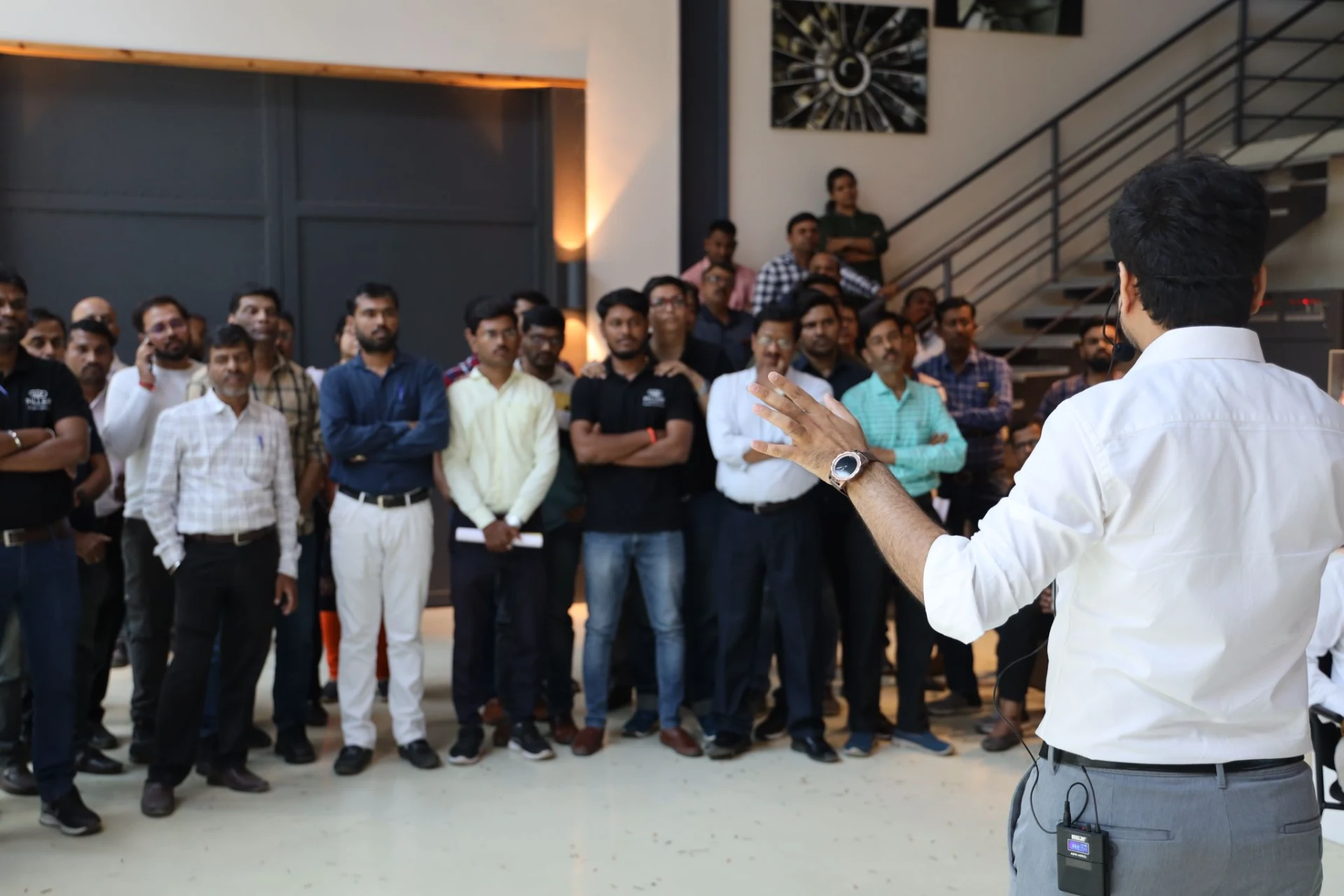
The good news is this: most Indian corporate teams are not underperforming because of a talent deficit. They're underperforming because no one has clearly defined what 'excellent' looks like. With 65% of Indian firms now investing in soft-skill and performance training, the companies that define and raise their standards first will win the decade — and here's exactly how to do it.
TL;DR- Most Indian corporate teams underperform not from lack of talent, but because performance standards are absent, vague, or unenforced — fix the standards first
- Setting high, specific, visible performance standards — not just KPIs — is the fastest and cheapest lever for team improvement in Indian organisations
- Avinash Chate's corporate training programs have elevated performance standards at 500+ Indian companies including Bajaj Auto, L&T, Infosys, and the Indian Army
- Peer accountability, structured weekly feedback, and behaviour-based recognition are the three pillars of sustained performance elevation in India
- You can implement a Performance Standards Blueprint in 30 days — starting with your next team meeting this week
Why Indian Corporate Teams Underperform Despite High Talent
Here's something I've seen in boardrooms and on factory floors across India, from Pune to Mumbai to Chennai: talent is almost never the problem. The teams I train at Tata Tech, Bajaj Auto, and Infosys are filled with capable, driven, intelligent people. The problem is almost always standards — specifically, the absence of a clear, shared, visible definition of what excellent performance looks like. When everyone on a team has a different mental model of 'good enough', the team settles to the lowest common denominator. That is not a talent problem. It's a standards problem.
The Performance Standards Gap No One Talks About in Indian Companies
McKinsey research confirms that Indian managers spend 21 hours per week in meetings — 35% more than their US counterparts. But in most of those meetings, performance standards are never explicitly discussed. There's often a vague expectation — 'hit your targets', 'do your best' — but the nuance of what exceptional looks like, what the team values, what behaviours are non-negotiable: those conversations happen rarely if at all. The performance standards gap is silent. It doesn't show up in KPI reports. But it shows up every day in team morale, quality of output, and customer satisfaction.
| Performance Element | What Most Indian Companies Do | What High-Performance Teams Do |
|---|---|---|
| Standard definition | Vague targets: "do your best" or "hit KPIs" | Specific behaviours and outcomes, written and visible |
| Standard visibility | Buried in annual appraisal forms | On team walls, in onboarding, in every review conversation |
| Accountability | Manager enforces compliance top-down | Peer accountability pairs create self-sustaining culture |
| Feedback frequency | Annual or quarterly performance reviews | Weekly specific feedback tied to agreed standards |
| Recognition | Salary treated as sufficient motivation | Behaviour-based recognition — not just number-hitting |
| Standard evolution | Set once in HR policy, rarely revisited | Reviewed quarterly with team input and updated as team grows |
How to Define 'Excellent' in Your Team — A Practical Framework
Here's how I define performance standards with teams in my training sessions. Step one: name the behaviours, not just the outcomes. 'Achieve 100% targets' is an outcome. 'Sends client communication within 24 hours, proactively flags risks 72 hours before deadlines, shares learnings with the team after every major project' — those are standards. Step two: make them visible. Write them on the wall. Put them in your onboarding. Revisit them in every performance conversation. Step three: live them. A standard your best people violate without consequence isn't a standard — it's a suggestion.
The Three Pillars of Sustained Performance Elevation in India
In my work with 500+ Indian corporate teams, I've found that sustained performance elevation rests on three pillars. First, peer accountability — teams where colleagues hold each other to standards outperform teams where only the manager enforces. Second, structured feedback — not annual reviews, but weekly, brief, specific feedback tied to agreed standards. Third, recognition — not just for hitting numbers, but for demonstrating the behaviours the team has agreed matter. When these three pillars are in place, performance elevation becomes self-sustaining. The manager's role shifts from policing to coaching.
What Happens When You Raise the Bar: Real Results from Indian Corporates
In sessions I've run with teams at Bosch, Siemens, and L&T, I've seen what deliberate performance standards elevation actually delivers. A manufacturing team in Pune cut quality defects by 30% in 90 days — not through new technology, but by agreeing on and enforcing a non-negotiable standard for completing pre-production checklists. A sales team at a financial services firm in Mumbai increased deal closure by 22% after we defined exactly what a complete client proposal looked like. These results don't come from motivation speeches. They come from the clarity of knowing precisely what excellent looks like.
Common Performance Mistakes Indian Managers Make and How to Fix Them
Here are the most common performance mistakes I see Indian managers make. First, they define standards once and never revisit them — standards must evolve as the team grows. Second, they apply standards selectively — one rule for the star performer, another for everyone else — which destroys team trust faster than anything else. Third, they confuse activity with output: measuring hours worked instead of quality produced. Fourth, they skip recognition entirely — assuming a professional salary is sufficient motivation. Trust me: behaviour-based recognition is free, and it's one of the most powerful performance levers in any Indian corporate team.
The 30-Day Performance Standards Blueprint for Indian Teams
Here's a 30-day Performance Standards Blueprint you can start this week. Week 1: convene your team and co-create your top five performance behaviours — not targets, behaviours. Week 2: document them, make them visible, and review one per daily standup. Week 3: begin peer accountability pairs — each team member checks in with one other on their agreed behaviours. Week 4: run a team recognition session where you celebrate the behaviours, not just the numbers. By Day 30, you'll have a team that knows what excellent looks like. I've seen this work at the Indian Army, at RBI, and at manufacturing firms across Maharashtra.
How Avinash Chate's Corporate Training Elevates Performance Standards
If you want to elevate performance standards faster and more permanently, the proven path is structured training. My corporate training programs — delivered in English, Hindi, and Marathi across India — are built on exactly this framework. I've worked with teams at Mahindra, KPIT, JSW, Ferrero, BARC, and BRO to define, install, and sustain performance standards that outlast the training room. As Maharashtra's #1 Corporate Trainer and a 2x TEDx speaker, I don't just motivate teams — I give them the tools, the frameworks, and the habit structures to perform at a higher level every single day. Performance excellence is trainable. And it starts with a standard.
Book Avinash Chate for Your Next Event
TEDx speaker. 11+ yrs training Army, BRO, RBI, BARC, JSW. Available for keynotes, leadership training, team building & manager development at your office or event venue.
✅ Thanks! Avinash team will reach out within 24 hours.'}).catch(function(e){f.outerHTML='Something went wrong. WhatsApp +91 8793630001
'});return false;">Select ServiceKeynote / Motivational SpeakingLeadership Development TrainingTeam Building WorkshopManager DevelopmentEmployee TrainingOutbound TrainingBook Avinash Now →Or WhatsApp directly: +91 87936 30001
Related Articles by Avinash Chate
- The First 30-Second Rule That Decides Every Sale Before You Even Pitch
- Ajit Agarkar's 21-Ball ODI Fifty Against Zimbabwe: The Silent Performer's Career Blueprint
- Zero Defects: How Sundram Fasteners Won GM Supplier of the Year 5 Times
Avinash Chate TEDx Speaker · Founder, The Future Corporate · 11+ yrs experience Avinash has trained Indian Army, BRO, RBI, BARC, JSW Steel and 1000+ corporate leaders across India. His work focuses on leadership development, communication skills, and behavioural training rooted in Indian values and modern business needs. |
Frequently Asked Questions
What are performance standards and why do they matter more than KPIs in Indian companies?
Performance standards are the specific, agreed-upon behaviours and outputs that define what excellent work looks like in a team. They go beyond KPIs to describe how work should be done, not just what should be produced. In most Indian companies, performance standards are vague or unspoken, causing teams to settle toward the lowest common denominator. Clear, visible, consistently enforced standards are the fastest lever for raising team performance — and they require no budget, no technology, and no restructuring to implement.
How can Indian managers set better performance standards for their teams?
To set better performance standards, Indian managers should follow three steps. First, define standards as specific behaviours — 'responds to all client queries within 24 hours' is a standard; 'be responsive' is not. Second, co-create the standards with the team rather than imposing them top-down — team-created standards get far higher buy-in and self-enforcement. Third, make the standards visible everywhere: team walls, onboarding documents, performance conversations. The goal is for team members to hold each other accountable before the manager ever needs to step in.
What measurable results does performance standards training actually deliver?
In Avinash Chate's corporate training engagements with Indian teams, performance standards interventions typically produce measurable results within 90 days. A manufacturing team in Pune cut quality defects by 30% after establishing non-negotiable pre-production behaviour standards. A Mumbai sales team increased deal closure by 22% after defining exactly what a complete client proposal looked like. These results don't come from motivational speeches or new technology — they come from the clarity of knowing precisely what excellent looks like and building peer accountability around it.
How does Avinash Chate's corporate training elevate performance standards in India?
Avinash Chate is Maharashtra's #1 Corporate Trainer, India's leading Motivational Speaker, and a 2x TEDx speaker. His performance standards training programs — delivered in English, Hindi, and Marathi across India — cover standard definition, peer accountability structures, weekly feedback systems, and behaviour-based recognition. He has trained teams at Bajaj Auto, Tata Tech, Mahindra, L&T, Bosch, Siemens, Infosys, TCS, KPIT, RBI, BARC, the Indian Army, BRO, JSW, and Ferrero. To book a session for your corporate team, use the enquiry form on this page.
Avinash Chate services
Corporate Trainer in Maharashtra · Top Corporate Trainers in Maharashtra · Leadership Trainer in Maharashtra · Top Leadership Trainers in Maharashtra · Team Building Trainer in Maharashtra · Top Team Building Trainers in Maharashtra · Motivational Speaker in Maharashtra · Top Motivational Speakers in Maharashtra · All service locations
← Back to all articles · Book Avinash Chate
By Avinash Chate — Maharashtra’s #1 Corporate Trainer & Motivational Speaker. .